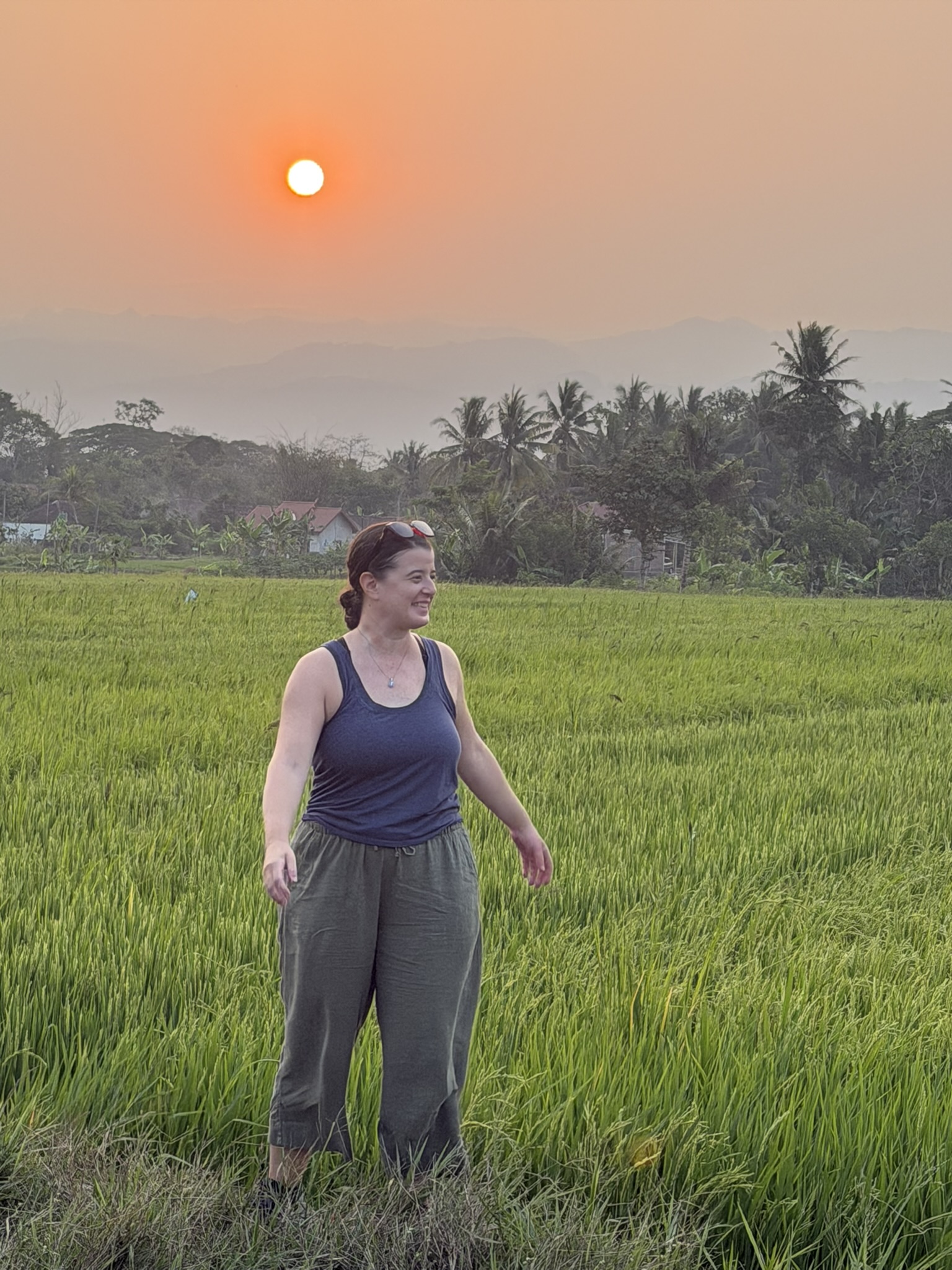
The culture shock hit me hard in Yogyakarta. Everything felt different and just a little bit off: the food, the streets, the language, the air, and so many other nuances. It took me some time to even vaguely adjust. Still, I managed to do some cool things and experience some unique and impressive culture: I visited massive temples, got lowered into a cave by ropes, saw a dance performance with music and movements I’d never experienced before, made my own batik art using hot wax and paint, visited the Sultan’s palace, tried new foods, and pushed myself very far out of my comfort zone.
Breathing it in
I’d never really heard of Yogyakarta until I started researching Indonesia, but it soon became the focal point of my time in Java. I was excited to see what the internet meant when it said Yogyakarta was the “cultural heart of Java,” and planned 6 nights in the small central Java city, which is also sometimes known as Jogja.
The 6-hour train ride from Jakarta was very comfortable and had great, educational views: alternating between shanty-town houses surrounded by garbage, local communities with kids running around, and beautiful lush rice fields with farmers working. And almost always some degree of smog coating the air, due to burning or vehicle emissions. I found my mood mirroring the skies throughout the train ride, happier in the rare times it was clearer and I saw glimpses of blue sky.
The air in Jogja was better than Jakarta for sure, but it was still smog-laden and often smelled like fires. My desperation for clean air was difficult to escape, especially because everything in town seemed to be an open-air design. For example, I stayed in a nice small hostel with a private room; the door opened to a courtyard where the kitchen and common areas were located, so I didn’t enjoy the nice outdoor space as much as I would have liked. I continued to wear masks outside and constantly sweat through all the fabric that covered my body, a constant push and pull between wanting to blend in with modest clothing and schvitzing in the 90 degree heat and humidity.
Eating through the culture shock
This was all distracting for me, but after all the slowing down I had to do since my ear infection and cough in Singapore I was determined to start moving again and push through the discomfort. So two hours after I arrived I signed up for a nighttime food tour.
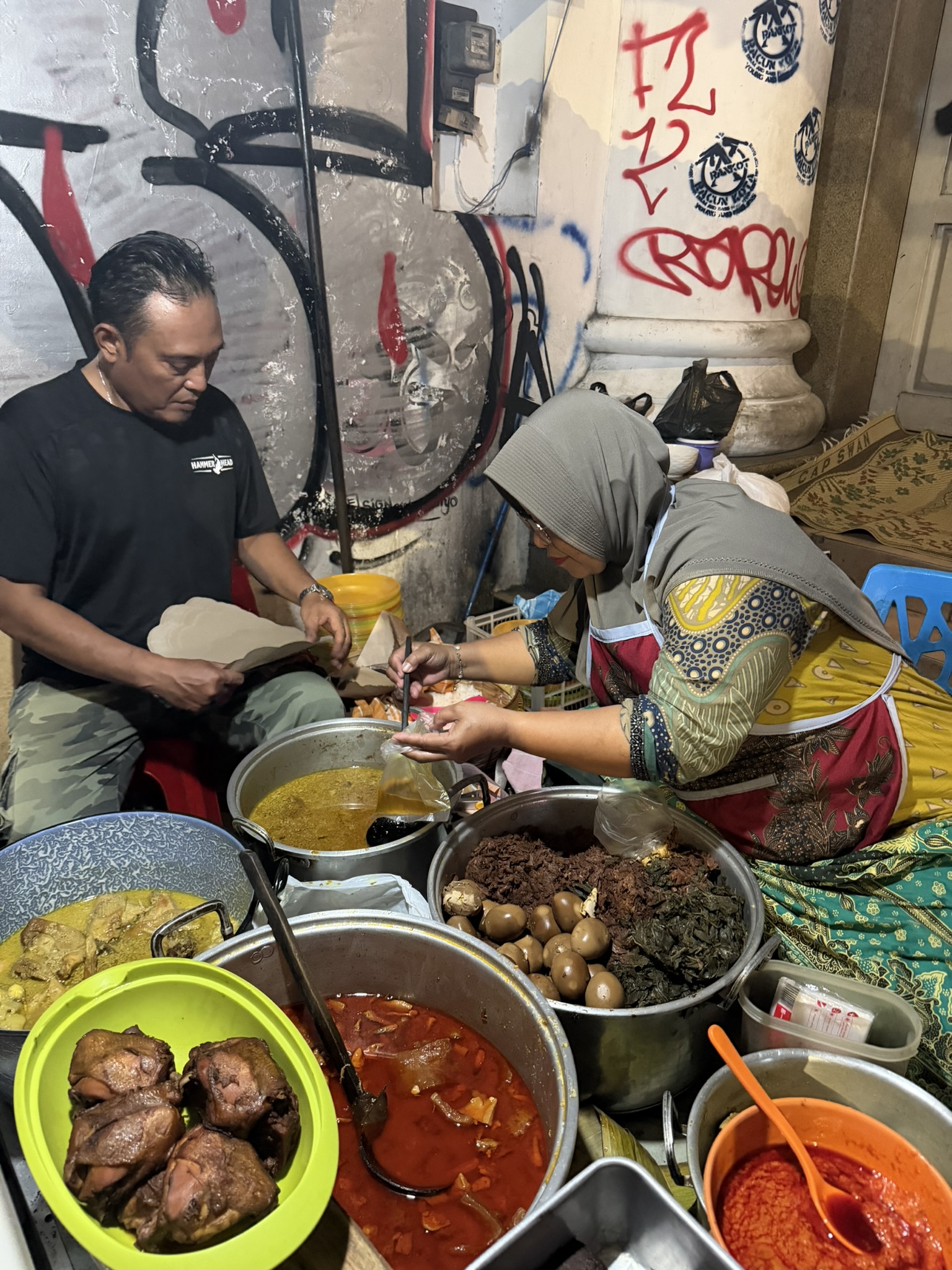
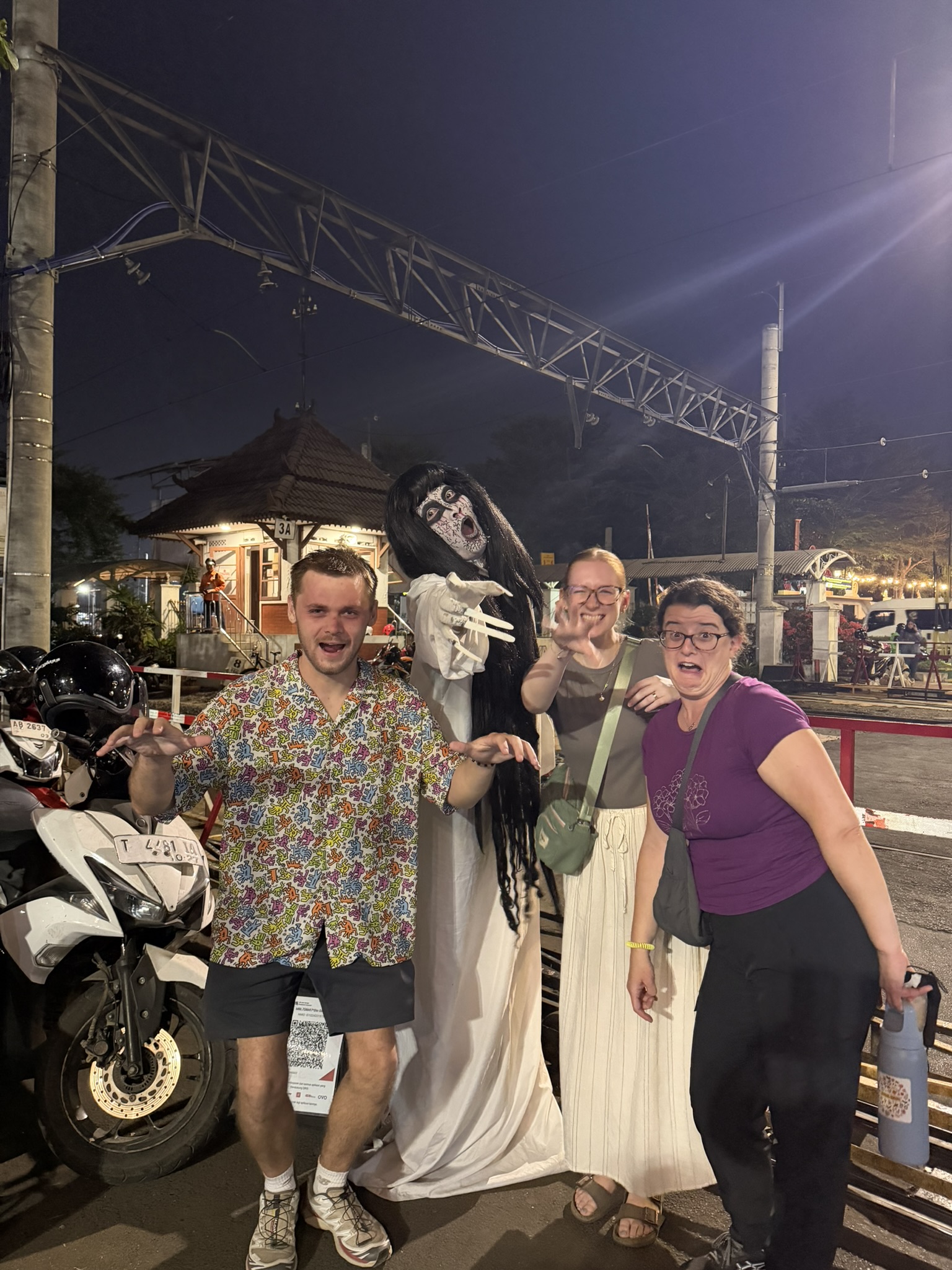
I met my guide Kalika and two other Irish tourmates in the center of the city. “I hope you’re hungry!” she greeted us. And oh boy did we eat that night. A selection of the food included:
- Nasi Gudeng, a rice and jackfruit dish that can also include other meats and an egg. This is a local specialty and play on the more popular Nasi Goreng, a fried rice dish.
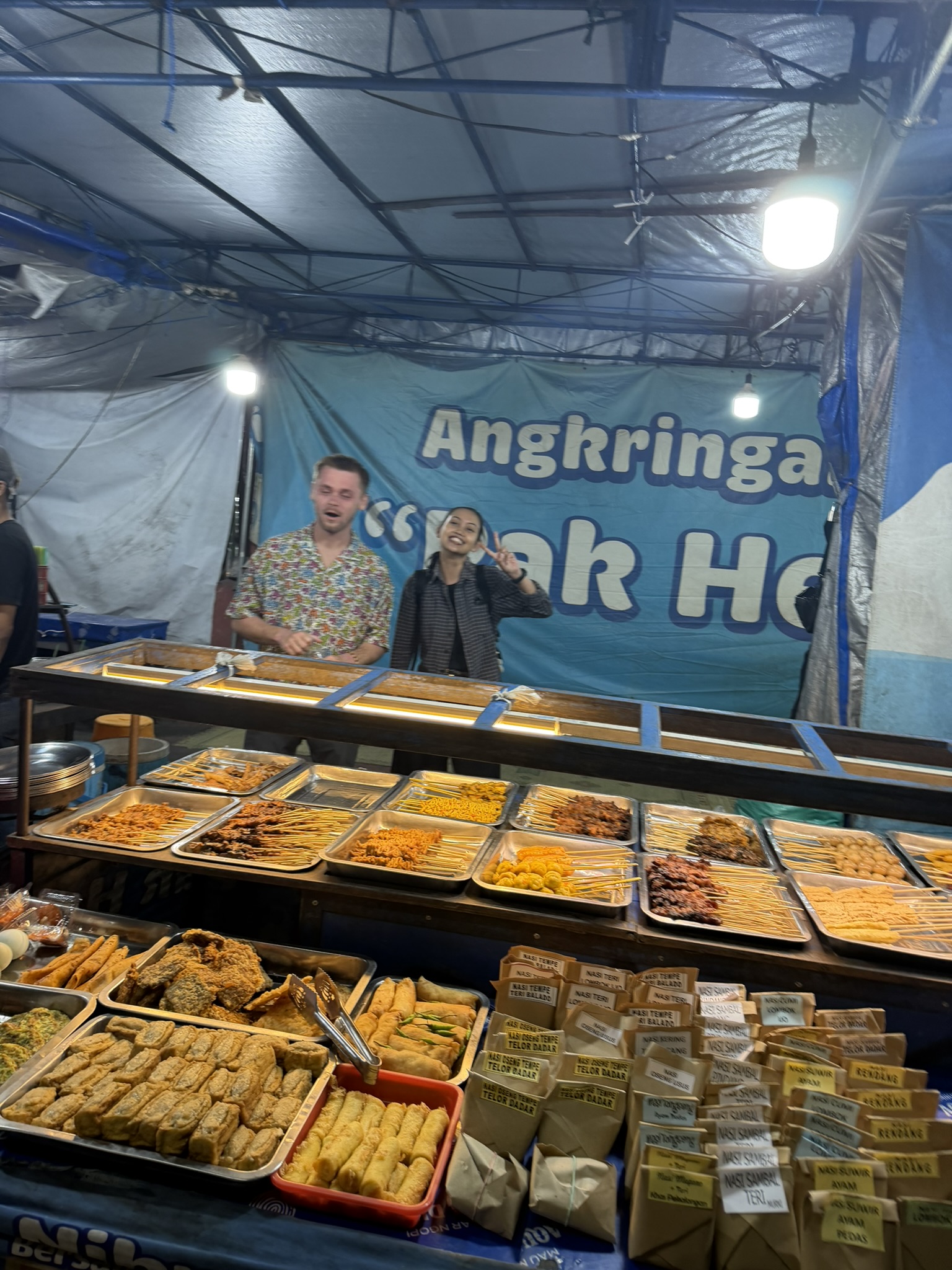
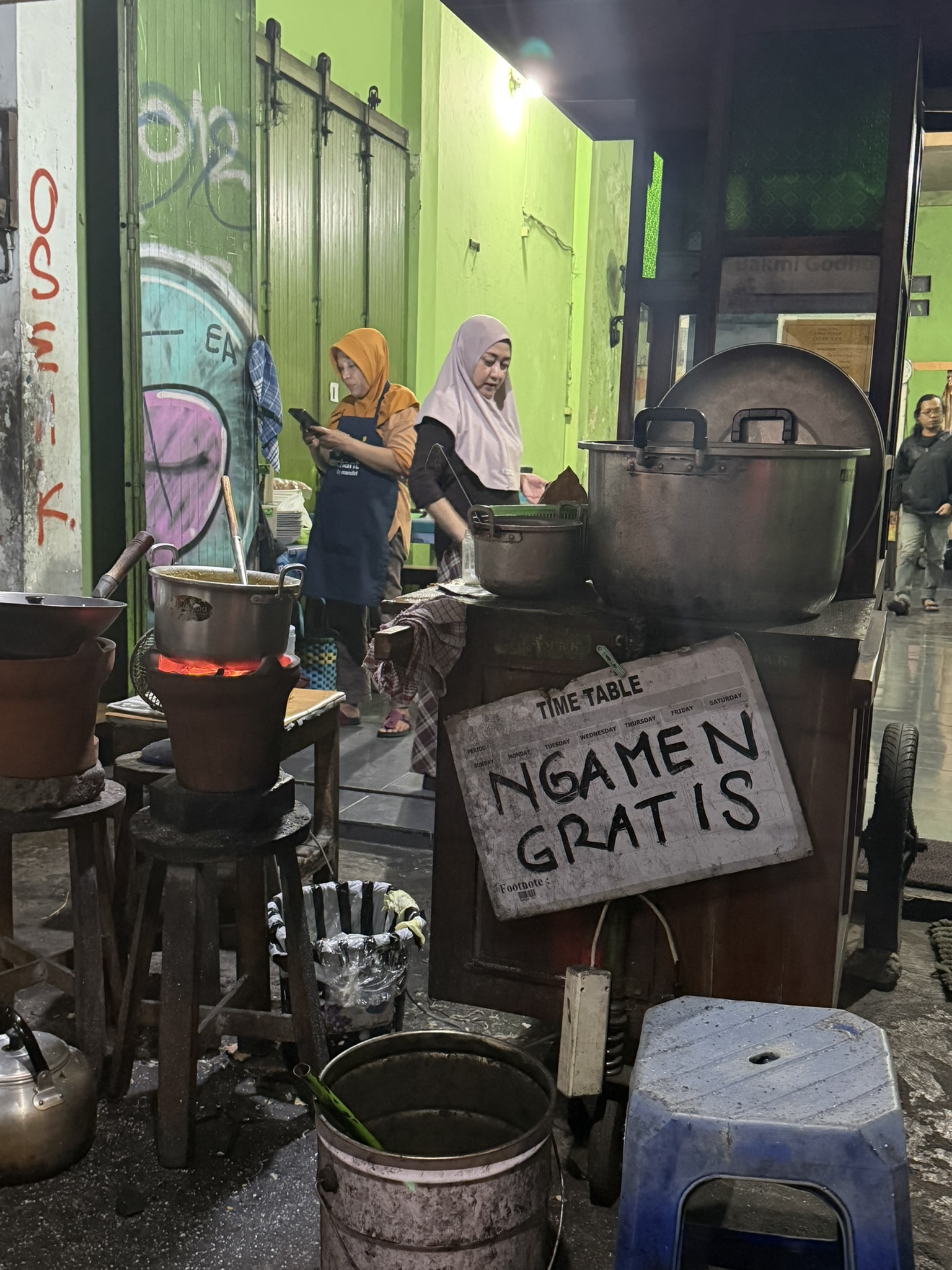
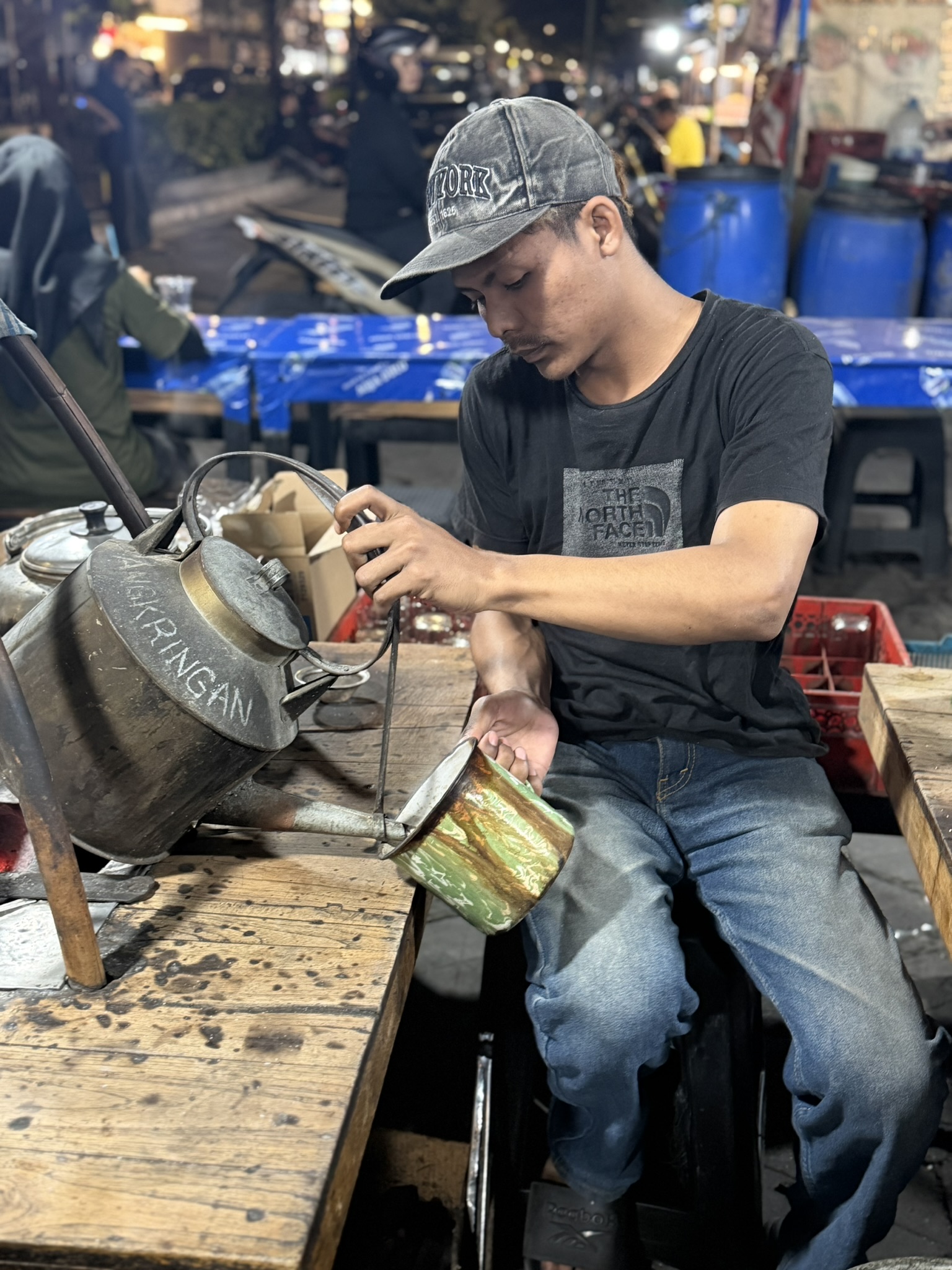
- Angkringan, a type of street food spot where you choose from lots of options. A street food safety tip: try to choose from the bottom of the pile and ask them to heat it up for you. And always clean your hands.
- Kopi Jus, translated as coffee juice, a social coffee specialty that involves dropping a hot coal into the coffee! It sizzles and then removes the acidity and caffeine before dropping to the bottom, and actually tasted pretty good.
- Bakpia, a lightly sweet dessert mini cake made from mungbeans, not my favorite but there were signs for it everywhere.
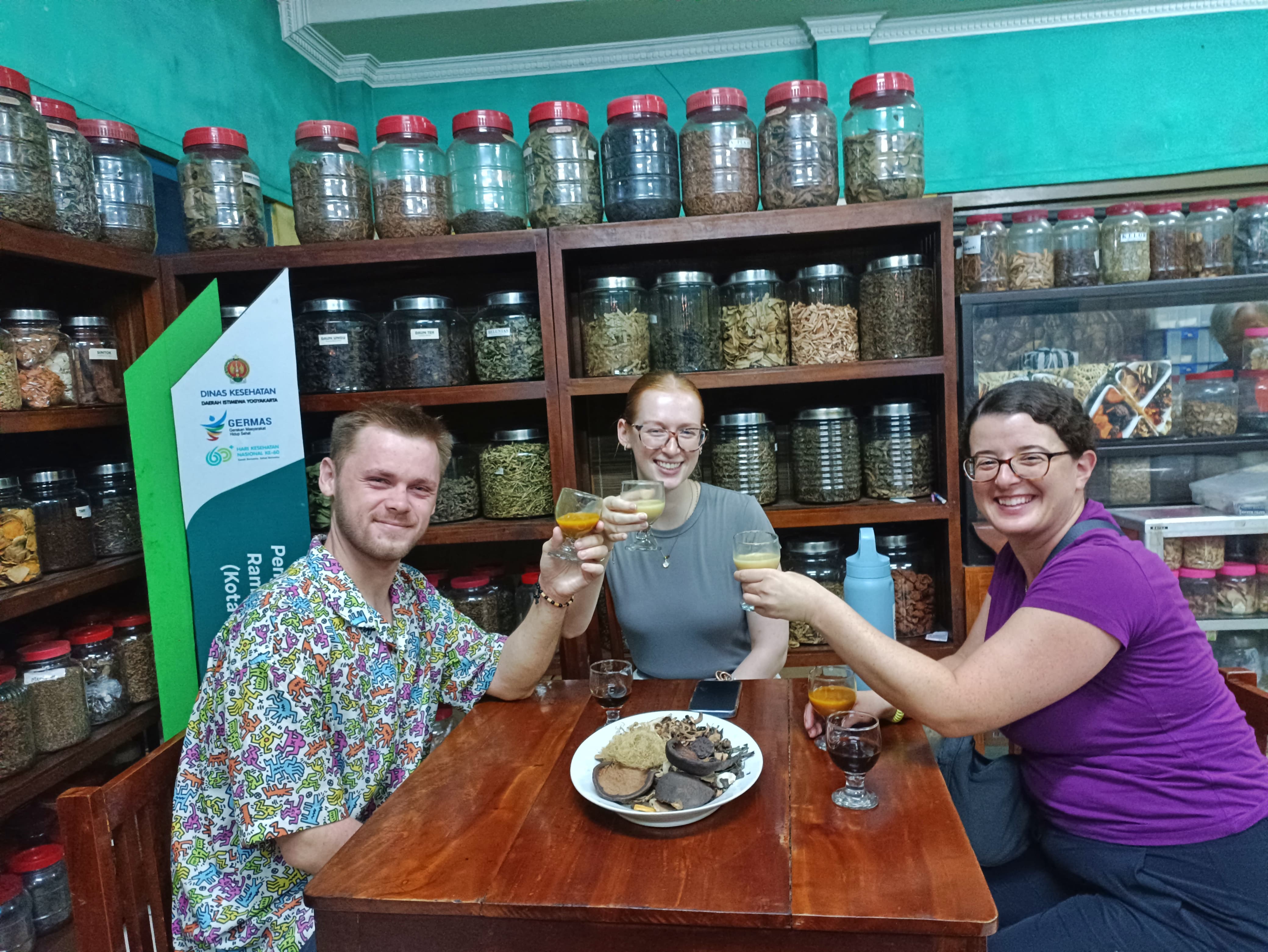
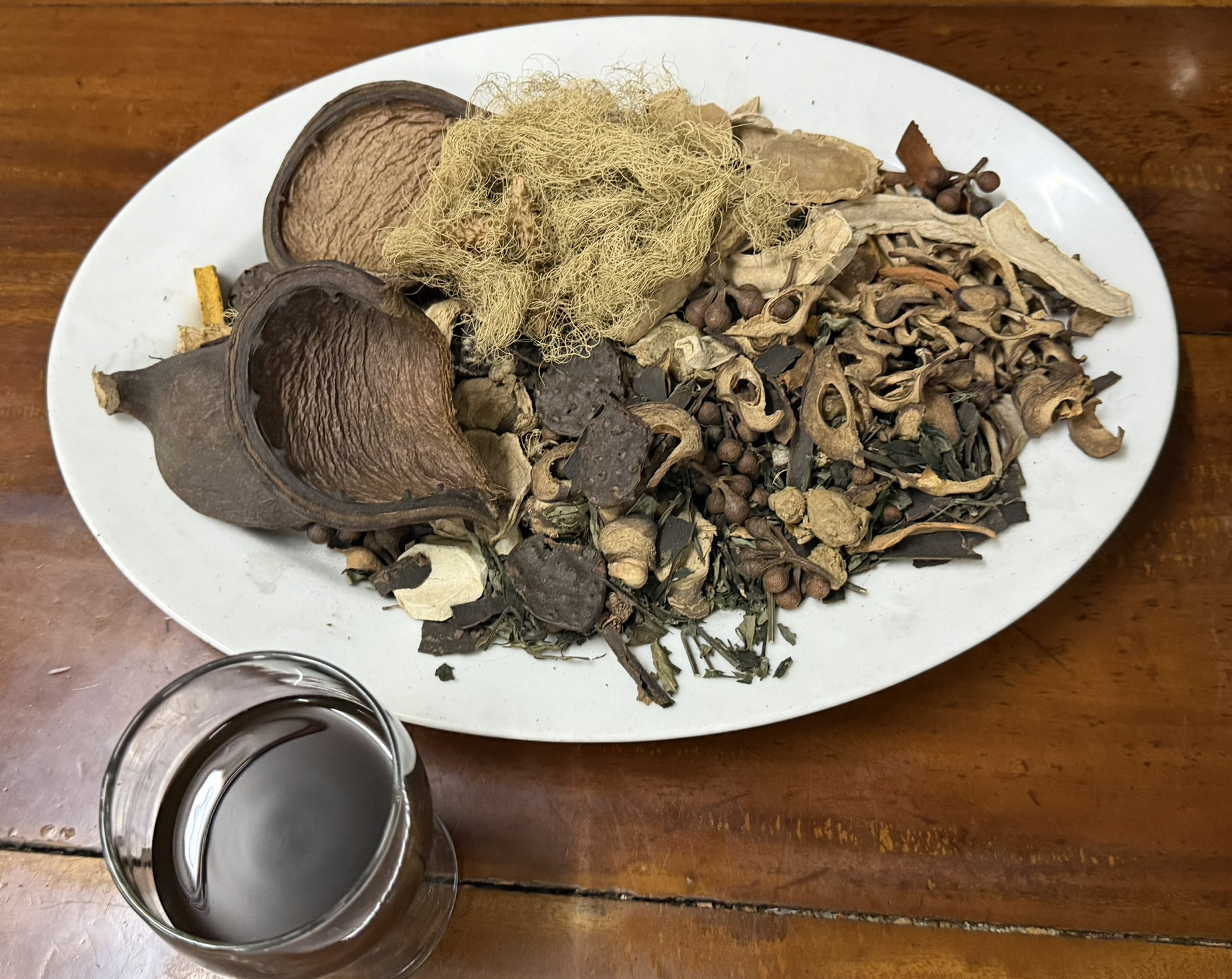
- Jamu, a type of medicinal beverage made from untranslatable roots and spices and things based on your ailments.
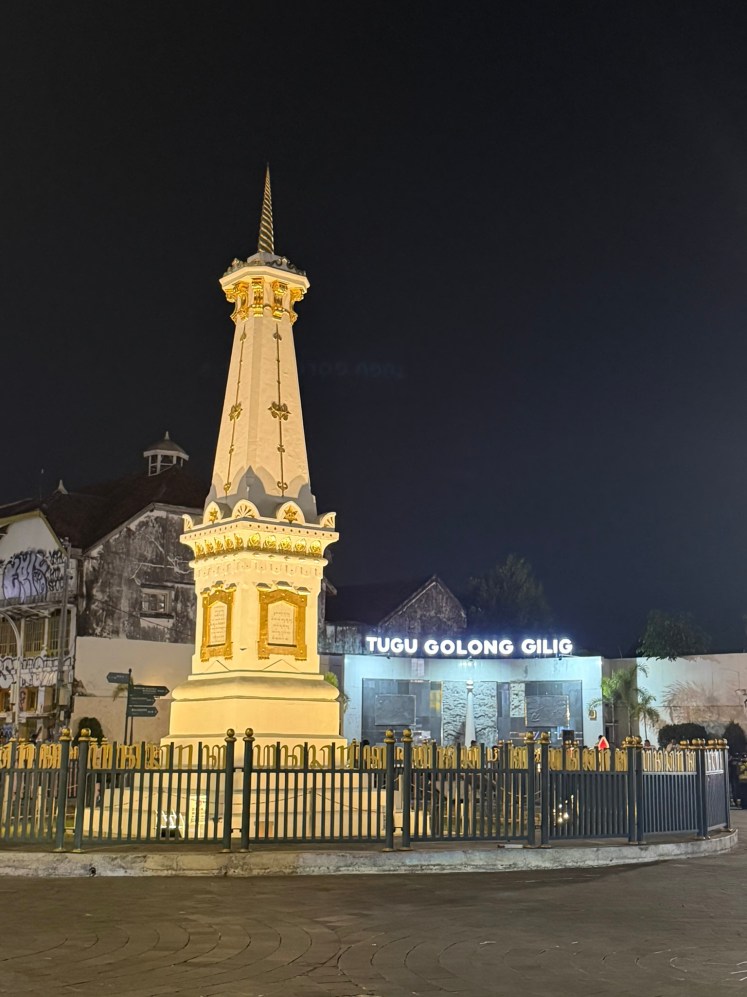
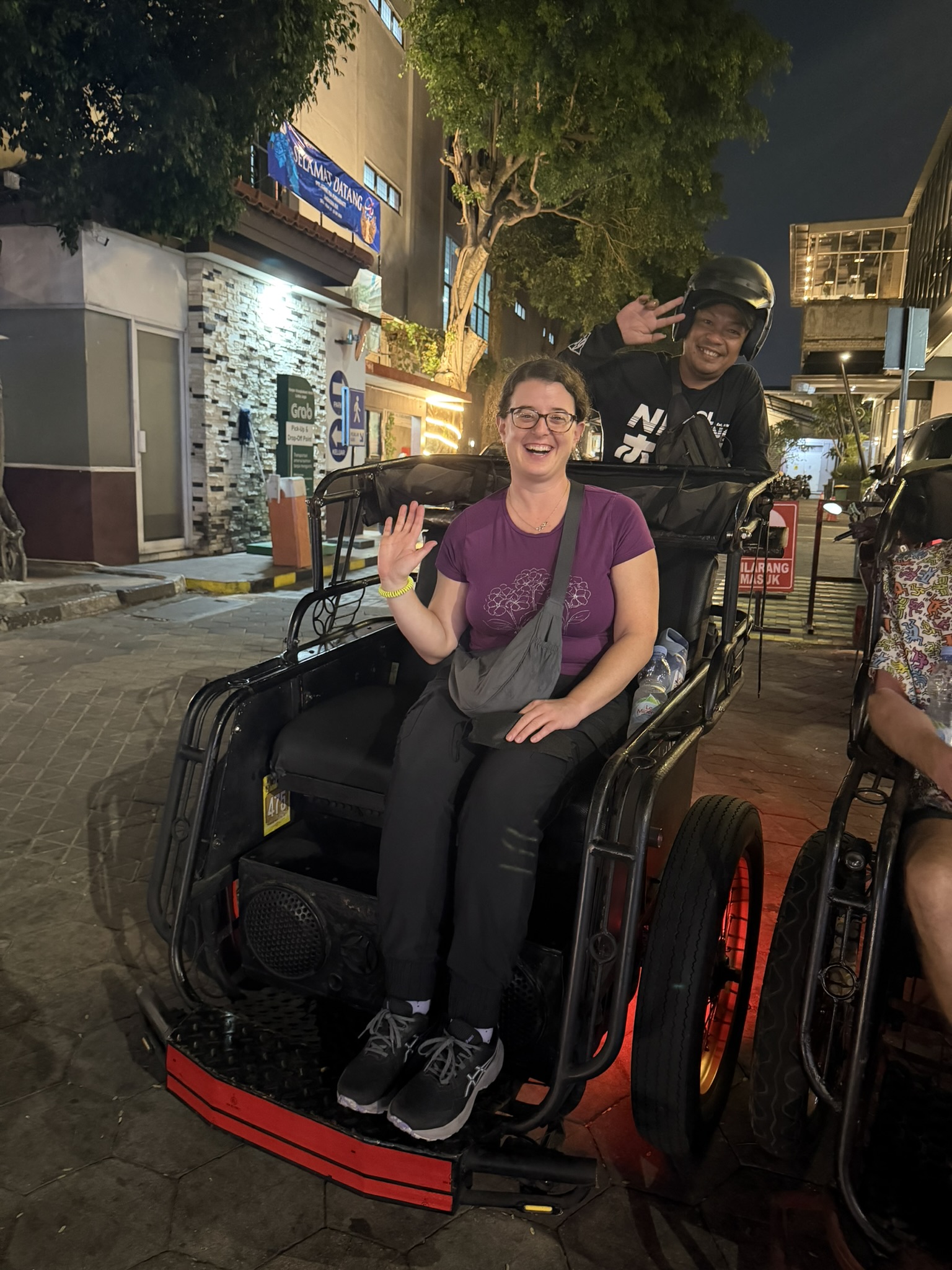
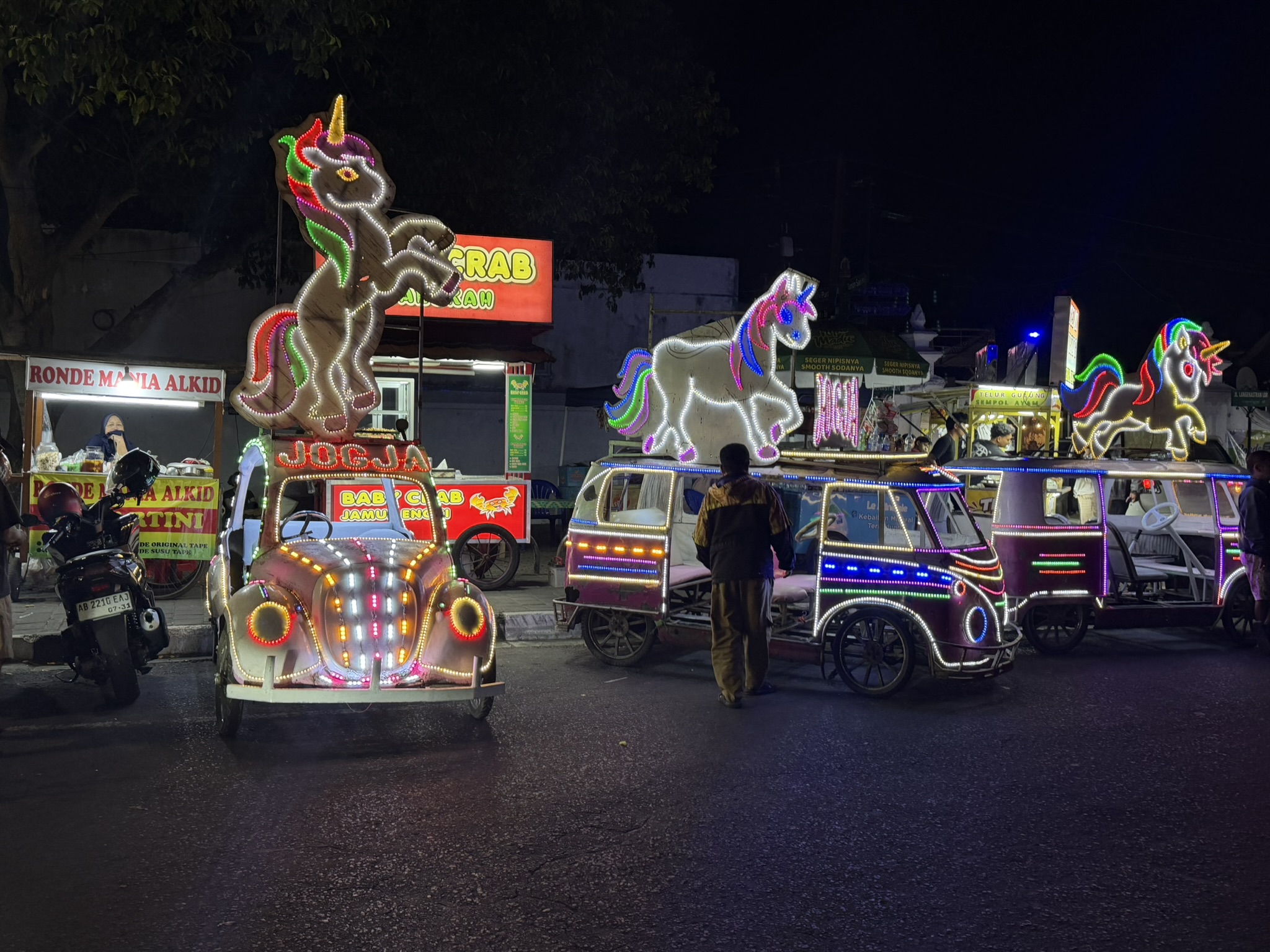
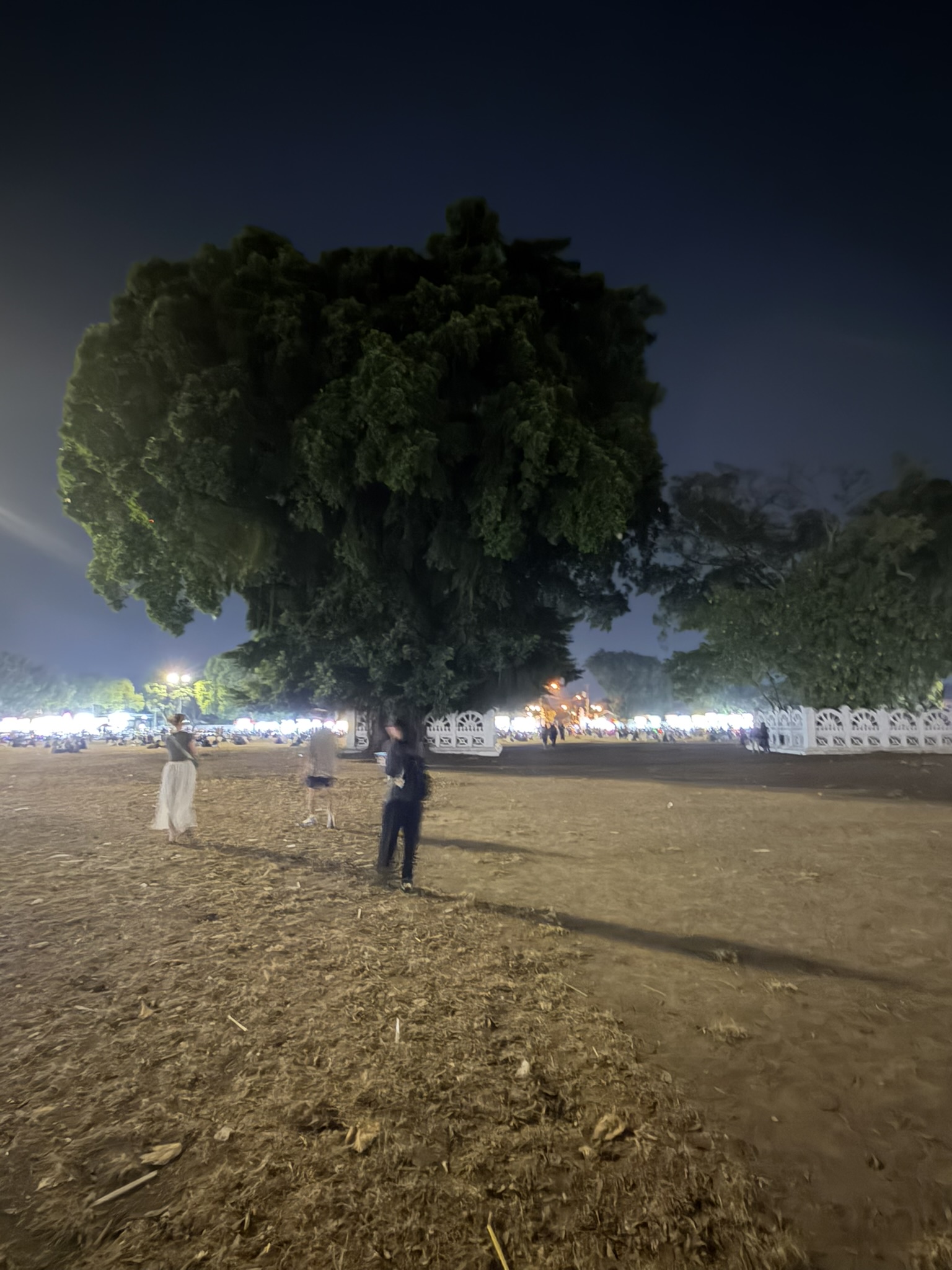
The food was good and the tour was really fun. We rode around on touristic e-tricycles with seats open to the front of the road, no seatbelts or safety required. We saw the popular Malioboro Street, a popular tourist strip, and ended in a square which becomes a hot spot of street food and hanging out at night. A local game there challenges people to walk blindfolded in a straight line between two large banyan trees in the square; those who succeed have a pure heart. We all tried and embarrassingly failed! Kalika said only about 15 percent of her tour guests are successful, which made us feel a little better.
Still, I remained a bit intimidated by the food in Java, with little familiarity to fall back on. Salads are nonexistent and veggies are risky due to the tap water they might be rinsed with, so being healthy feels difficult. Chicken is popular, which is helpful for me, but dishes advertised as vegetarian might be made with shrimp paste or beef skin. Sate, sticks of chicken, was an easy option, and I ate many chicken and rice dishes. I had hoped to be able to prepare a few of my own meals, but the grocery store did not sell produce or bread, leaving me confused and constantly seeking out a restaurant. I did take a recommendation for a fancy western-style restaurant one night, where I splurged on a pizza, salad, and glass of French wine, the only time I saw any wine in Java. The whole meal cost me $12. At least the prices were keeping me happy, with many street food meals costing $1-2.
Ulee and the scooter
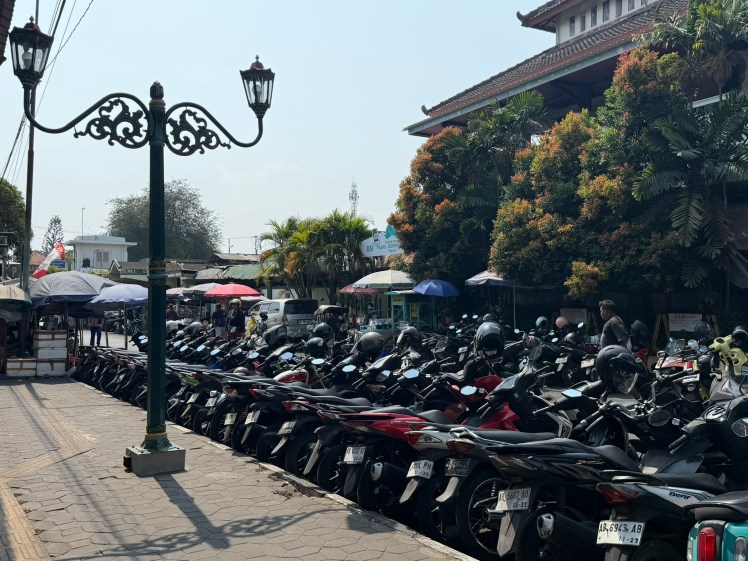
Indonesia is scooter city, and I was starting to come to terms with the idea that I would have to get on the back of one eventually on this trip. Grab cars were still available, and at an average of $1.50 a ride I took them everywhere. Still, scooters are cheaper and faster and are able to navigate the narrow alleyways that cars can’t access. While I don’t know that they will be my top choice for transit moving forward, I’m pleased to report that I conquered my fear and had my first scooter passenger experience. And it happened in the most bizarre, unsafe, local travel way possible.
I quickly learned that Jogja is not a city for taking a casual stroll. The sidewalks break often for food vendors and poor infrastructure, and you are usually walking in the road alongside the speeding scooters and wacky traffic patterns that don’t observe lane lines, while you try to remember that vehicles drive on the left side here. Meanwhile, men constantly try to offer you transportation on their tourist-tricycles or tuk-tuks. And did I mention it is always 90 degrees?
I started to learn this on my first full day, as I walked toward one of the temples close to my hostel. As I walked down a quiet street, the road seemed to dead end with a large gate, and I prepared to turn around. A young woman on a scooter who had just passed me was sitting around, and stopped me to ask where I was going. “The temple,” I shared. “Oh, you can’t go now, it’s closed for another hour because it’s Friday, a holy day, and people are praying inside. I’m here waiting for my father to pick him up.”
I thanked her for the info and was getting ready to re-route myself, when she started the typical “where are you from?” conversation and expressed excitement over the ability to practice her English with me. Her name was Ulee, and she shared some info about the town and things to do. She told me about a place that teaches people about batik art where they speak English, and I said “sure, that sounds good, maybe I’ll go there.” And then she offered to take me there: “hop on I’ll drive you!” Ok, now my solo travel safety goggles come back on. But with seconds to make a decision, I find myself agreeing to go with her.
I paused enough to tell her I’d never been on a scooter before, and she’d have to tell me what to do and drive slowly. She found this funny but helped me figure it out, showing me where to put my feet and how to hold on to the back with one hand. I told her if she was a man I wouldn’t have gone with her. She told me I looked really open and friendly.
And then we were off, starting slowly on empty streets, and soon merging into traffic. There were no helmets but I didn’t think about this until a few blocks in. It was kind of fun, rushing by in the open air.
We arrived at the art place (phew!), and it seemed like a typical tourist kind of studio where you learn about the process of making the local art called batik and then they try to sell you some. I bought a small piece after negotiating down; it folds up like a piece of cloth and you can frame it at home. Ulee waited for me patiently, and then I had her drop me off at a nearby museum. I asked if she would take a selfie with me as I disembarked, but she smiled and said no, and then just as quickly as she arrived she was gone.
The cultural heart of Java
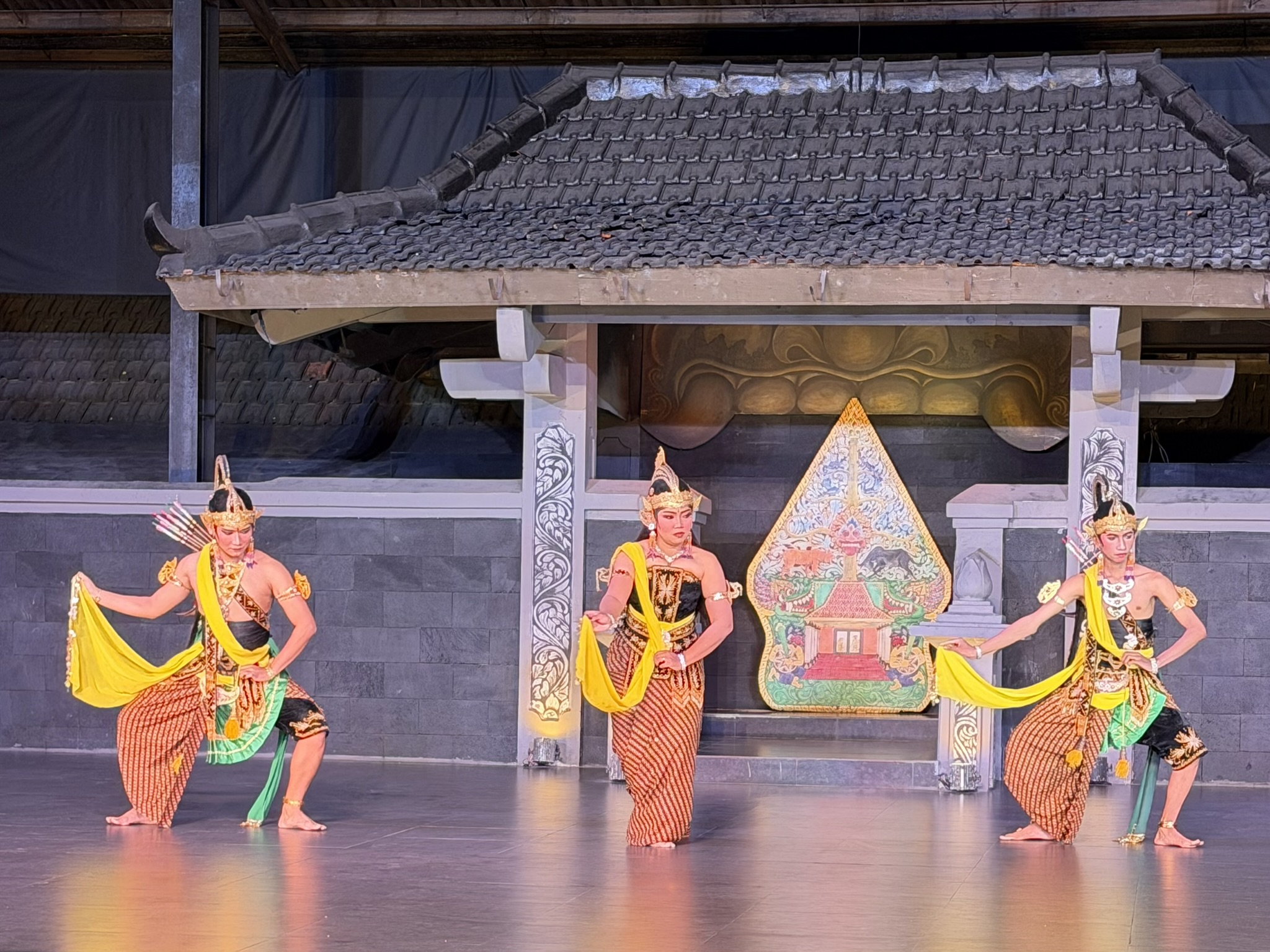
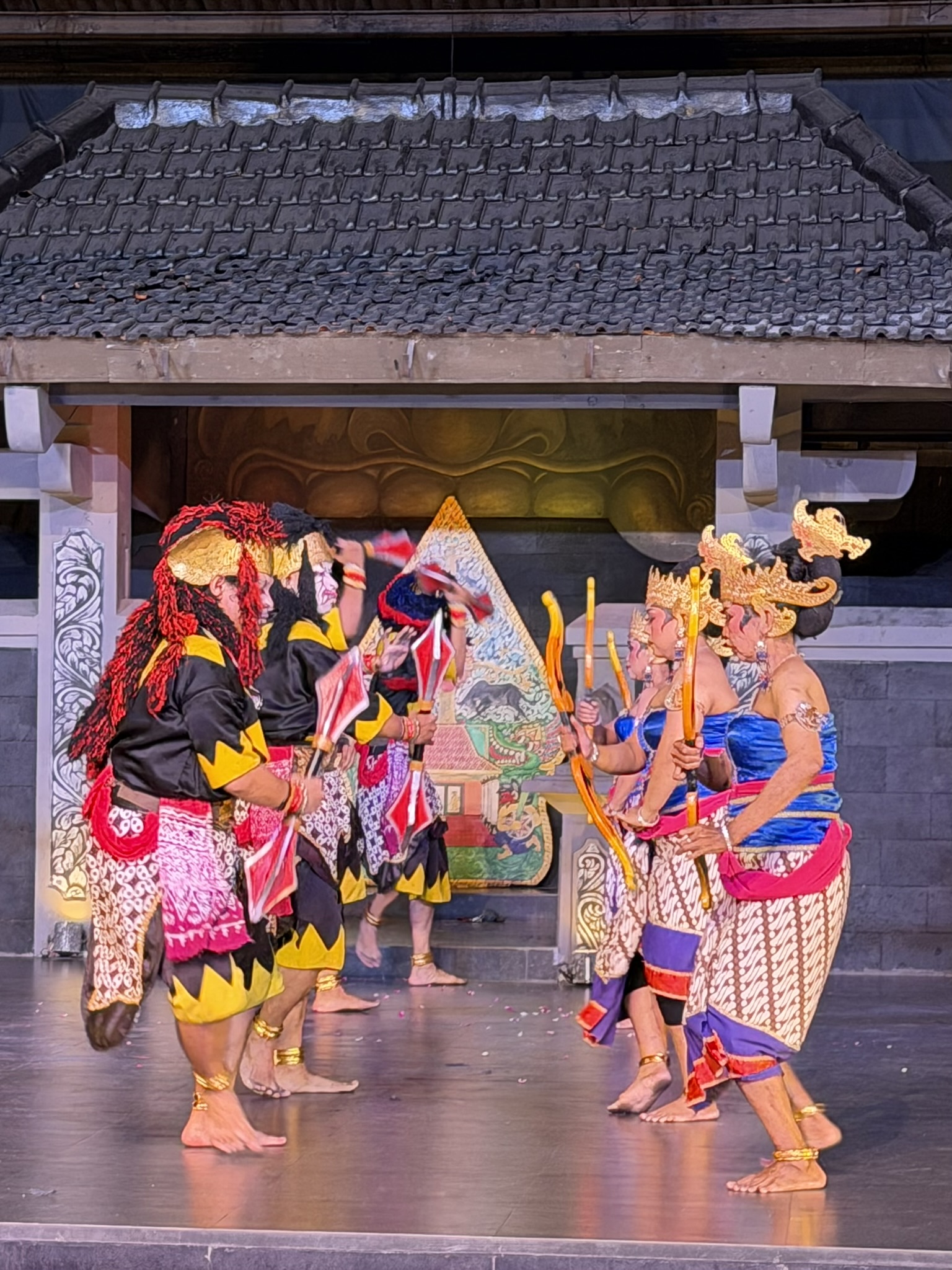
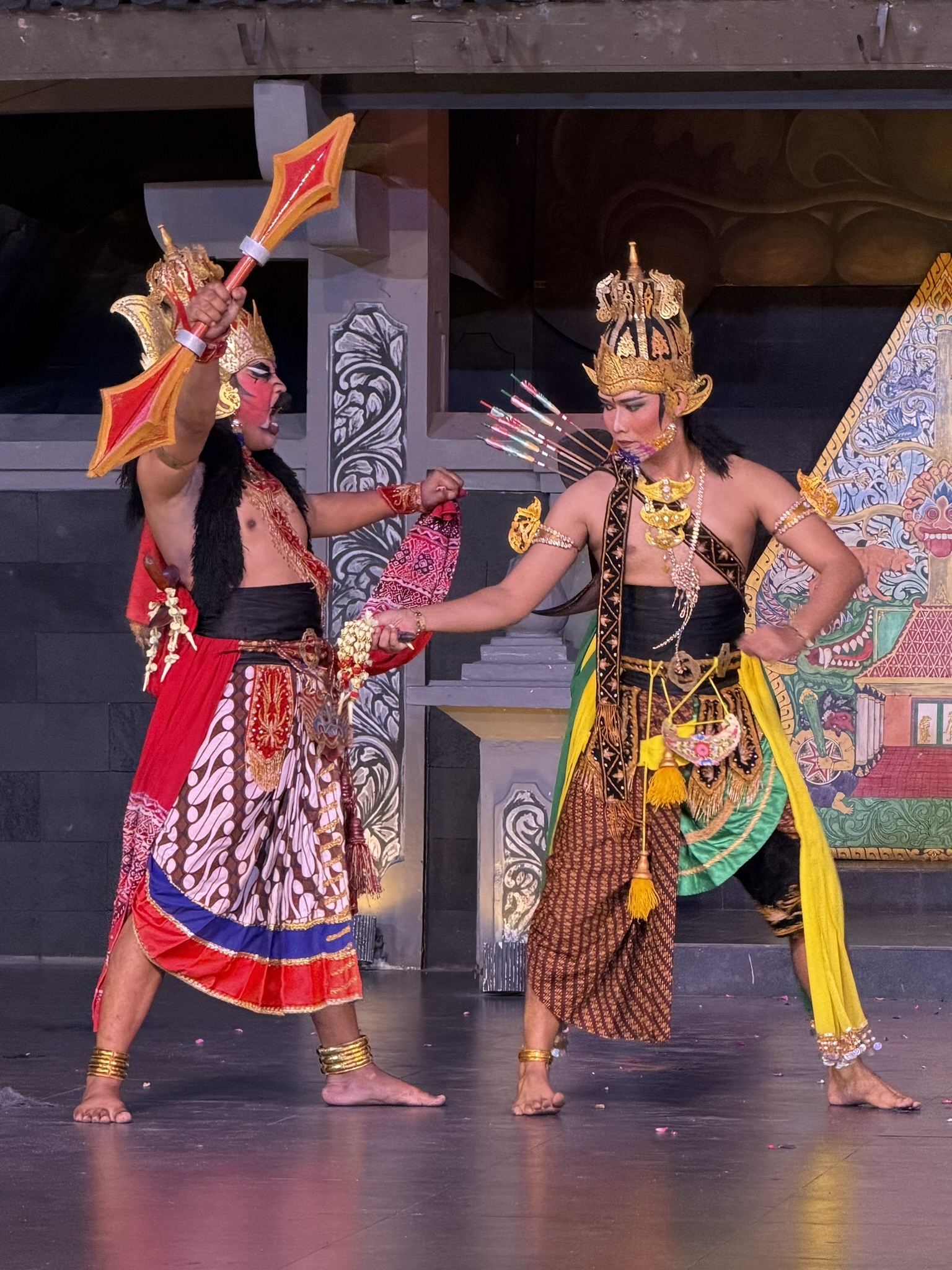
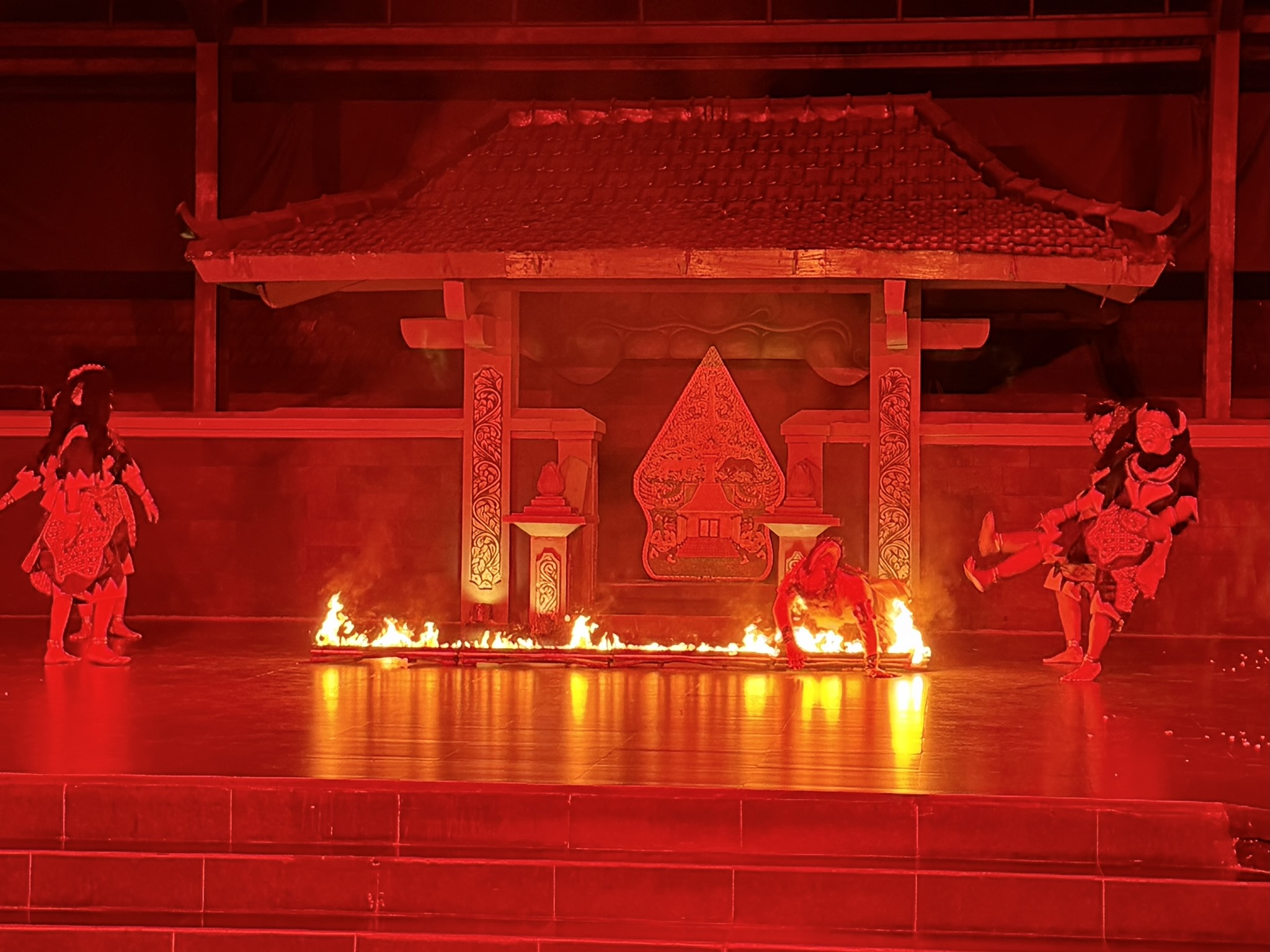
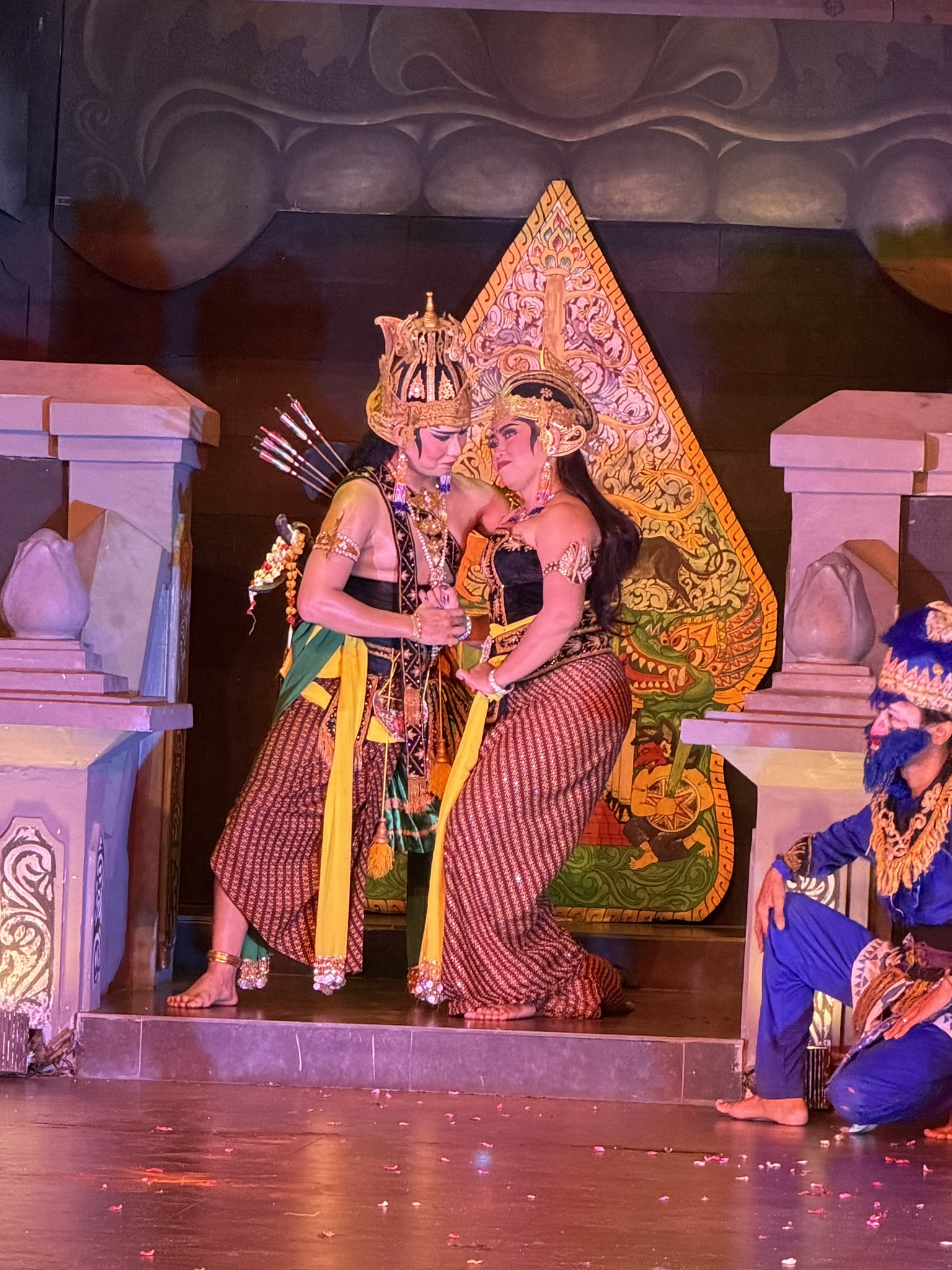
Once I came to terms with the food and the transportation, I was ready to lean into the cultural experiences. First up, an evening at the Ramayana Ballet, preceded by a nice buffet dinner alongside all the tourist groups. The dance company has been performing this piece for 50 years, and it tells a well-known tale that came from India and China but became its own local adaptation: A prince and his princess are happily in love, but one day the demon king kidnaps the princess. The prince employs his monkey friends to help rescue her, culminating in a war. The prince is victorious and the pair are reunited, but he doesn’t trust that she did not cheat on him with the demon king, so she agrees to participate in a trial by fire. She successfully completes the trial and everyone is happy in the end. Except for all the dead characters.
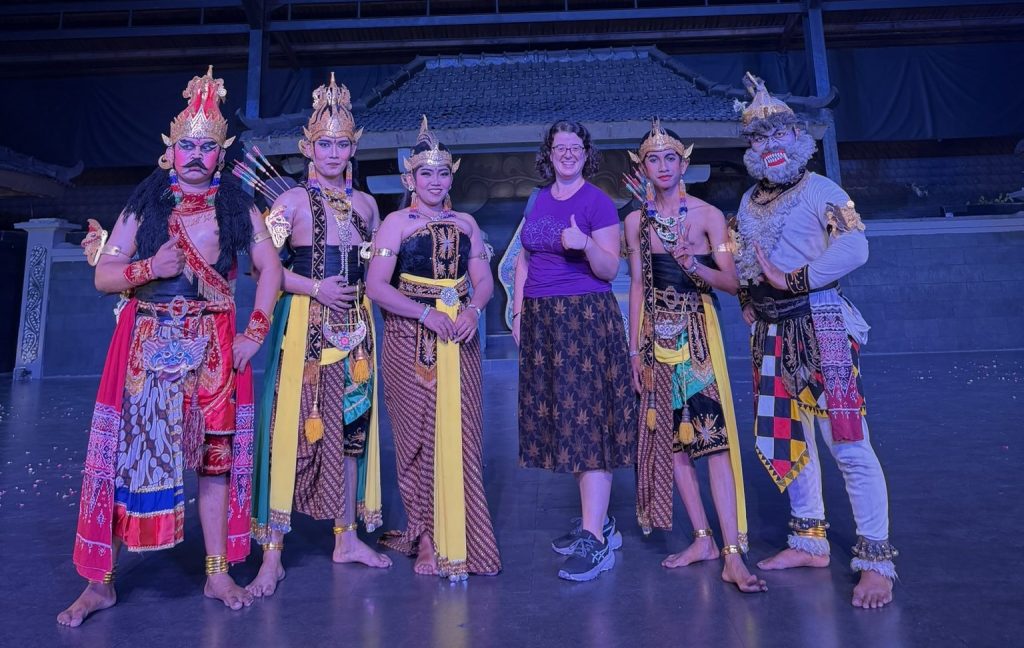
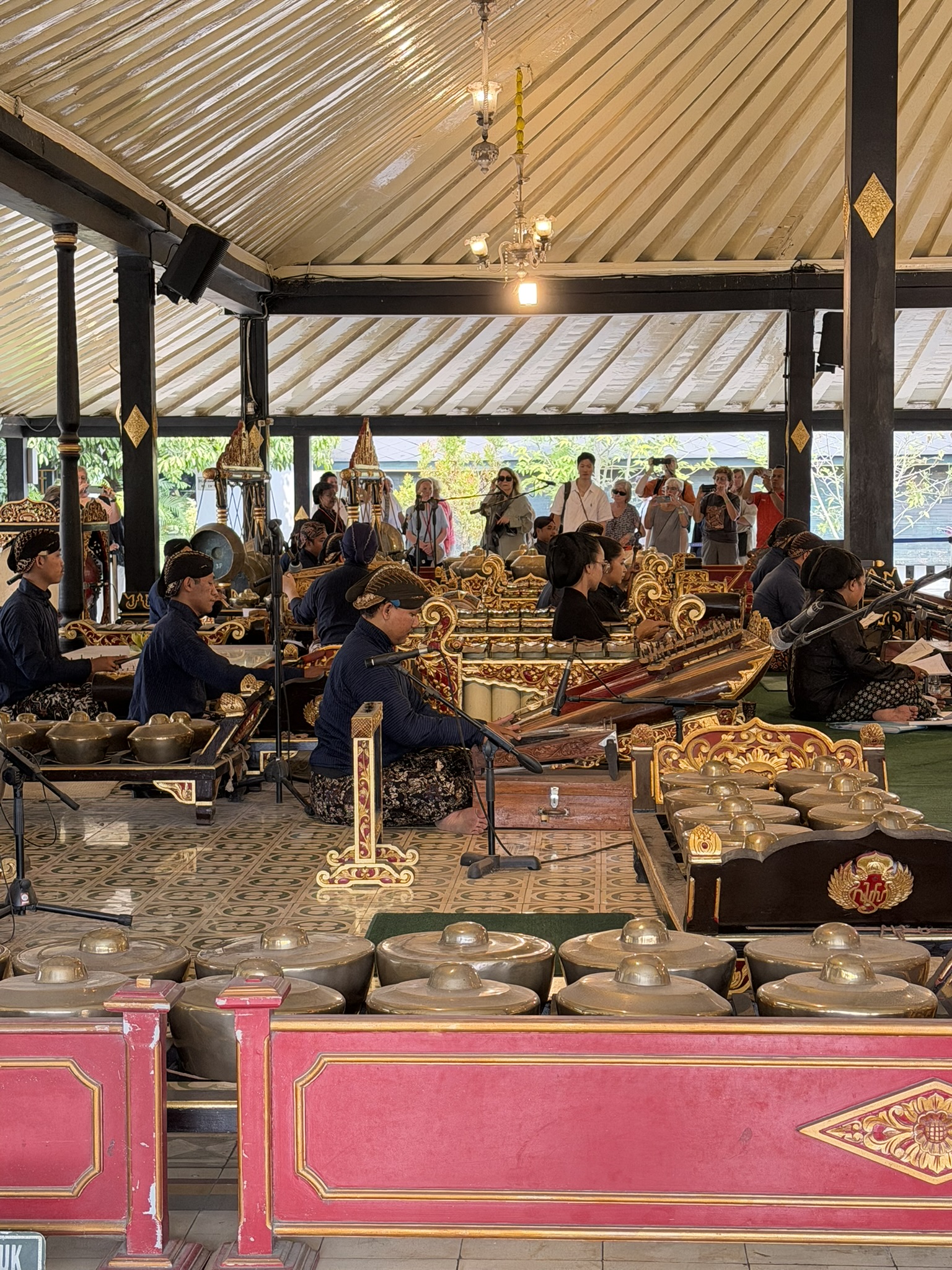
The movement is a unique form of dance that I had never seen before, full of sharp tai chi-like hand movements by the men and smooth plies by the women, using their ornate costume pieces as prop choreography. They are backed by local music called gamelan, which sounds like a meditative chorus of xylophones. The show includes live fire, and monkey characters who seamlessly climb up the sets. It was all so mesmerizing. At the end the audience was welcomed on stage for photos with the cast. Walking back to the hostel, I reflected on how art revives me and brings me so much joy.
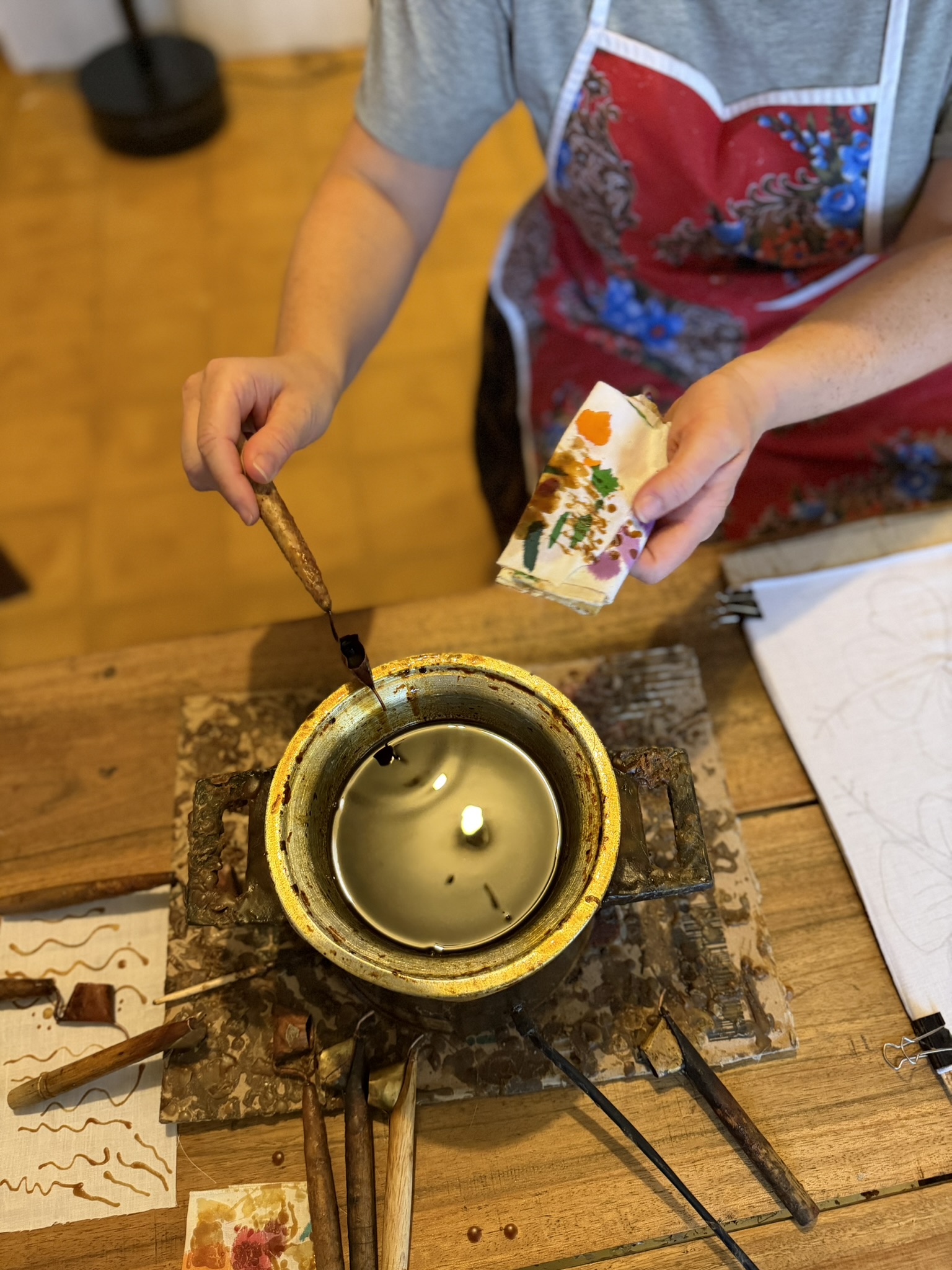
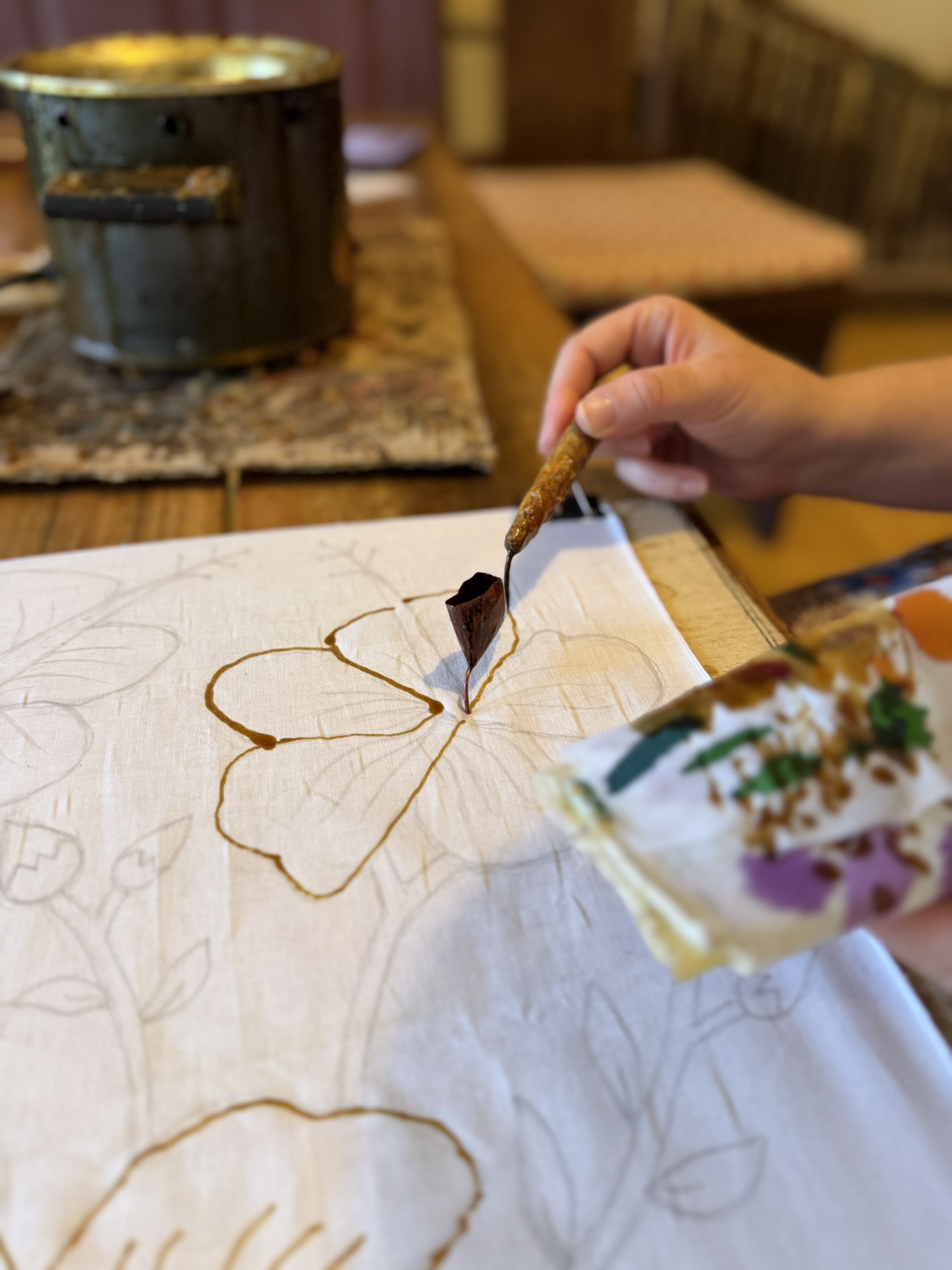
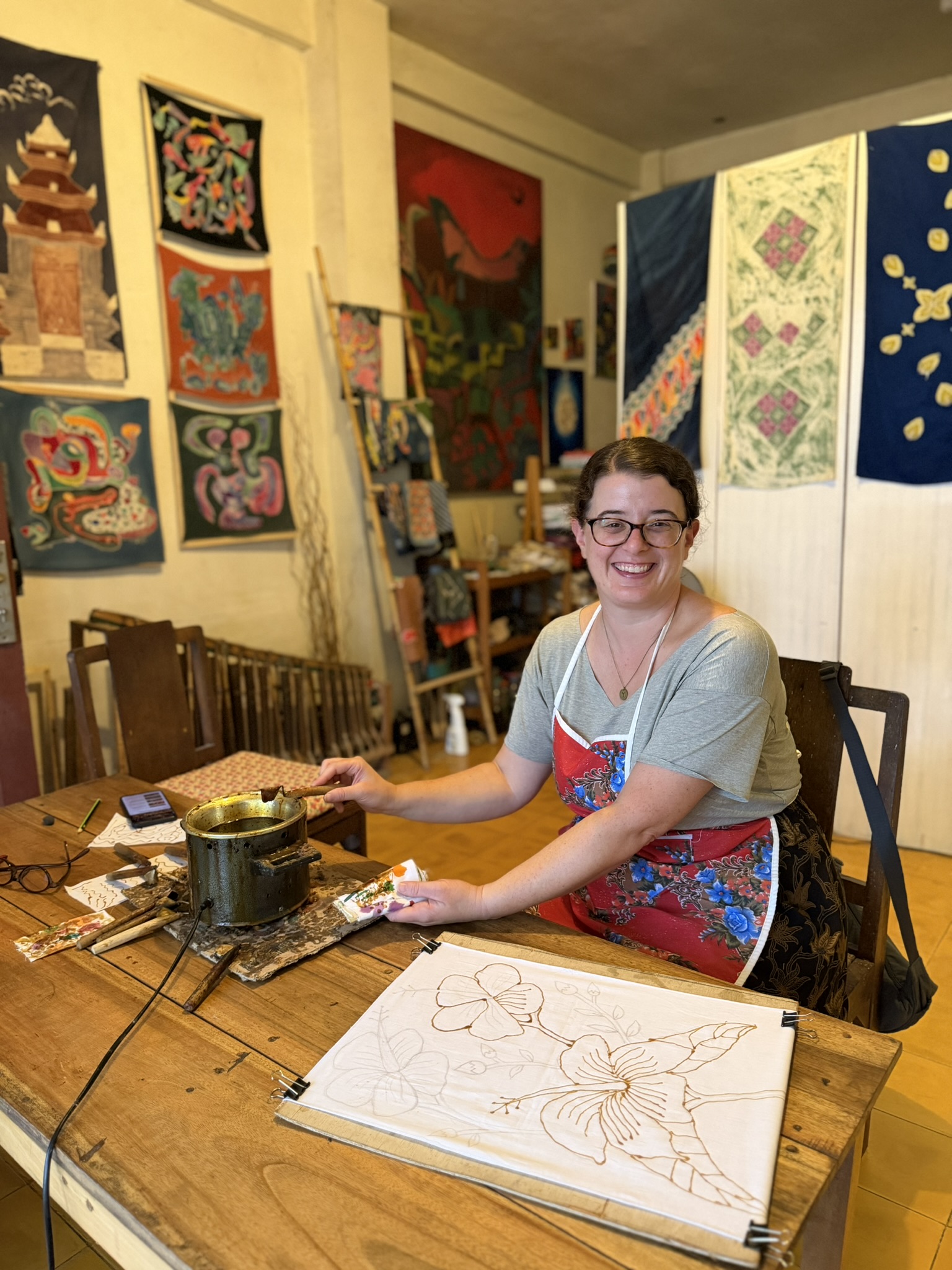
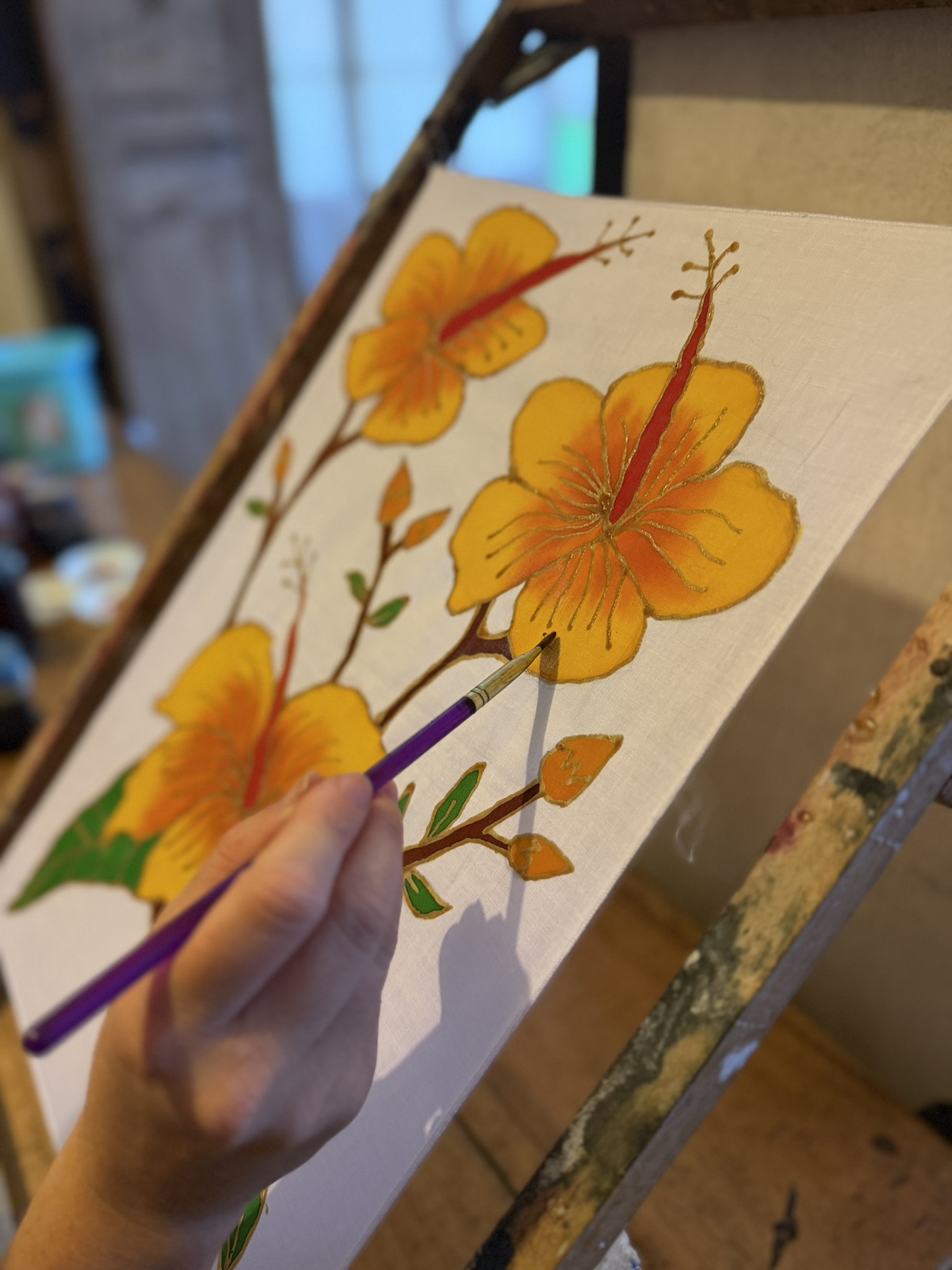
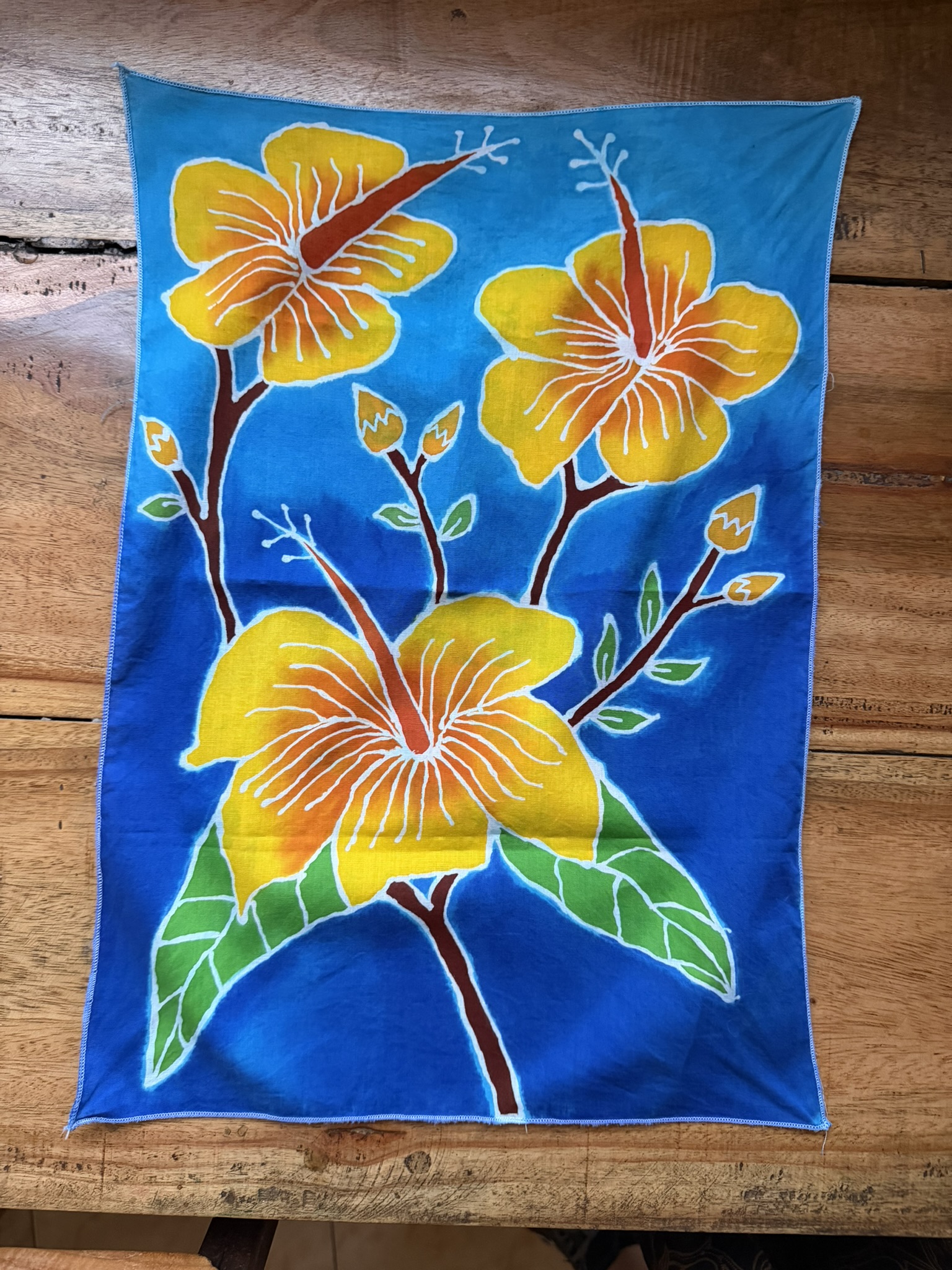
I kept leaning into art by spending a day at a batik making workshop. Batik is a popular Javanese art form that is made on cloth that can be framed like art or made into clothing, often in a meaningful pattern or used for traditional ceremonies. The process involves drawing the piece and covering the lines in hot wax, which quickly dries. Then the painting is done with watercolors, which easily stays in the lines of the wax. There’s an extensive drying process in the sun, and then the whole piece is dipped in boiling water to remove the wax, leaving the color of the canvas behind, often white. It can take many hours to make one small piece.
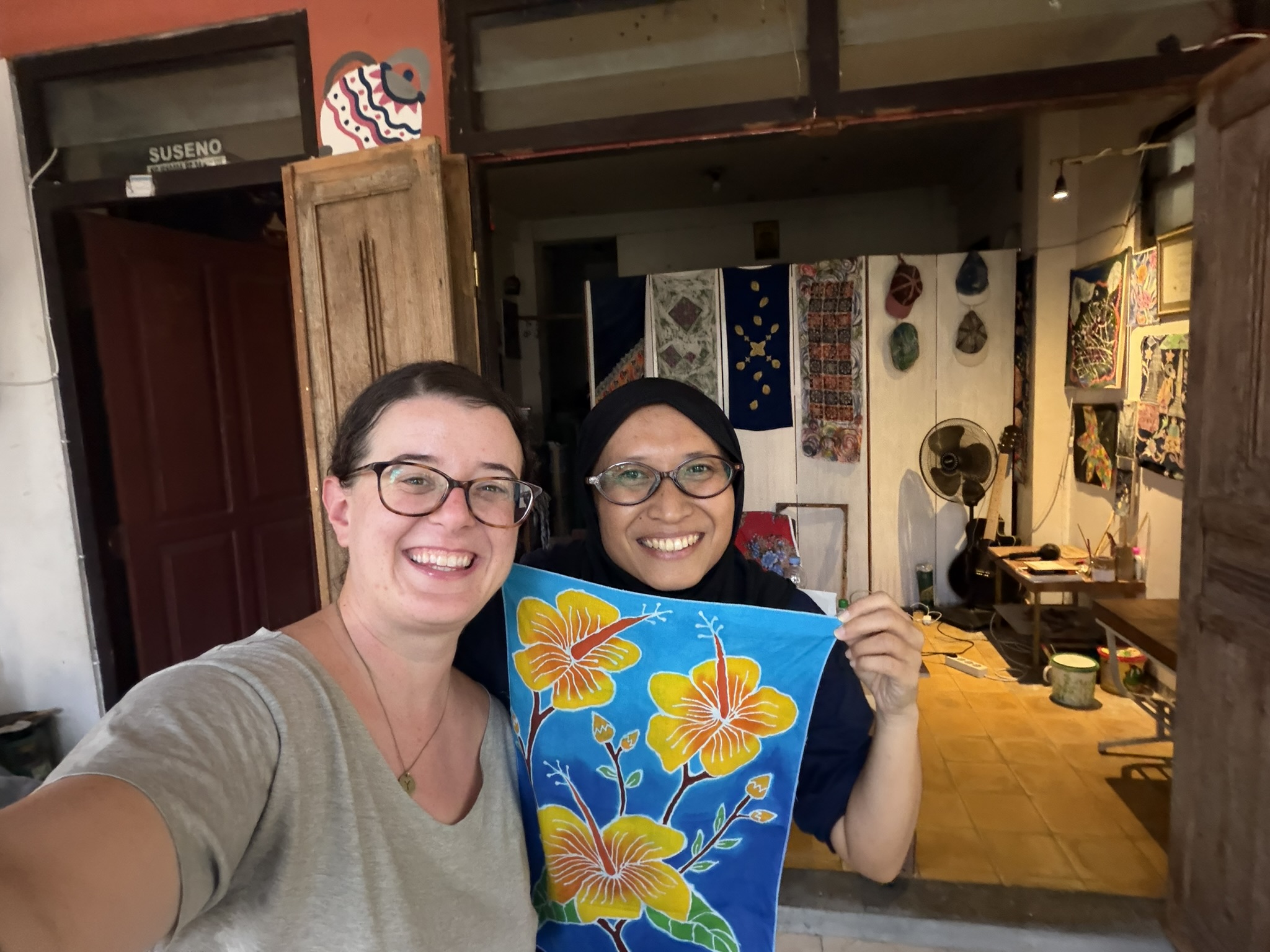
I had a private lesson with a woman about my age named Nunu, located in her home studio in an historic neighborhood called Kotagede. Aside from being a great and patient teacher, we had a lovely time chatting about art, politics, and global wealth inequality. As the conversation unfolded I was aware that it was a bit radicalizing, as I learned what American wealth means to people who cannot access savings or the ability to travel, like the majority of Indonesians including Nunu. I tried to tell her things like how a $45k a year salary in large American cities is not enough to live off comfortably, but I kept sort of stumbling into how much money that is to Indonesians. Nunu told me I could live like a queen in Java. It left me feeling grossly privileged and unsure what to do with those thoughts, so I just stewed in them for a few days.
While my batik dried, I walked around town with Nunu’s elderly father, who enjoys showing people his hometown and highlights like a 400 year old temple complex and local architecture with a sort of horned roof. I learned that most traditional homes have a second covered structure designed for socializing. Seno seemed to know all the locals, many waving at him as we walked the narrow alleyways. He even wrote a little booklet in English about the area and the tenets of Islam that he gave me.
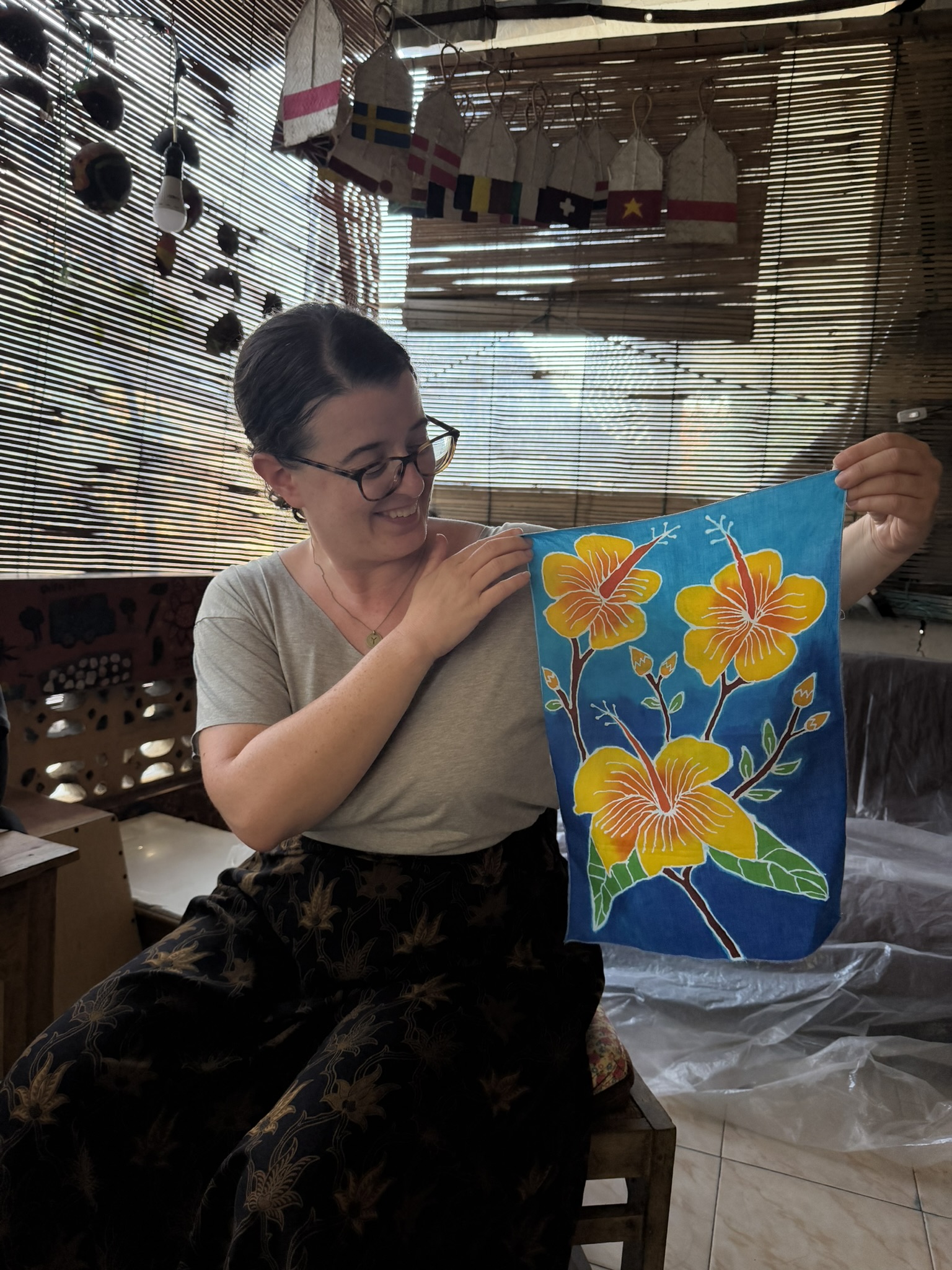
When we returned home, Nunu led a big reveal, and I loved my final batik! It looked amazing, yellow and orange flowers on a blue background. I was so happy; it was such a wonderful day of art and focus and connection, and I left feeling reenergized about my time in Jogja.
Palaces and temples
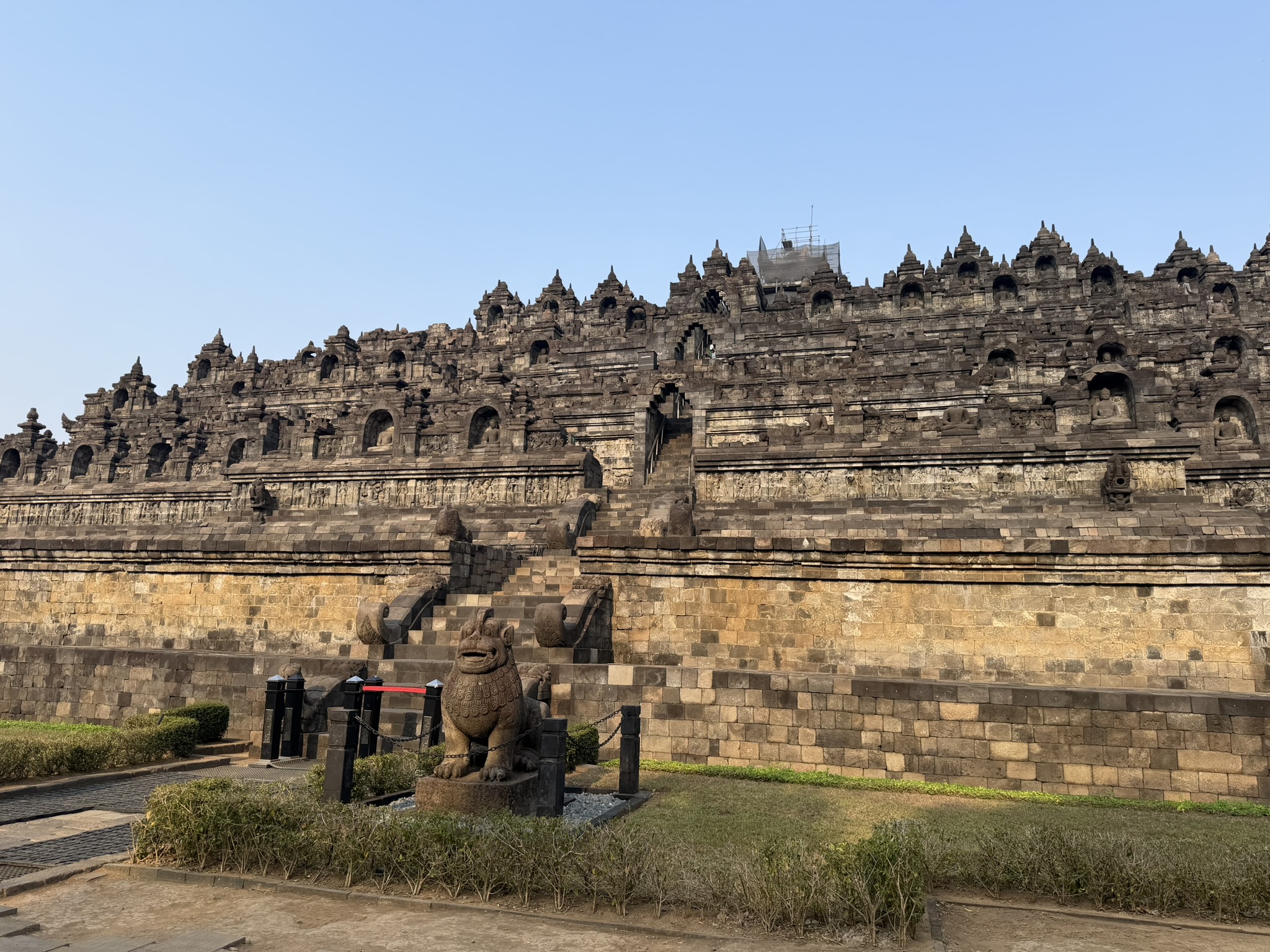
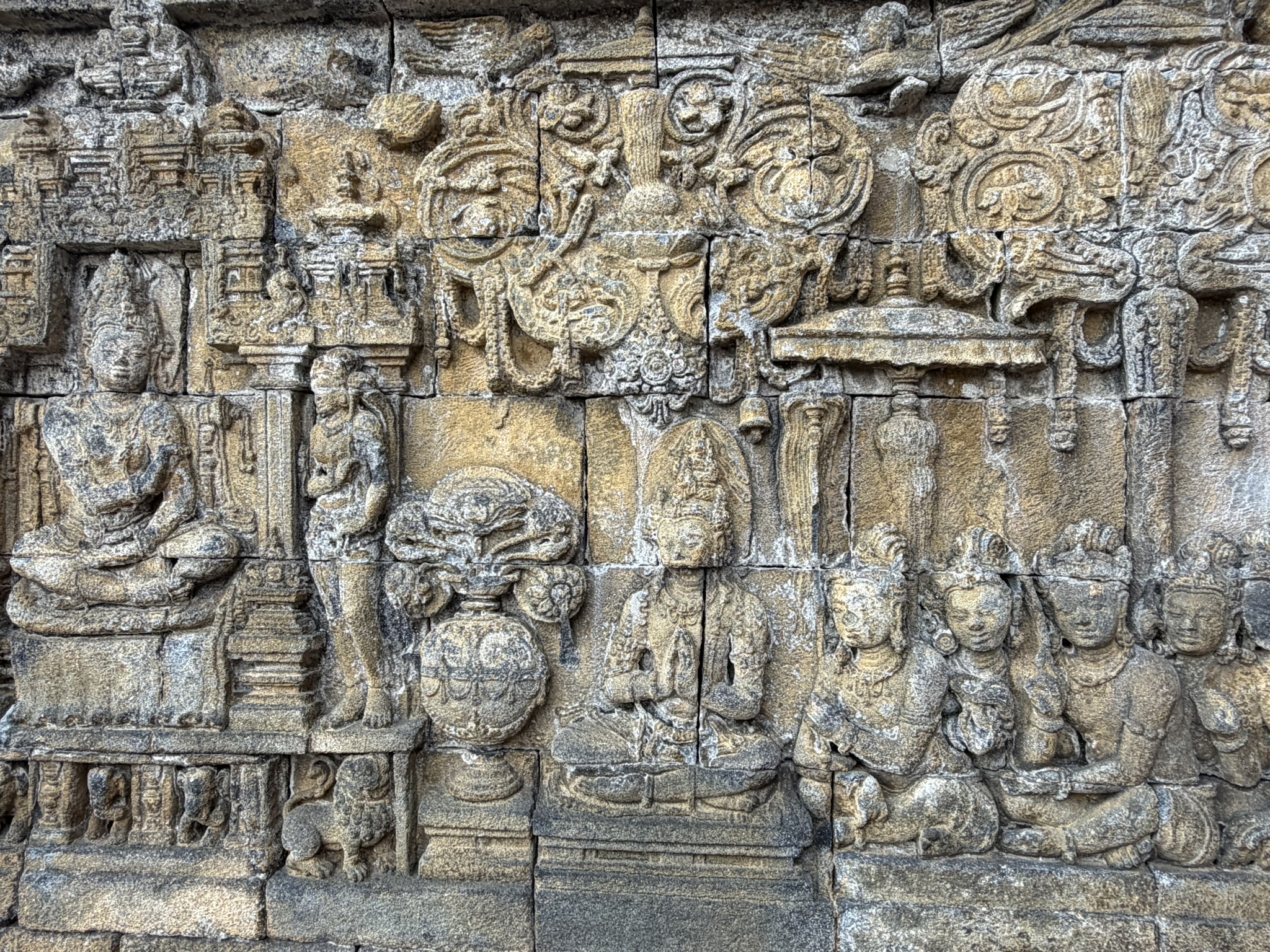
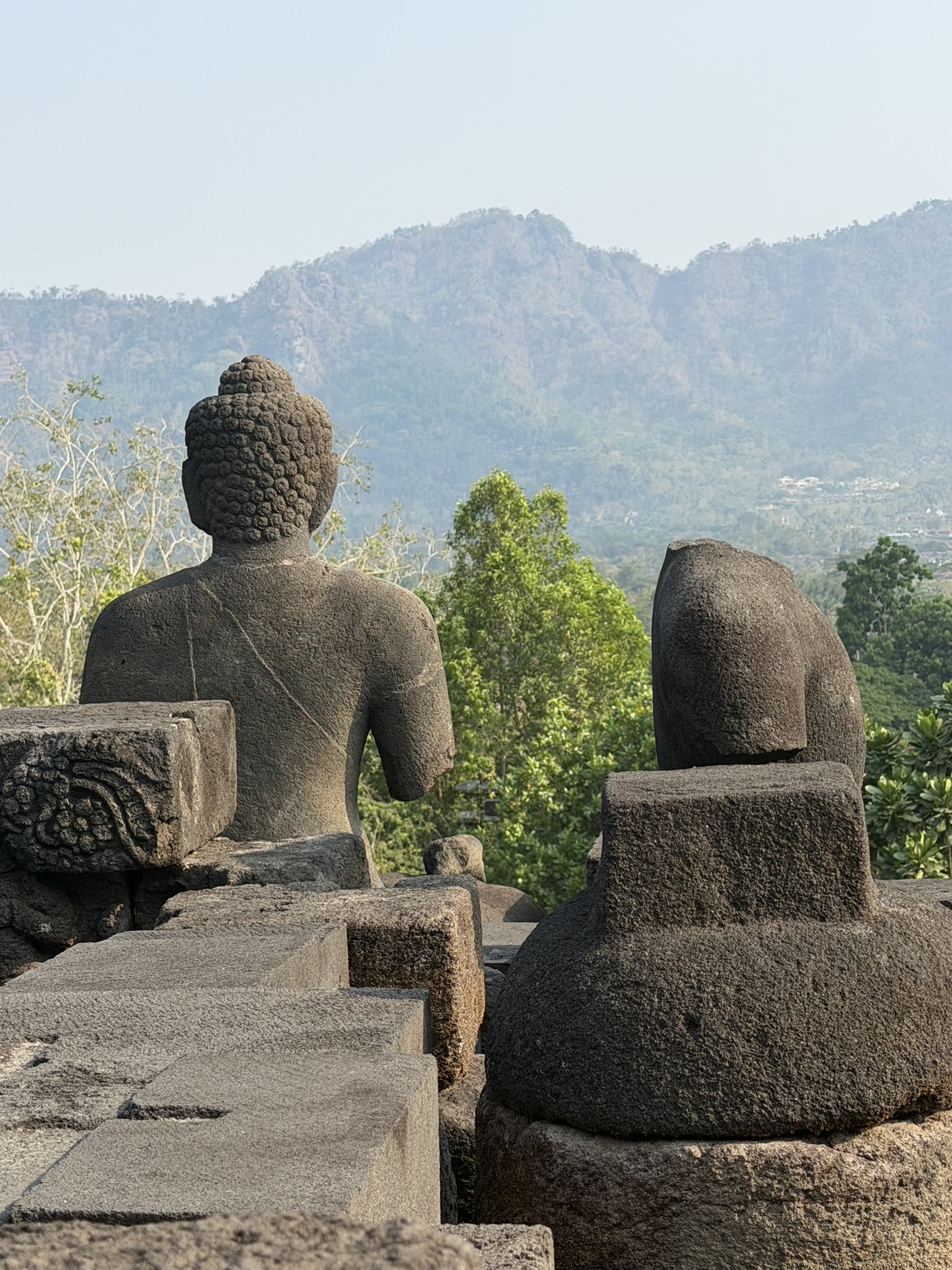
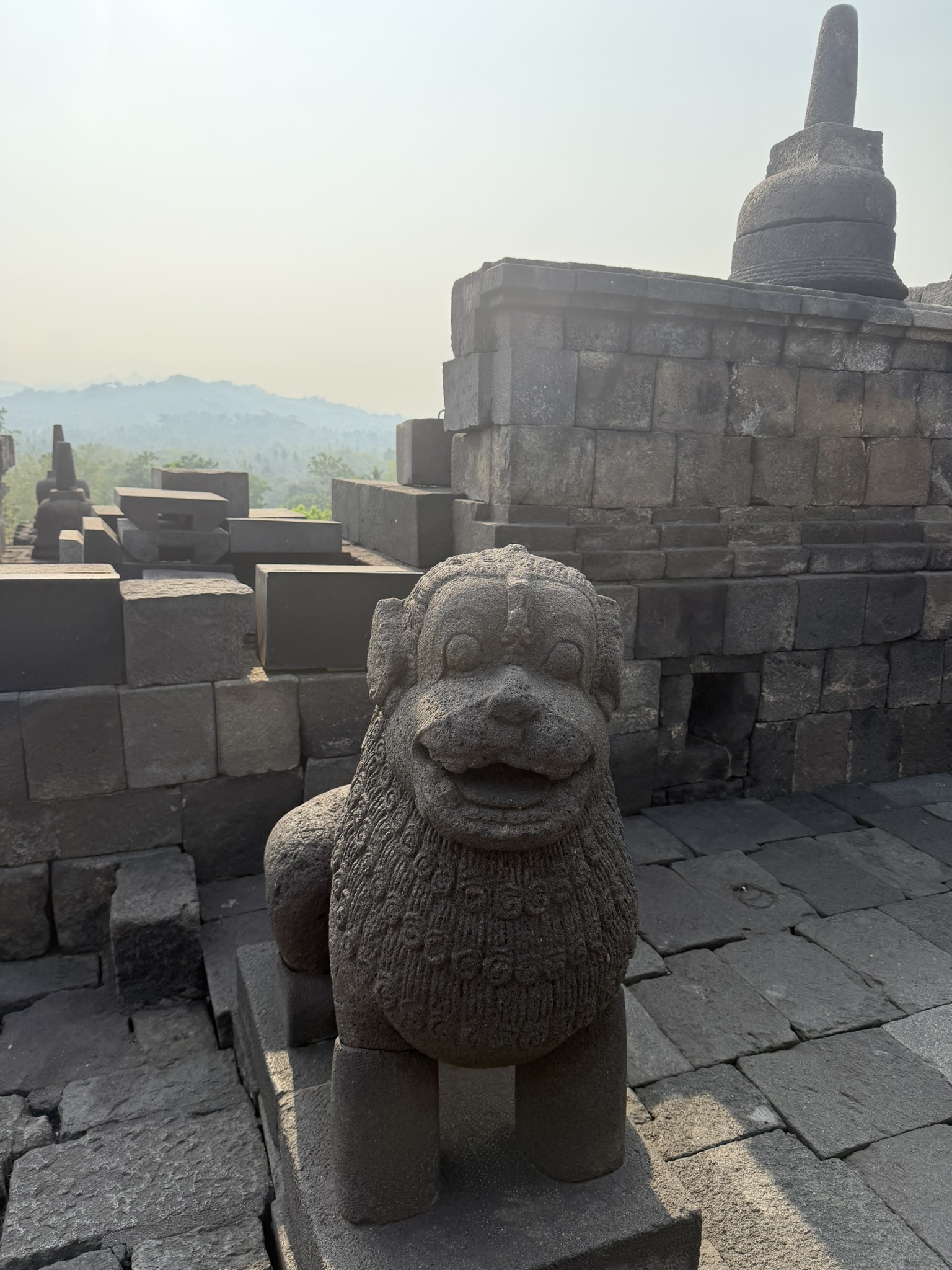
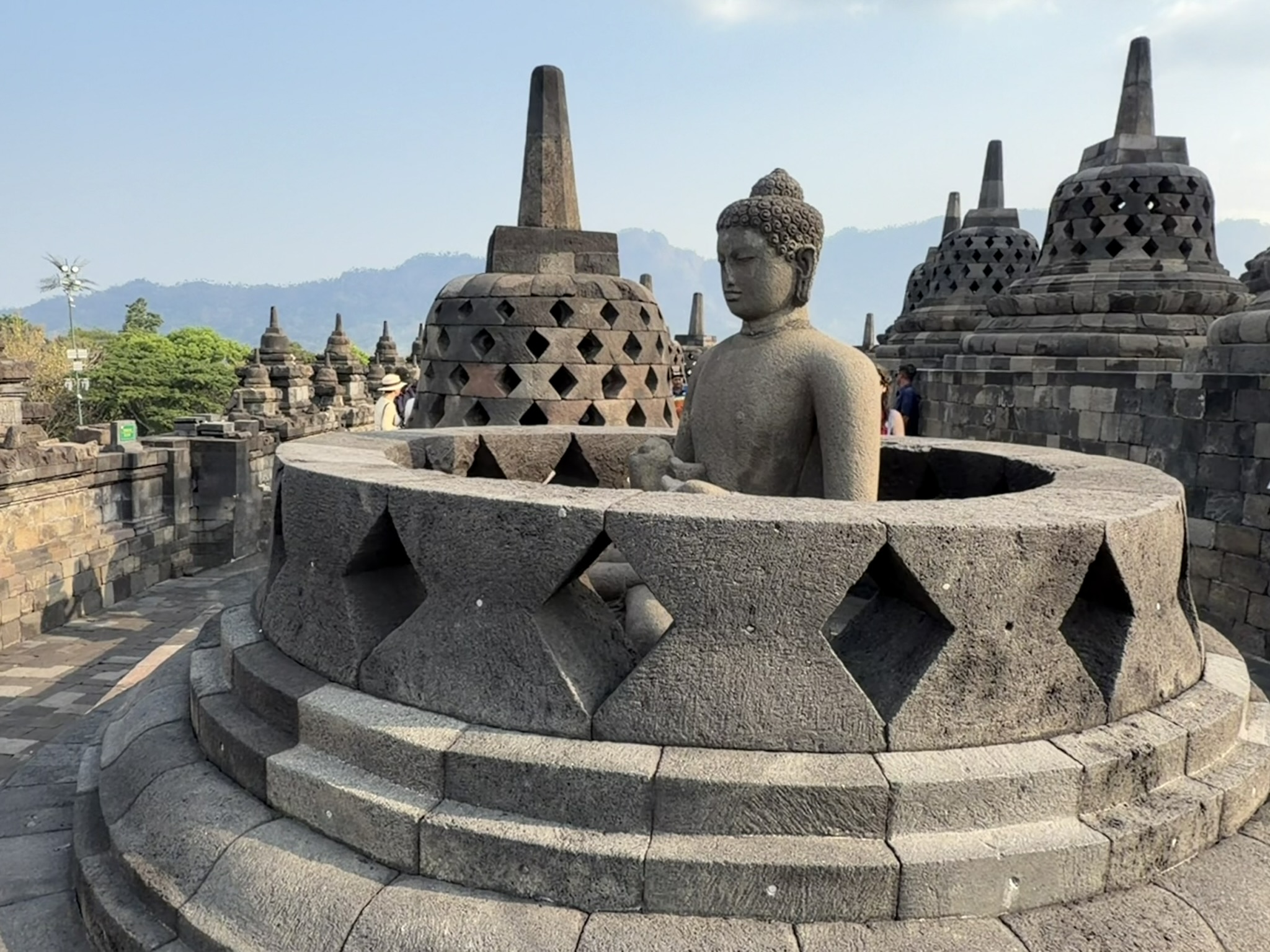
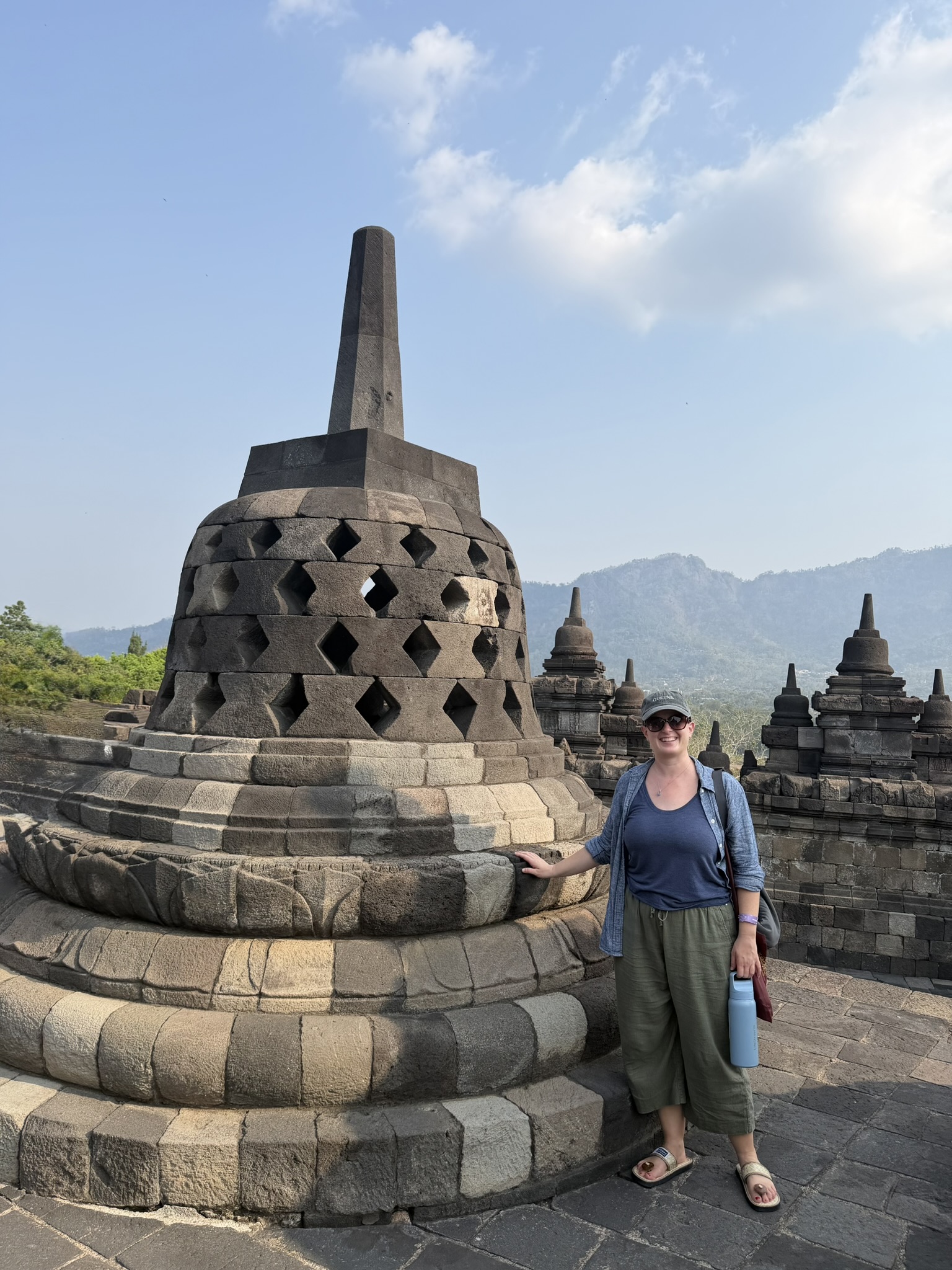
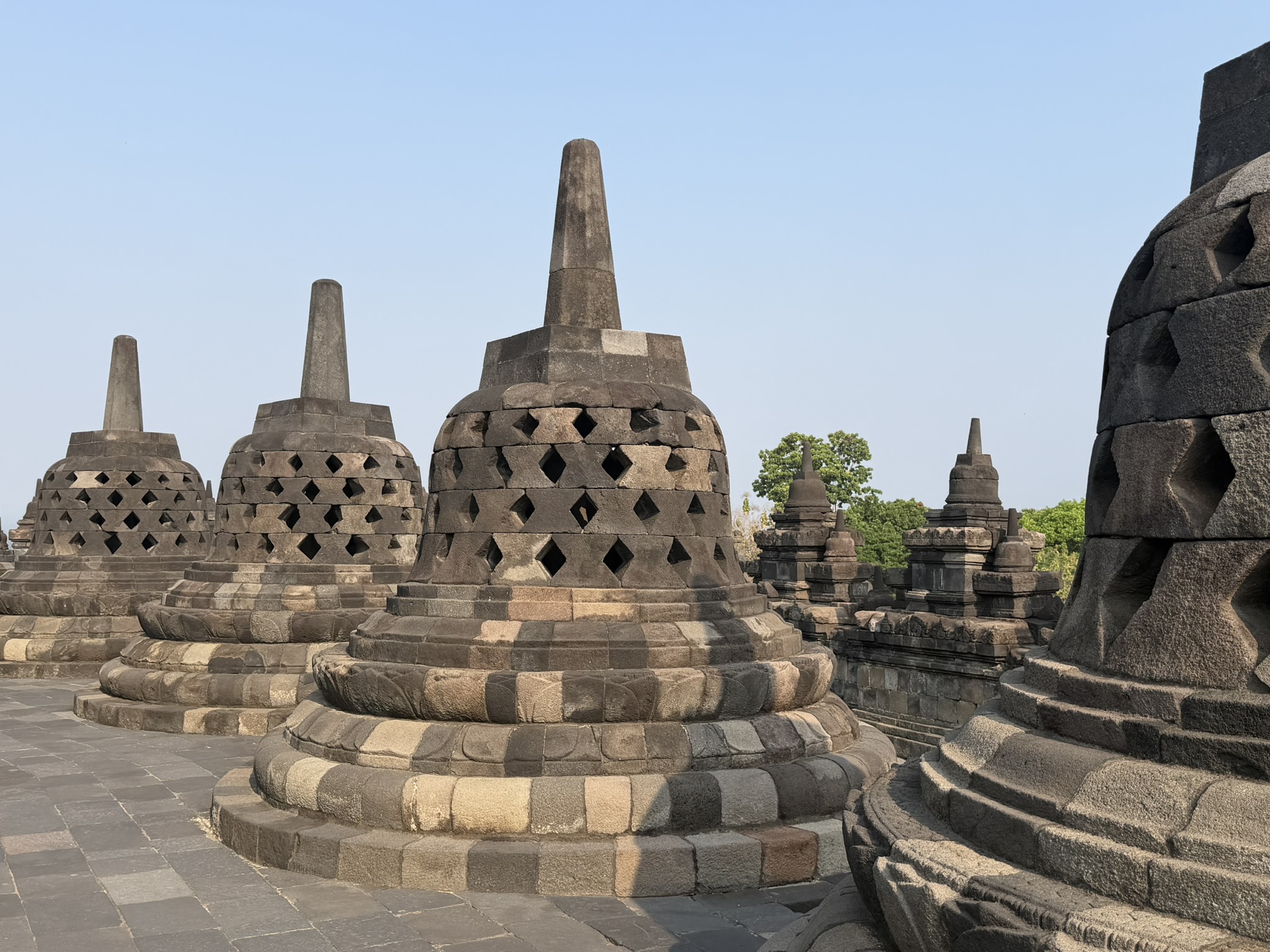
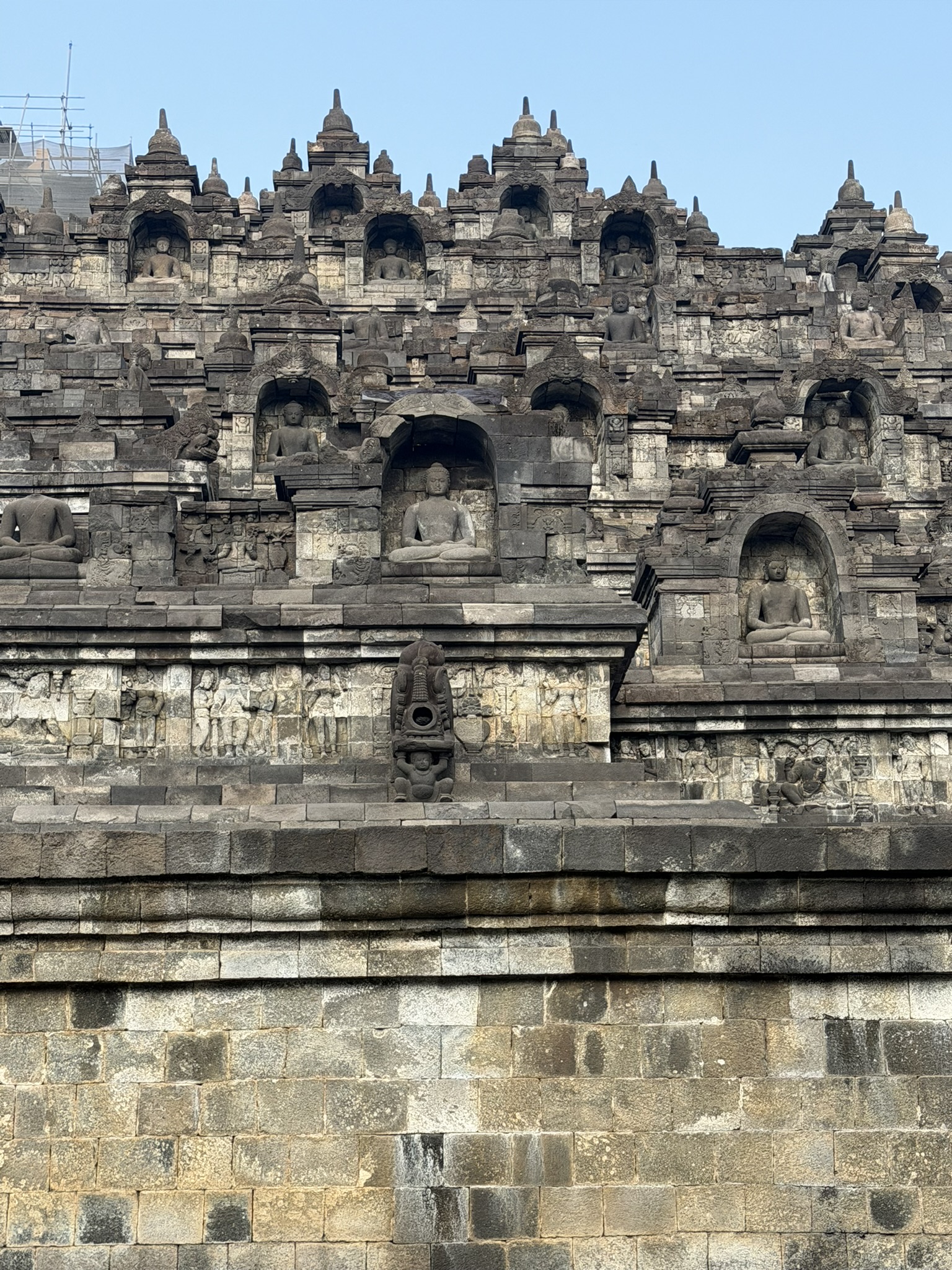
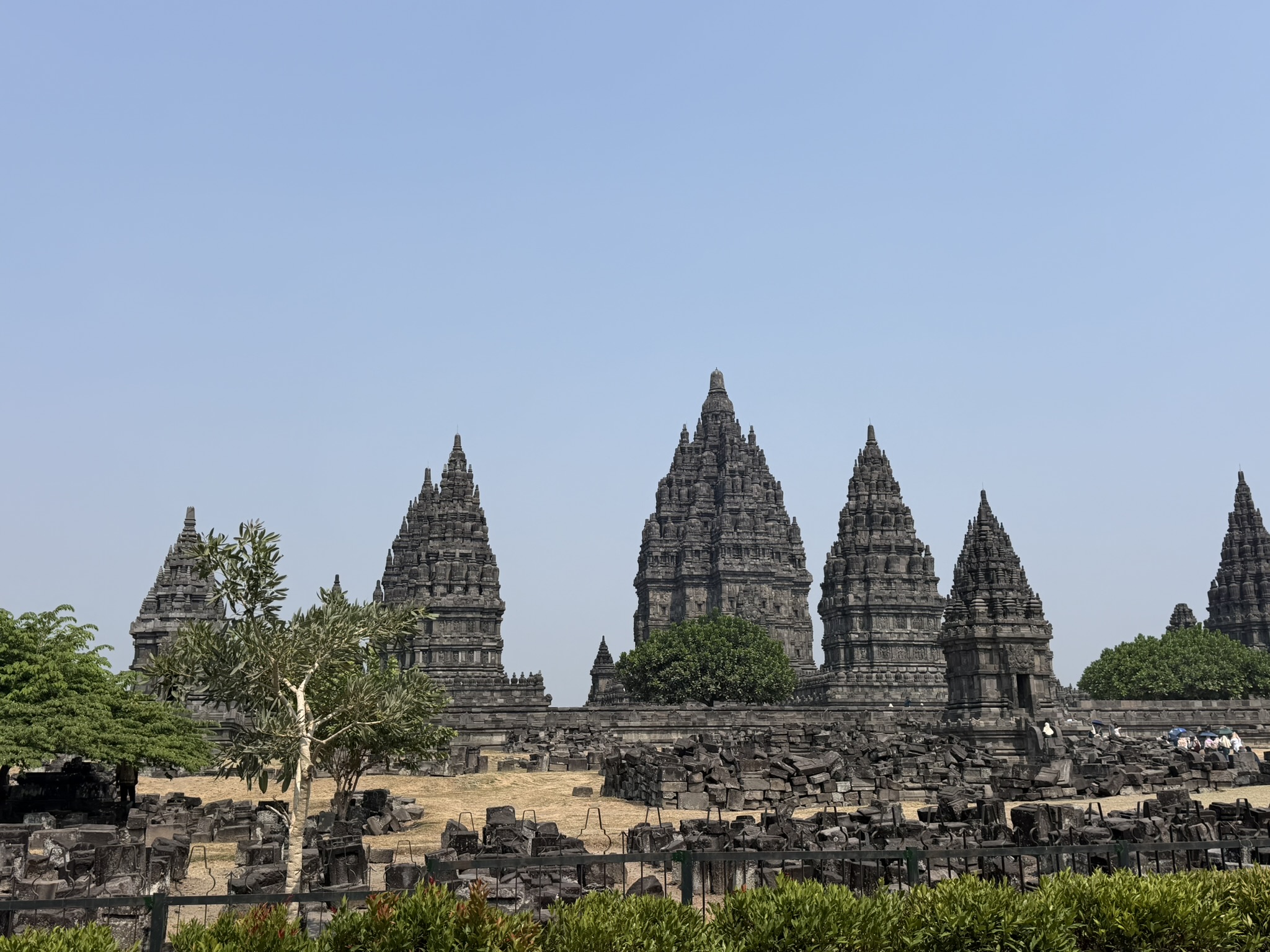
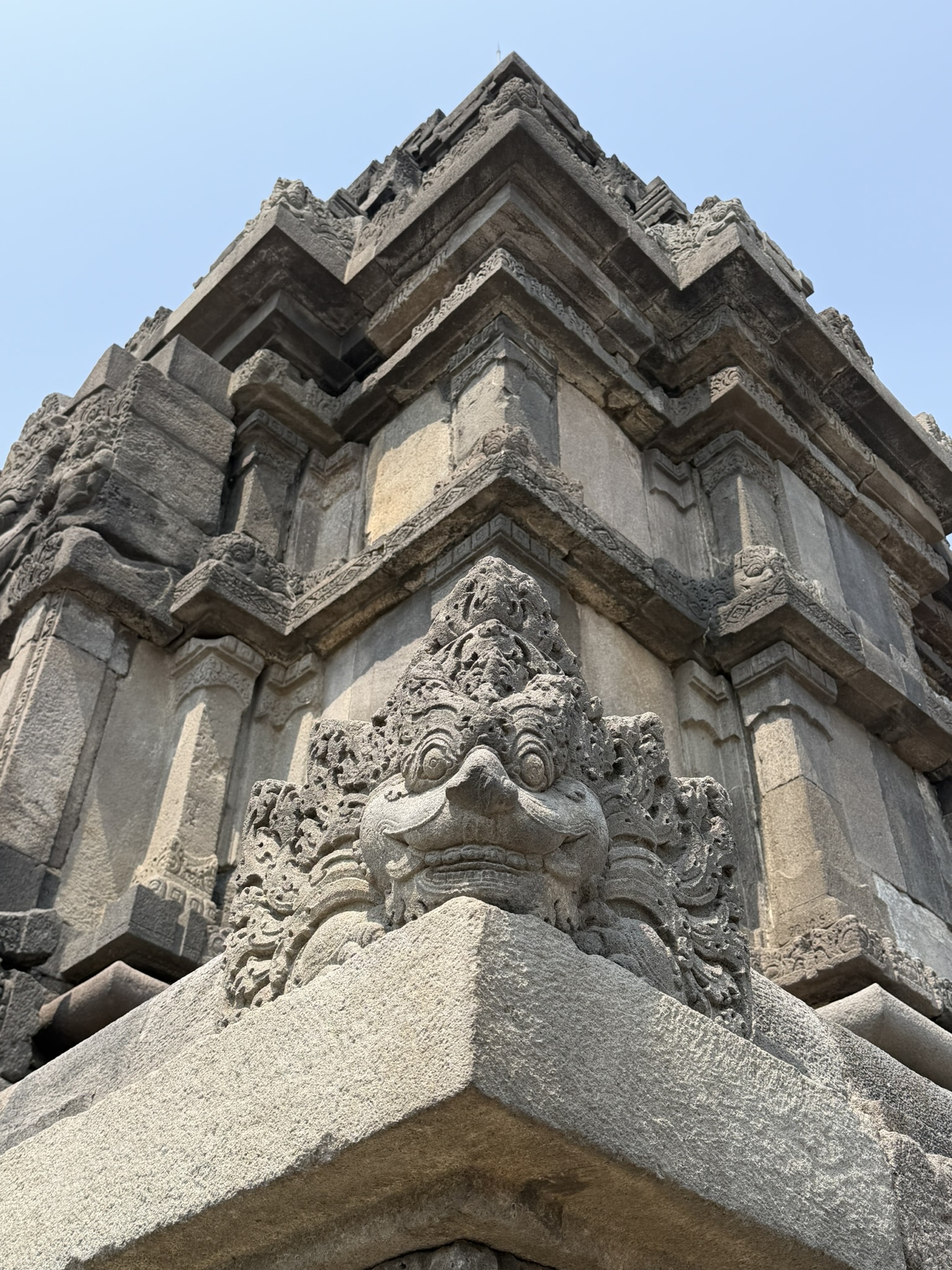
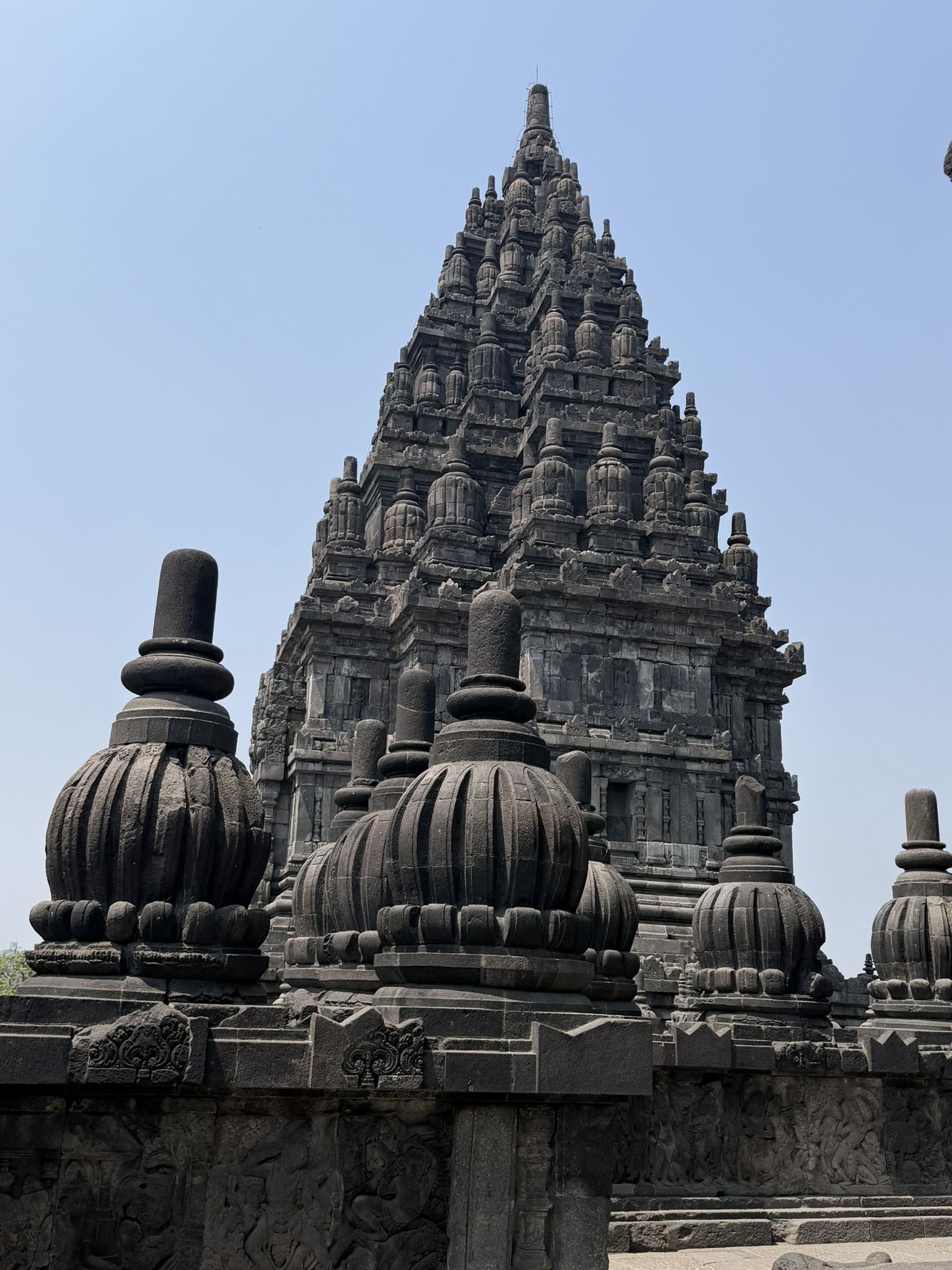
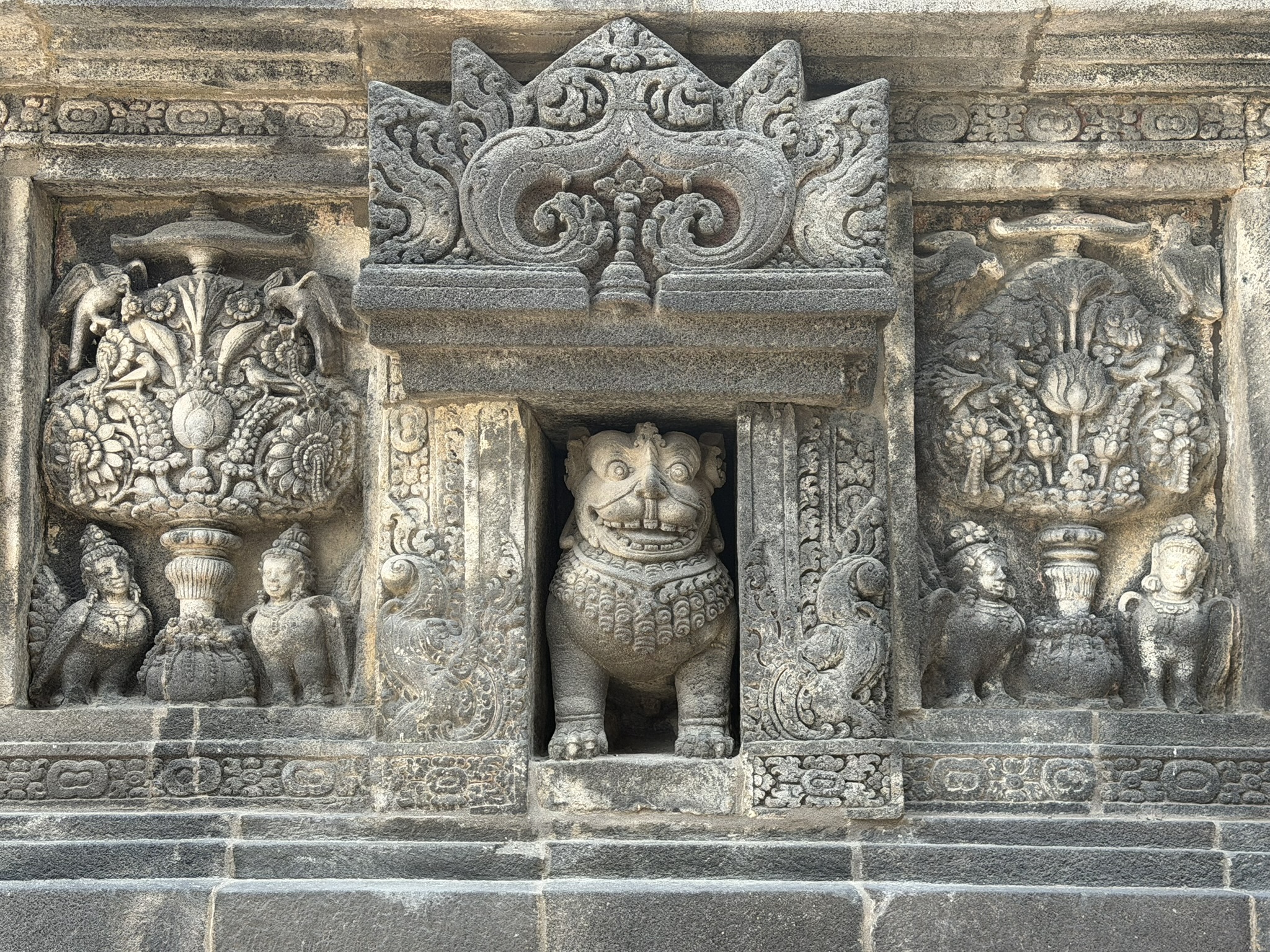
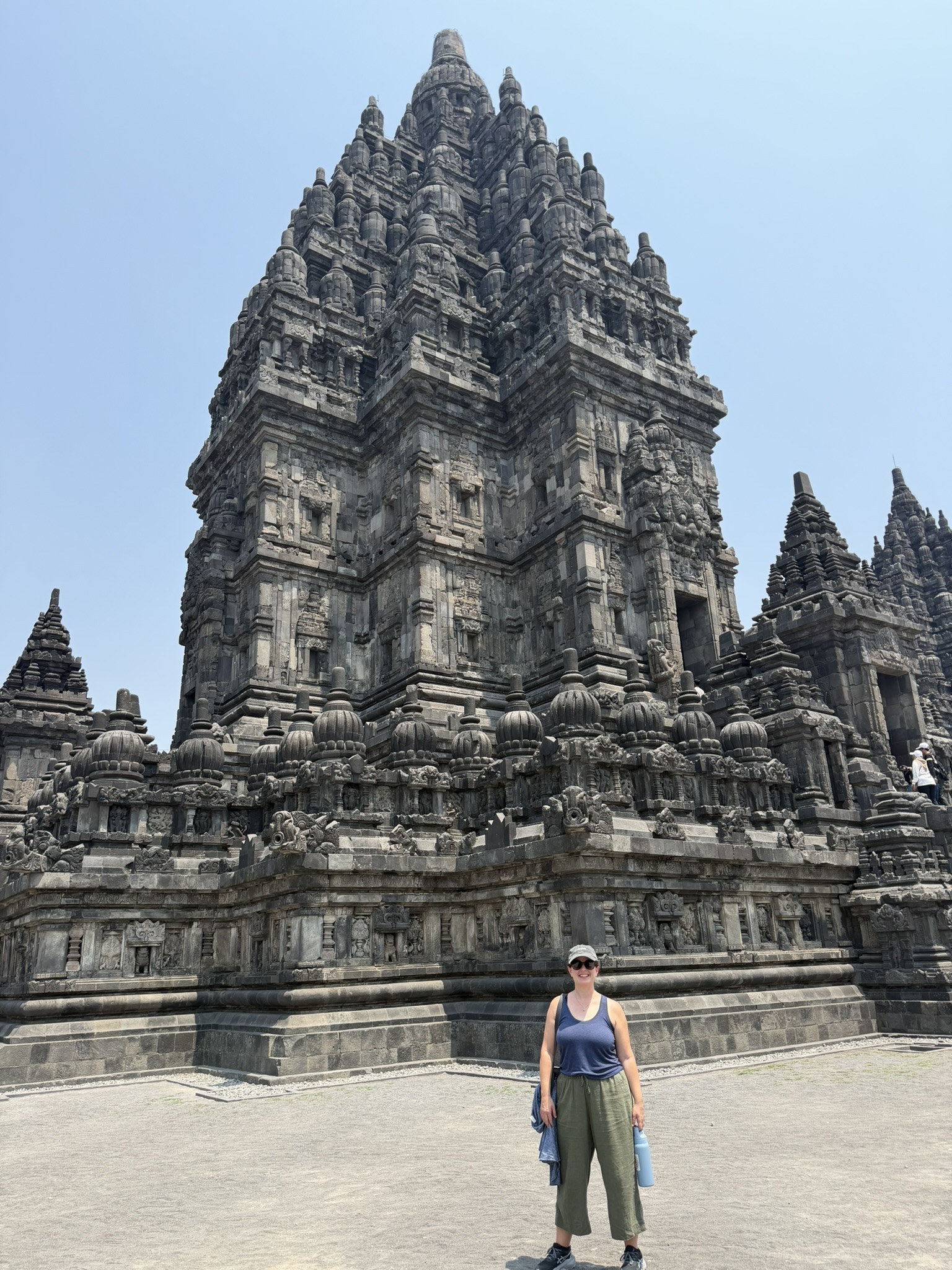
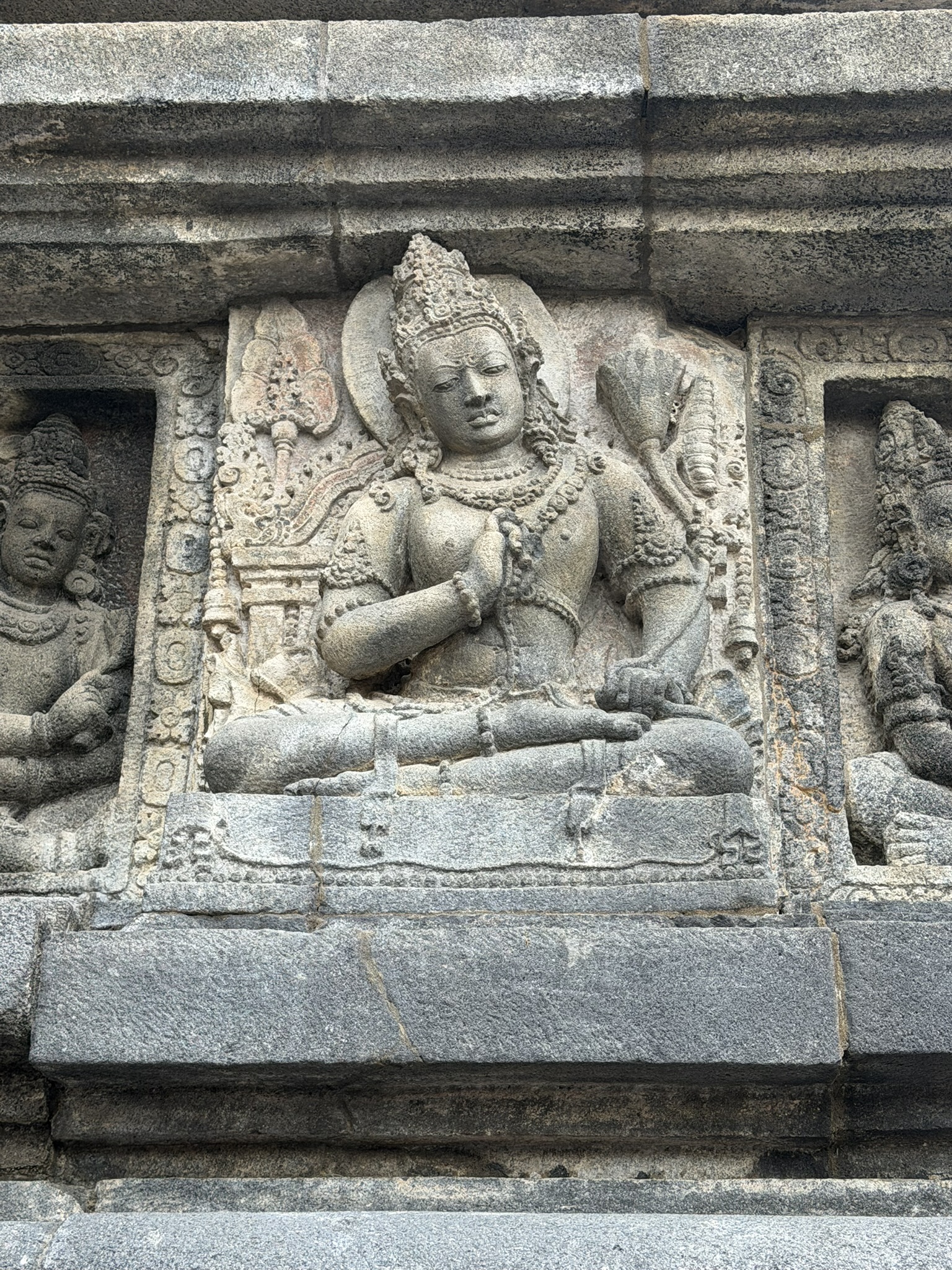
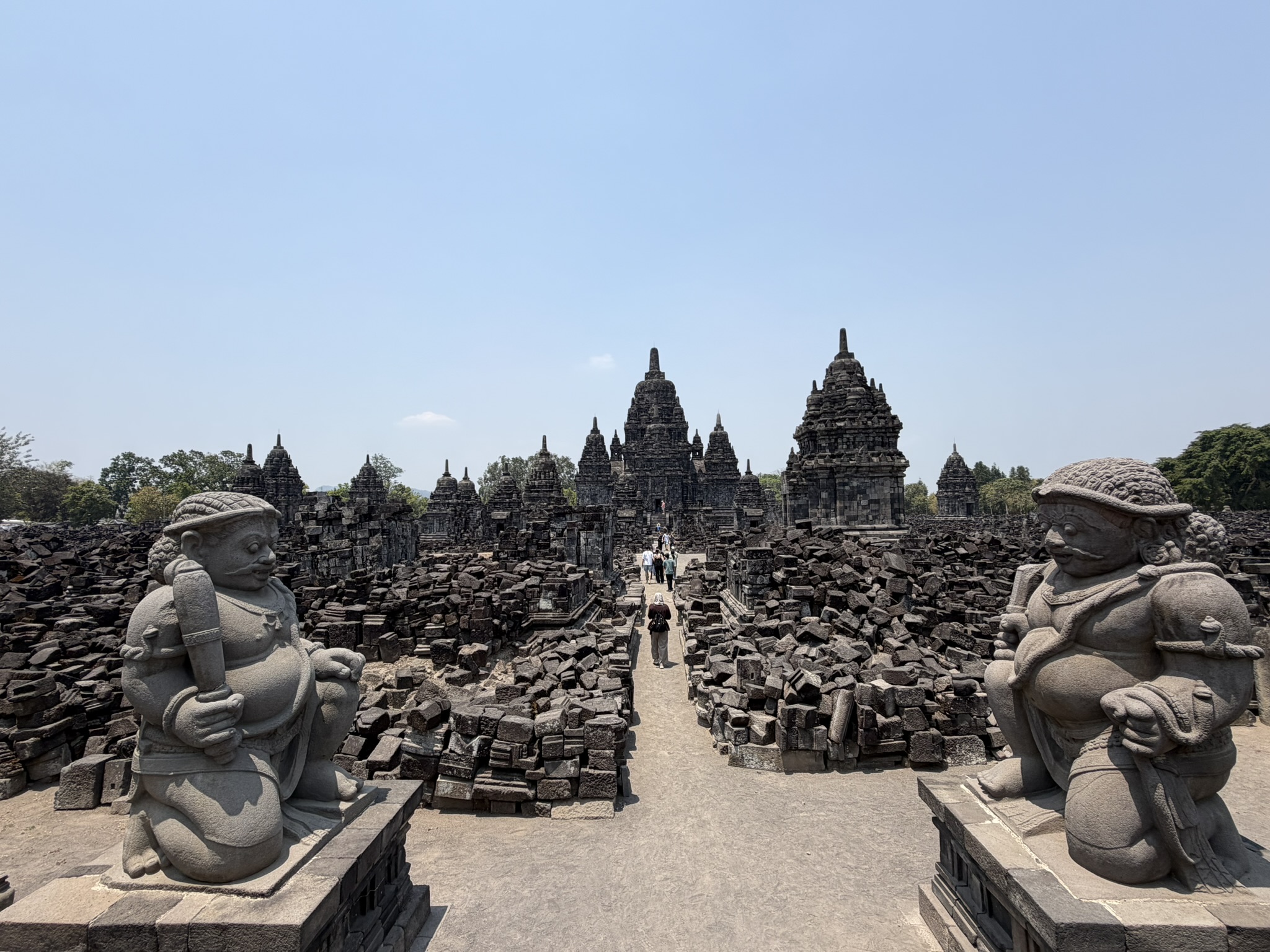
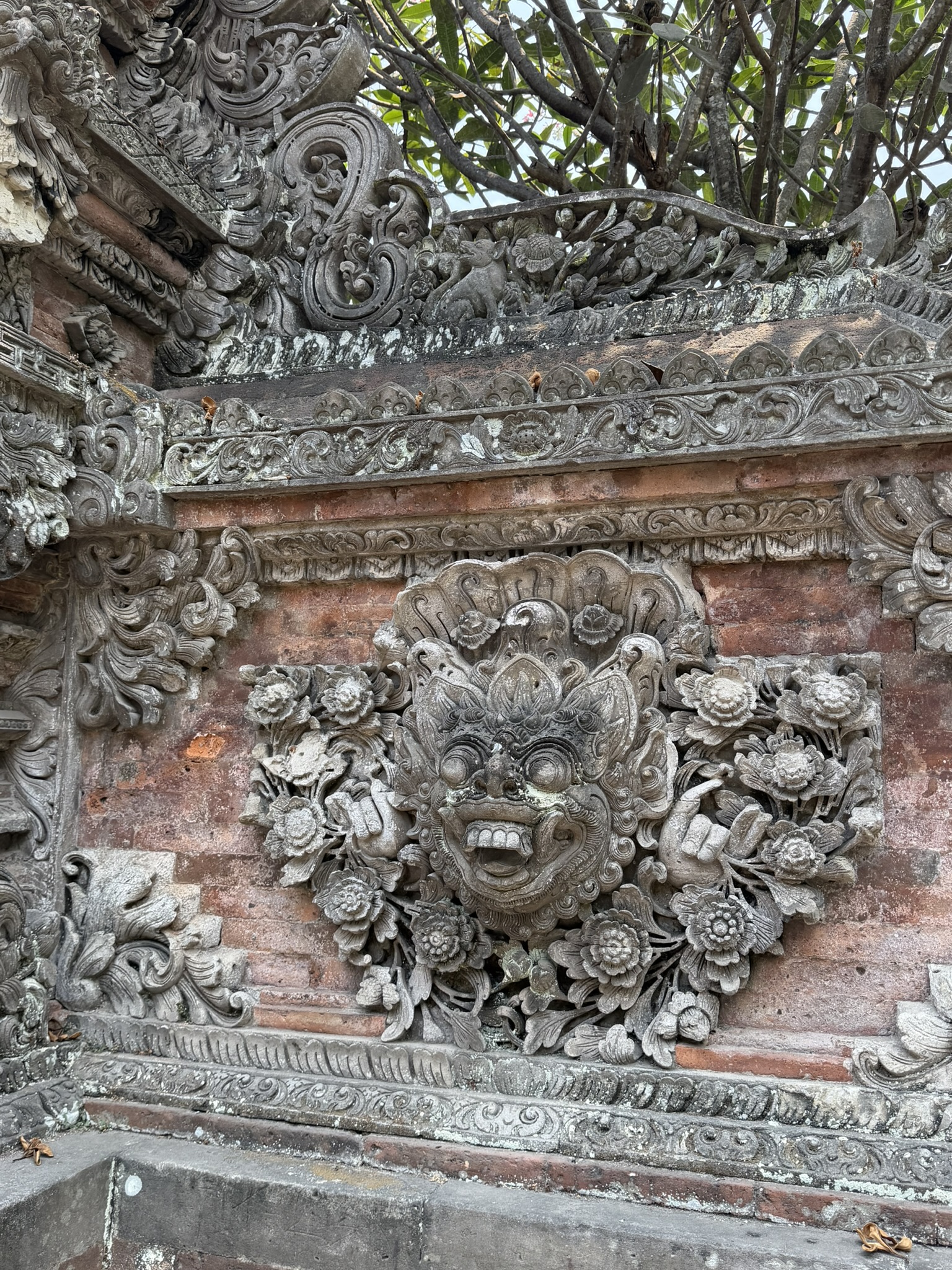
The culture didn’t stop with the art; I visited some incredible temples and palaces. The most popular tourist activity in the area is a trip out of the city to Borobudur temple, an ancient UNESCO site. Many also visit Prambanan temple, another ancient site. I visited both sites on a long day trip. They were stunning, a combination of Buddhist and Hindu influences. Both temples are over a thousand years old, and both were destroyed in major earthquakes, then re-discovered two hundred years ago and rebuilt using some of the original materials. The landscape views are impressive, and seeing the carving details up close makes it all the more awe-inspiring: lions and gods and monkeys. The stupas – bell-shaped stones with openings meant to inspire meditation – on top of Borobudur were especially eye-catching.
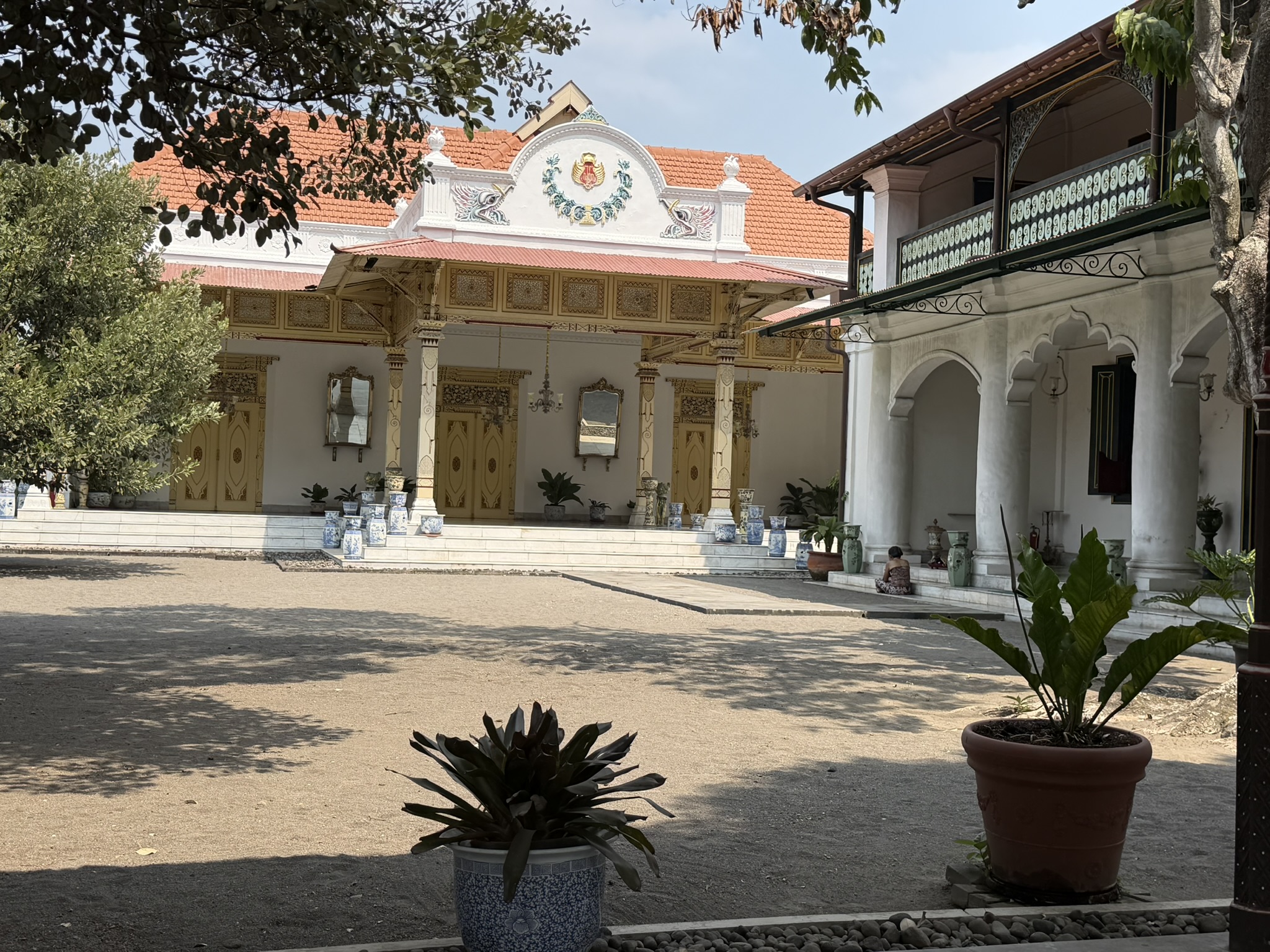
Yogyakarta has a unique political designation. Technically called the Special Region of Yogyakarta, it is the only place in Indonesia that gets permission from its national government to maintain a monarchy. The city is run by a sultan, who serves a dual title as governor. There are no elections, just hereditary power. The sultan lives in a palace in town, which he opens to the public during the day while he does his business at another site.
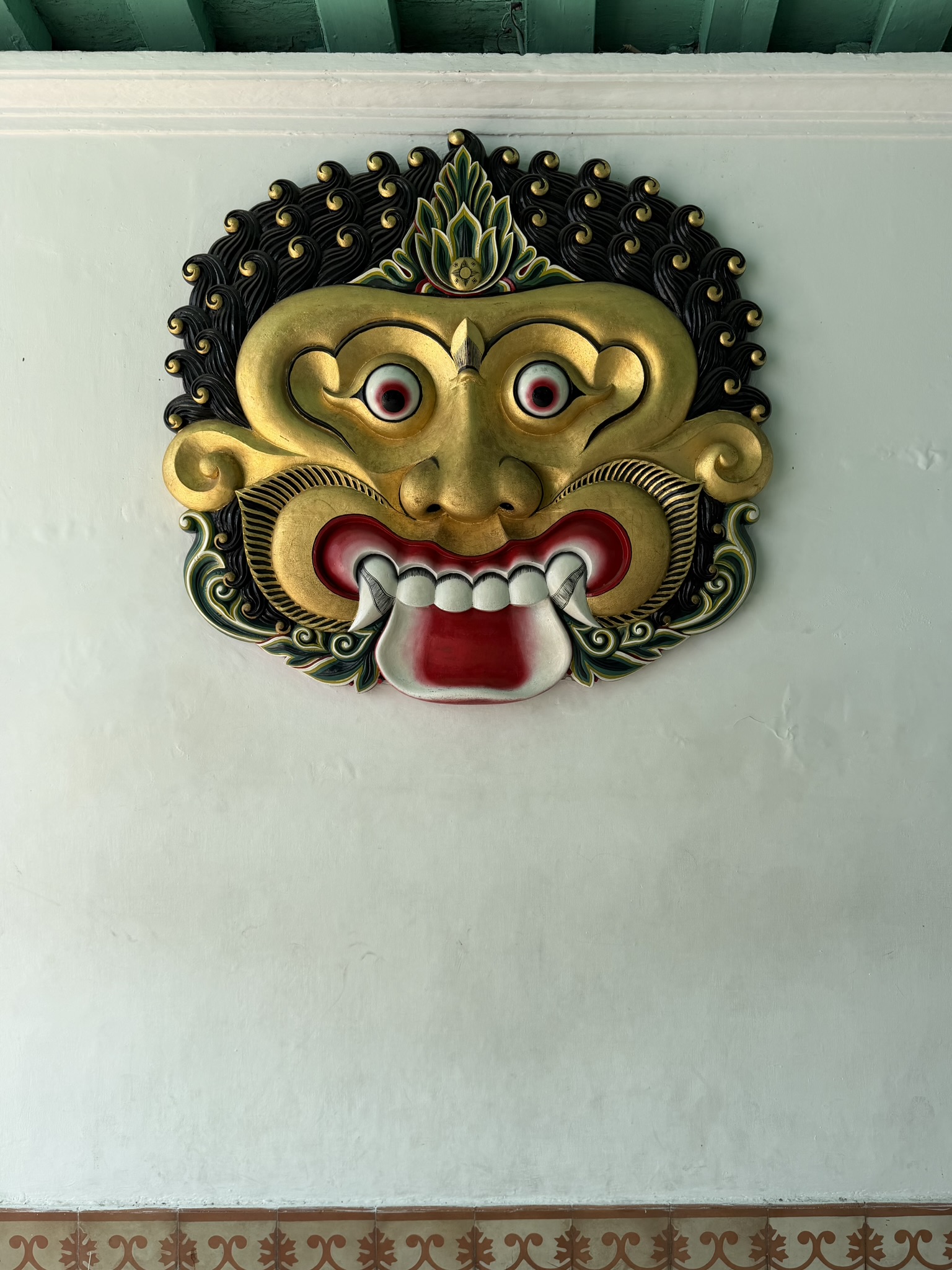
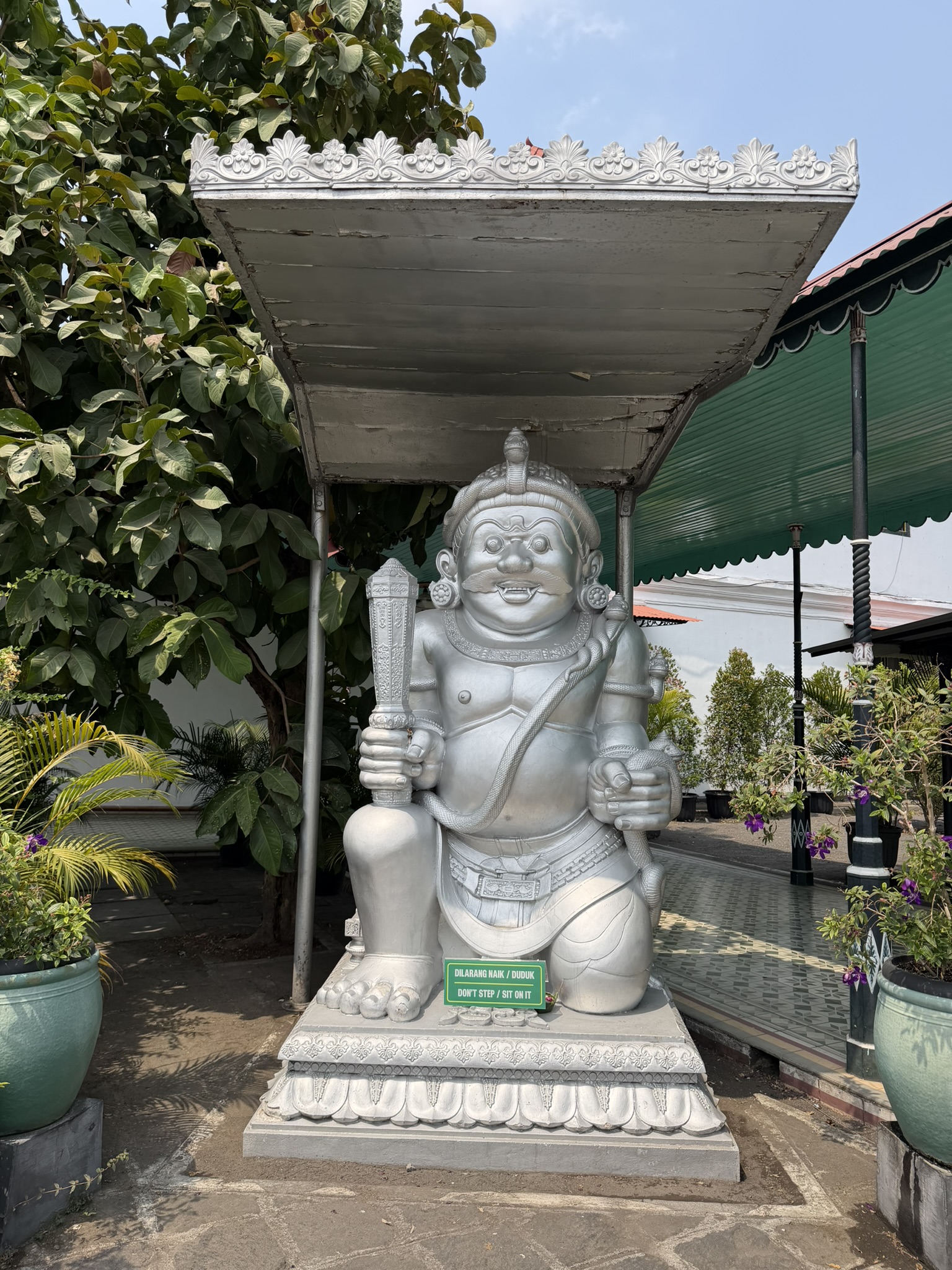
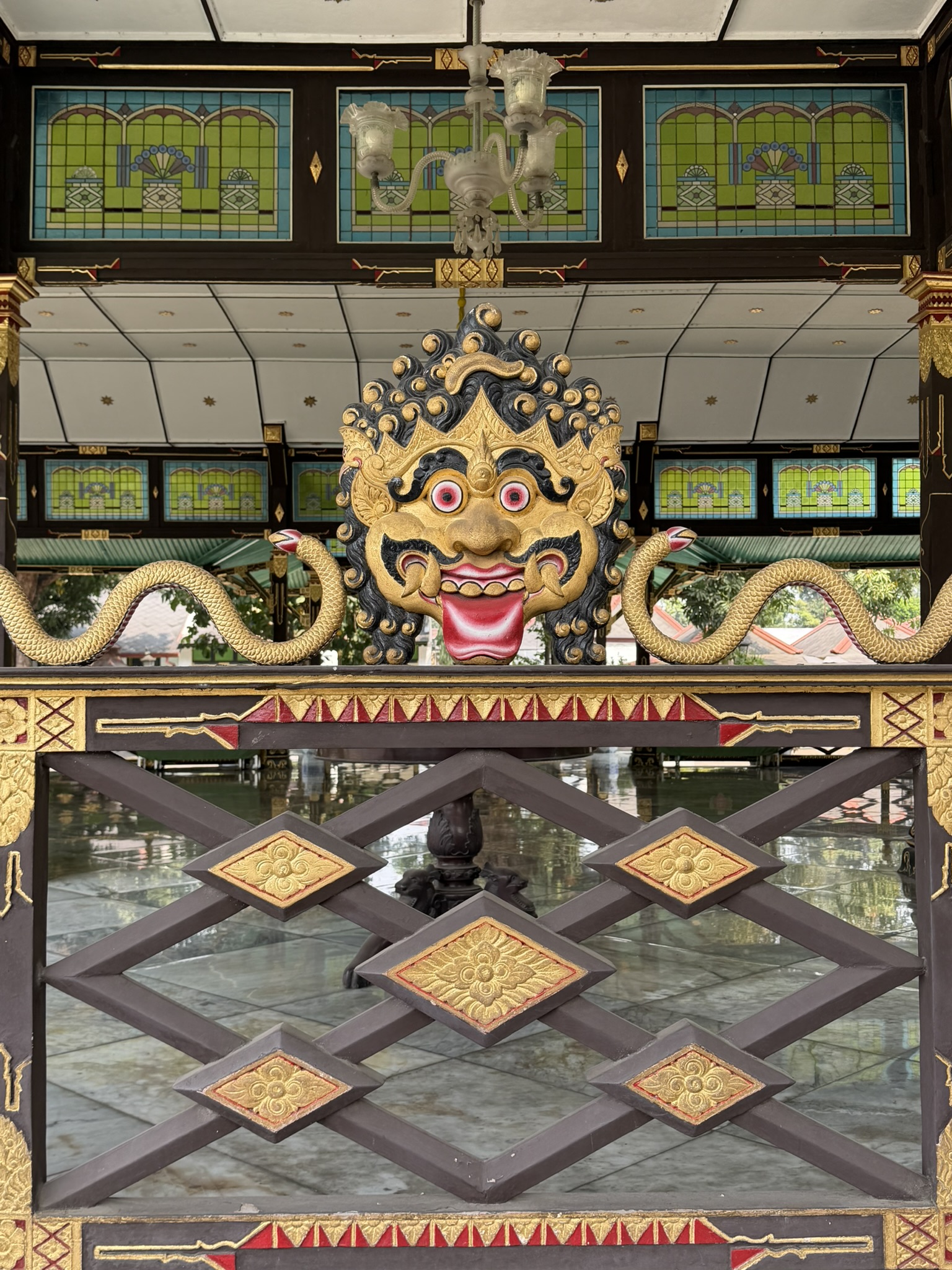
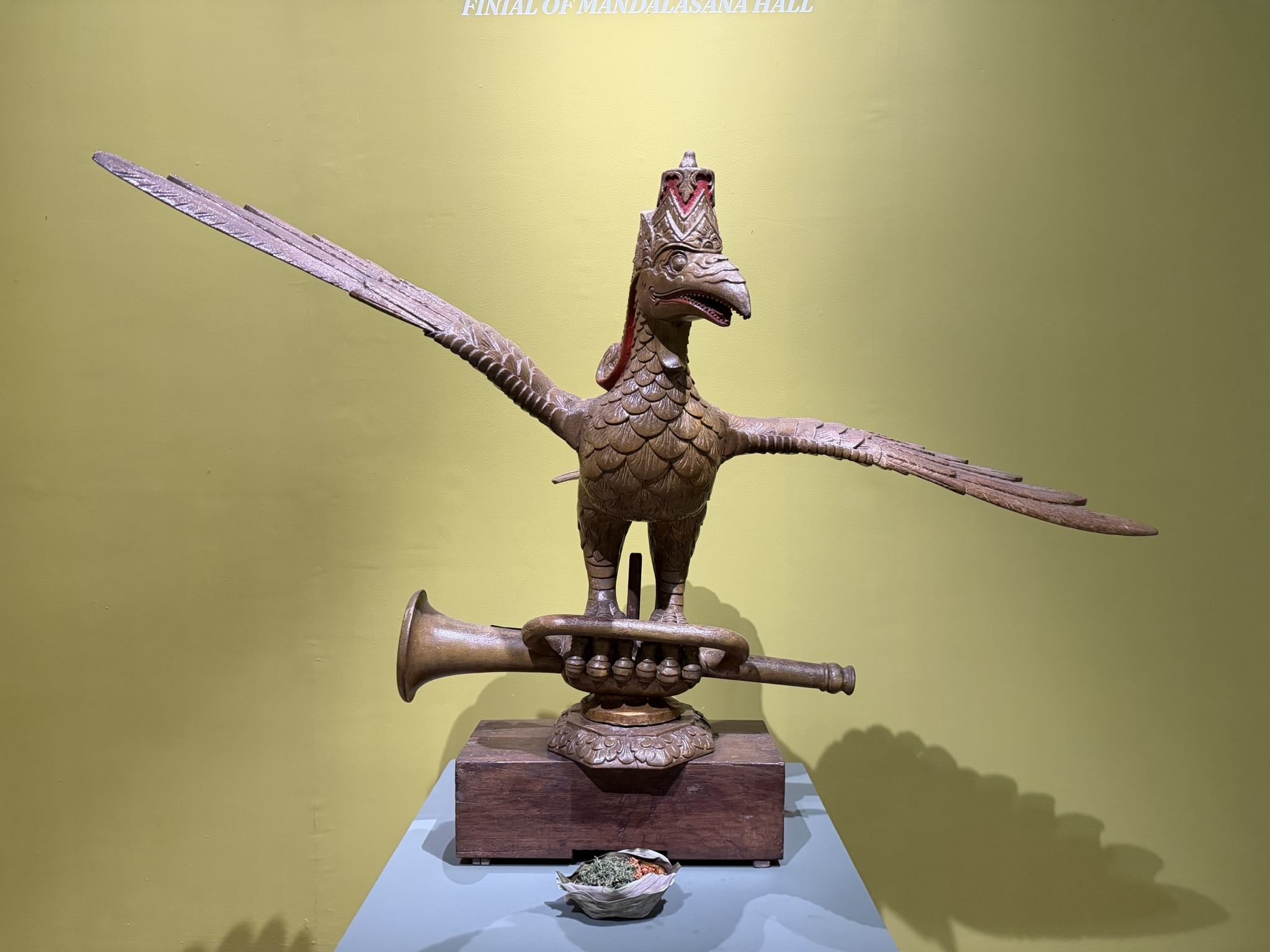
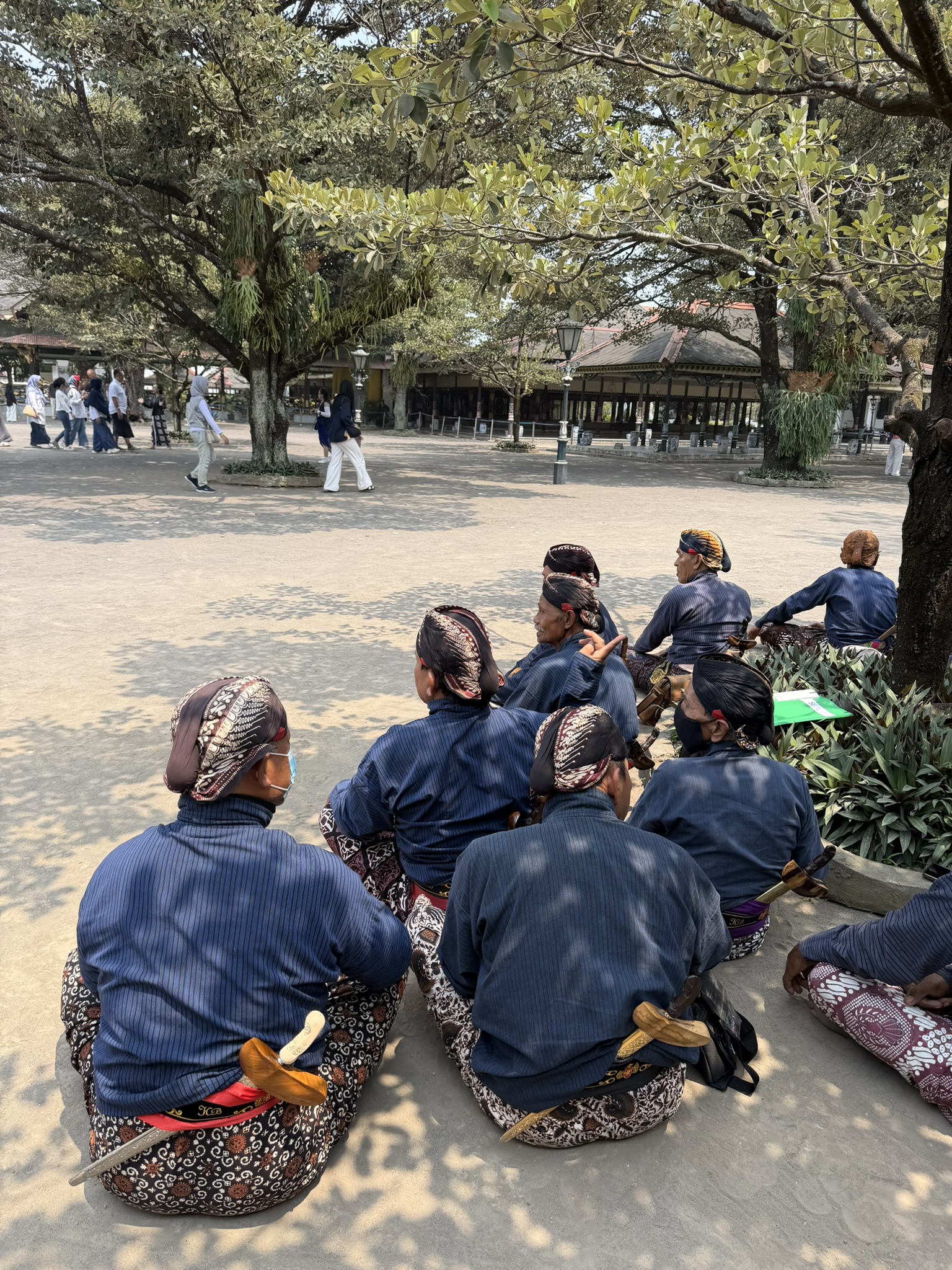
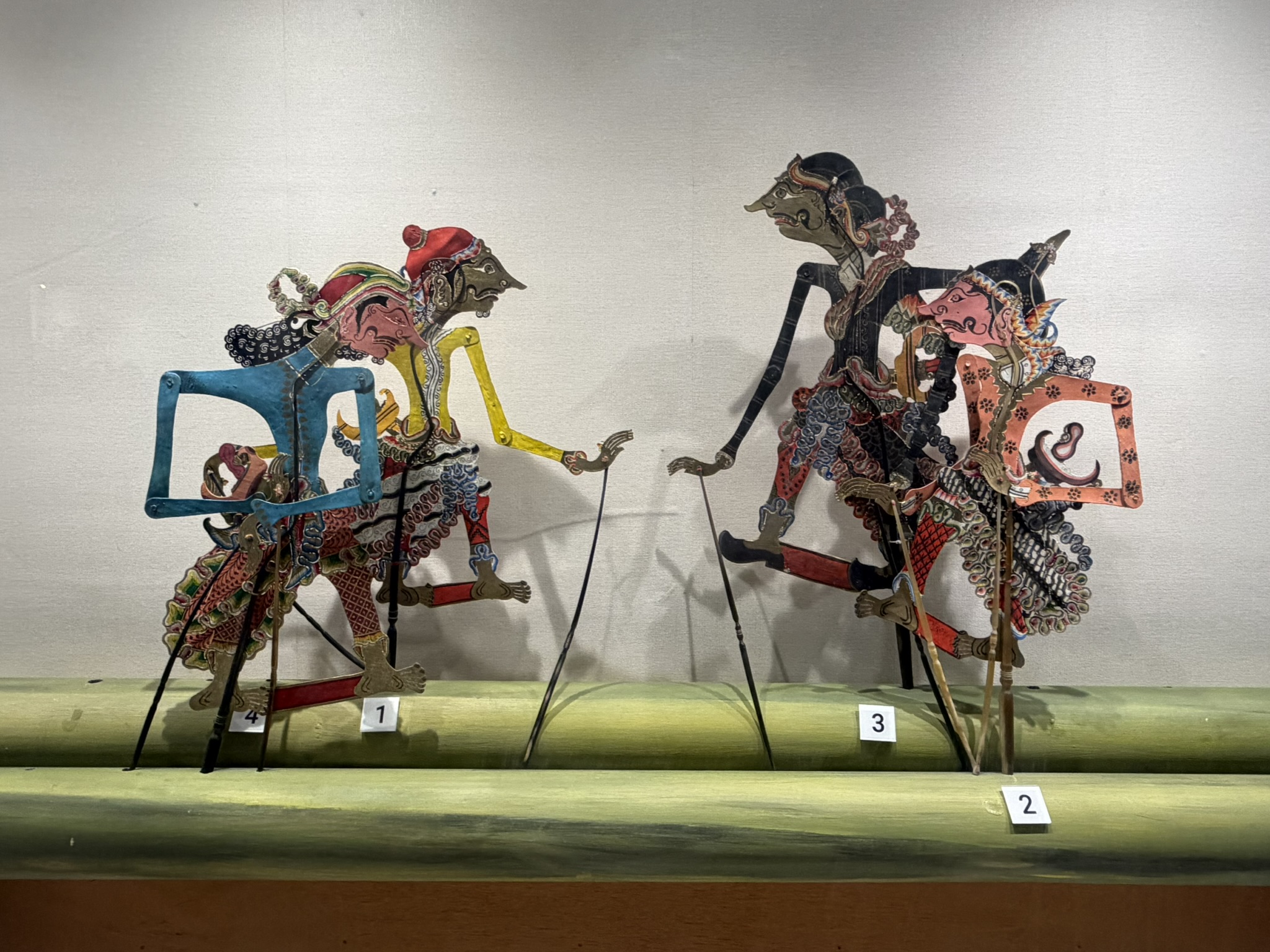
Inside the palace grounds are museum exhibits, beautiful buildings, and frequent live performances of gamelan music, dance, and a local puppet theater art called wayang. I heard some ethereal gamelan music while I was there. I opted not to visit with a guide, and was confused by the throngs of men calmly and casually sitting on one of the lawns with swords tucked into their back sarongs. I assume it was a security force waiting to be needed, but perhaps they were a performance troupe; I’ll never know.
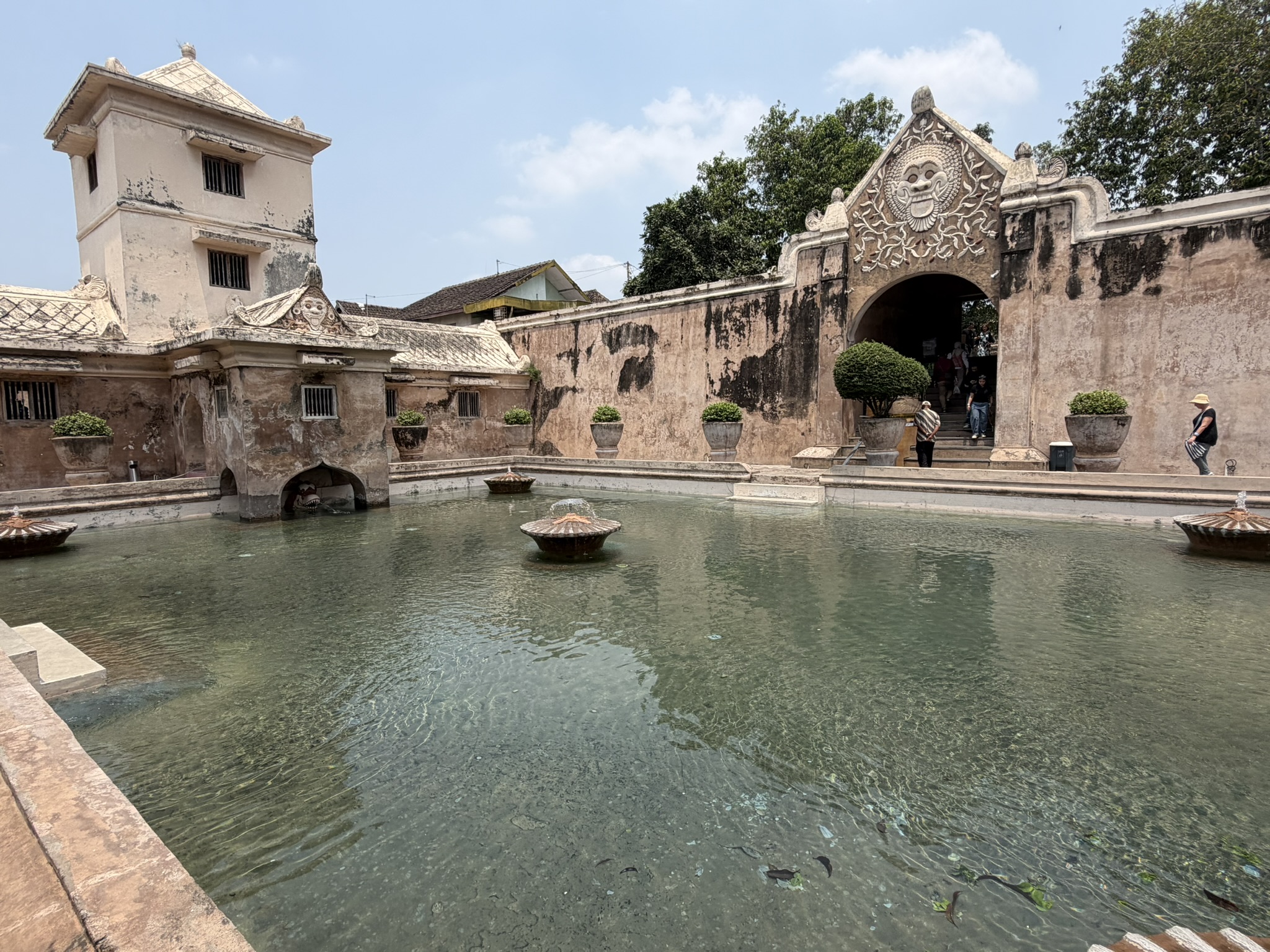
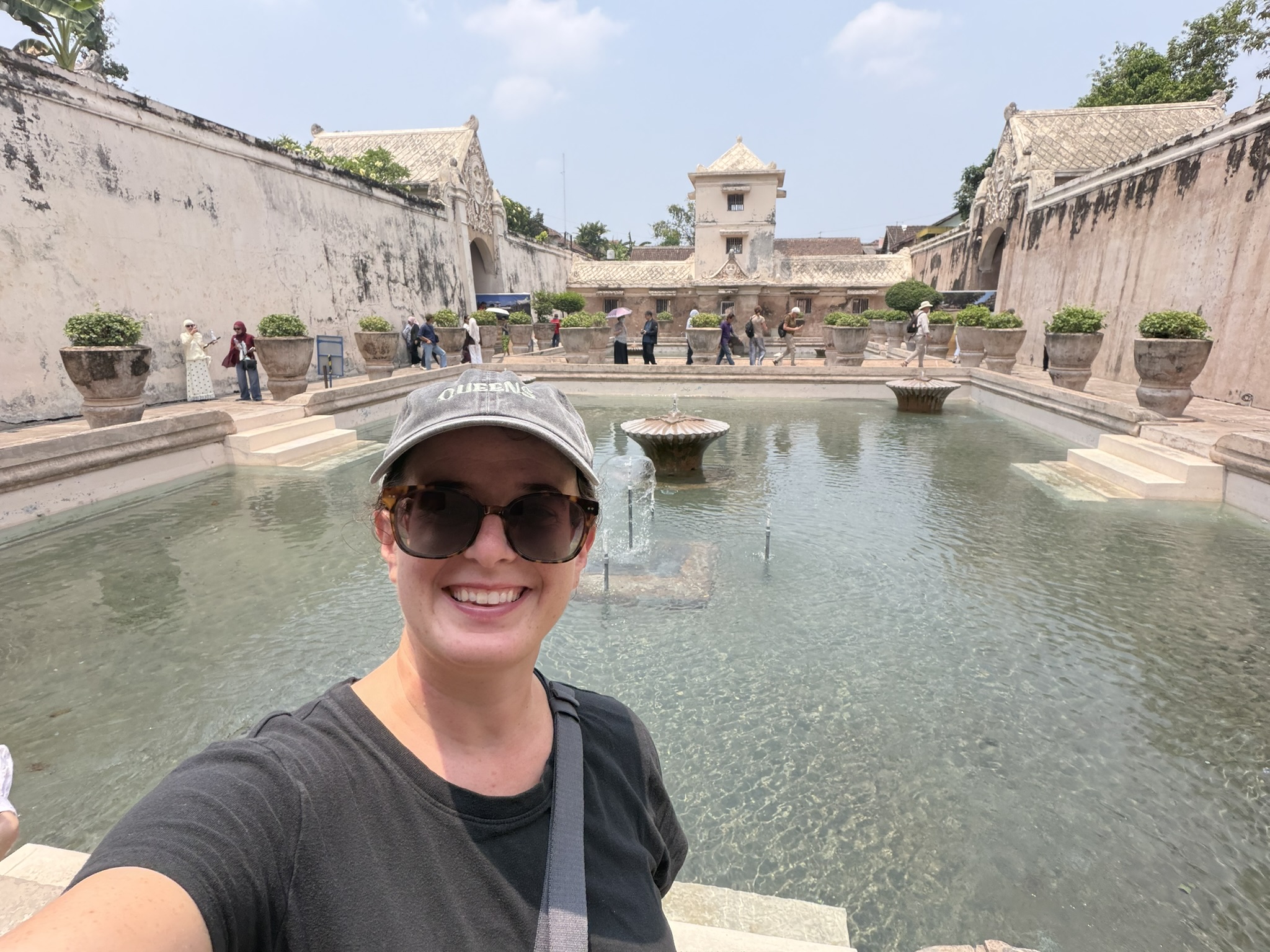
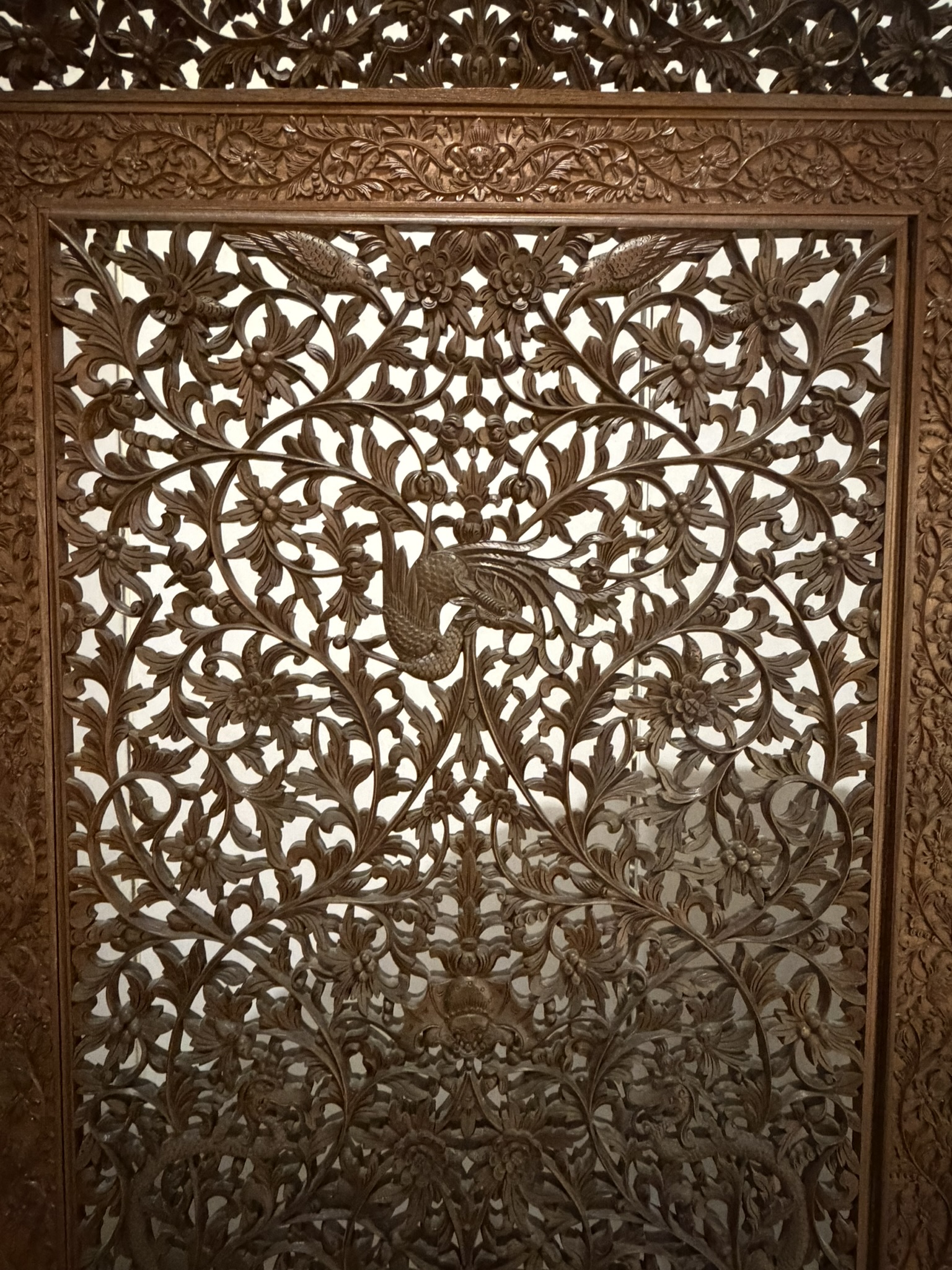
I also walked to something called the Water Temple, which was pretty but small, and without a guide I zoomed through the space. I really enjoyed a visit to the Sonobudoyo Museum, which was instructive in many local cultural traditions.
Back to nature and myself
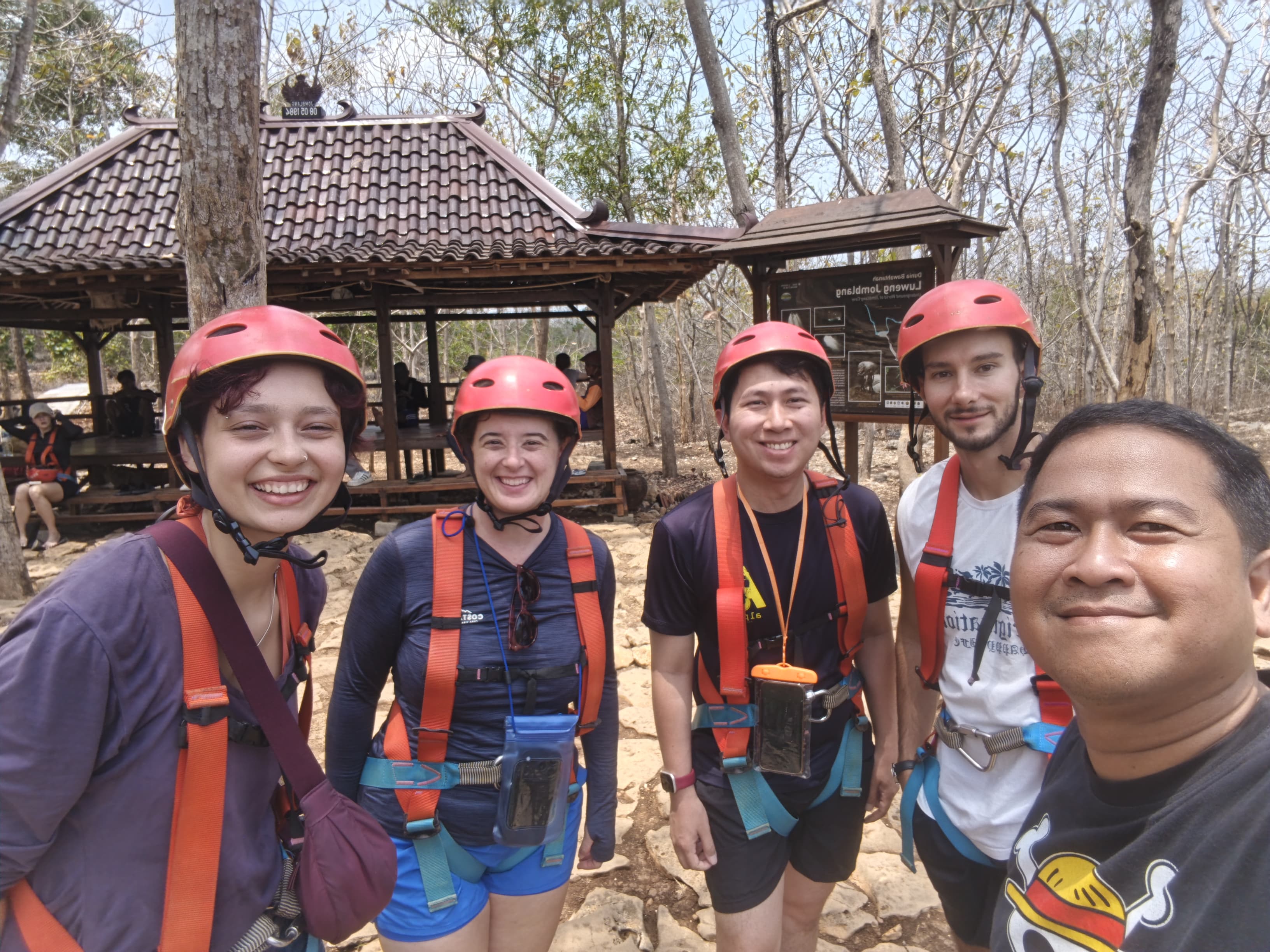
Jogja reminded me that art revives me, and then it reminded me that so does nature. I was very excited for my day trip to explore some caves outside of the city. I joined an SUV tour with 3 other people, a digital nomad from Greece, a weekend visitor from Singapore, and a girl from the Netherlands who got sick and had to leave halfway through the day. A very bumpy road in the middle of nowhere took us to our first stop: Jomblang Cave.
Nature and adventure tourism in Java is not so safe and regulated. Locals collectively run the popular tourist spots, and to my understanding there are no safety rules. Still, about a hundred people a day descend into Jomblang, and I assume they all survive.
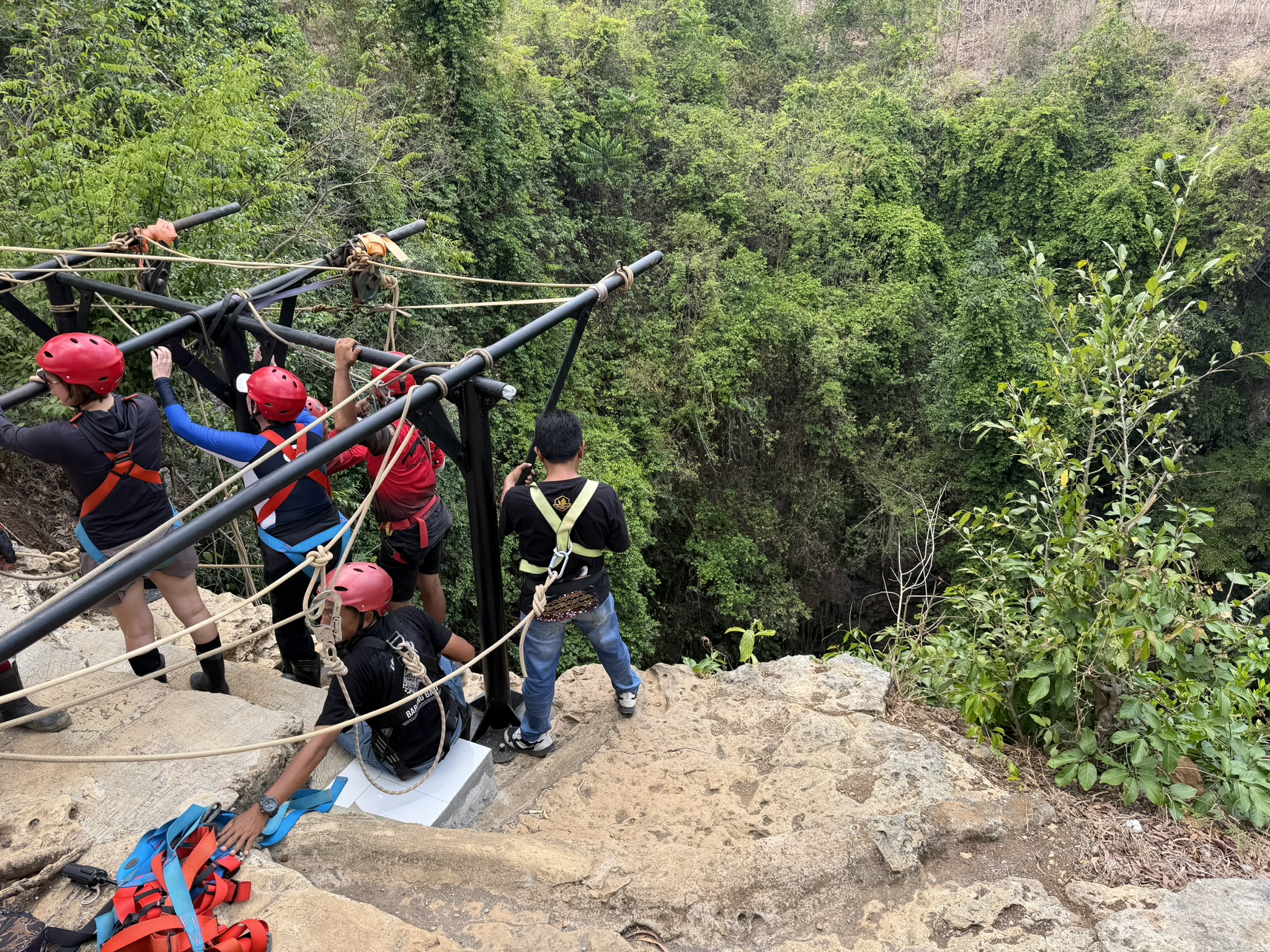
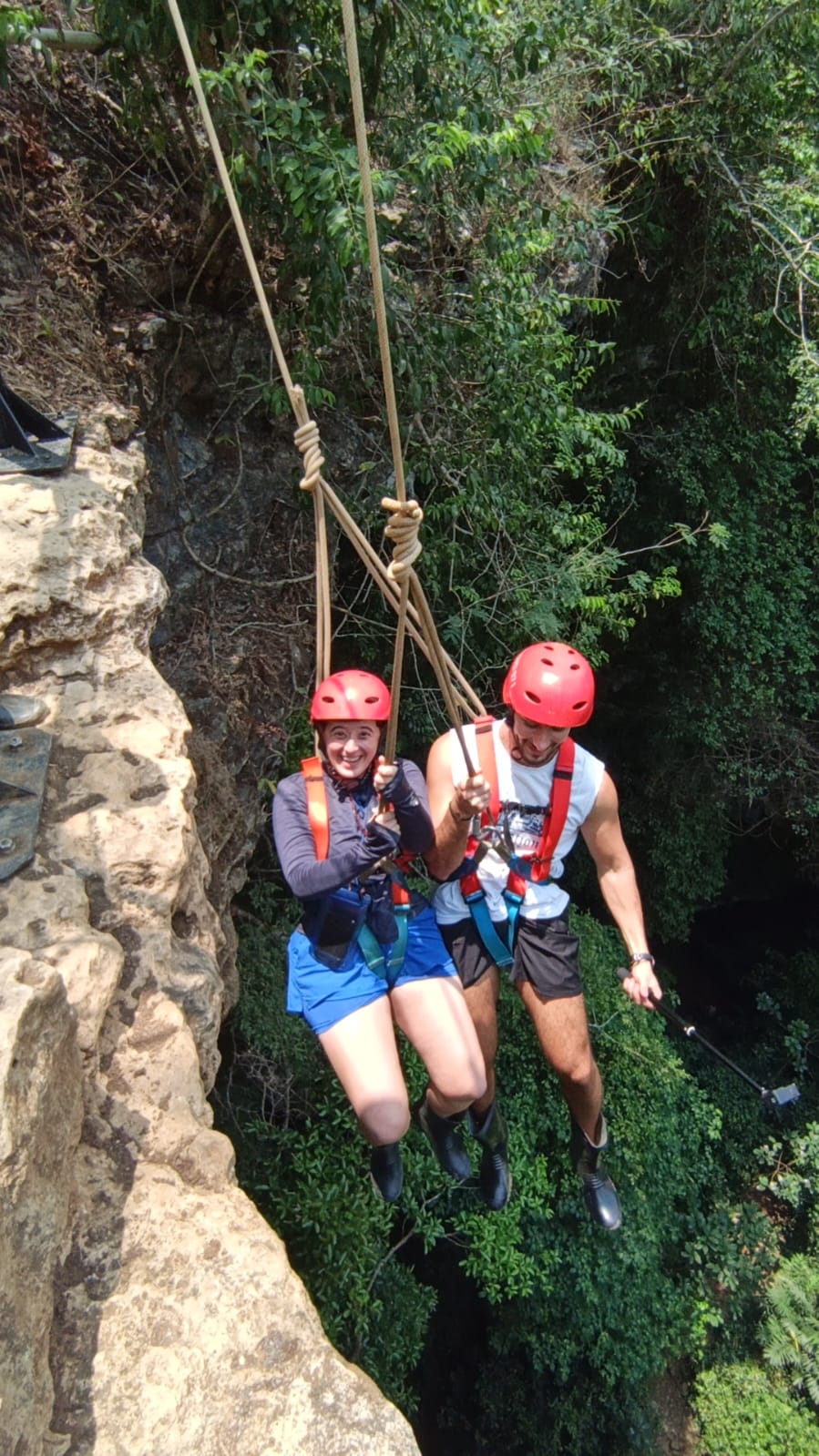
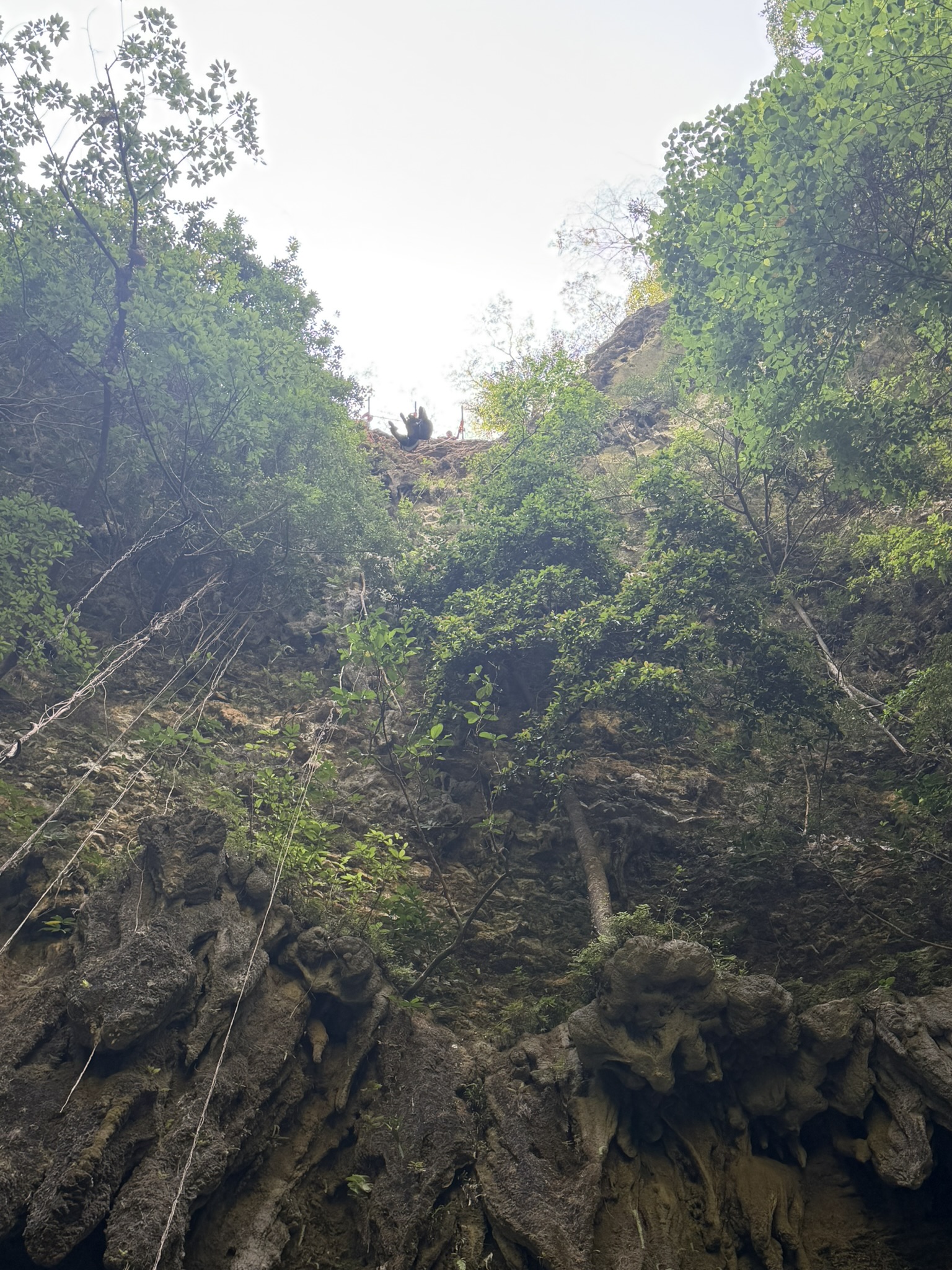
Because when I say descend, I mean it. After donning a harness and getting roped in, I stepped to the edge of a cliff to a massive opening in the ground, covered in green trees and plants. I spun around, leaned back, and then my feet left the edge. I was dangling by rope, seemingly controlled by a few men who had the ropes tied around some rocks and poles. And they lowered me down, alongside a partner from my group. Adrenaline sprung out from me, but it was beautiful, and eventually I made it safely to the ground.
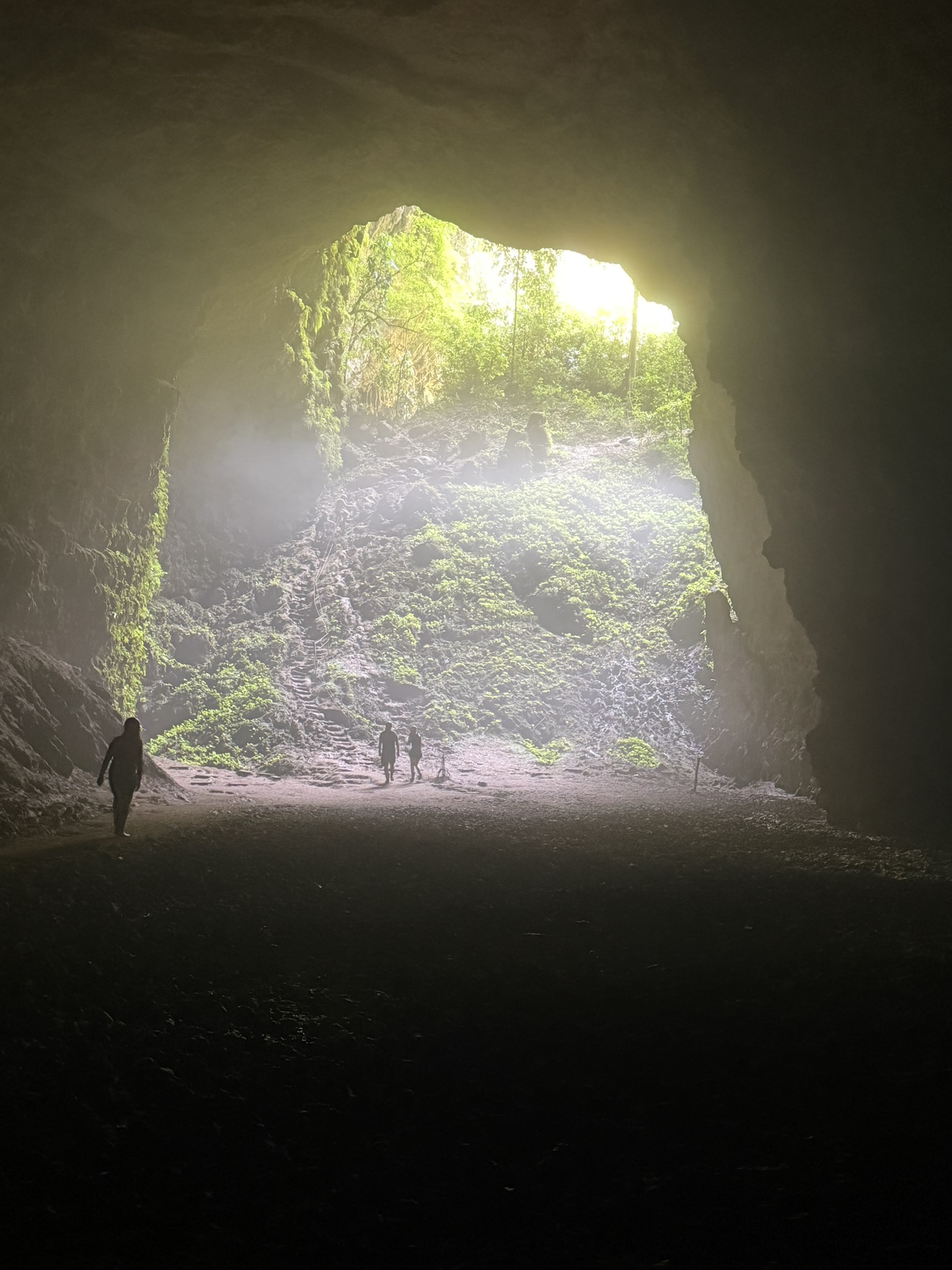
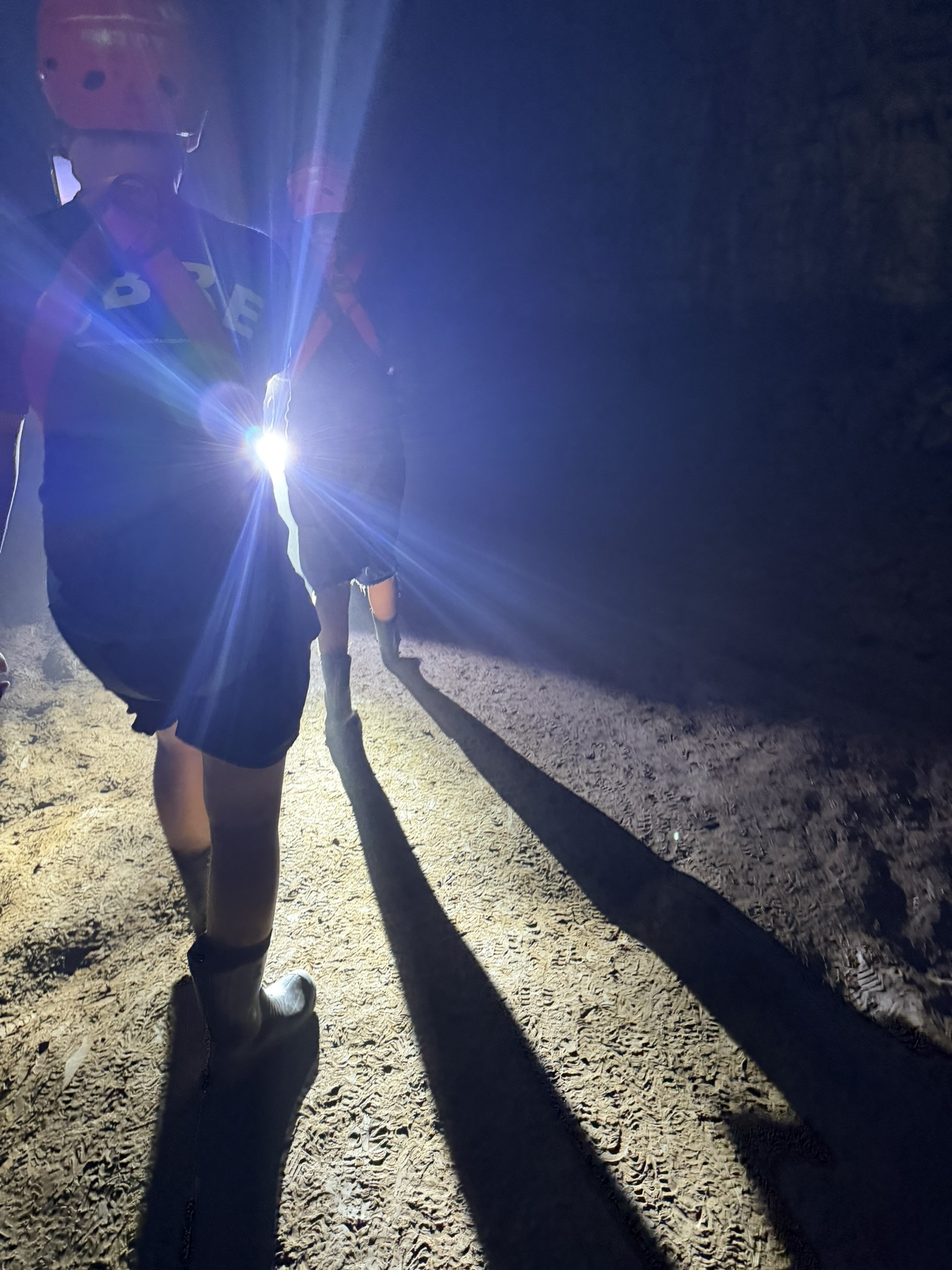
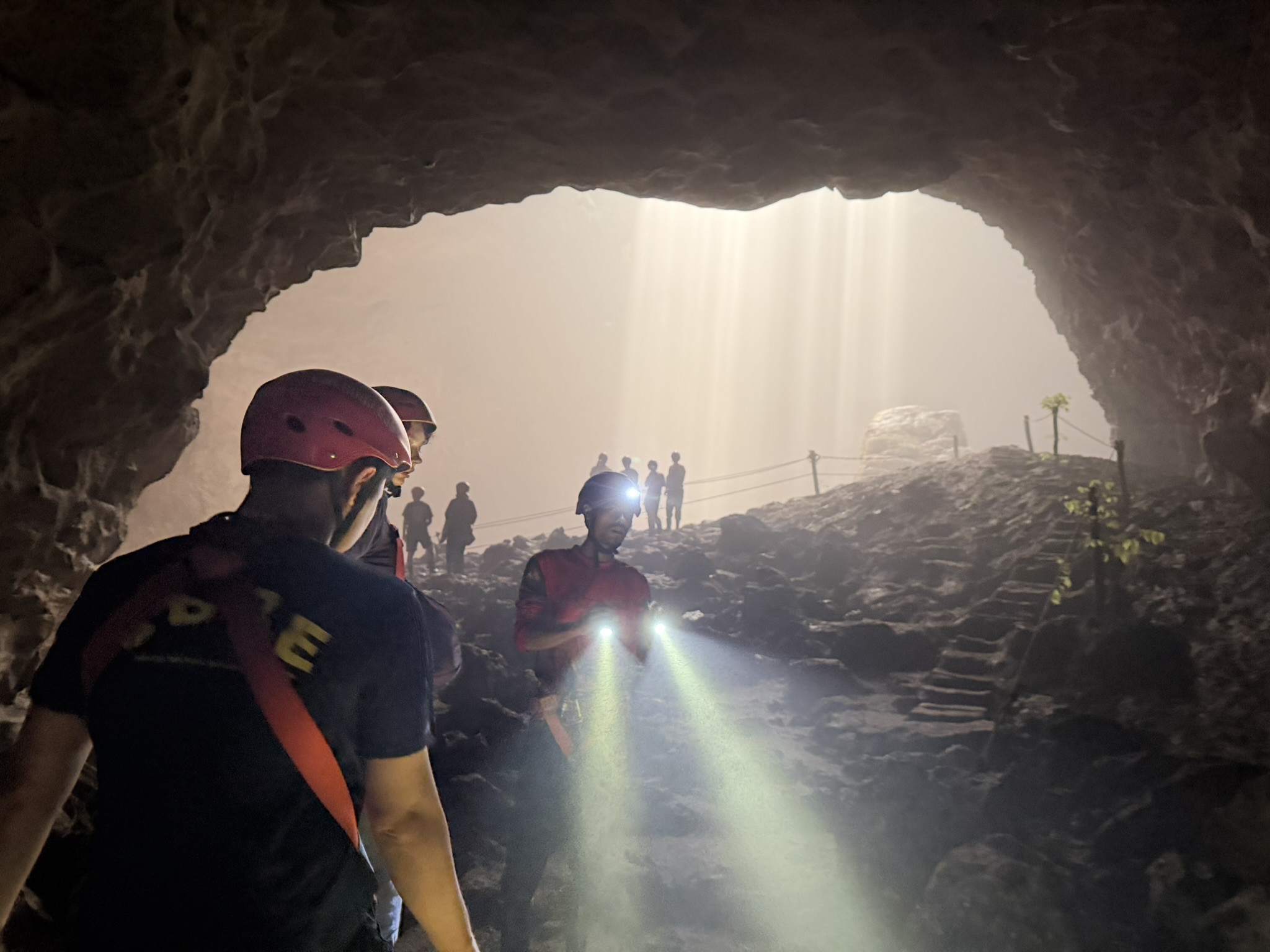
Tucked into the subterranean hole was a massive opening in the wall, the cave entrance. We proceeded on a short walk along rocks in the pitch-dark cave, wide enough to not feel claustrophobic but dark enough to be nerve-wracking, even with the guide’s flashlight.
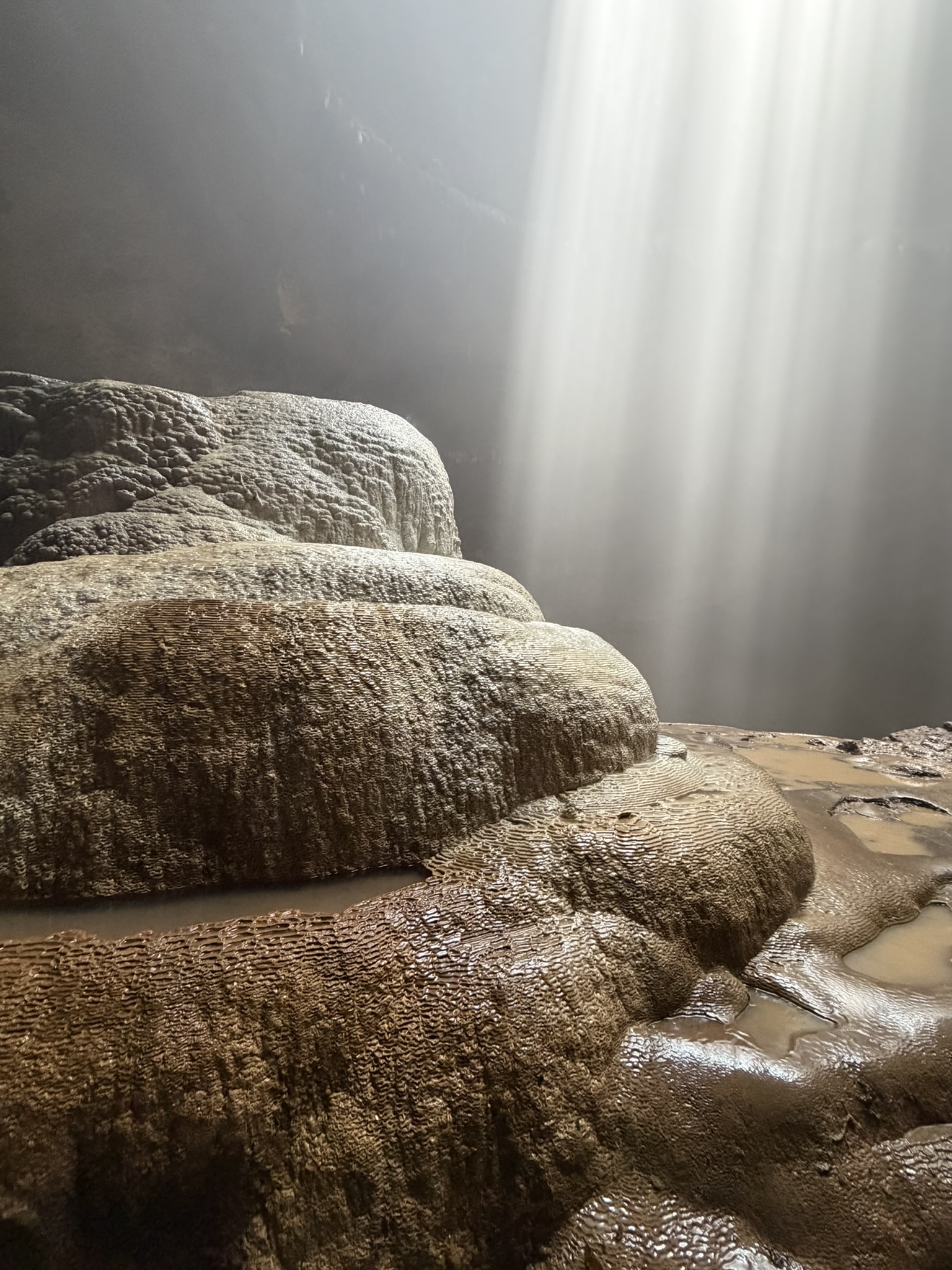
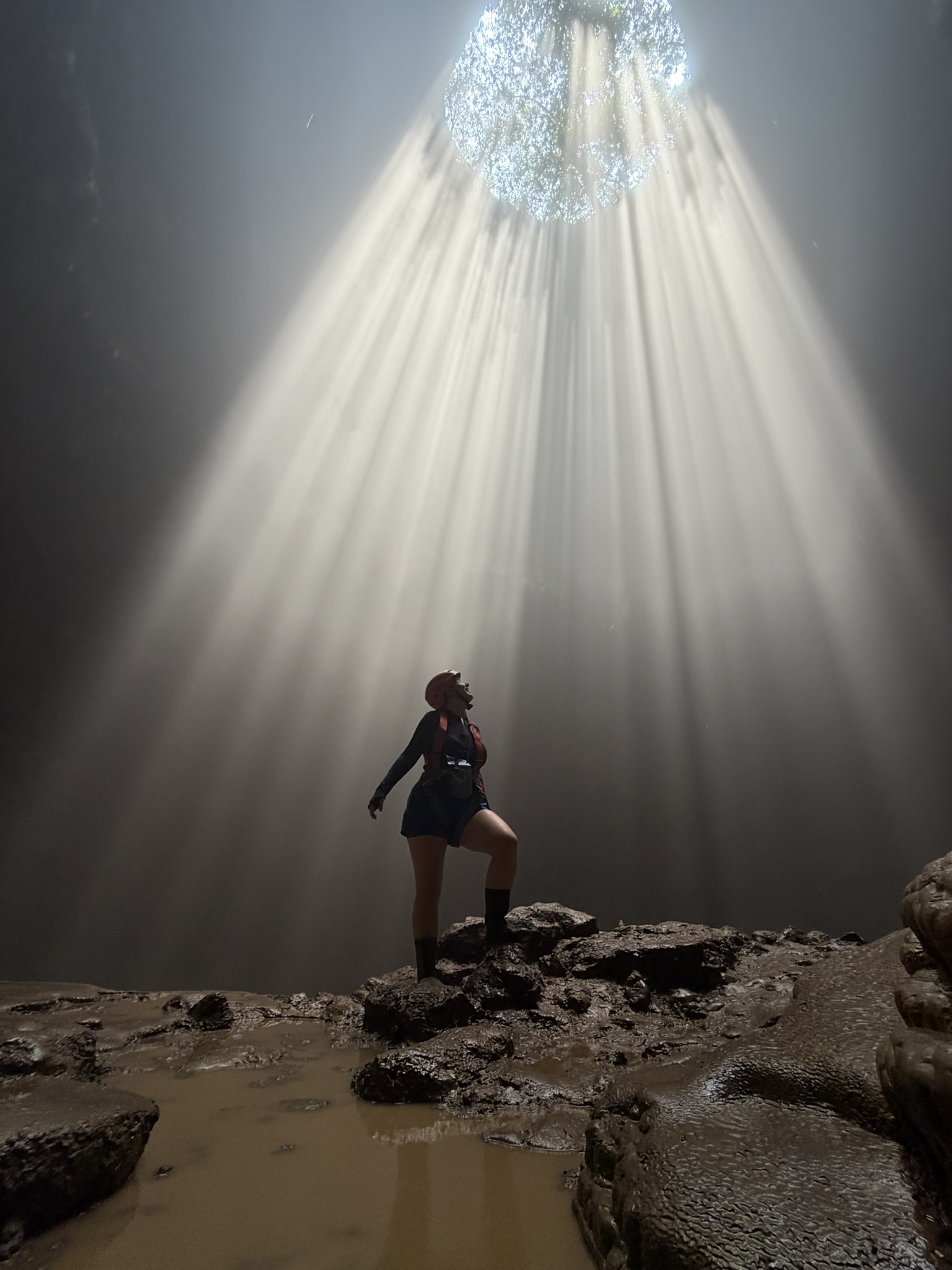
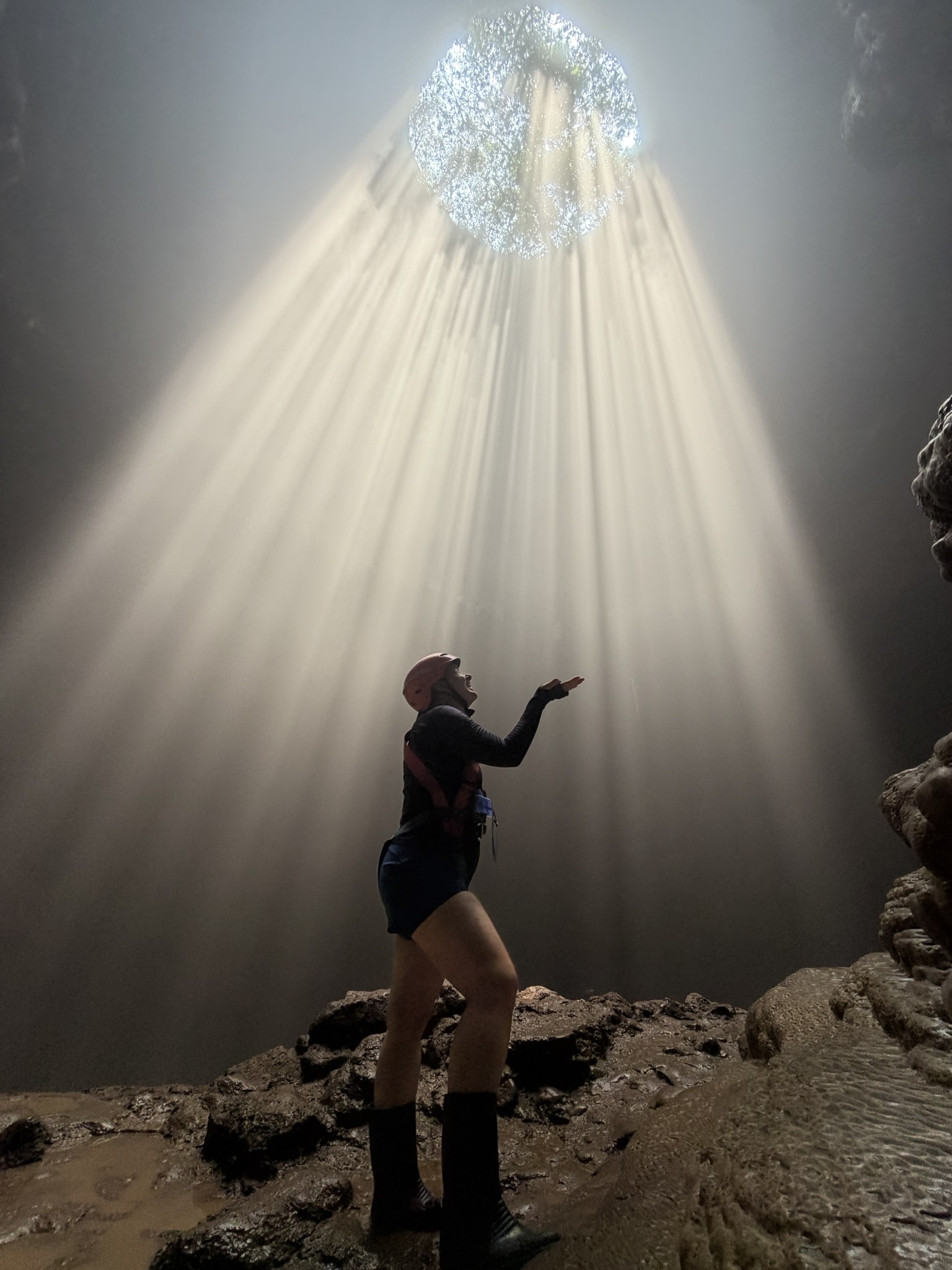
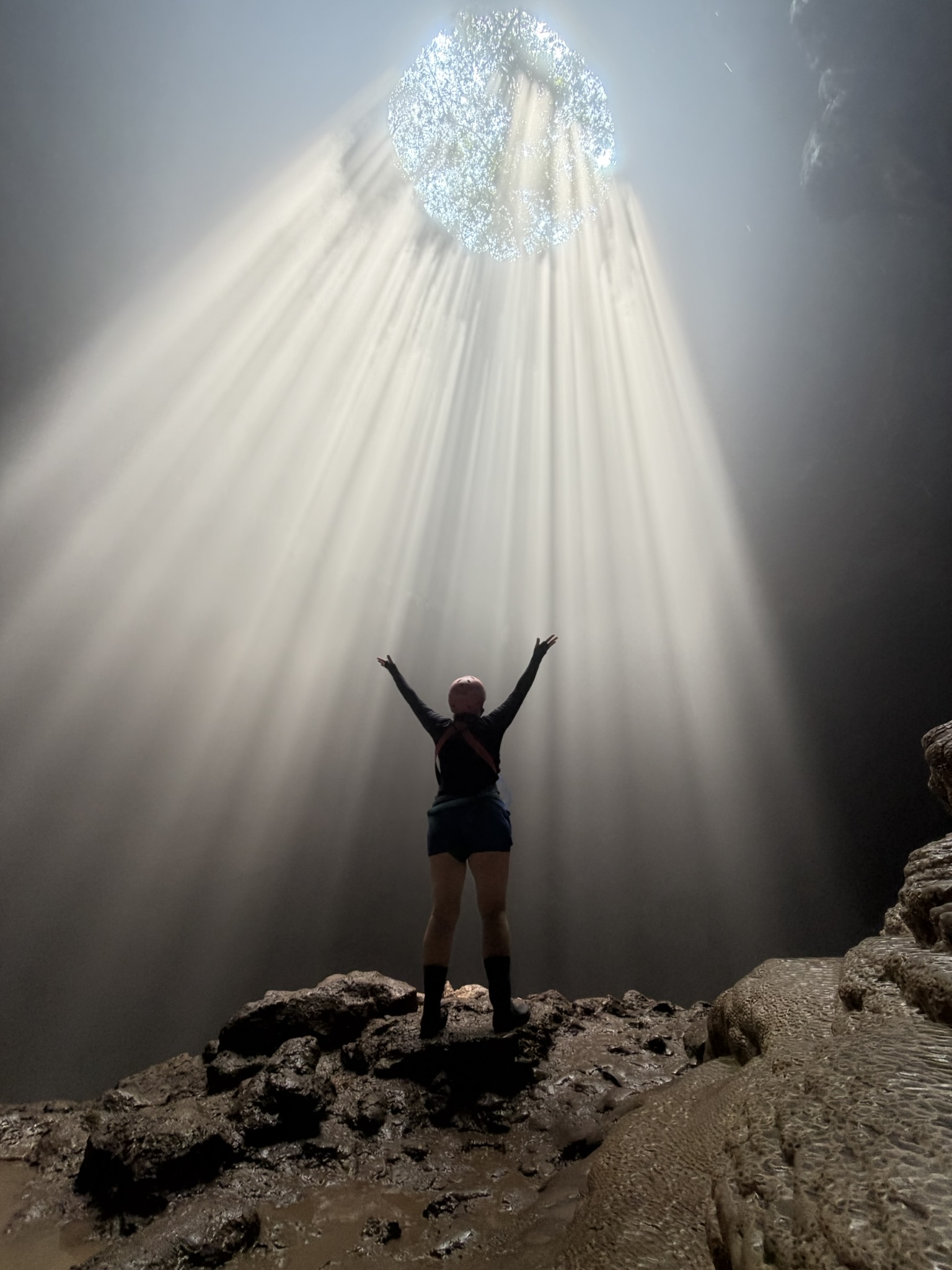
Soon, we arrived at the main attraction: an opening in the roof of the cave that lets in a heavenly stream of light beams into the dark cave. With the low oxygen levels and the water flowing down below it was an awesome experience. The guides took some amazing photos for everyone.
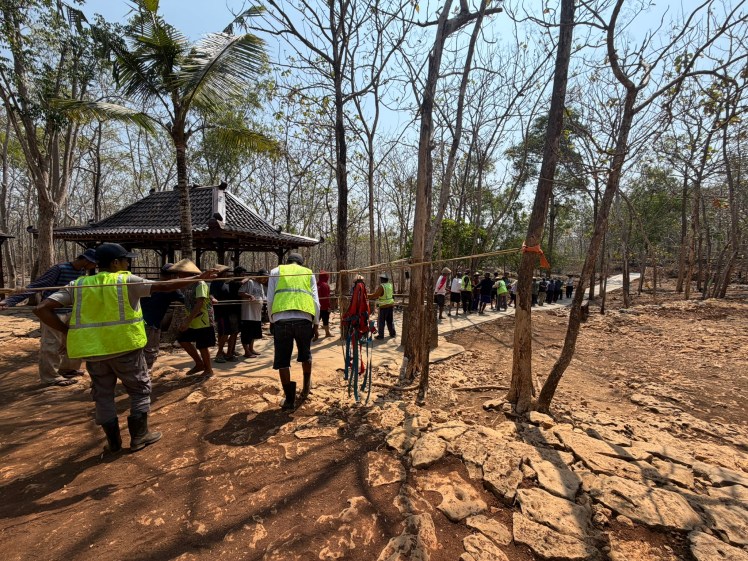
The way out took quite a long time, and I soon learned why. With about 100 people in the cave that day, we had to be lifted back out by rope, two by two. The extraction mechanism? 30 men heaving the two ropes up. It was a sight to behold. Each couple took about 3 minutes in total; I took to counting the seconds to keep me entertained during the wait.
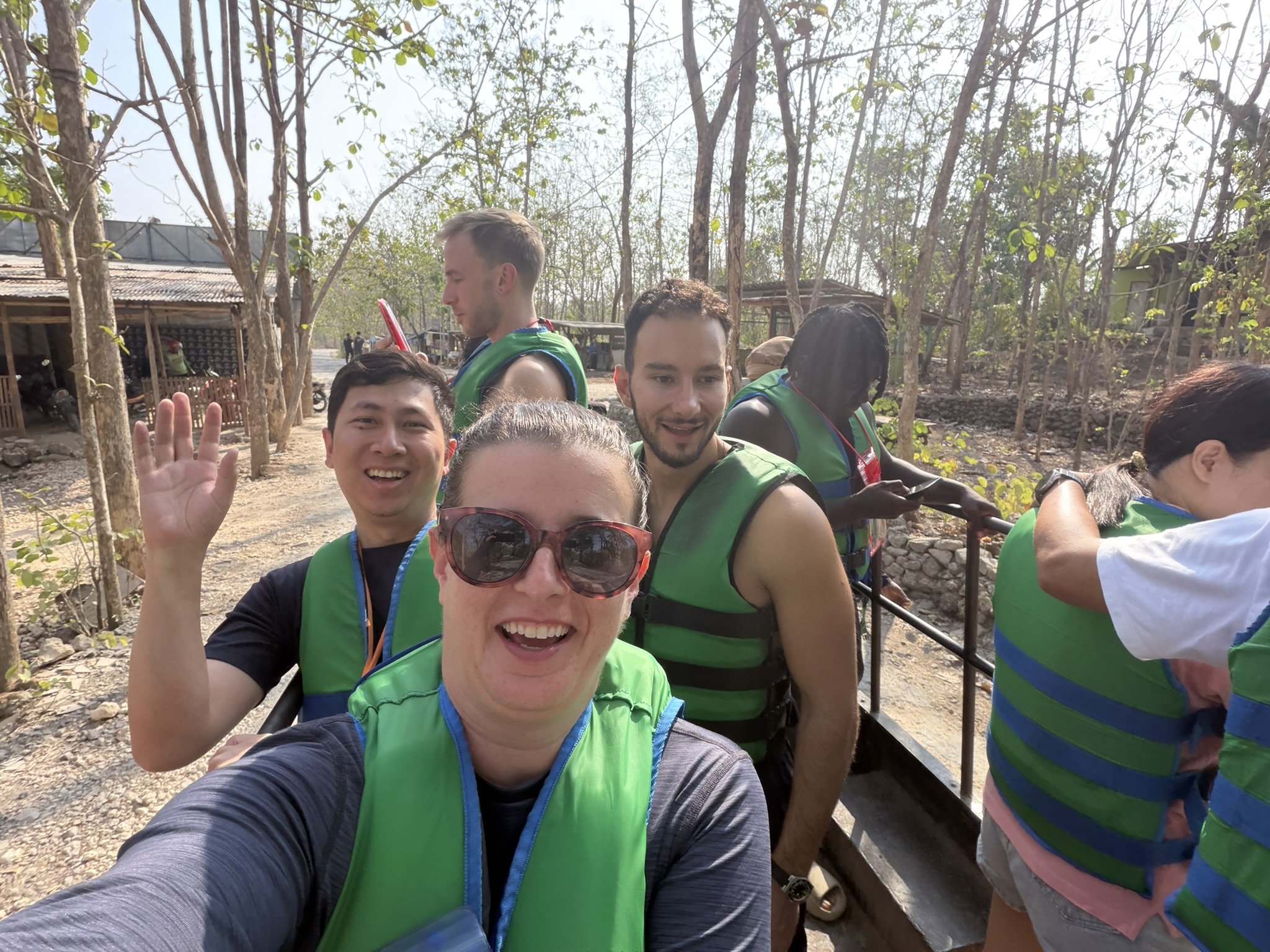
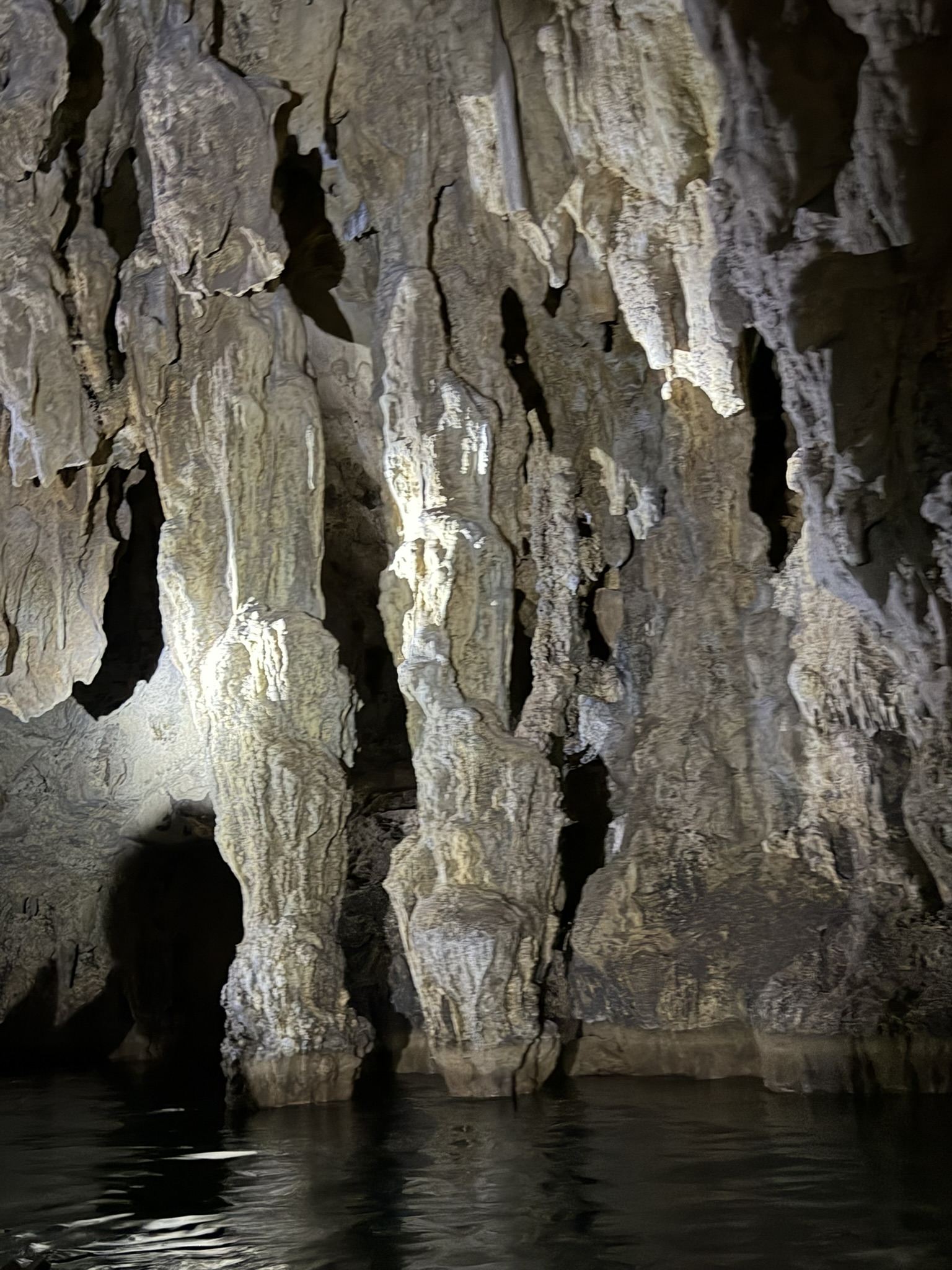
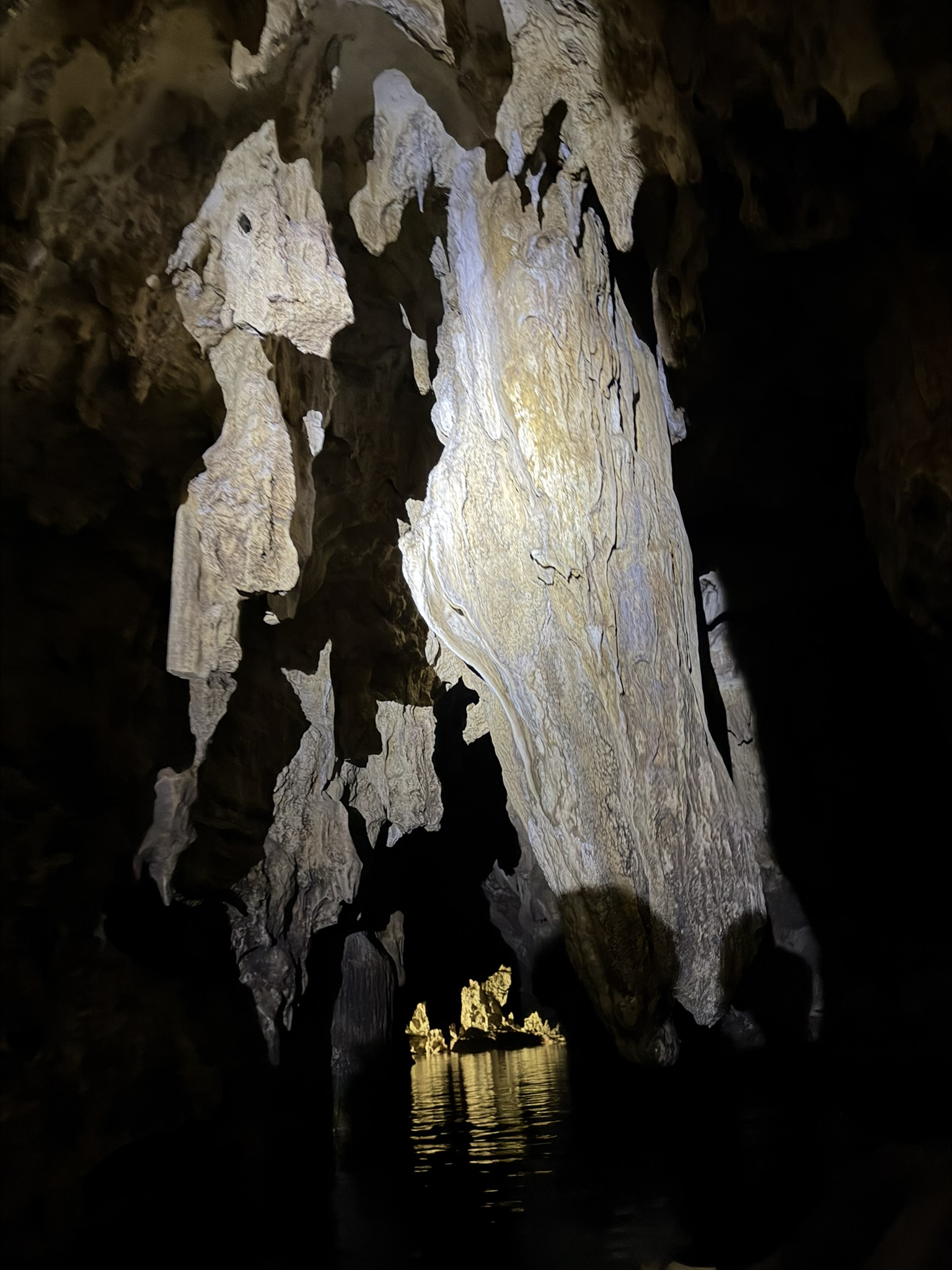
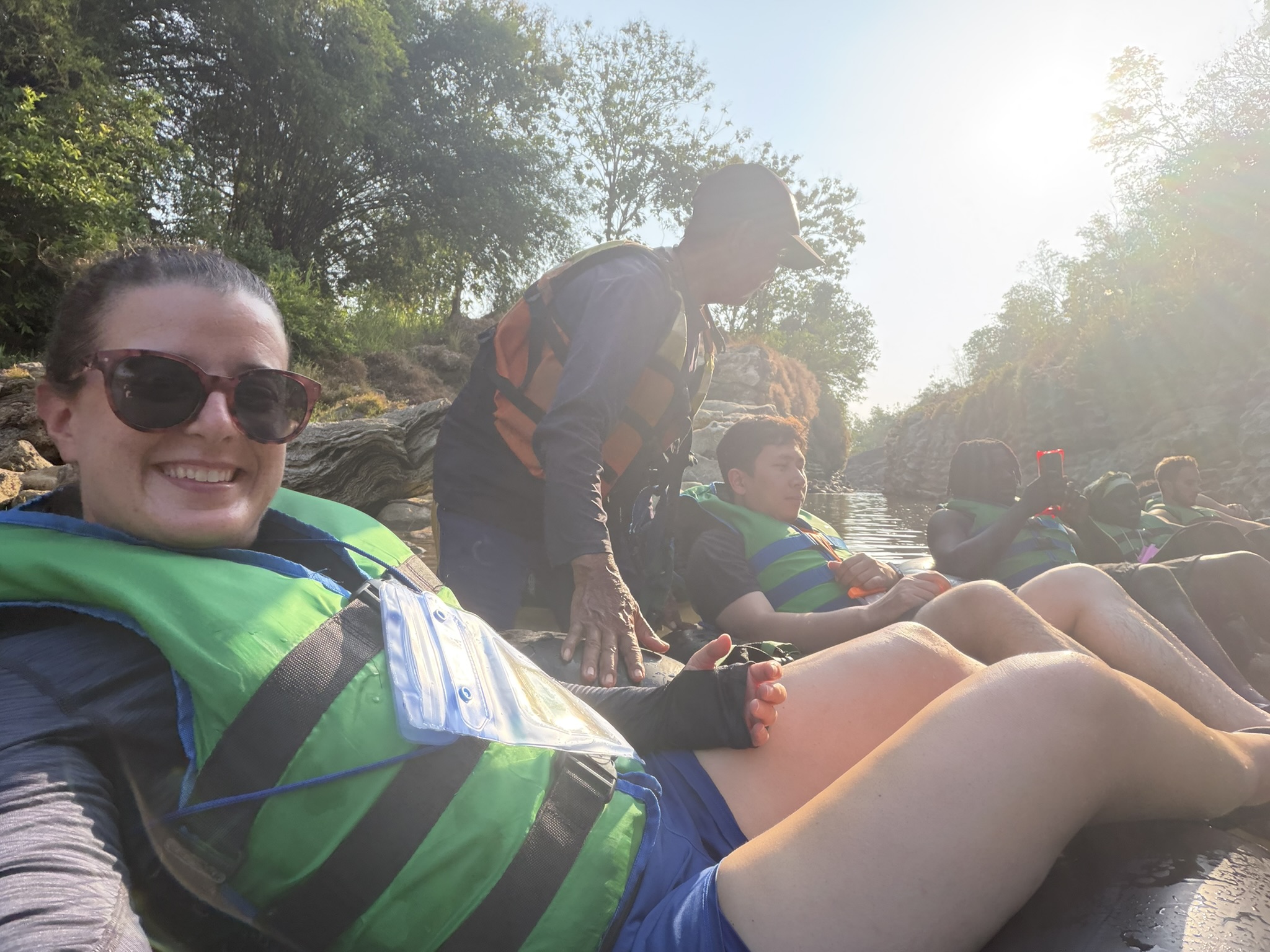
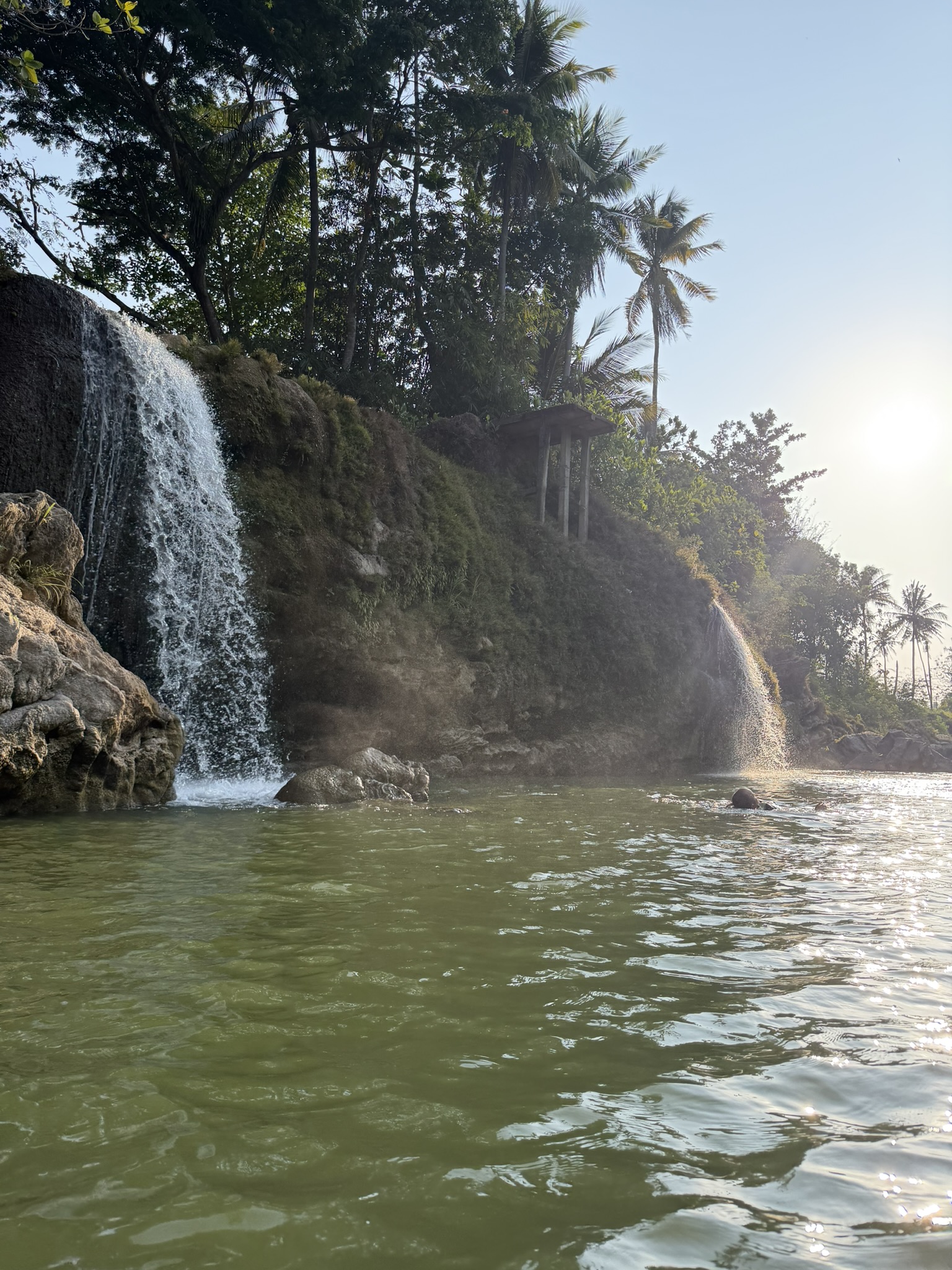
After lunch, we made our way to yet another epic cave experience at Pindul Cave, which was much chiller and essentially a calm river tubing experience. The chaotic part entailed climbing in the back of an open-air truck, standing, to transport us to the cave entrance. It was scary but nice driving through a small village. The cave was dark with excellent rock formations and many bats on the ceiling, and later we tubed down the river outside to see some small waterfalls. I left the day happy to be in nature and fresh air, feeling good about my continuing travels.
Having enough time to travel slowly in Yogyakarta was helpful in bringing me back to my center. I found a local yoga class that was very challenging and unintentionally a hot yoga class with its semi-outdoor space. I got an aromatherapy massage at a nice place for $12, the lemongrass scent reenergizing me. I went shopping and bought a cute skirt that I could wear to blend in with the modest Muslim culture while staying cool. Just some little things to make me feel like me, and not just an overwhelmed tourist.
I’m glad I saw Jogja and dug deep into my time there, despite some of the ongoing challenges around air quality and health; and despite the endless unfamiliarity. I could feel myself learning and growing, even through some of those harder moments. With a few days left in Java, I was eager to see what the rest of the island had in store for me.