I really liked Crete when I visited in 2022, though it was only for a few days and entailed express tourism to see as much as I could. This time, I arranged for two weeks on the large and rugged island, which is the southern-most Greek island and is as close to Africa as to mainland Europe. First, a week based in the small northeast port city of Chania, returning to the nice large hostel I stayed in last time. Later, a few days in the south in Agia Roumeli and then the northern port city of Rethymno, before flying out of Heraklion.
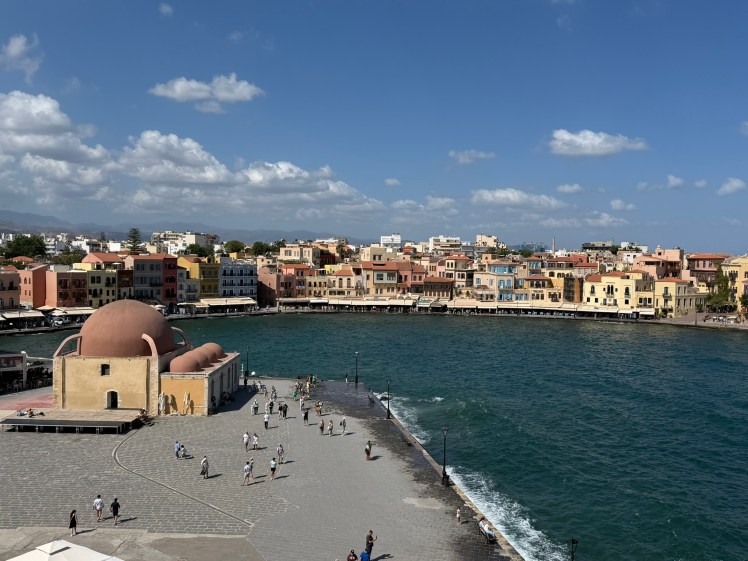
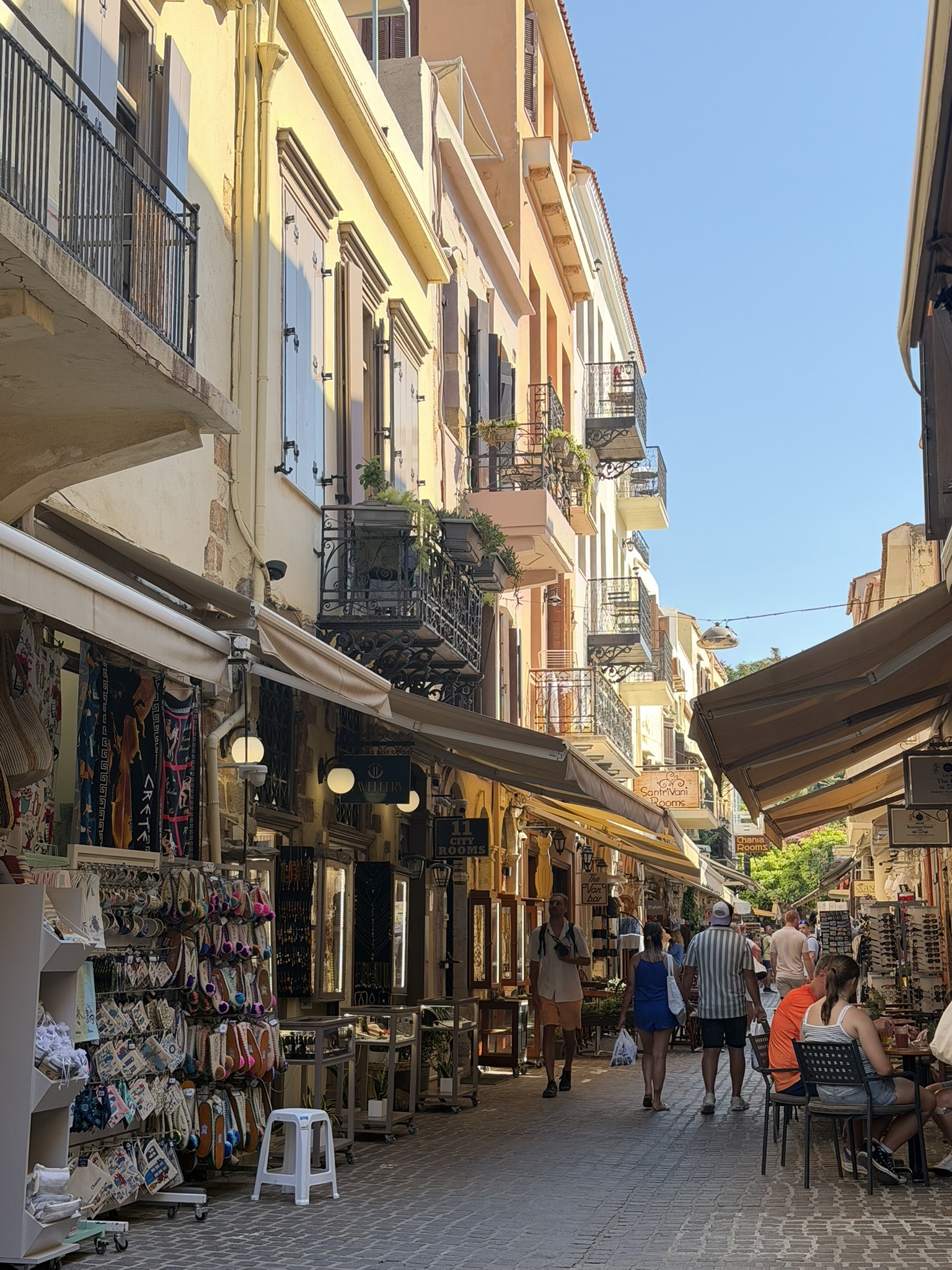
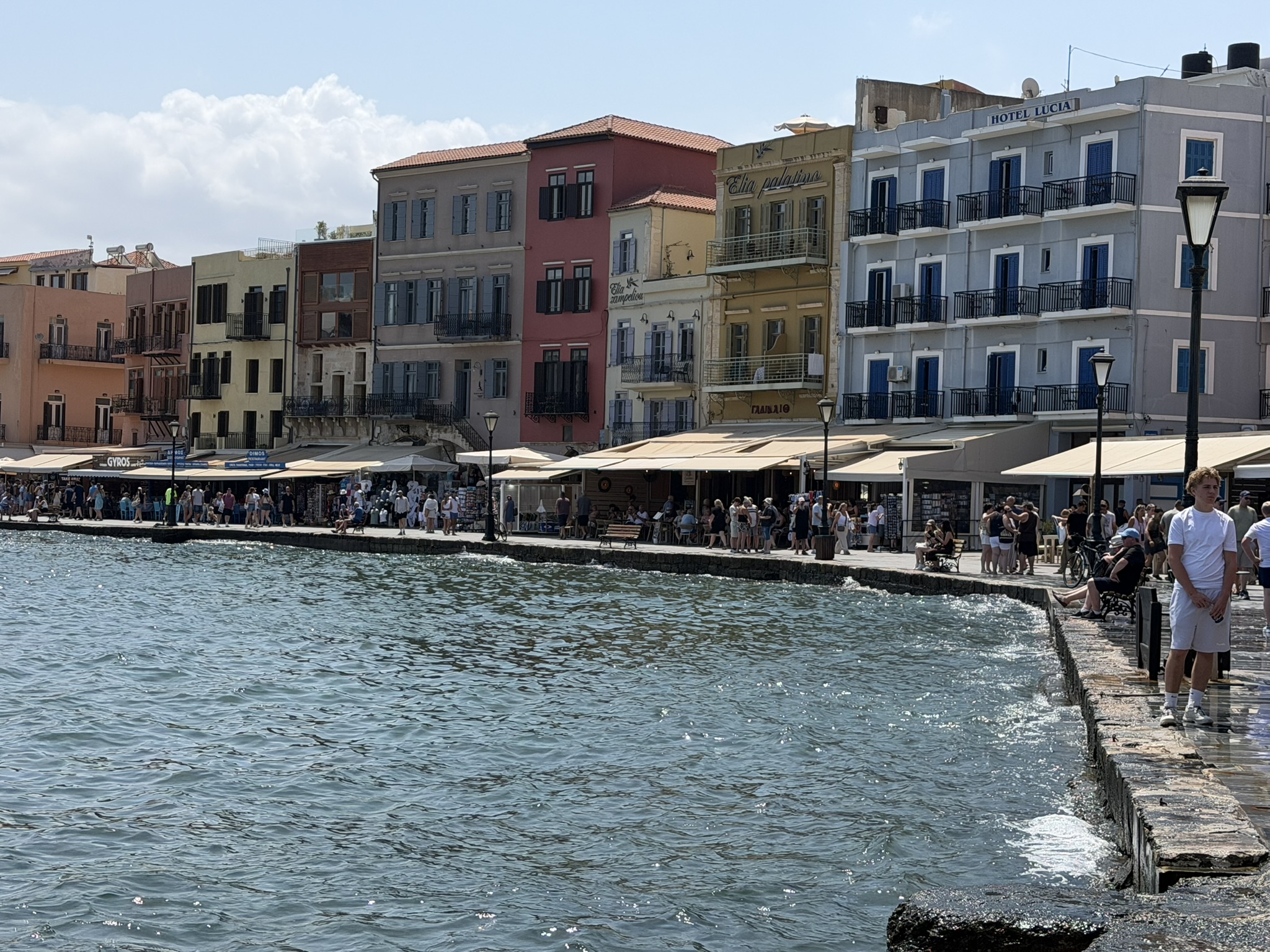
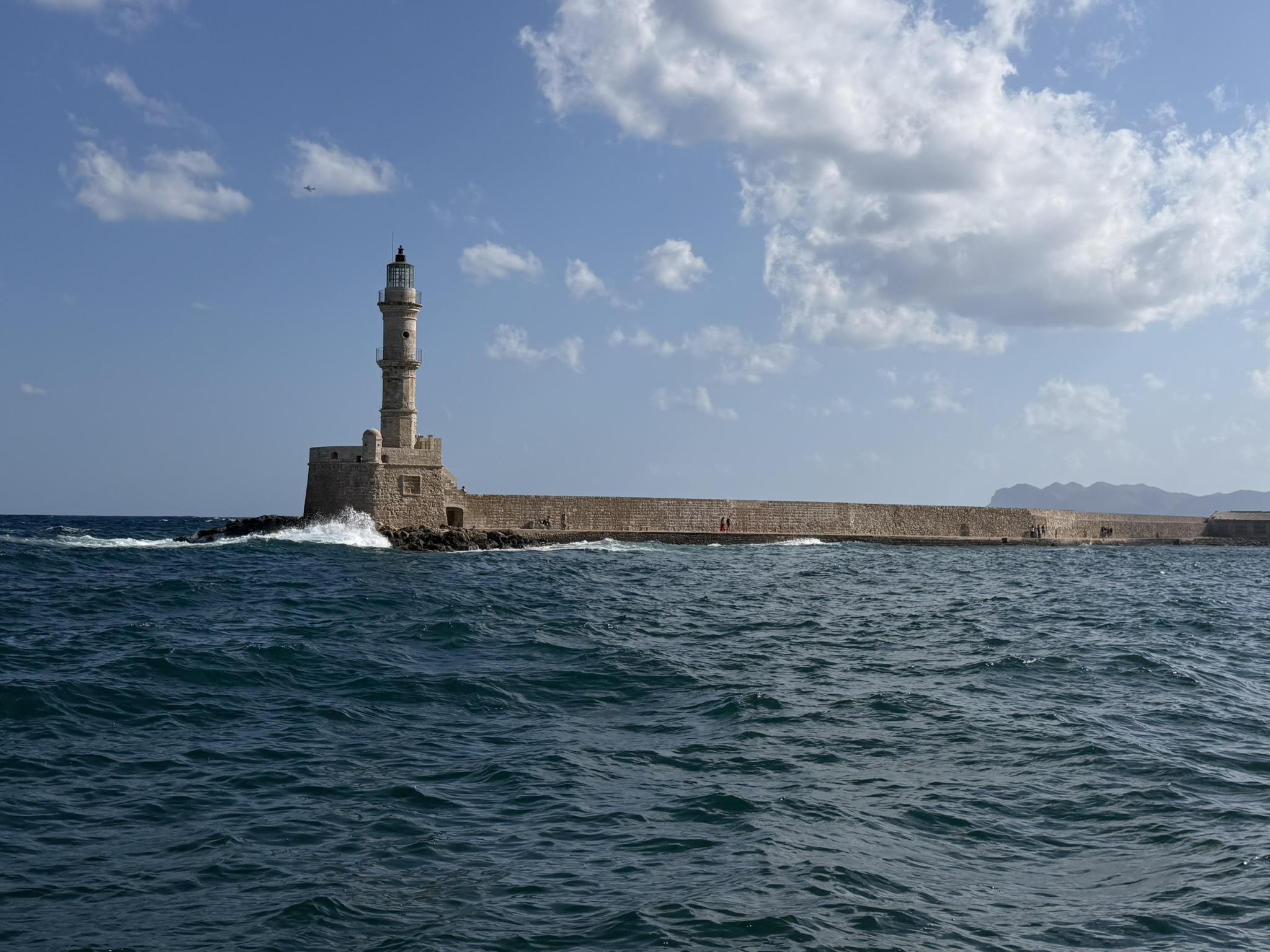
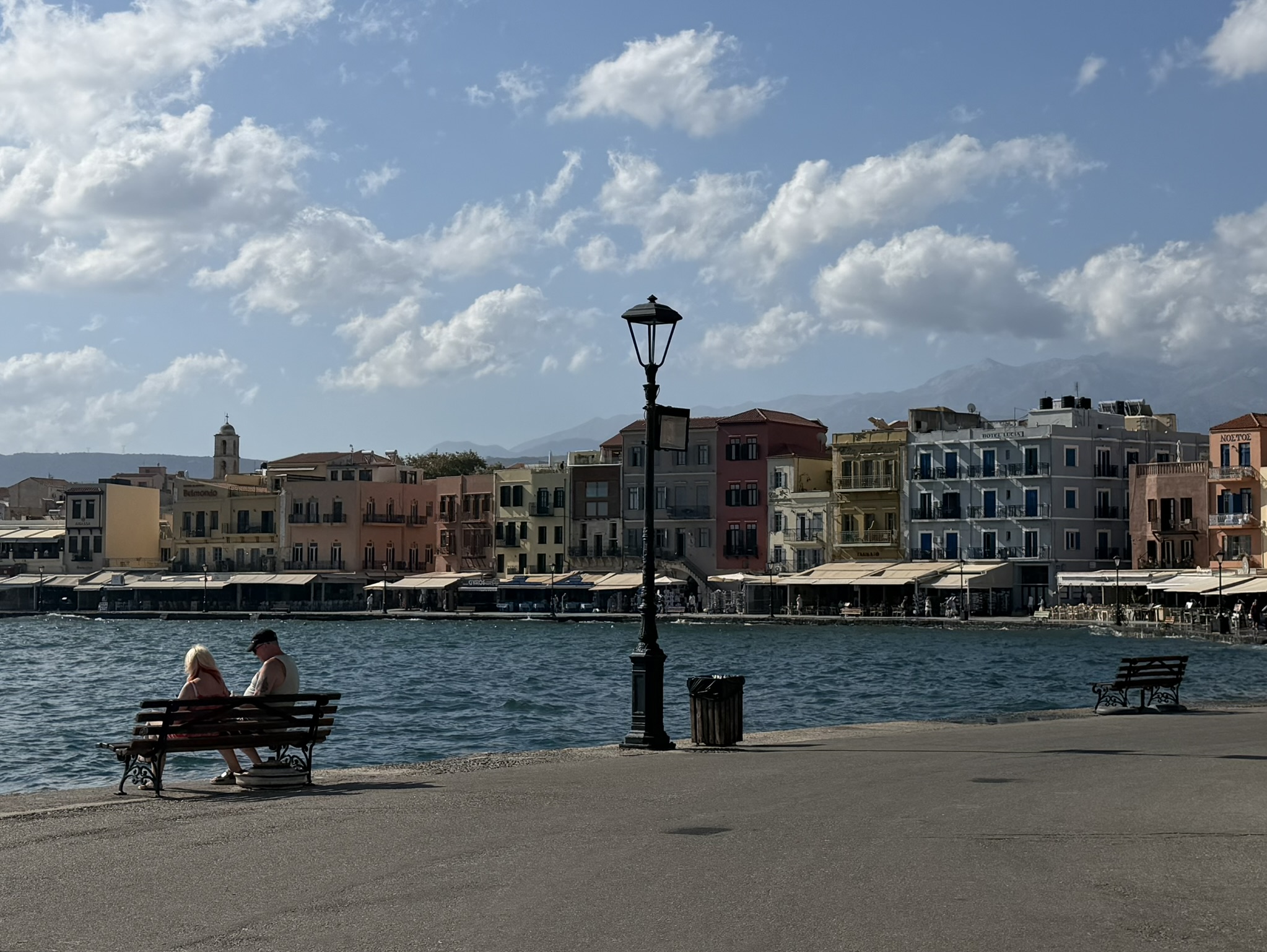
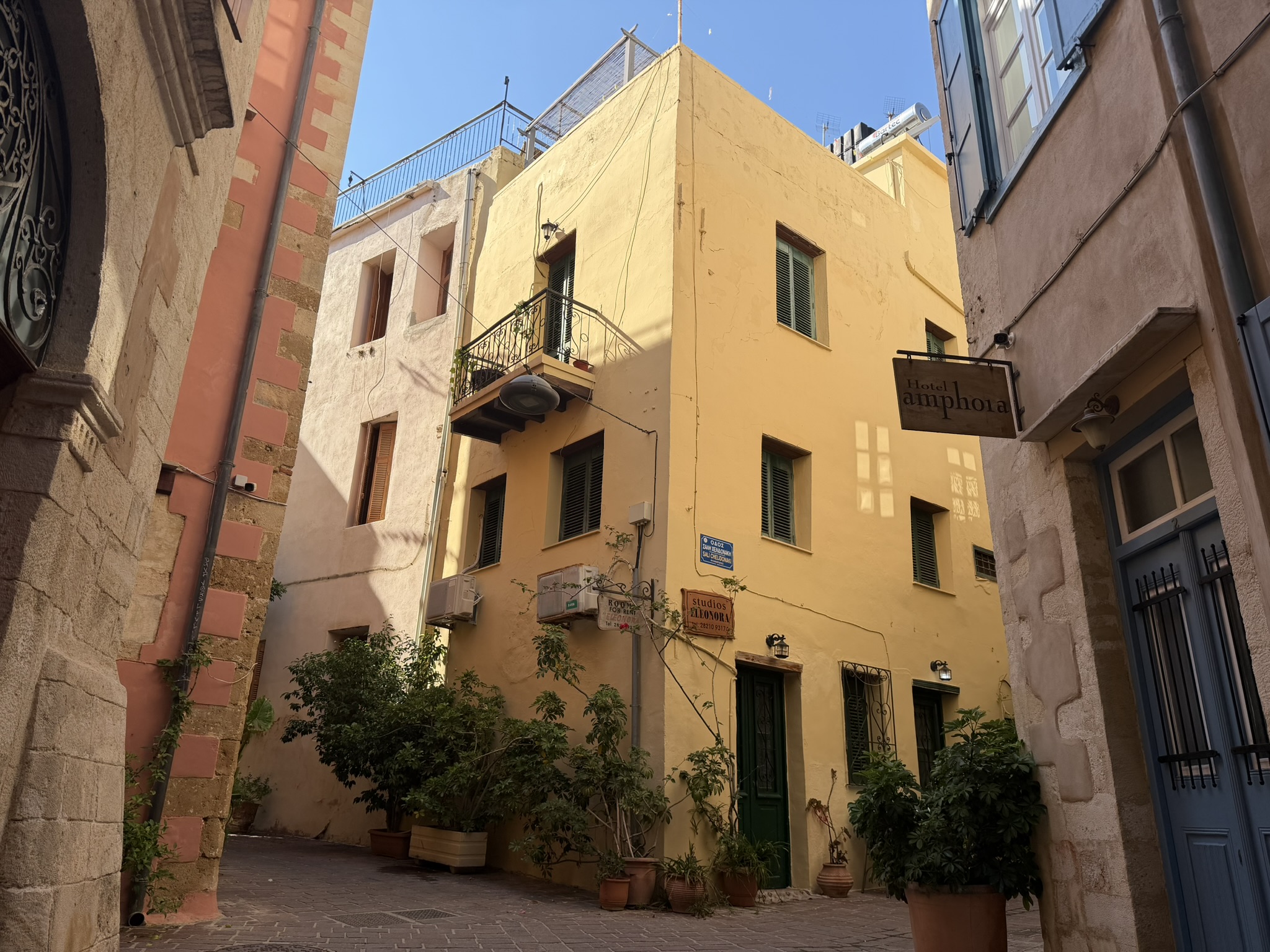
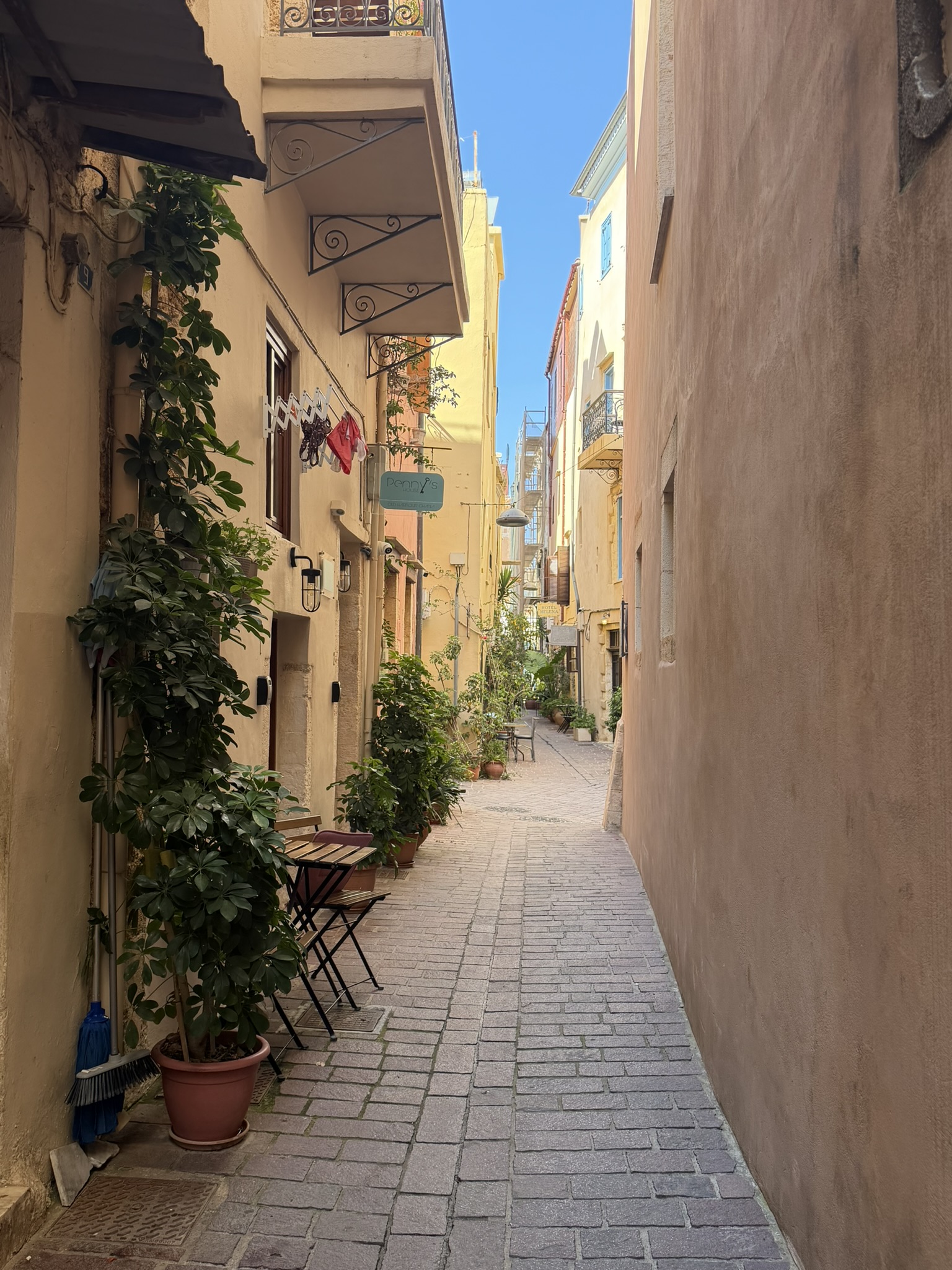
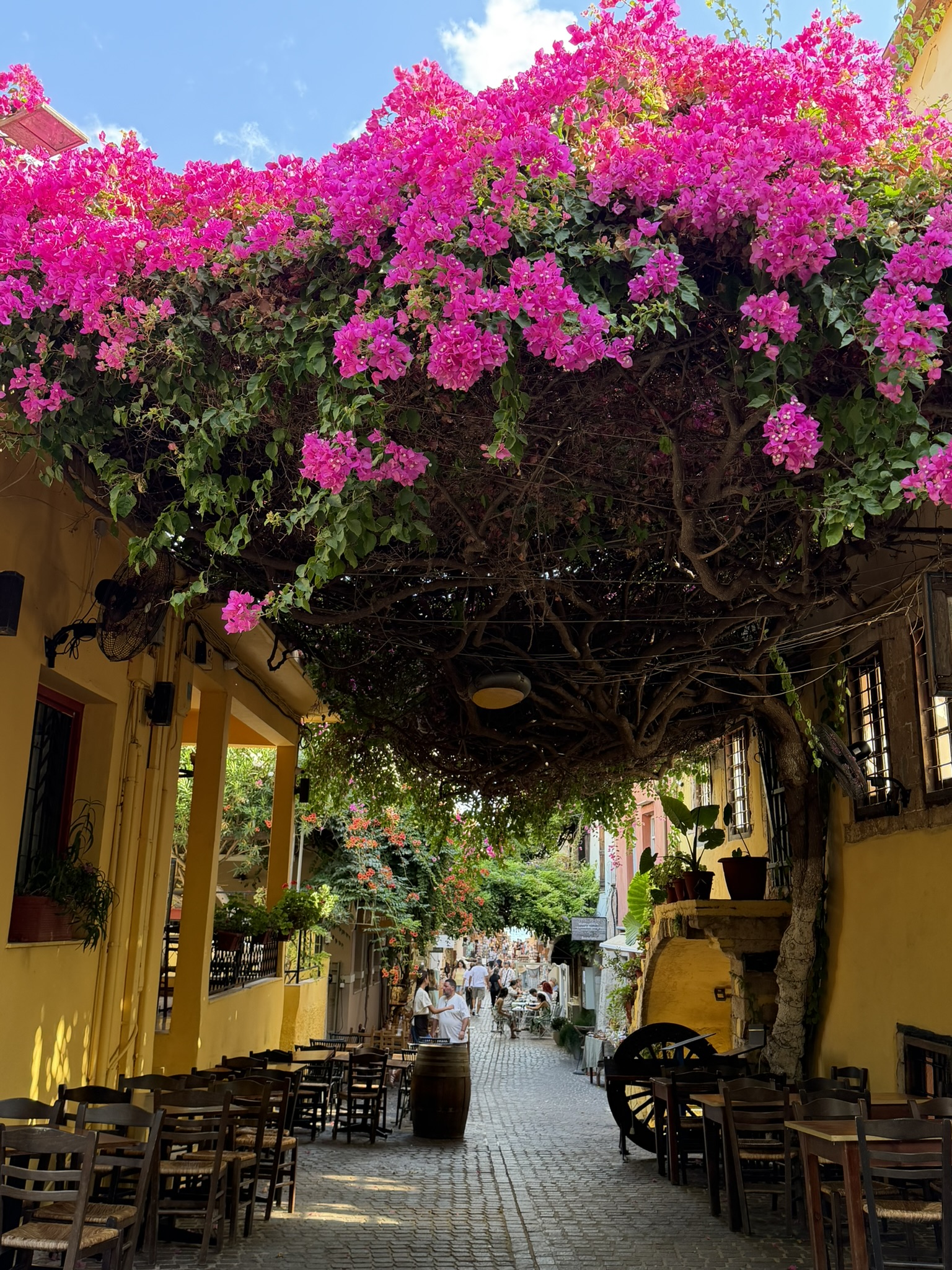
I find Crete to be a great combination of tourism activities, nature, and a real local place; somewhere I find myself saying “I could live here.” Of course, I still haven’t found a place I’d actually want to live long-term other than New York, but the sentiment still arose. Chania has everything: it’s a small port city of about 55,000 people—more in the summertime, and one of the largest developments on the island of 650,000 residents. It features a charming, horseshoe-shaped old town harbor lined with waterfront dining and shops, overlooking a lighthouse and encased in old fortress walls that have seen many colonizing forces over the centuries, ranging from the Venetians to the Ottomans to the Germans. This has left Crete with a real sense of independence, and though the island fought hard to become part of Greece in 1913, it maintains its own identity and distinct culture and traditions.
With two weeks to enjoy Crete, I really settled in in Chania. A few days in, I found myself recognizing a shift: I’m finally deeply enjoying myself. Of course I had a great time on the other islands, especially in Naxos where I could feel the stress start to melt away with each beachy sunset, but now I’m feeling stunningly present and full. It’s a feeling I often chase when traveling, and yet so elusive, especially when there’s limited time to explore a place. It’s hard to say why it happened in Chania. Perhaps it was the people I met, or the food I ate, or the nature I explored, or the stabilizing force of a city atmosphere. Maybe it was time. Or maybe it was just the intangible feeling of a great place.
People
Chania was the most social time of my trip so far. I made quick and close friends in the hostel, mostly with my dormmates and people at group meals arranged via the hostel’s group chat. I also discovered an app for traveler get-togethers called Nomad Table that I hope to try in other locations if I am feeling lonely.
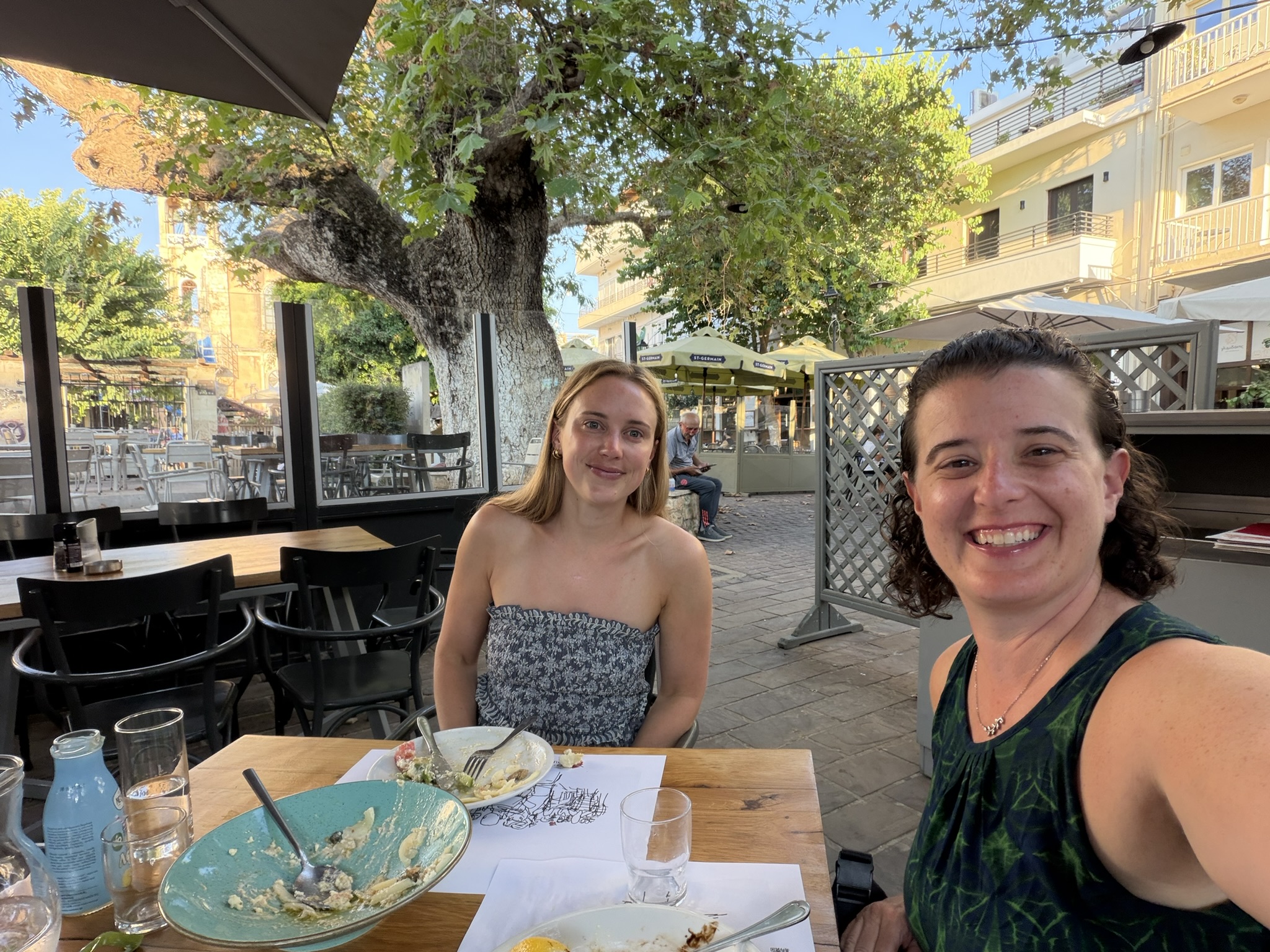
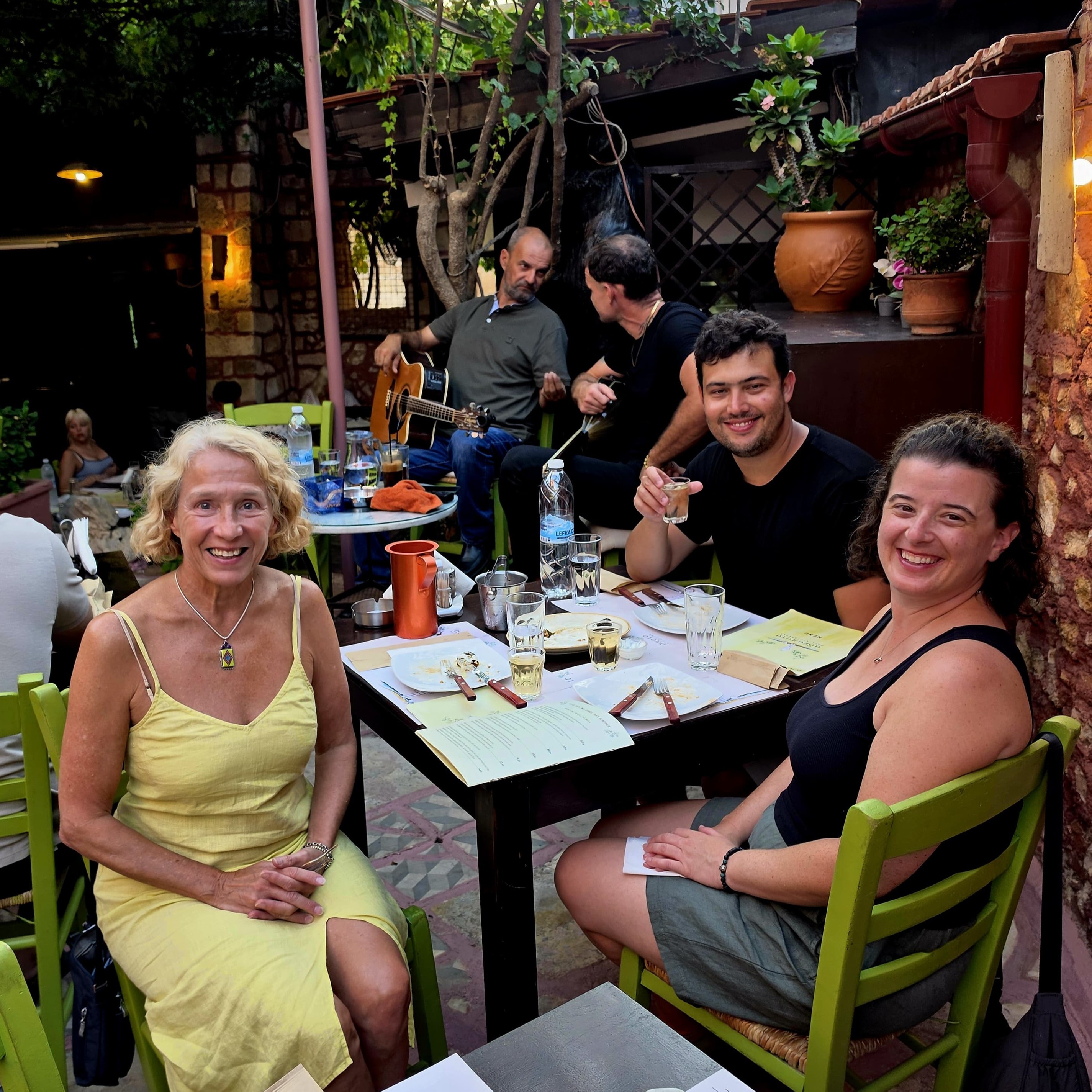
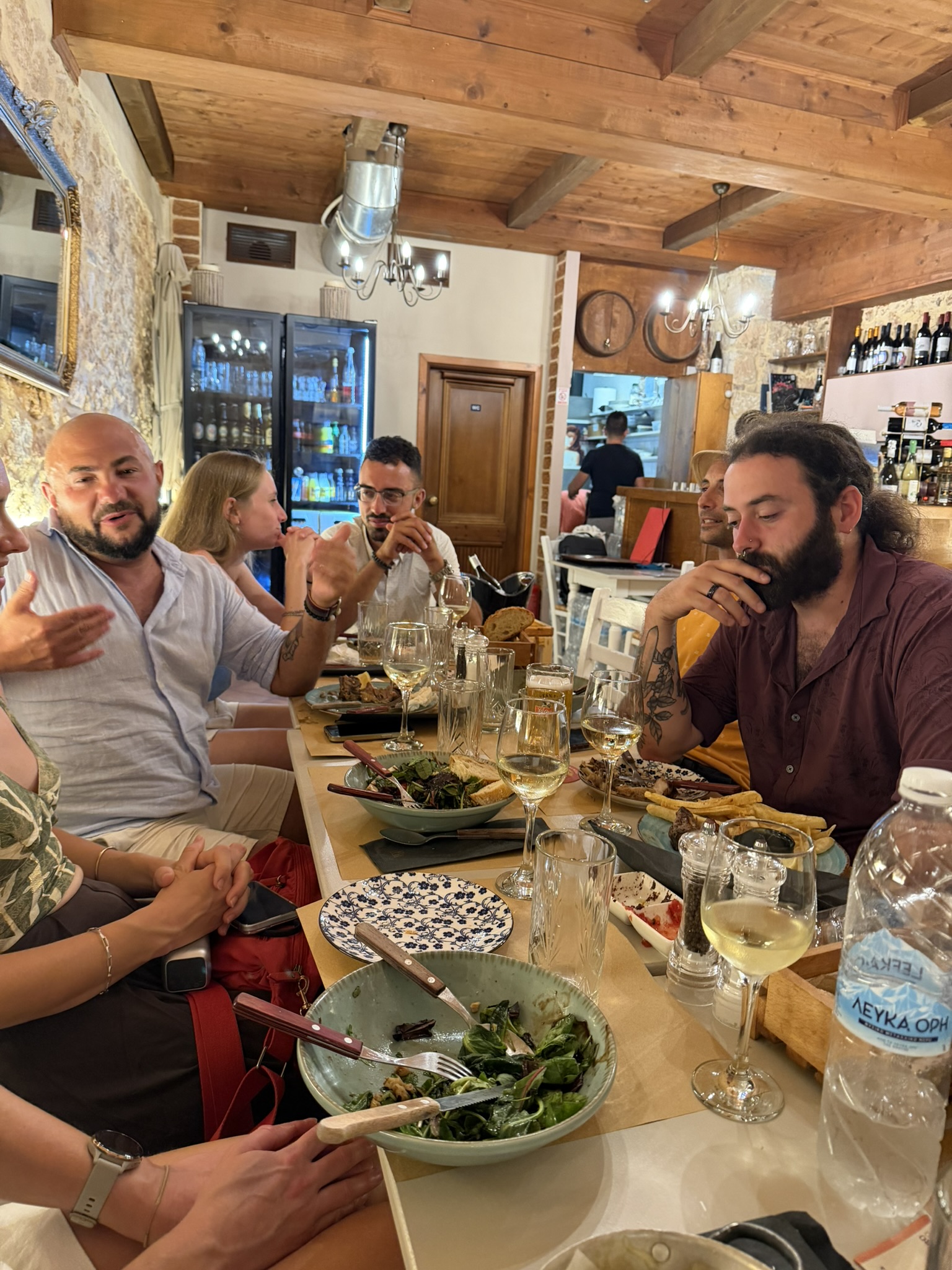
I spent a lot of time with my roommate Hillary from New Zealand, who is on a 3-month trip allowed by her medical job as she prepares for her exams and celebrates turning 30. We seemed to have similar vibes and schedules. Jane was the first traveler I met so far from NYC, an outgoing and energetic woman of 68 enjoying her retirement from working for the UN. Luis, an early 30s gay man from Mexico City with parents now in France and living and teaching physics in Russia, while seeming to speak every language imaginable including Greek. Nico, a Crete native staying in the hostel while his family was going through some drama, most recently a chef in New Orleans after studying in Mississippi, back in Greece for his year of mandatory military service and here to stay. He served as an excellent unofficial tour guide before drinks and a big group dinner one night. Patricia, from Spain living in Ireland and here to go scuba diving. Kira, from Ireland living in London here for a quick holiday with friends, also a nonprofit worker. Many others.
Hostels have their downsides; even in nice and clean ones I sometimes find myself craving a few private hours to lounge around uninterrupted. But for being social and meeting likeminded travelers, there is nothing better. It was such a great contrast from my solo time so far. It has me reflecting on the need for social balance in the months to come.
Food
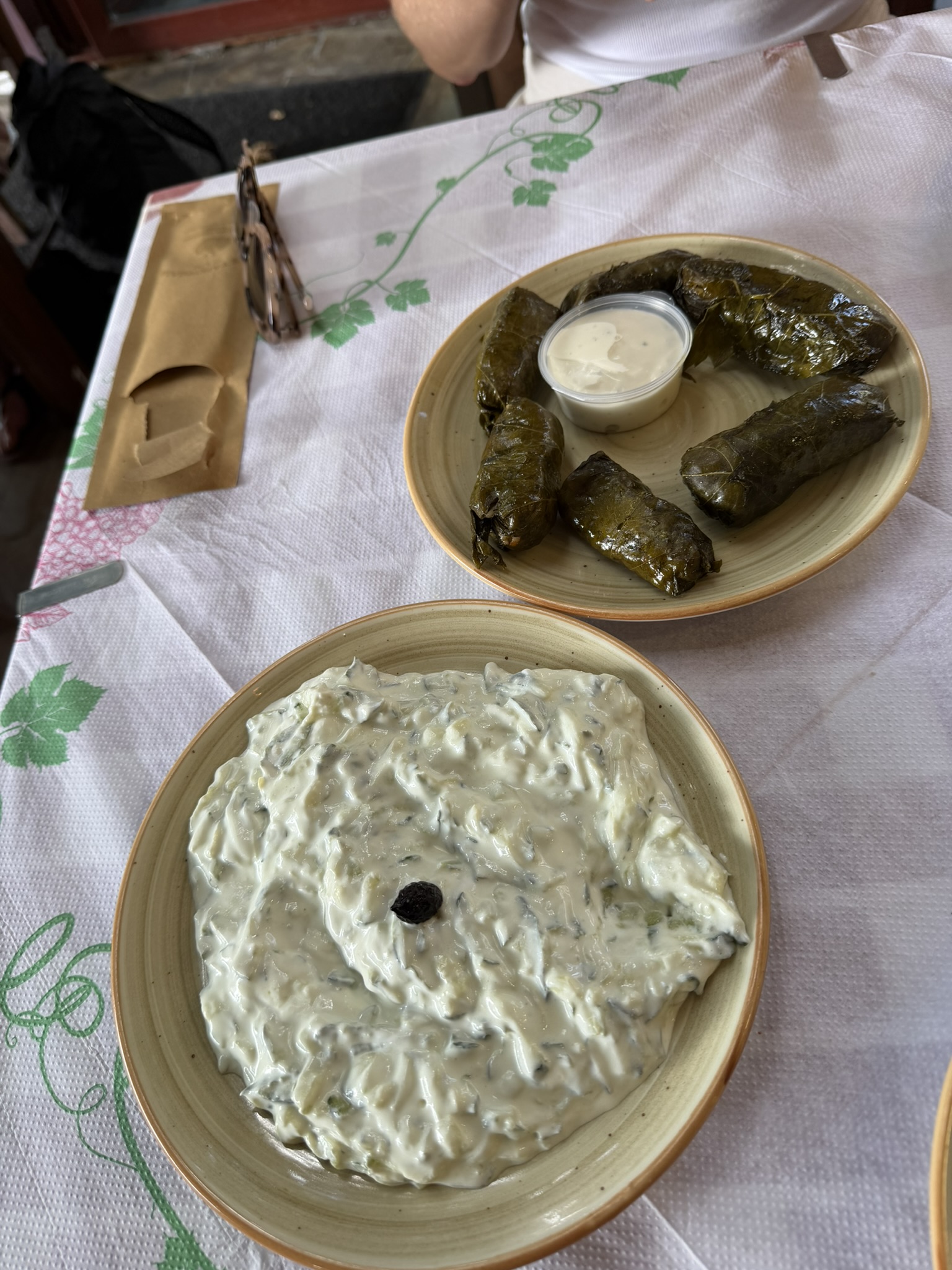
I still have not had a bad meal in Greece (except perhaps the bread and butter dinner I had a night I felt sick). Each Greek island has its own specialties, though I find Crete to be the most locally-sourced and unique spot. While of course there are supermarkets and processed snacks and such, it seems most food is grown locally and supplied widely to households and restaurants.
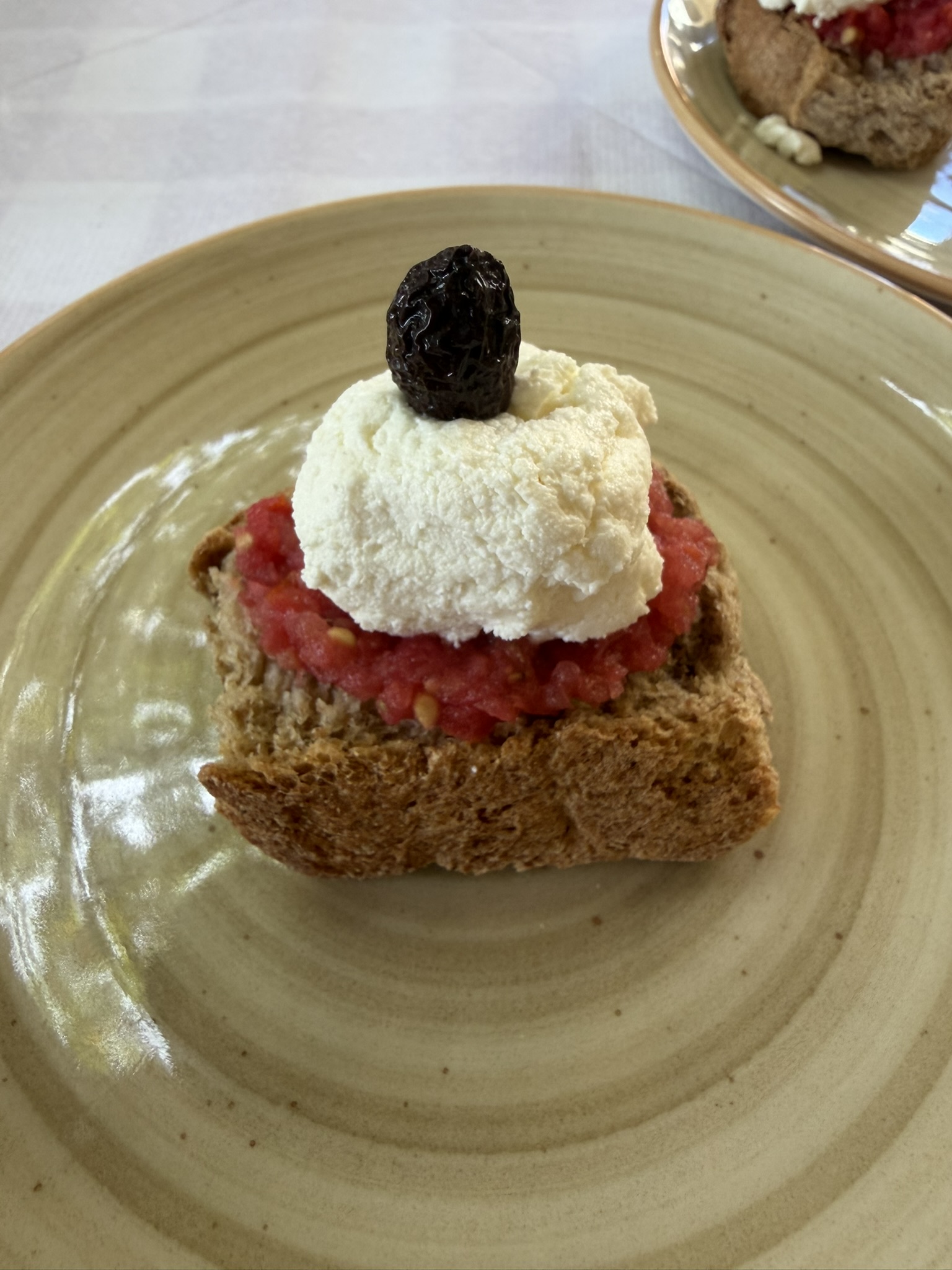
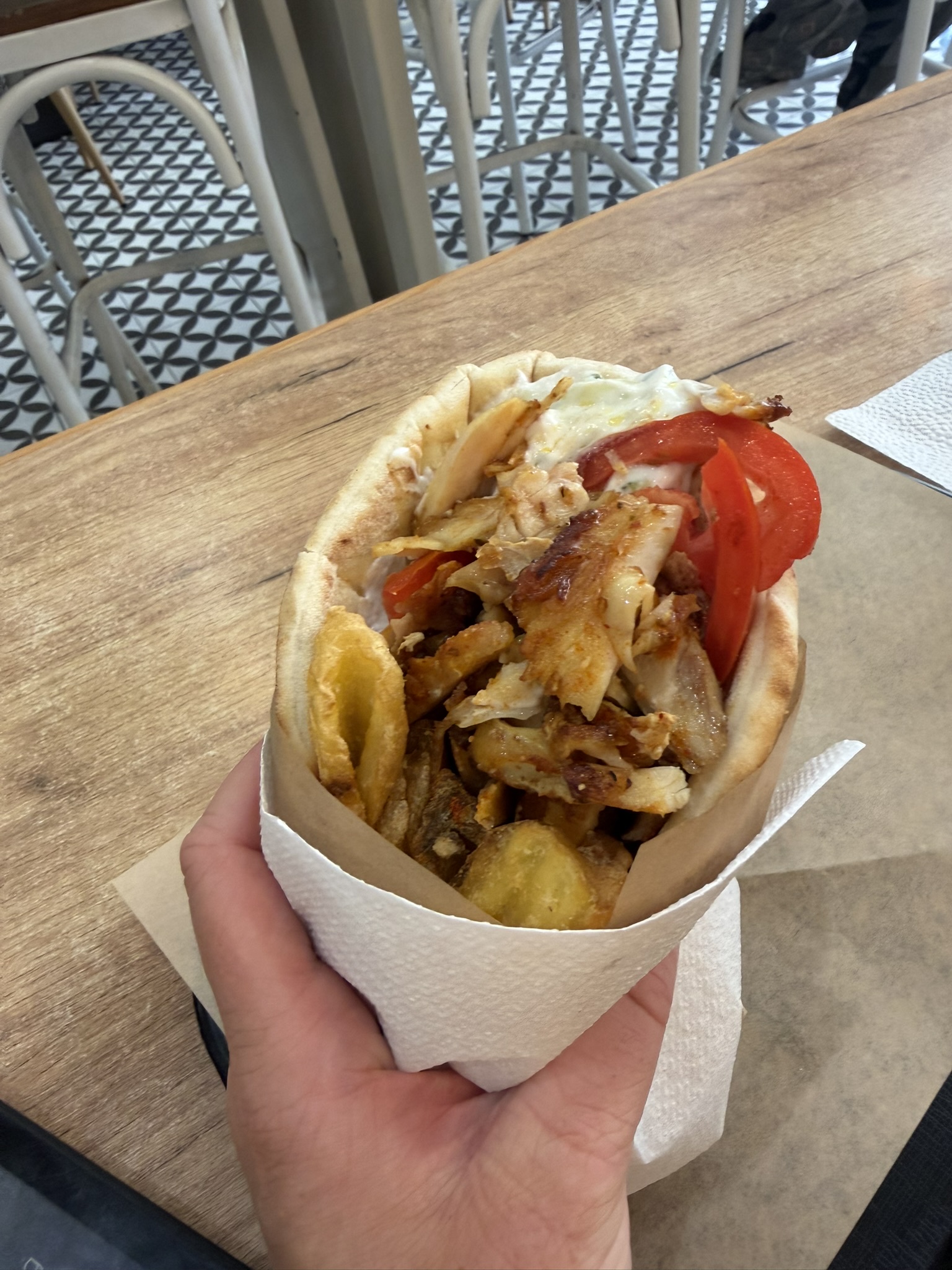
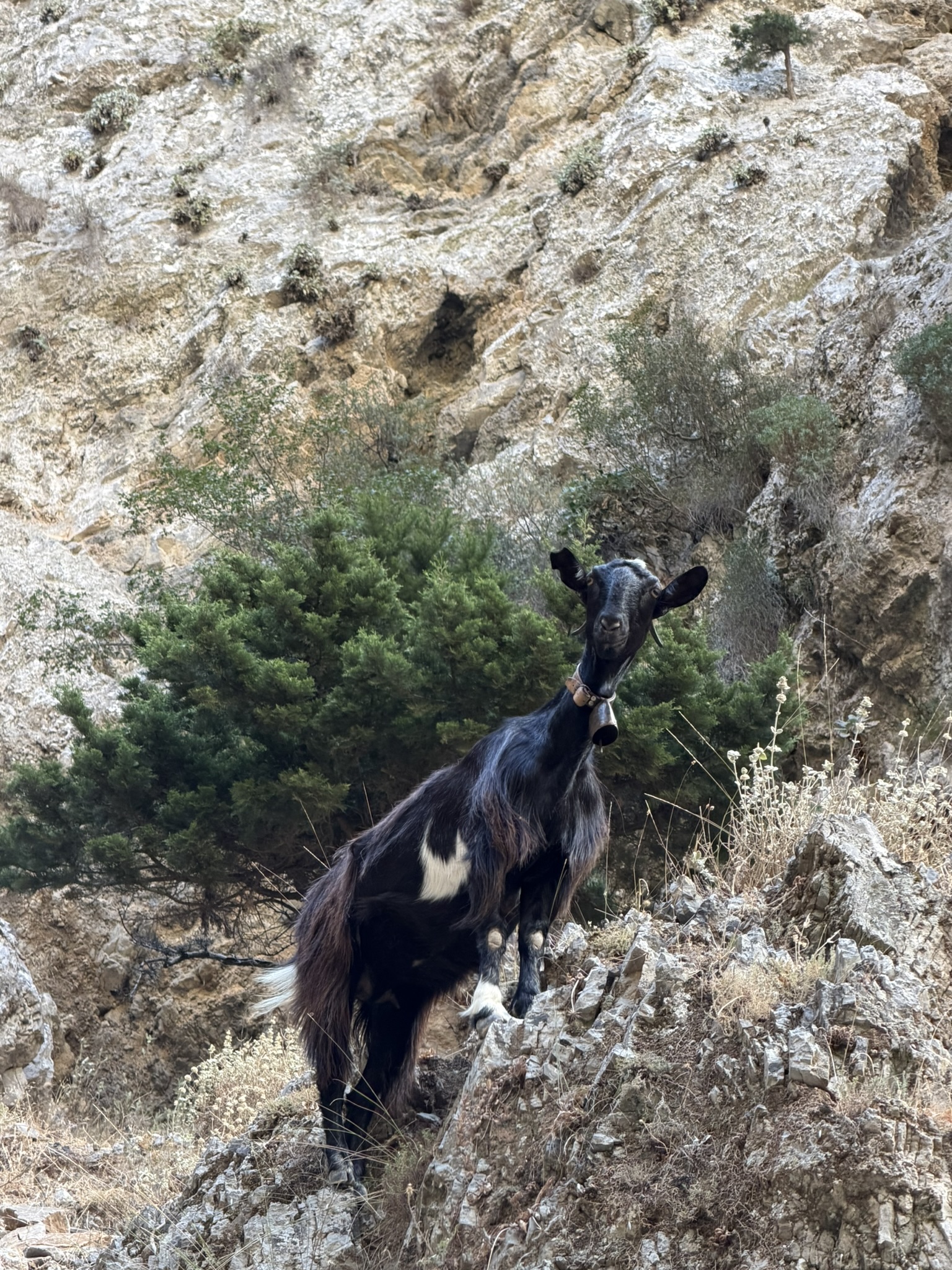
Some Cretan specialties include rusks, a common hardened bread; and dakos, a simple dish comprised of a rusk, tomato spread, and soft cheese on top, perhaps topped with an olive. Seafood isn’t as popular as certain meats here. I see goats everywhere and there is so much good cheese. I even tried a slice of fast food pizza, and though I was skeptical, it was pretty good. Souvlaki and spanakopita and all that good stuff is of course still around. Outside of Athens, I’ve seen very few non-Greek restaurants, except for some scattered Italian spots and in Rethymno a “Chinese/Indian restaurant.” Diverse options are not necessary here; I haven’t gotten sick of the food.
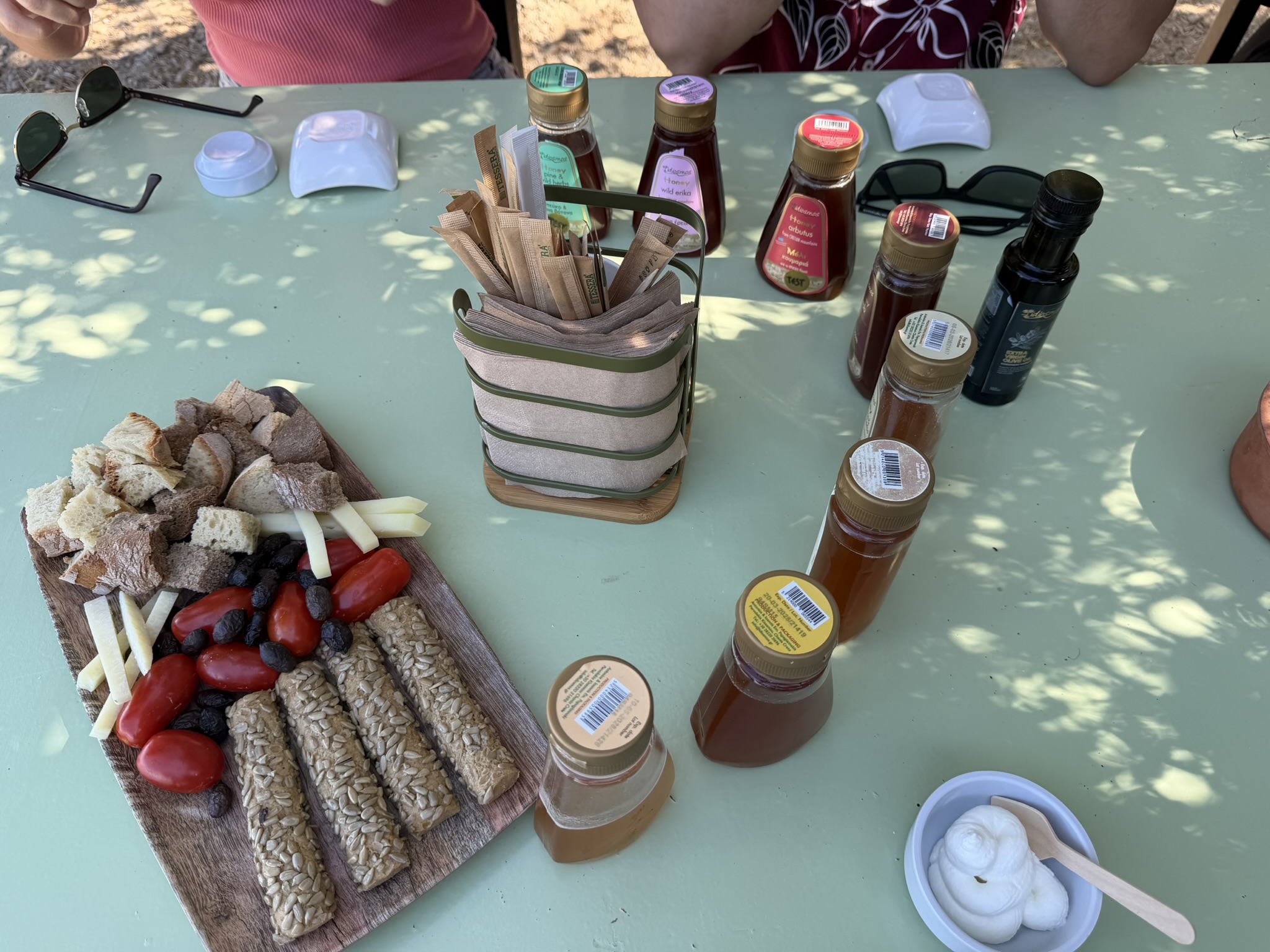
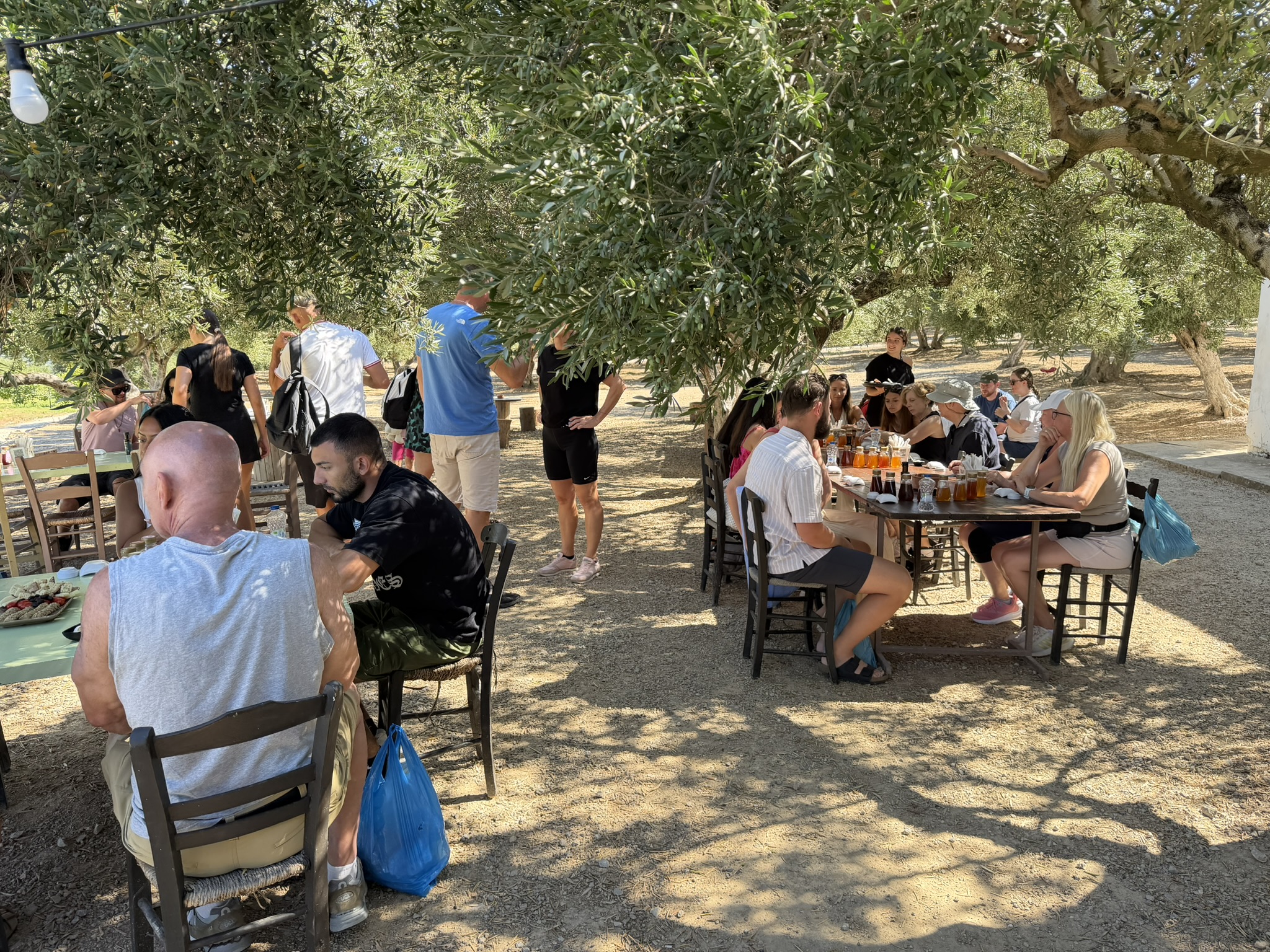
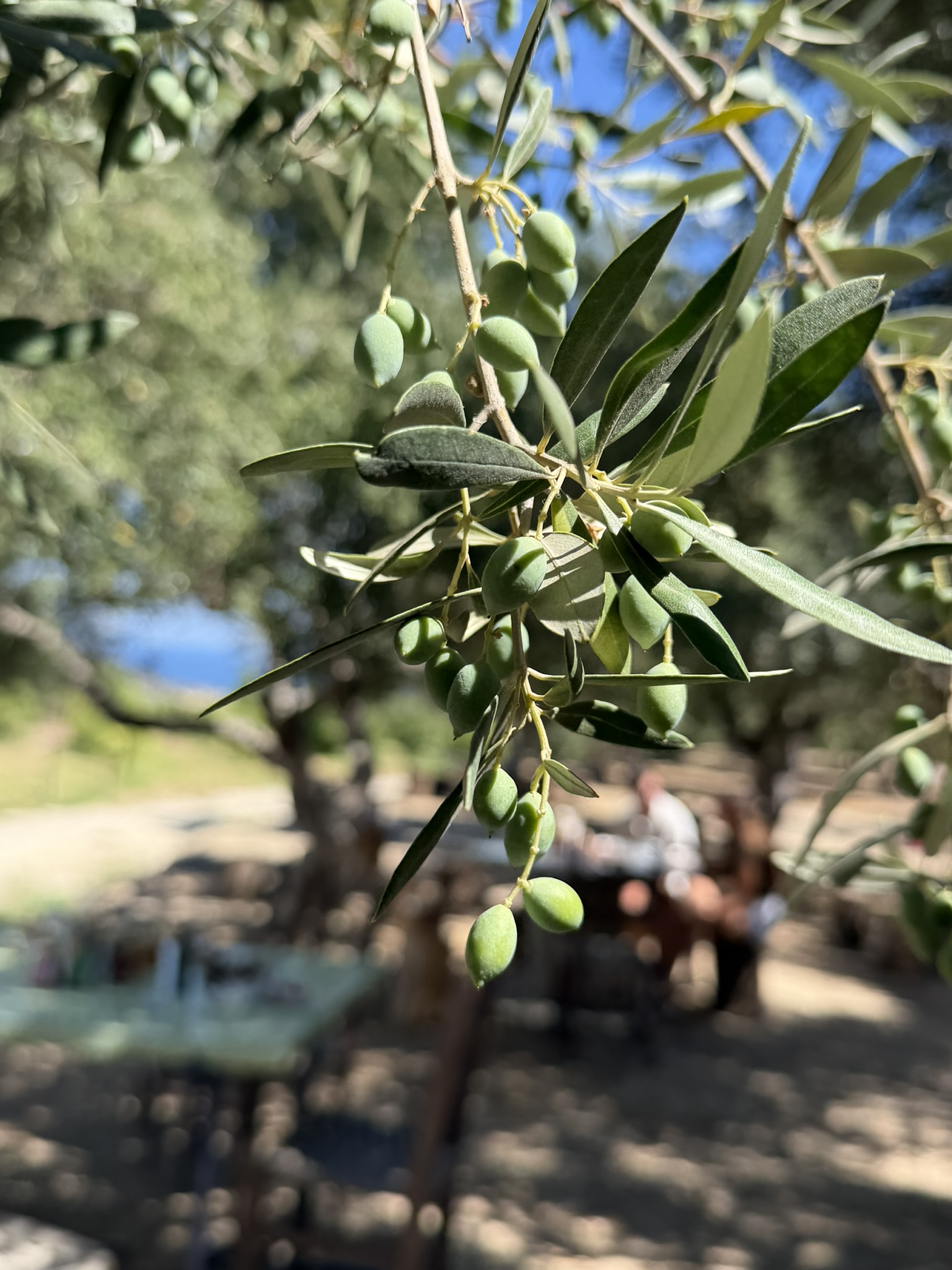
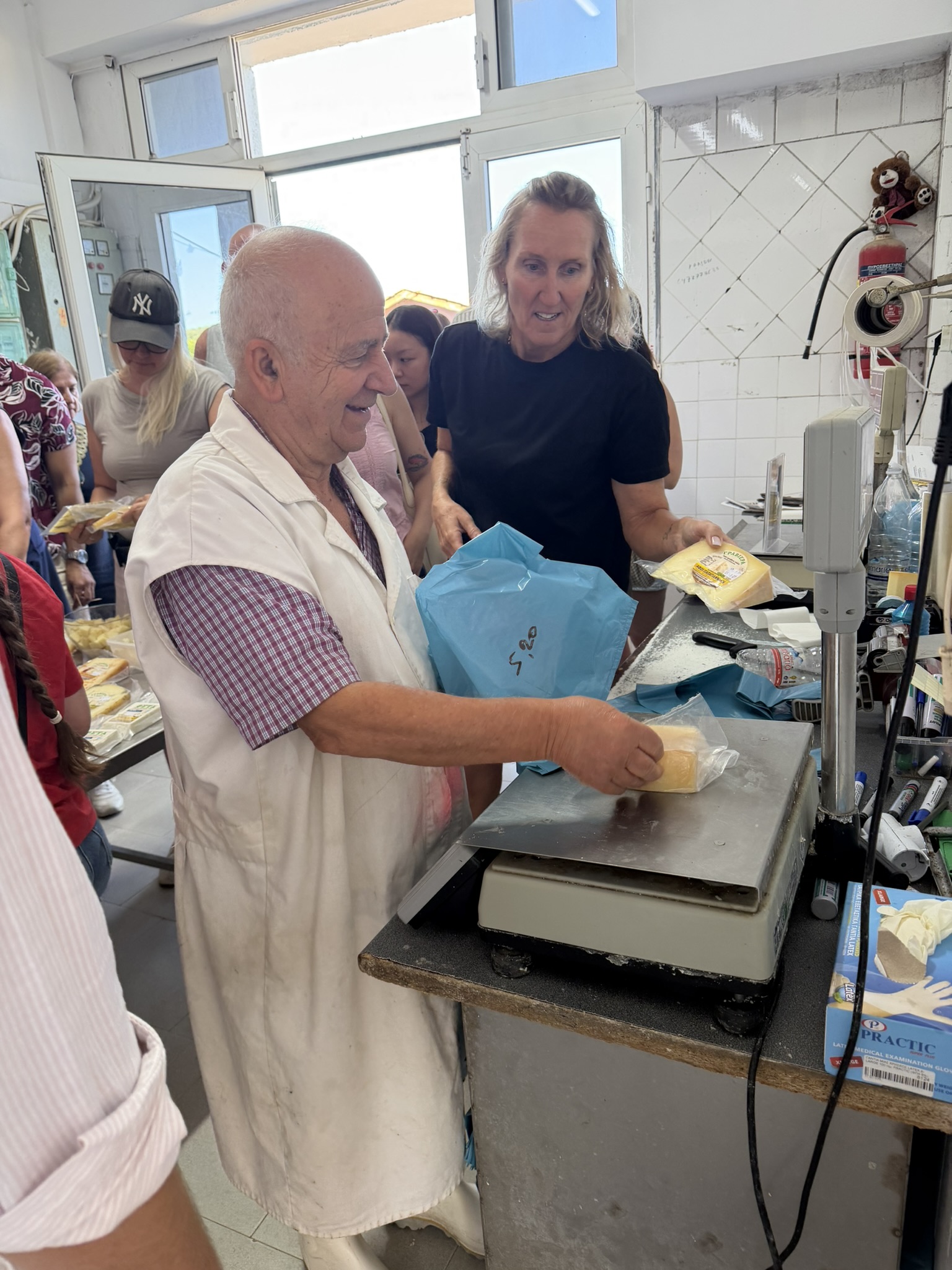
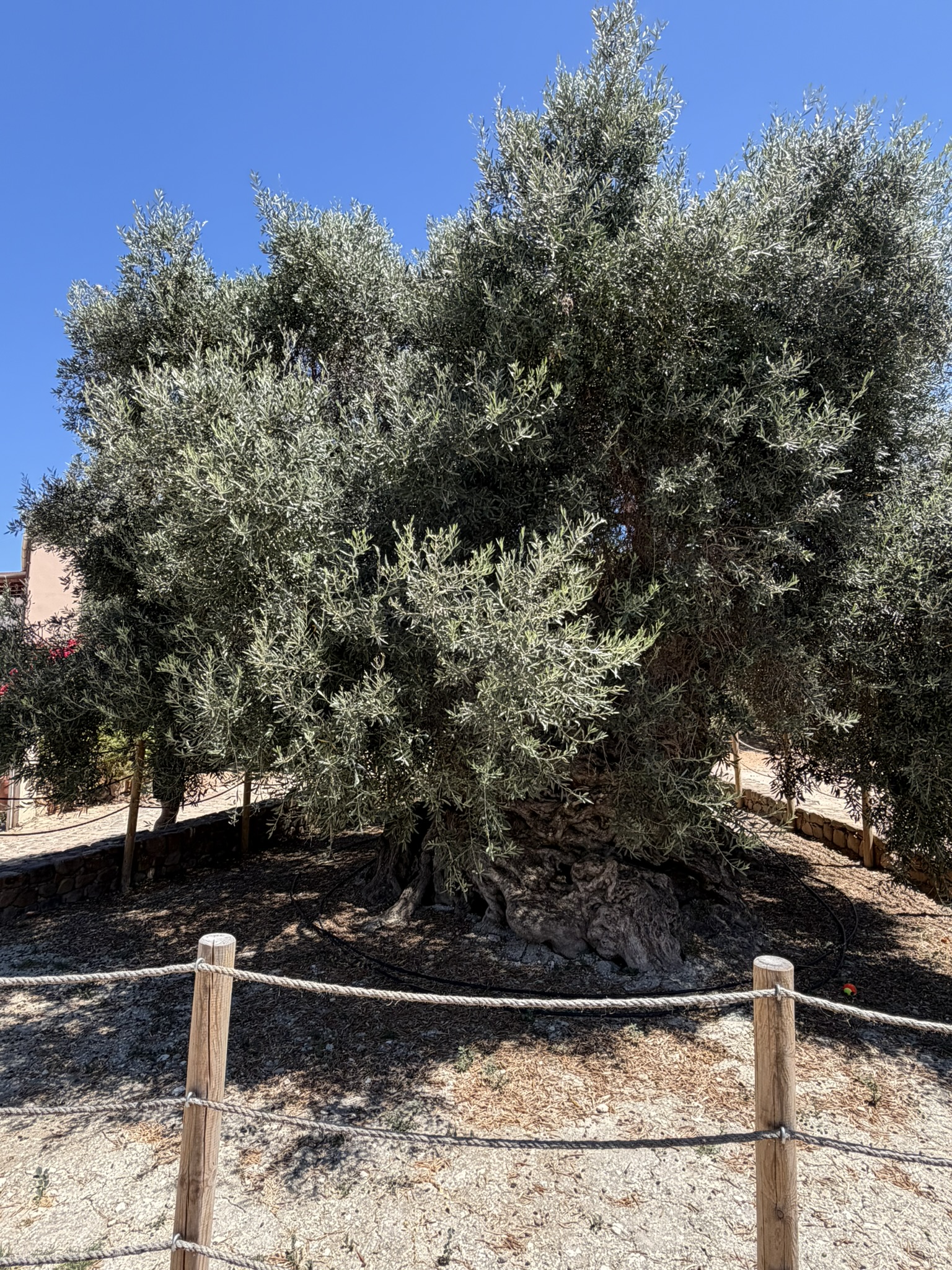
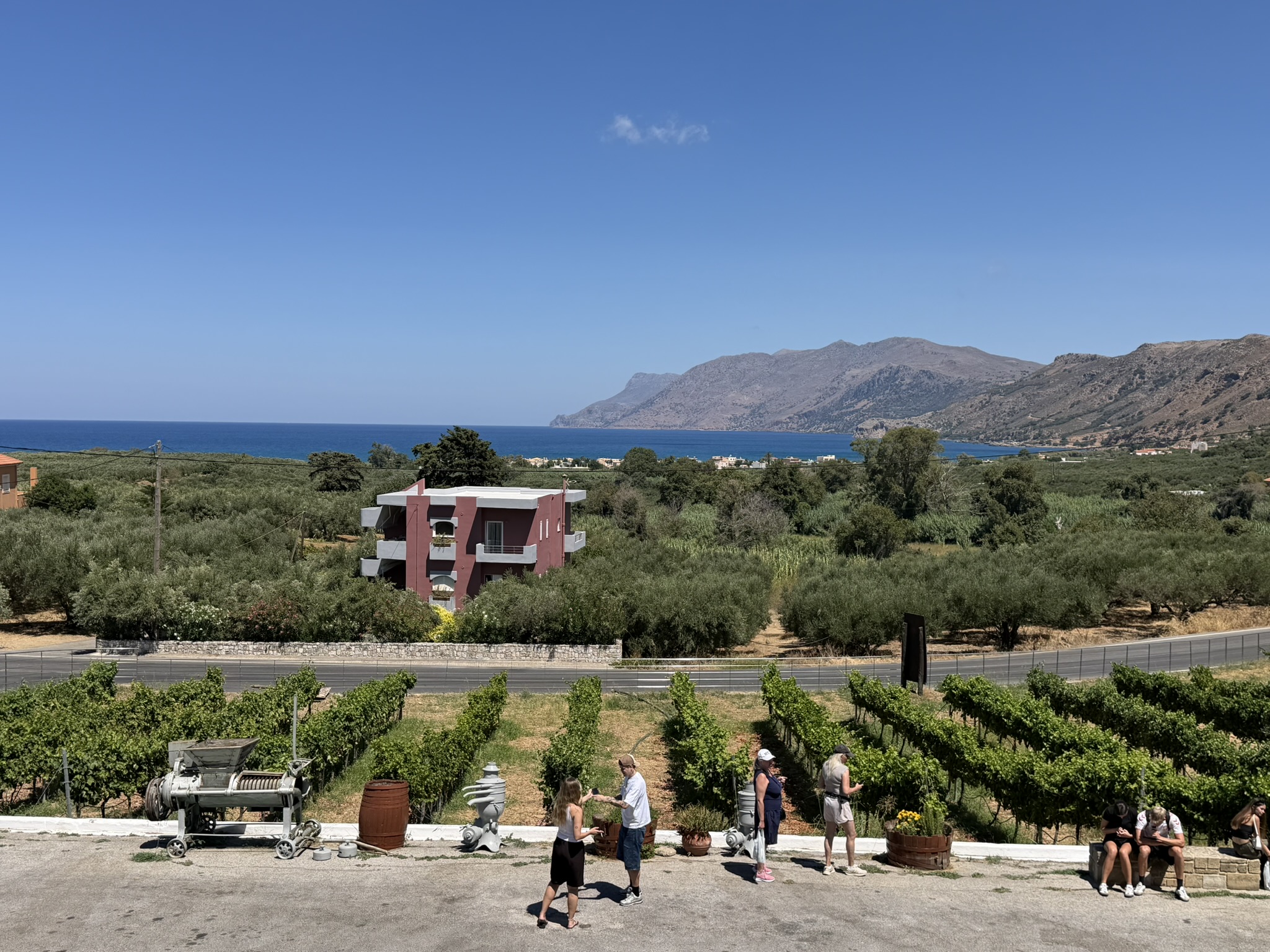
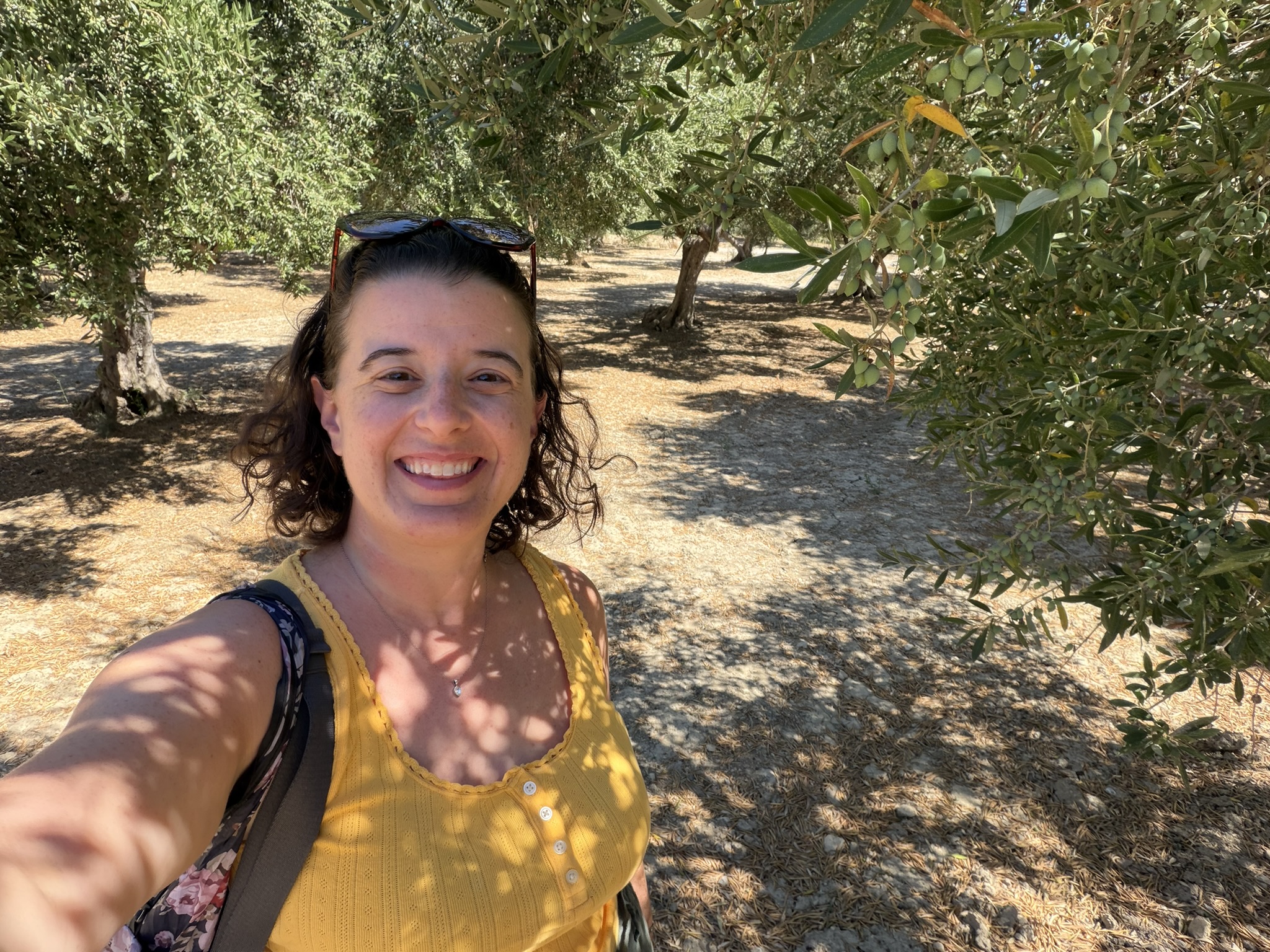
I learned a lot about food and agriculture on a tasting tour, which took us to farms and secluded spots on the interior of the island to sample baked goods—like an amazing zucchini cheese pie, locally-made cheese, honey, and wine. Our incredibly enthusiastic guide, Linda, was from Sweden, continuously hyped up the tour as “the best day ever!” and it really lived up to the hype. We ended the day by visiting the oldest olive tree in the world in a small village called Vouves, somewhere between 3,000 to 5,000 years old!
I’ve liked all the house wines I’ve had with my meals, nice dry whites with unique grape varietals, including a Moscato clone that is dryer than most. Ouzo is gross and tastes like bad licorice, but raki is nice and often comes as a post-meal treat alongside a small dessert bite. Rakomolo is a tasty shot of raki with honey and cinnamon that is popular in Crete. There’s an unfiltered local beer in Chania called Charma.
Most of my meals have been unrushed and enjoyable with my e-reader or perhaps some hostel friends. I had a lovely long meal with two hostel friends with live Greek music performers right next to us. Wait staff will bring the bill if you ask, but getting their attention can be a challenge, with an expectation that you aren’t rushing to leave.
Nature
Crete’s got some big mountains in the interior of the island, with the westernmost White Mountain chain its largest and so-named because they often accumulate snow in the winter. It means driving the 70-kilometers from north to south takes an hour and a half on winding roads. It also means some excellent hiking opportunities. The most popular on the island is the Samaria Gorge, a 12-mile hike that I completed during my first visit.
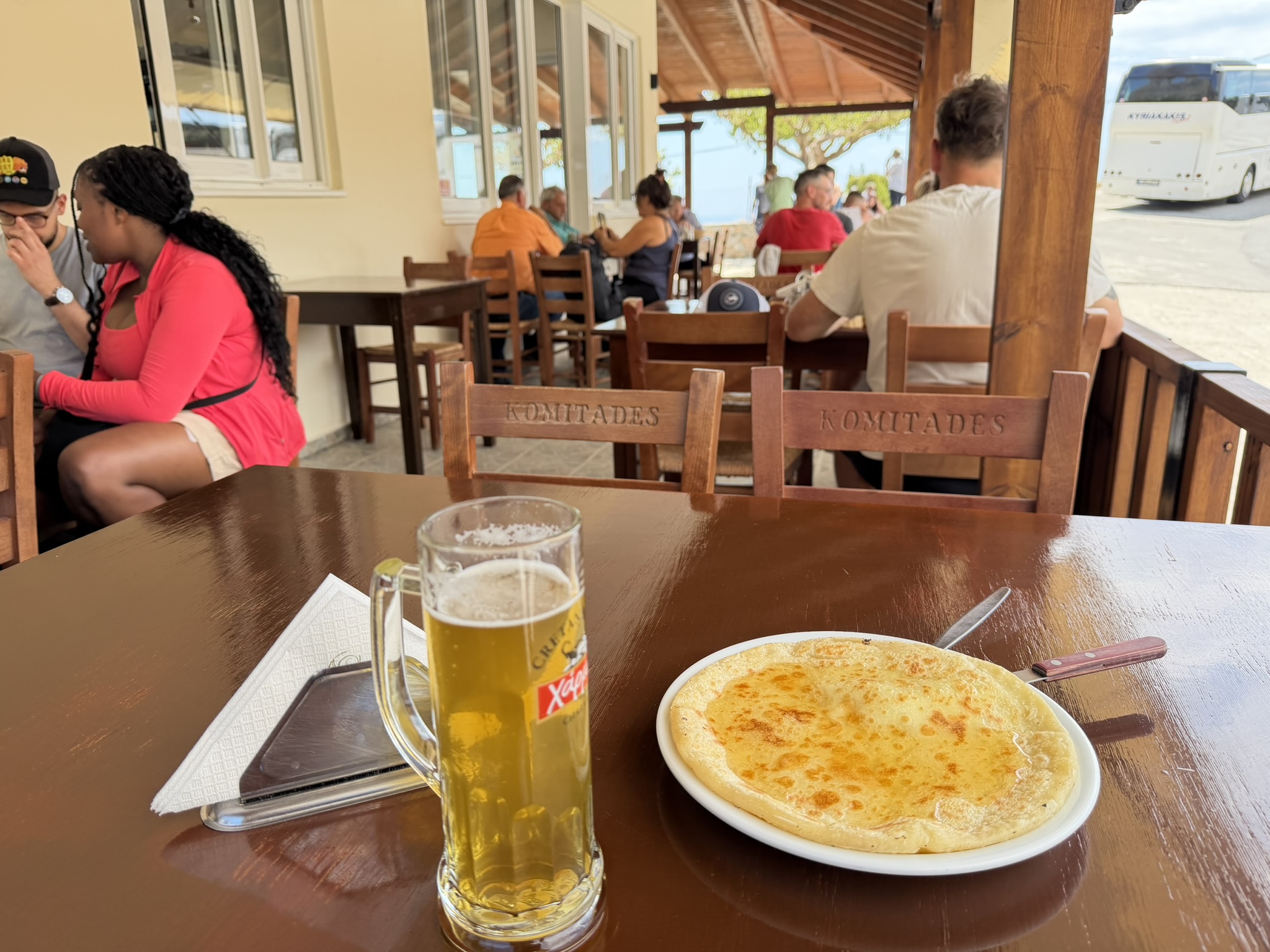
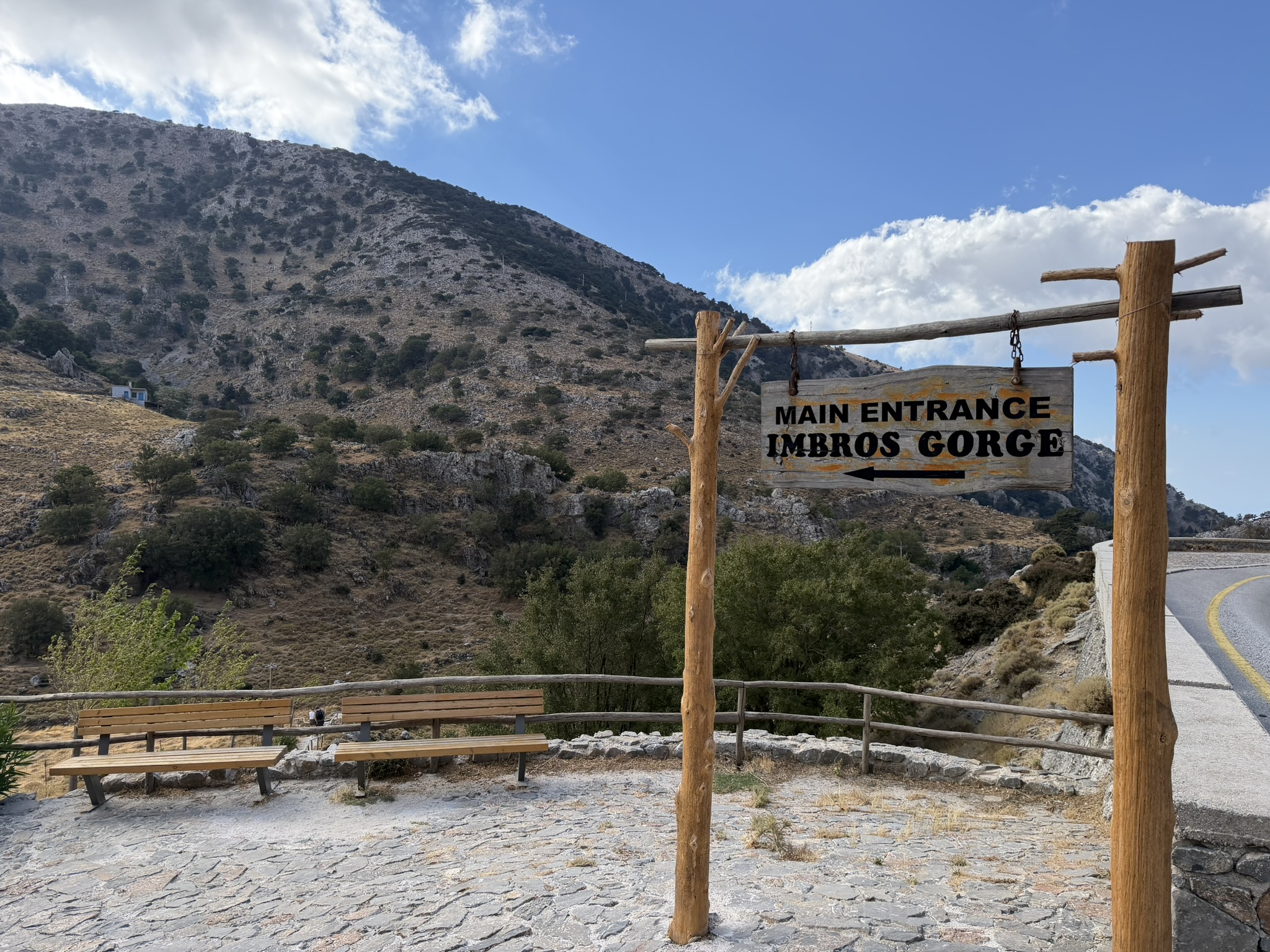
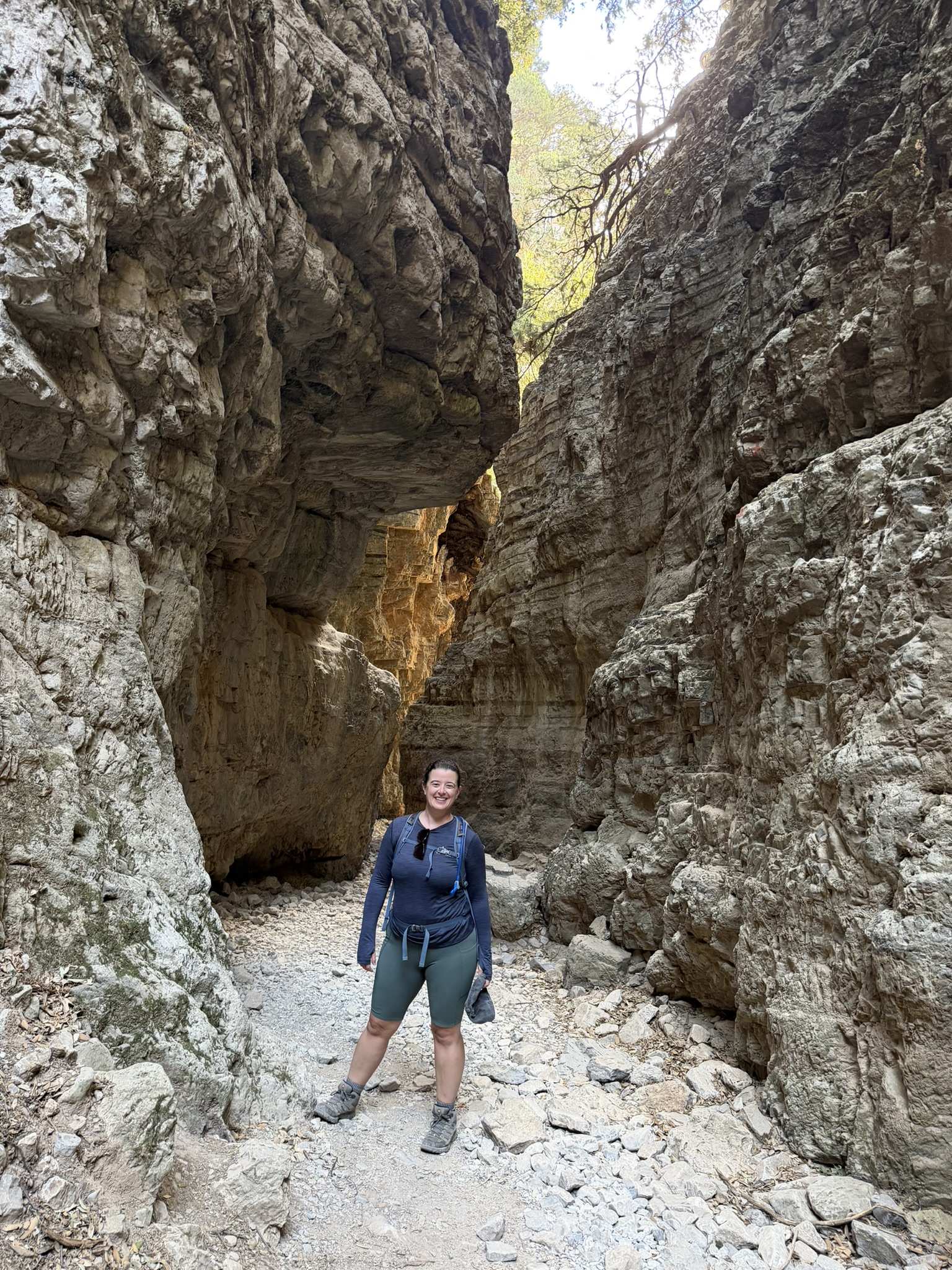
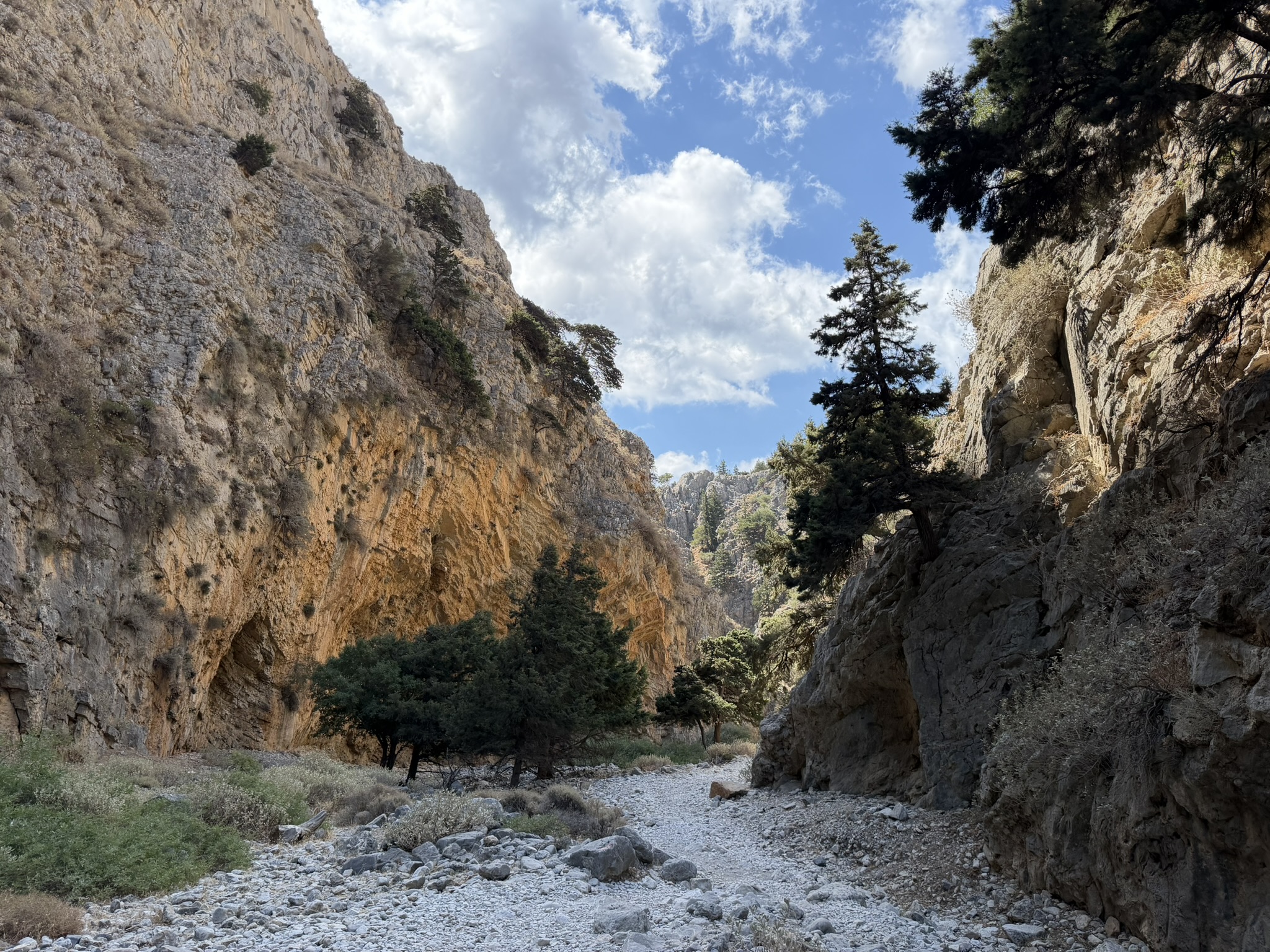
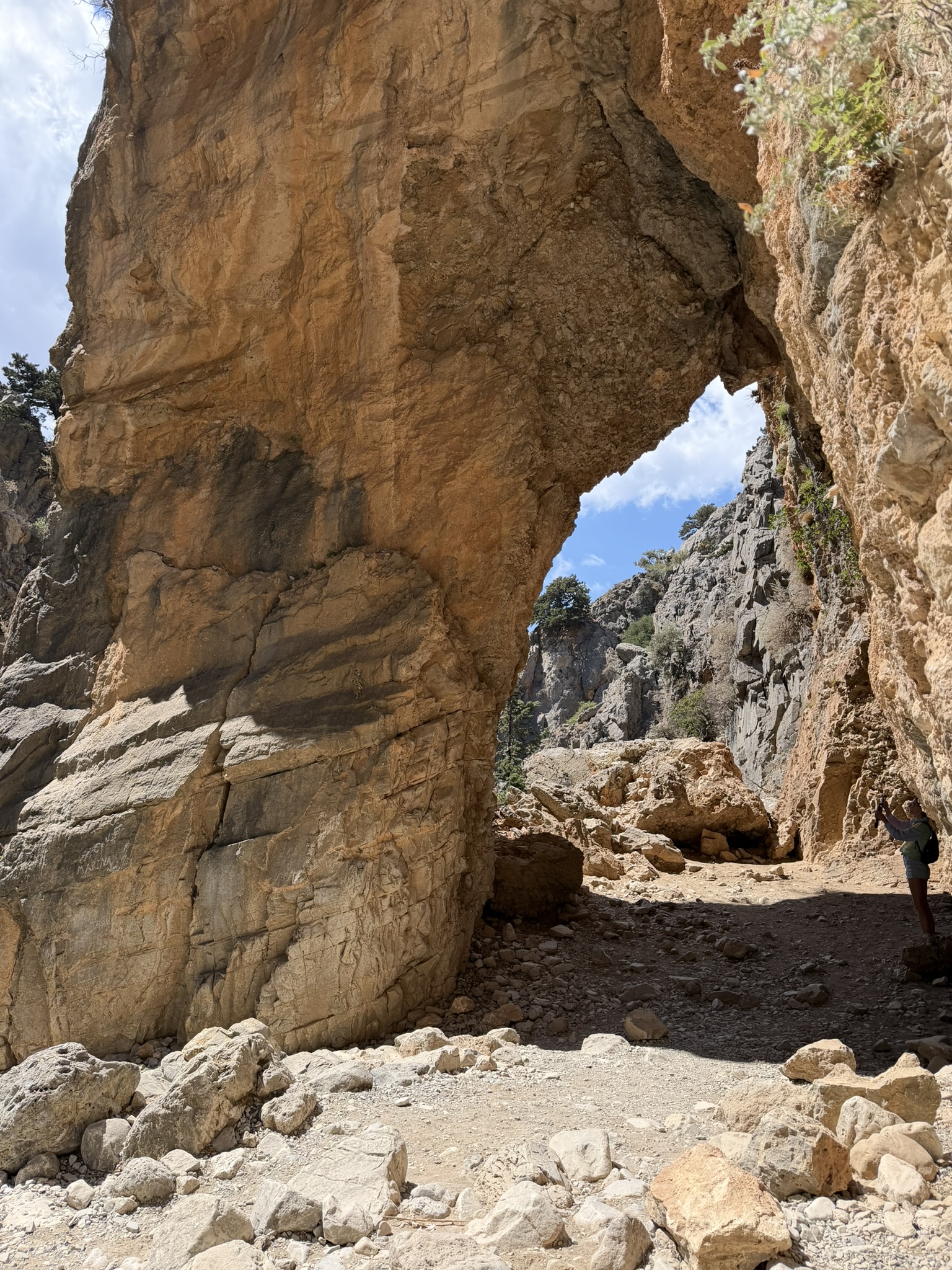
This time, I tried the Imbros Gorge, another of the many gorges that line the island. It was quite short at a little over two hours, with just one little dry slot canyon area and a cool arch. Because it’s easier, the crowd is comprised of less experienced hikers. I had to ward off another solo girl who was hiking in unsupportive sandals with a tripod she often set up at the popular photo stops, ruining the photos for other people while she sexily prowled on the rocks. I spoke to her later, and it turned out she was Ukrainian and excited for her business trip to NYC in the fall, where she was planning to take a helicopter ride for the views. Uhg. #StopTheChop. The hike ended in a nice swim in the south coast town of Sfakia, where the local delicacy is a thin sort of crepe filled with local cheese and soaked in honey.
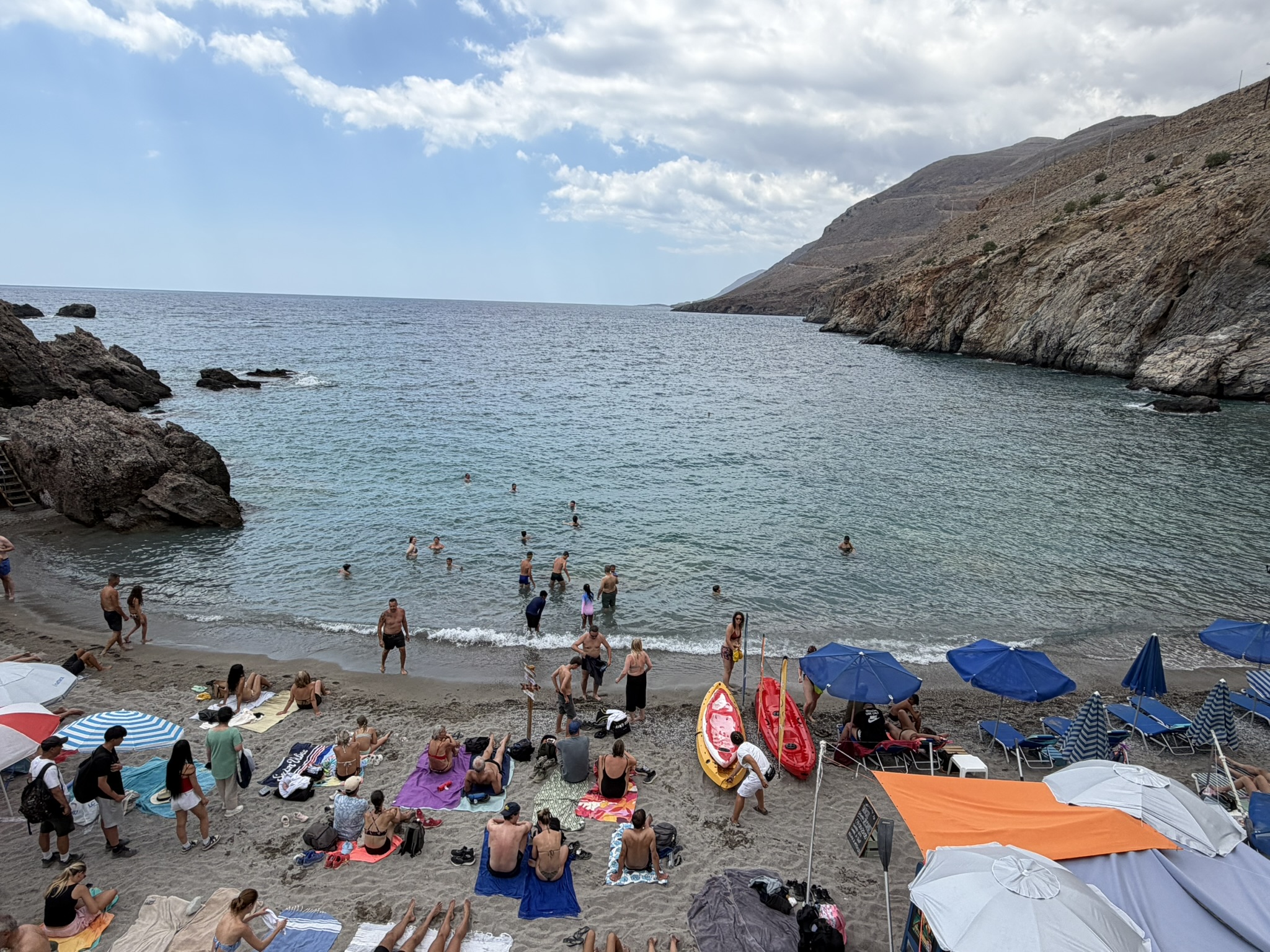
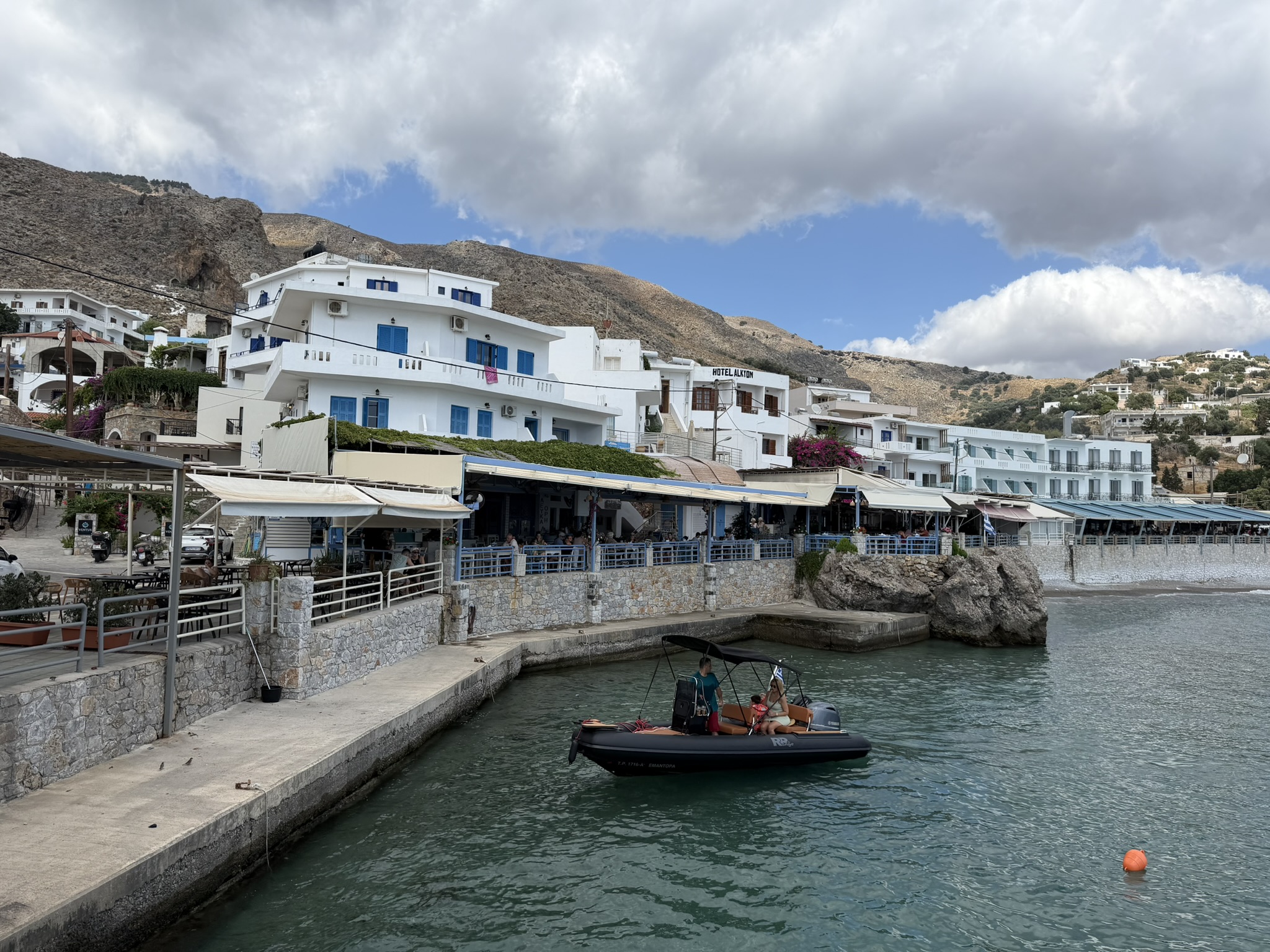
Crete isn’t where I’d tell someone to go if they just want a beach vacation, but it happens to have some amazing beaches and coastline, including some right in Chania or a very short city bus ride away. The August winds were much calmer than in the Cyclades, making the air very hot some days but perfect for swimming in clear, calm waters on both the north and south coasts.
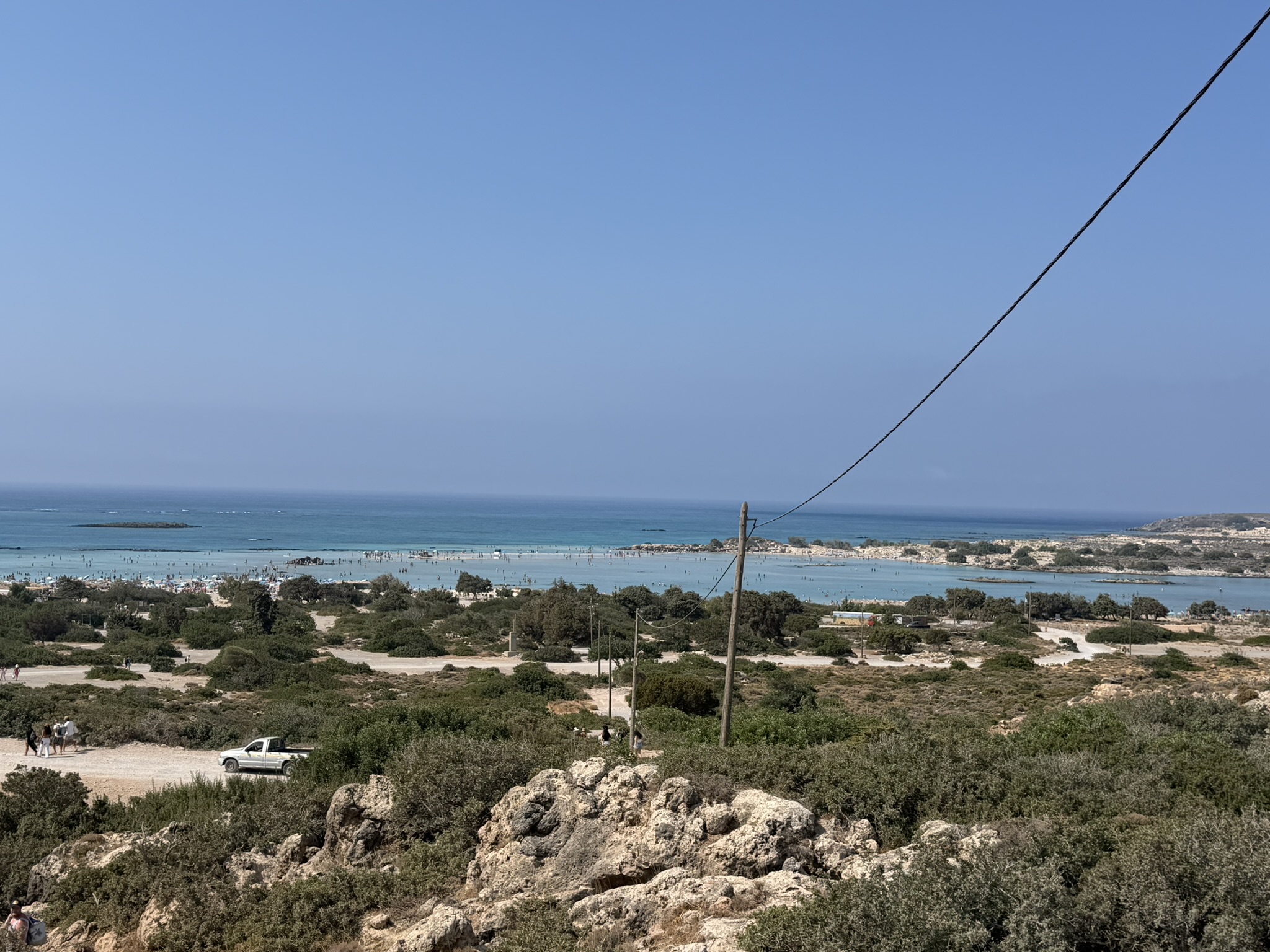
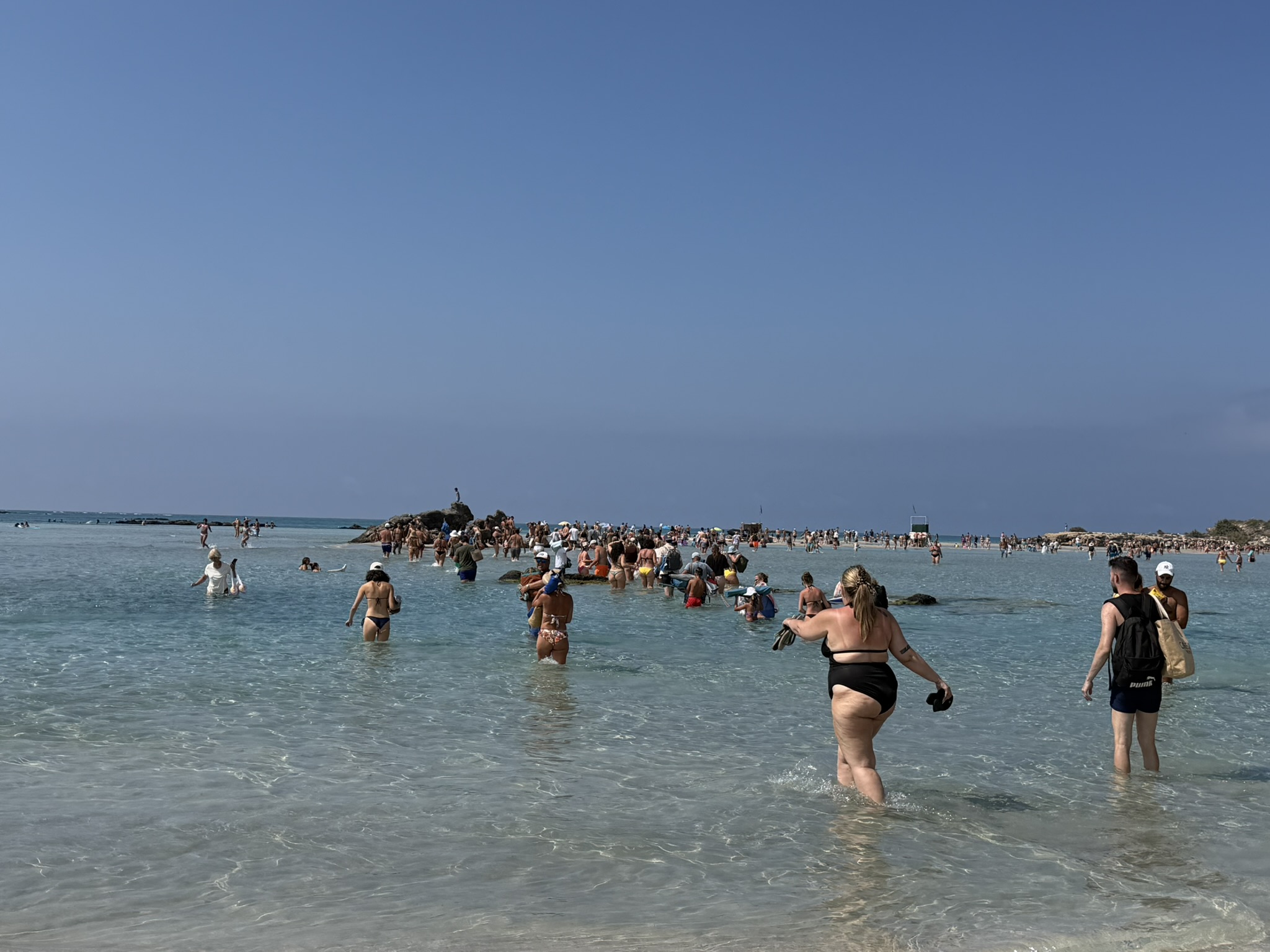
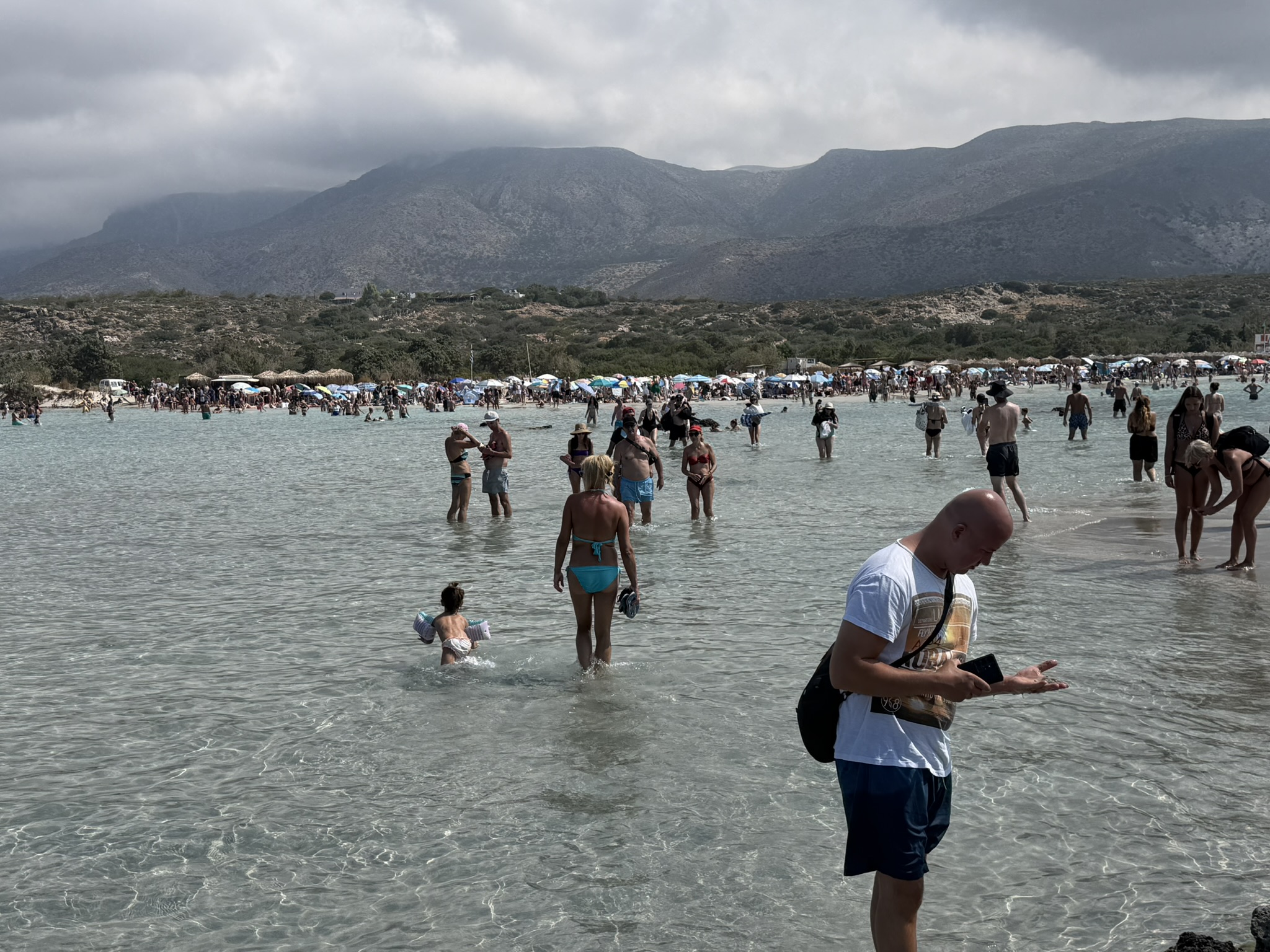
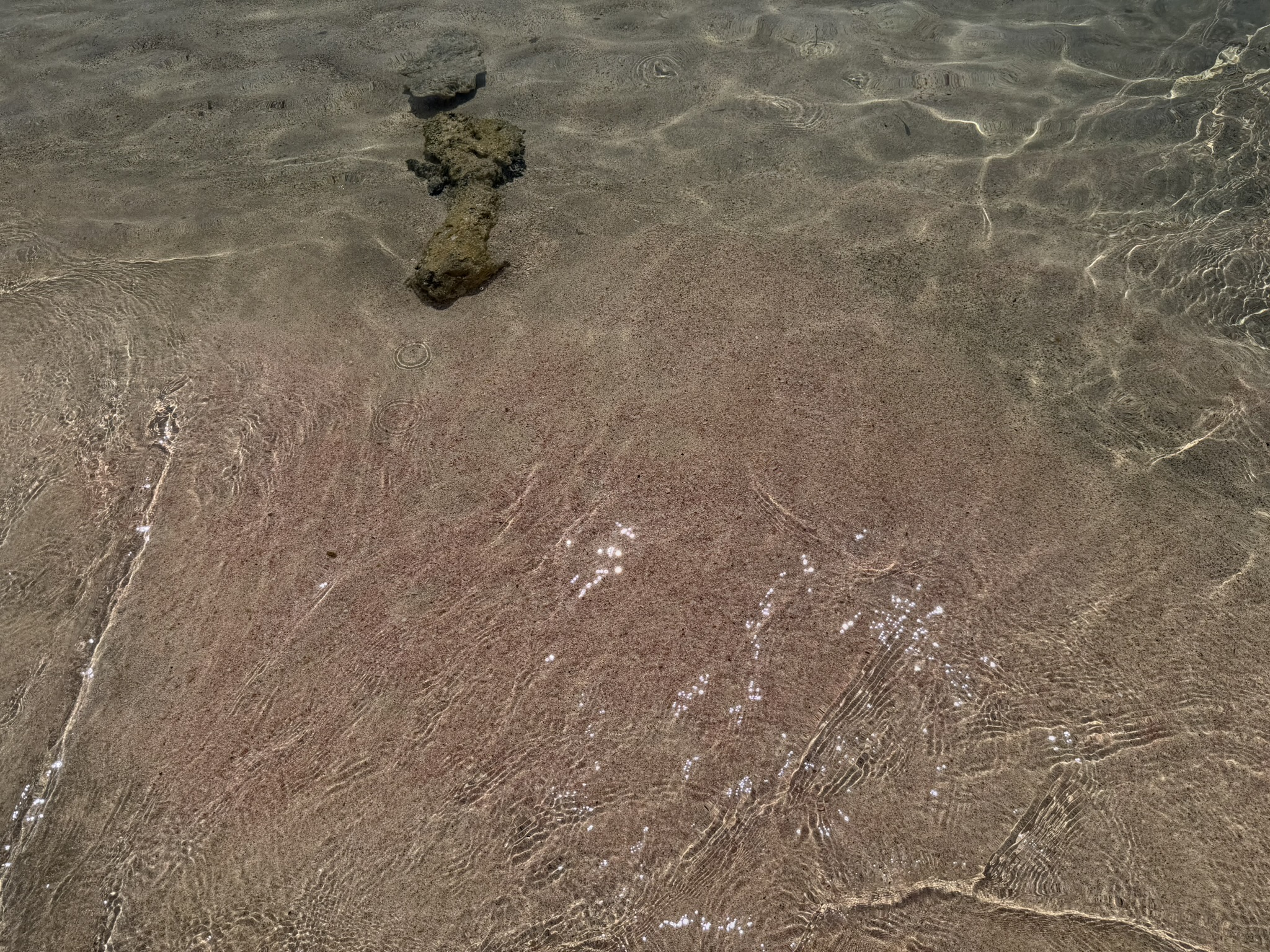
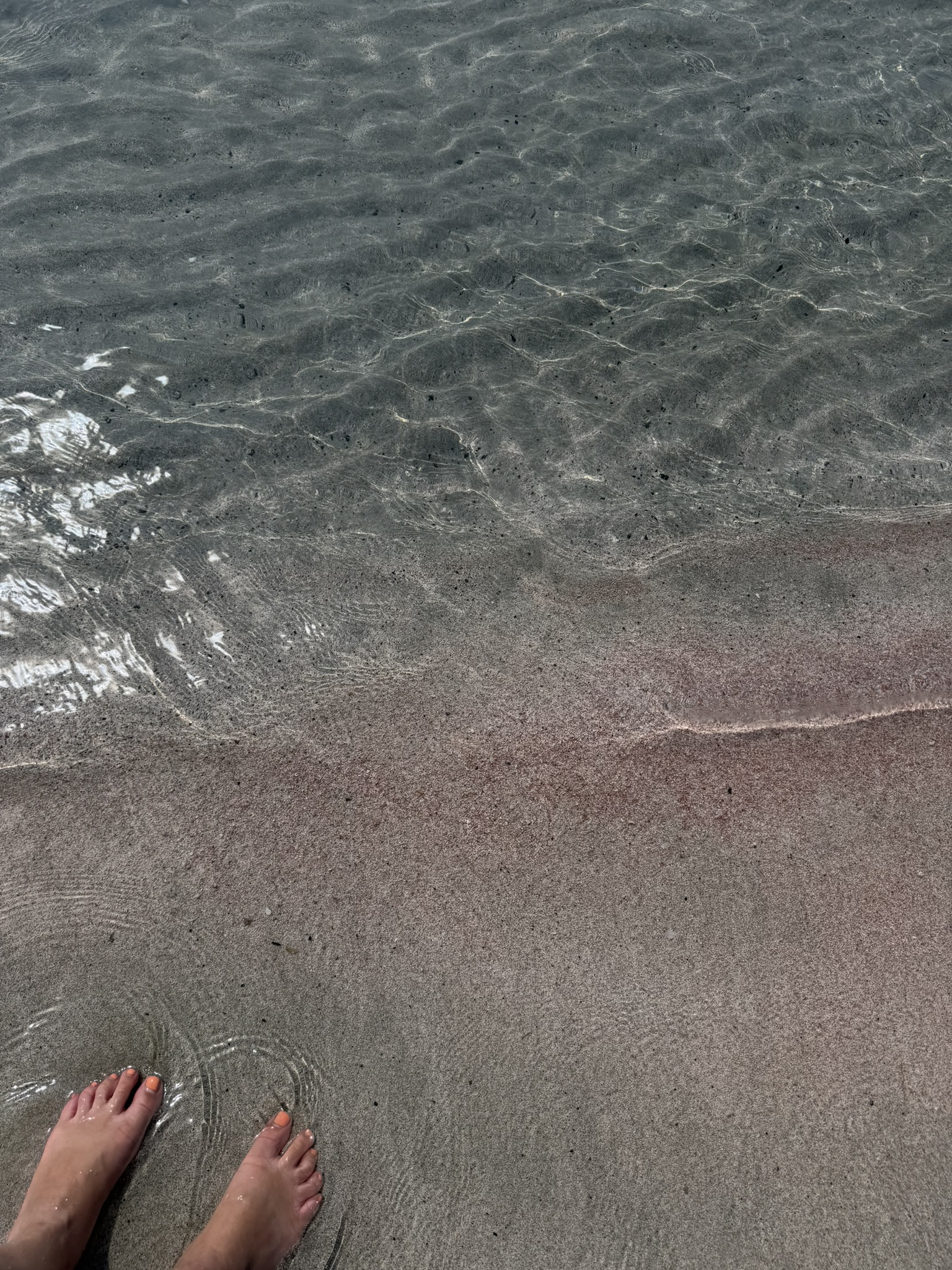
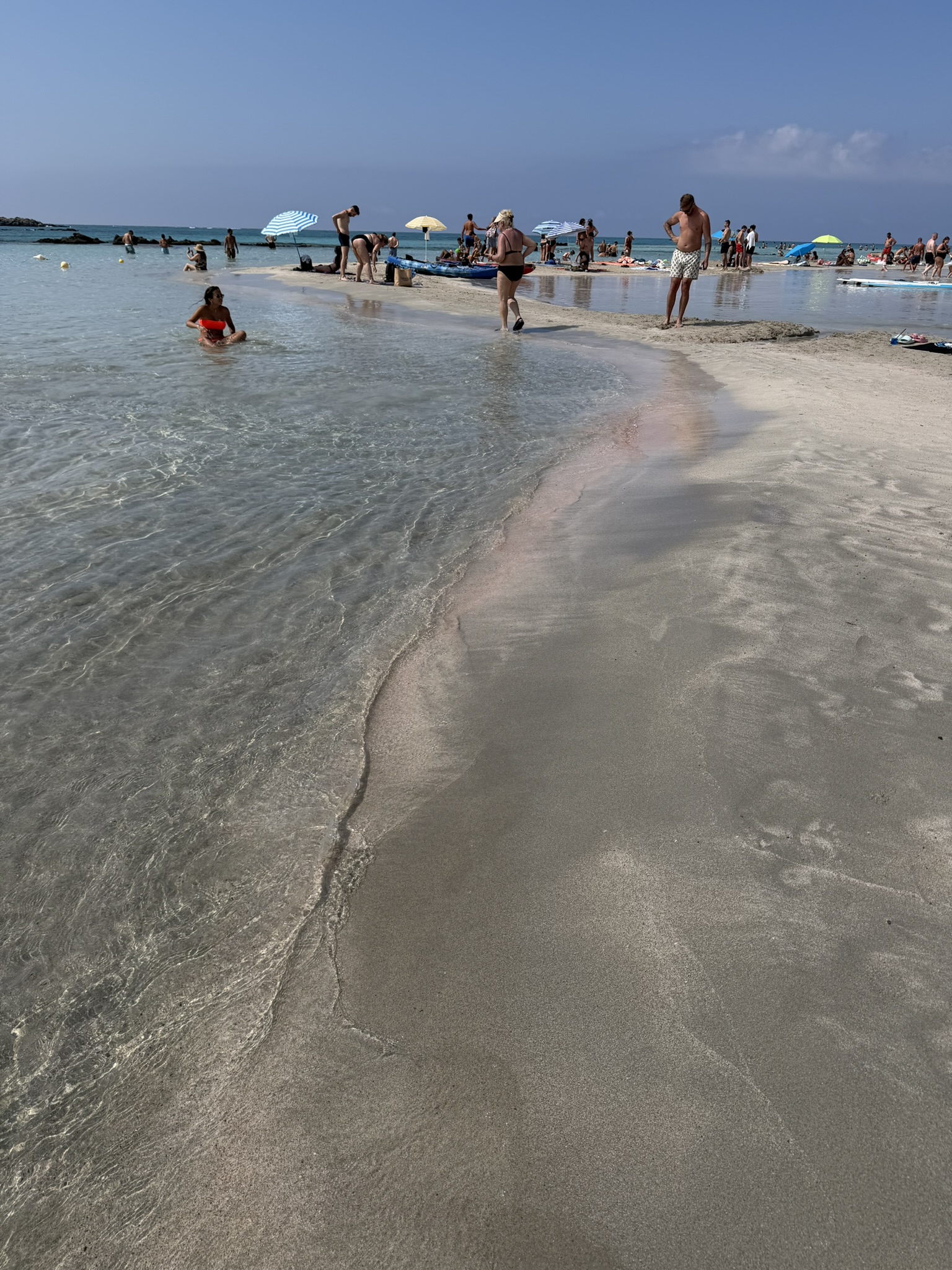
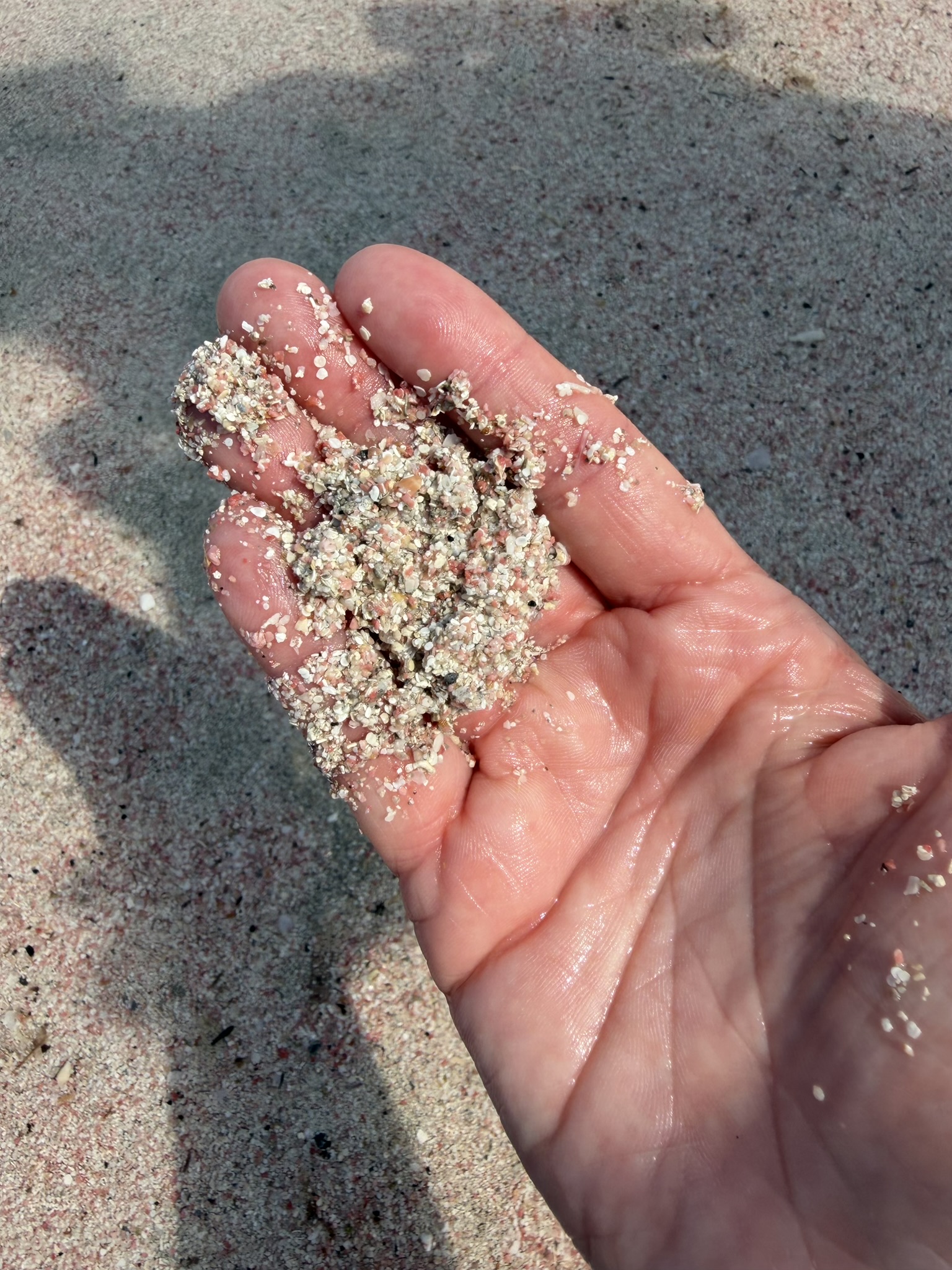
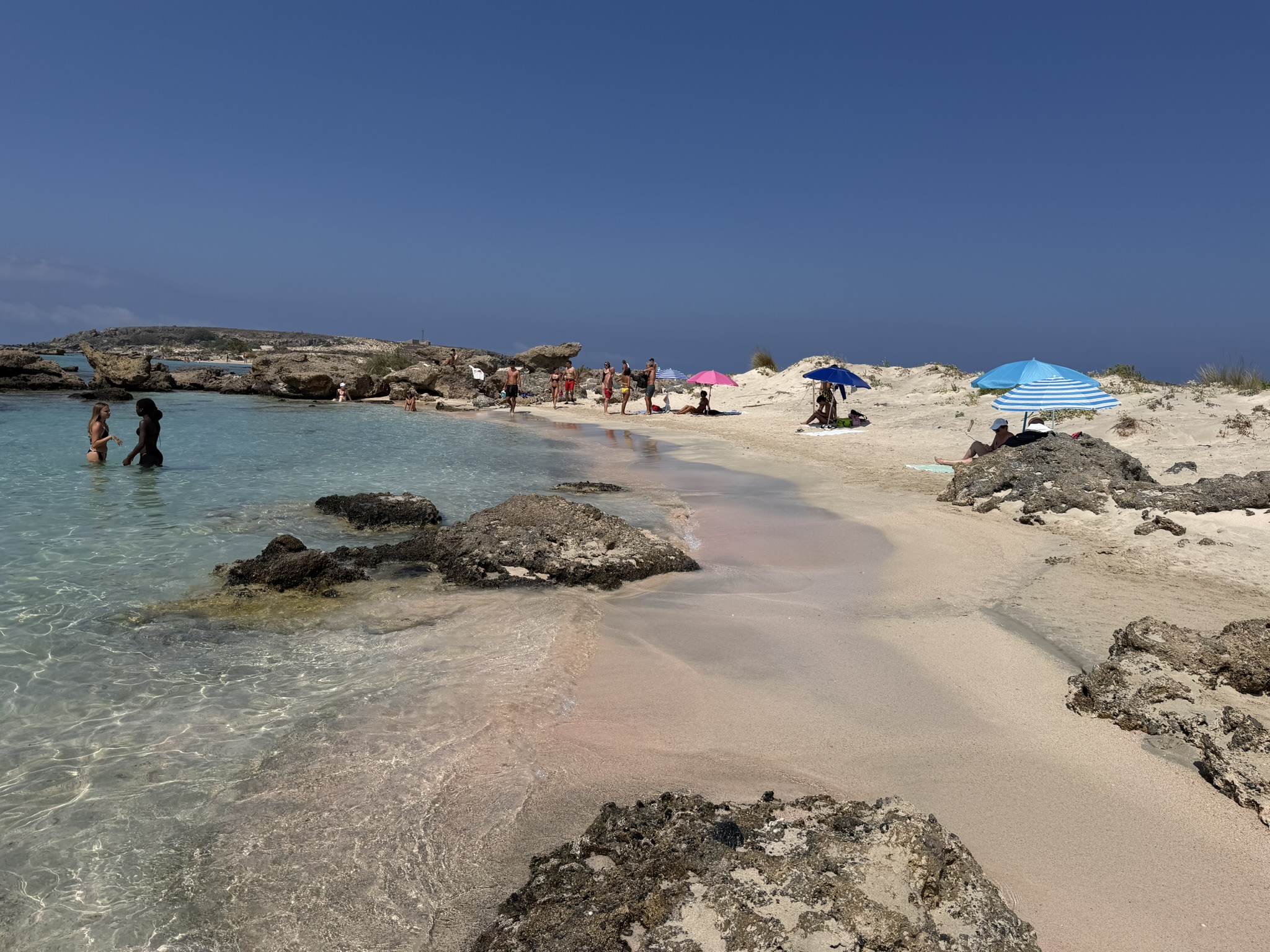
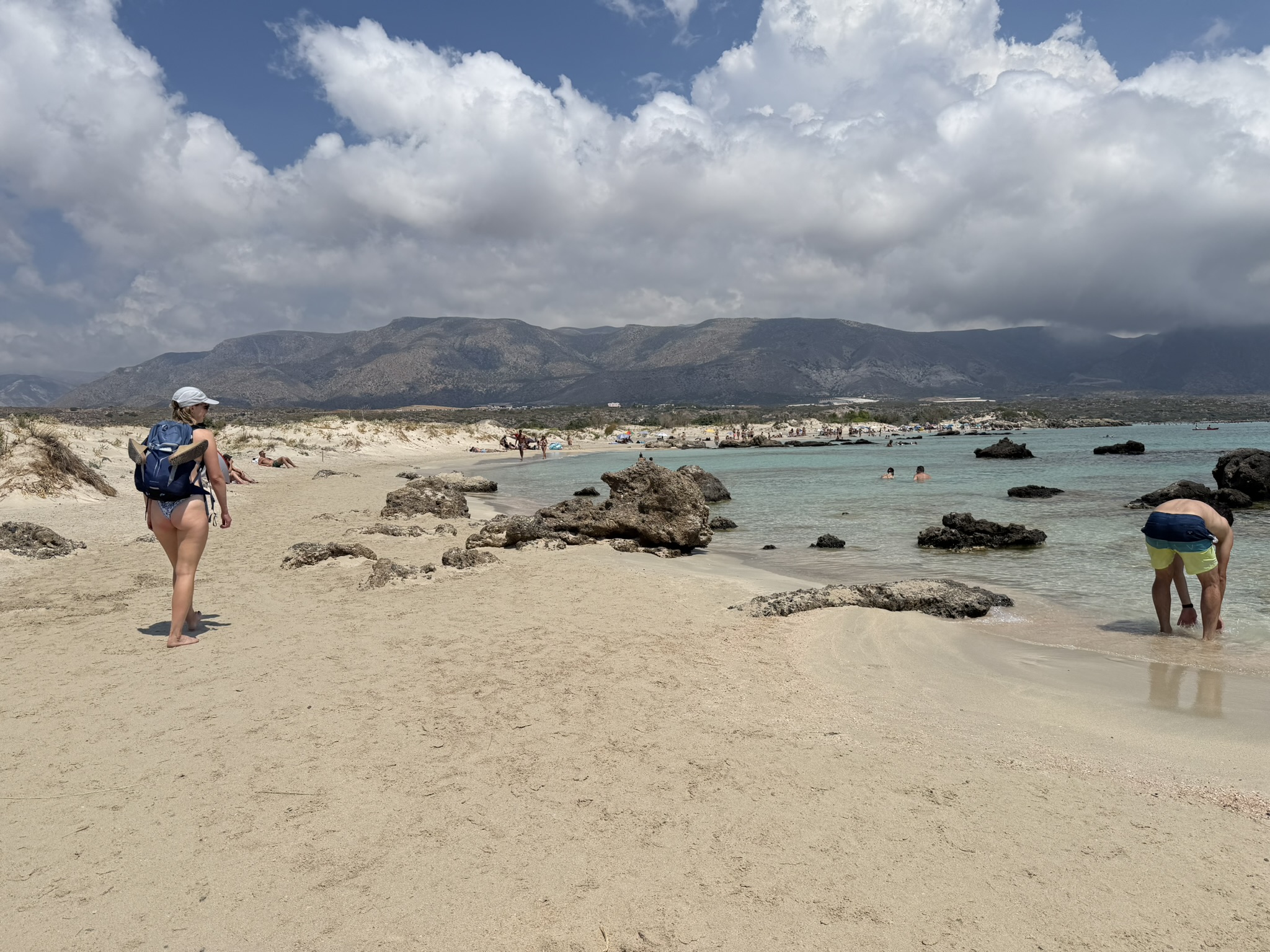
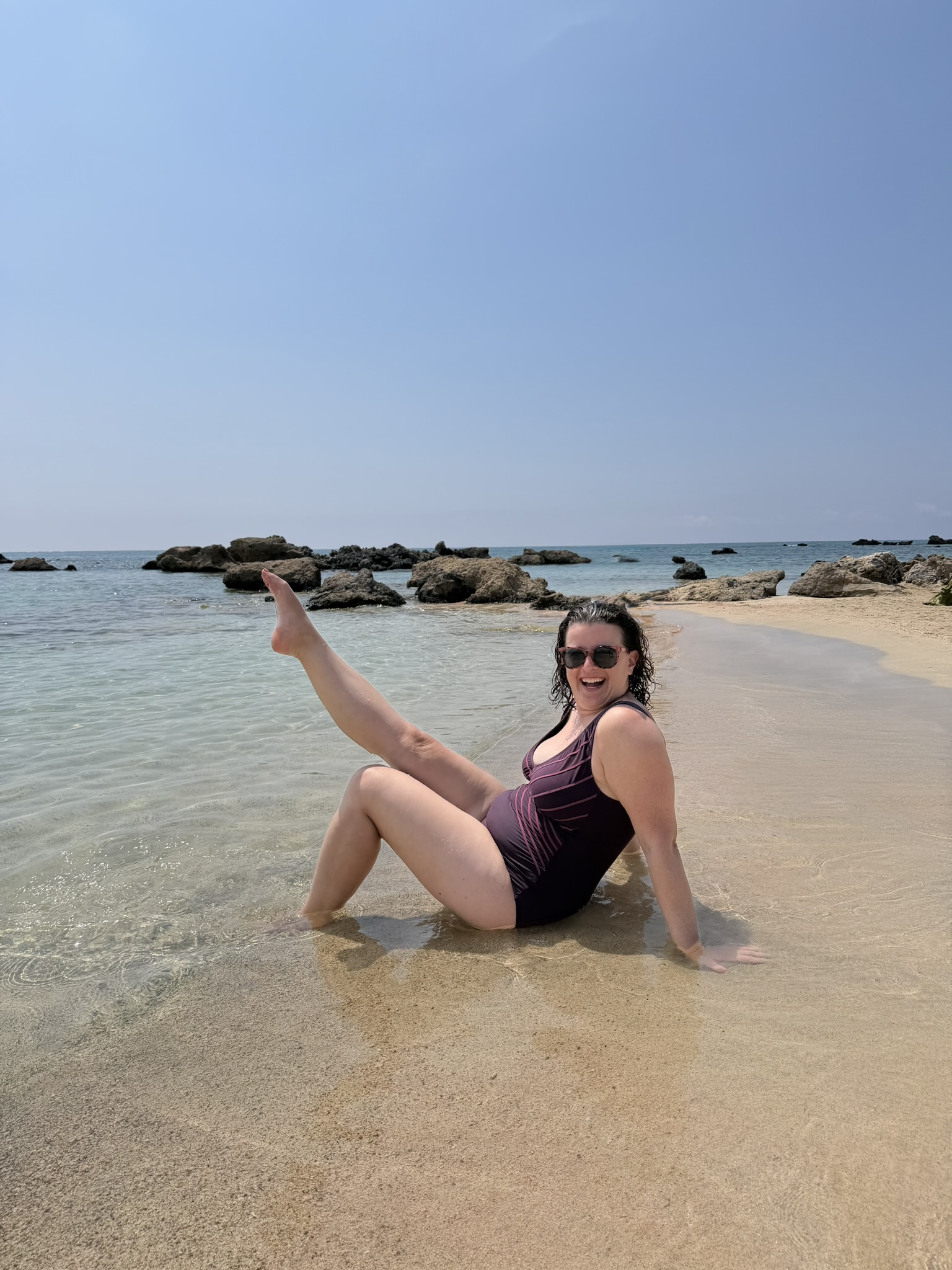
I took a very special day trip to Elafonissi Beach, a popular tourist beach destination on the southwest coast. It is known for its pink sand, the result of crushed up shells and corals that evoke lounging on Barbie and Ken’s beach. Seeing the pink sand is never guaranteed; it depends on the weather and the currents. Our tour guide instructed us to hike through the hip-deep water to Elafonissi Island to get away from the crowds and find the pink sand. An excellent tip, because there it was! My hostel friend Hillary and I hiked in for about 40 minutes and found a wonderful spot to lounge and take photos with the pink sand and perfectly blue water for a couple of hours, mountains in the background teasing us with some localized clouds. After the beach, we made a nice stop in a tiny little mountain village called Elos for a meal, then back to Chania for a city night.
Normal city things
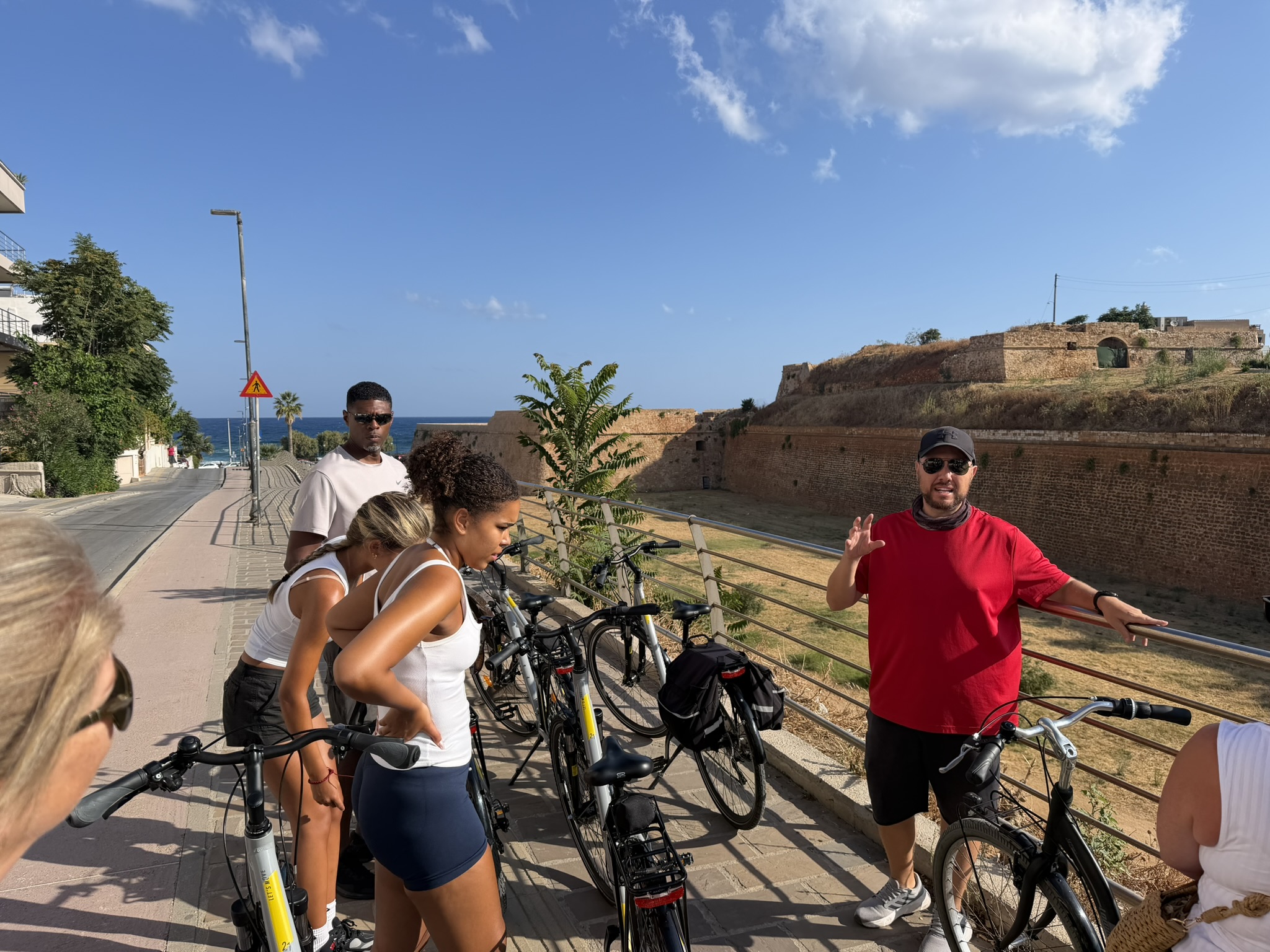
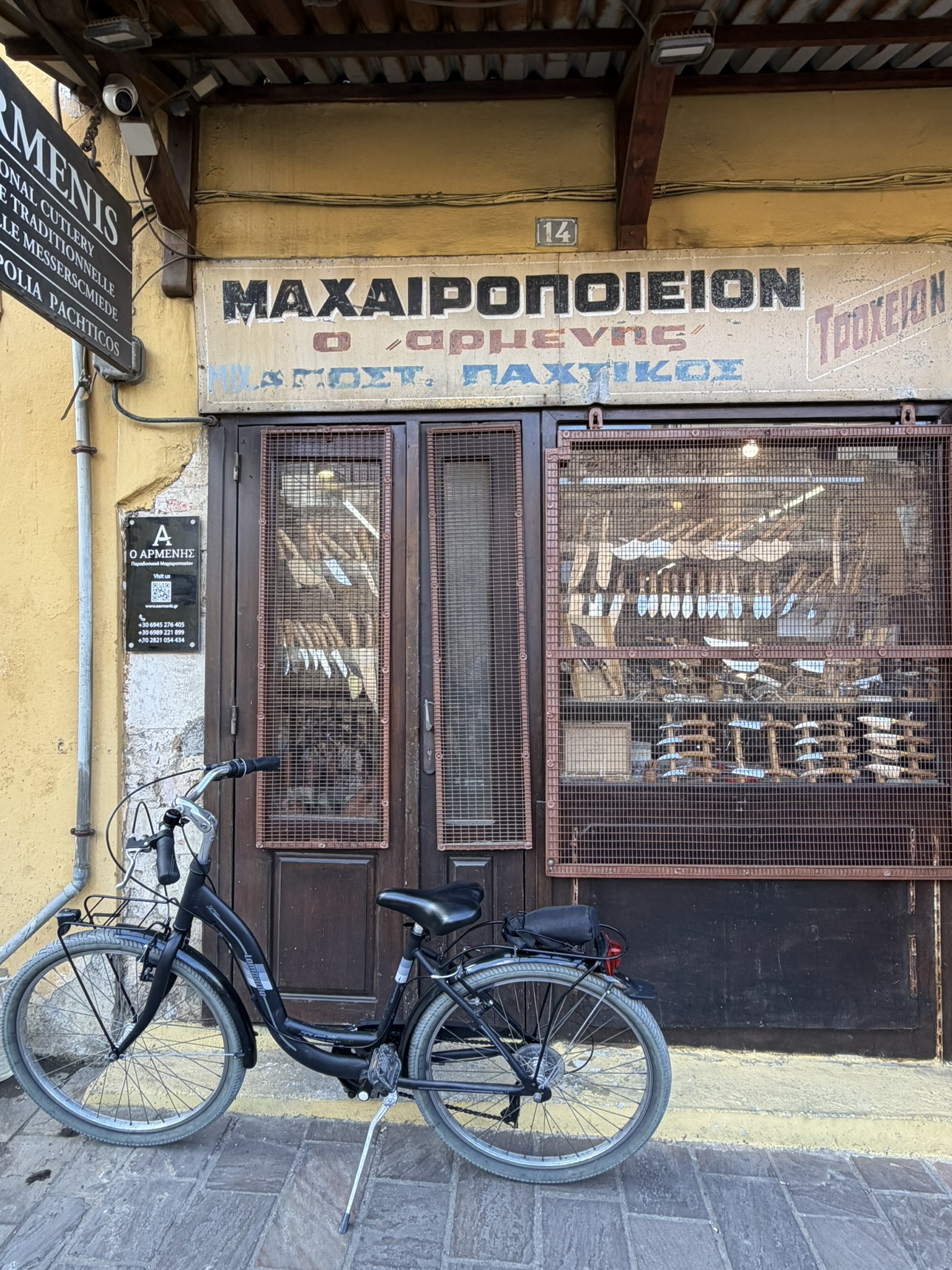
With time on my hands, I did some things in Chania that I might have done at home, in an effort to ground myself and feel a little more embodied. Despite some struggles around places being closed for a major religious holiday on August 15th, I found an excellent vinyasa yoga class with teacher Dimitra, located in a cute neighborhood a short bus ride away. I treated myself to a massage (I opted for a “Cretan Traditional Massage,” which seemed similar to Swedish but with olive oil). I gave myself time to go shopping, browsing in the many non-touristic shops in hopes of finding a bathing suit. I found success in a discount department store, where I was also excited to find my brand of shampoo and conditioner and picked up some more sunscreen. I bought breakfast supplies and snacks in the grocery store. I did laundry. I walked everywhere, and so much. I took a bike tour and felt confident weaving around the cars and narrow alleyways.
I also allowed myself a few days with no set plans, one of which became essential at the end of the week when I felt a sore throat. With all the time I had in Chania, I felt no guilt sitting around the hostel doing nothing for a day. My big activity that day was walking to the grocery store to purchase local “mountain tea.”
All of these great days left me with that tasty feeling of being full and satisfied. And still, I was content to continue the journey exploring Crete for another week. Next up: a bus and ferry to the tiny south coast town of Agia Roumeli!
 travels.of.tara