My 82 year old father recently told me he’s been working on a project to enter some of his old travel and hiking journals onto the computer, which he described as a combination of field notes and personal reflections. This was perhaps a bit shocking to me, because that’s how I like to document my own travels. It was a similar sense of surprise as the time I learned he spent years working on reformer political campaigns in New York City (like, volunteered for Bella Abzug) – after I had independently found my way to working in local politics. Family shapes you in ways you can’t always see. And that’s the sense that drove me to propose the next big travel adventure: a family trip to Budapest, Hungary to explore my dad’s ancestry.
I made the pitch just before dad underwent major shoulder surgery, hoping to give him something big to look forward to. He immediately embraced the idea of visiting the country where his father was born for the first time. Mom took a little more convincing, especially after she and I had recently traveled to Naples, Italy where she was overwhelmed by the crowds. Eventually she came around and got excited about the trip, spending hours researching until she got overwhelmed with all the activities and I swooped in to save the day with a well-organized Google doc.
While I’m used to the three of us spending time together now, as an adult in my 30s, this would be our first big family vacation to someplace new in well over a decade. As a seasoned solo traveler I’m used to doing things at my own pace, so I reminded myself to pack my patience. I would need it.
Saturday
After a grueling 17-hour journey, my parents and I found ourselves in Budapest; me with semi-delirious excitement over being someplace new, mom dealing with an alarming dizzy spell that started after she combined a medication with a free sample of whisky in the New York airport, and dad steadily comfortable despite some sudden and urgent bathroom breaks throughout the journey. These quirks tested my patience early.
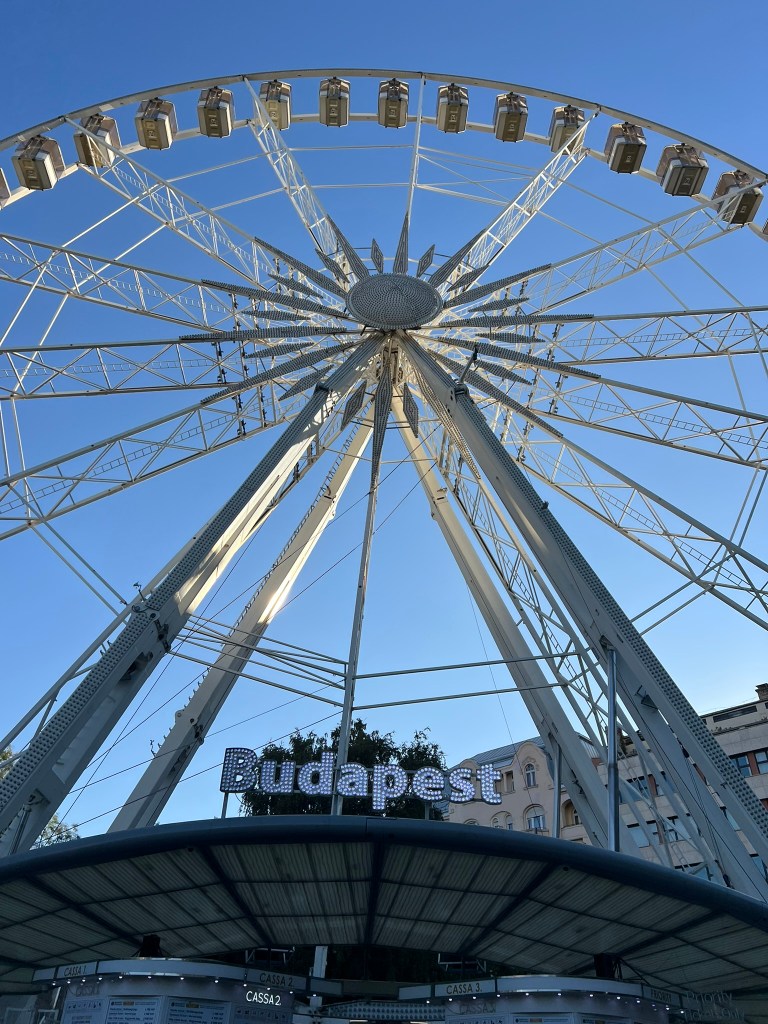
We settled into our spacious Airbnb in the heart of the touristic part of town on the “Pest” side of the Danube River, next to a park with a ferris wheel in it, and fought the urge to nap. I went out to exchange money and grocery shop, enjoying my first impressions of a new place.
The first challenge was figuring out what certain grocery items were in Hungarian—the sour cream and the yogurt were right next to each other in identical blue containers—and how much things cost. The Hungarian Forint is about 1/3 of a USD, plus some decimal points, so if something costs 1,000 HUF, you are paying about $3. It took me a while to get the hang of it.
Generally, people seemed to speak English, but not everybody, and not necessarily well. Hungarian is a tough language, more similar to Finnish than other Central European languages, and after many tries I was able to absorb only “hi” and “thank you” (szia and köszönöm).
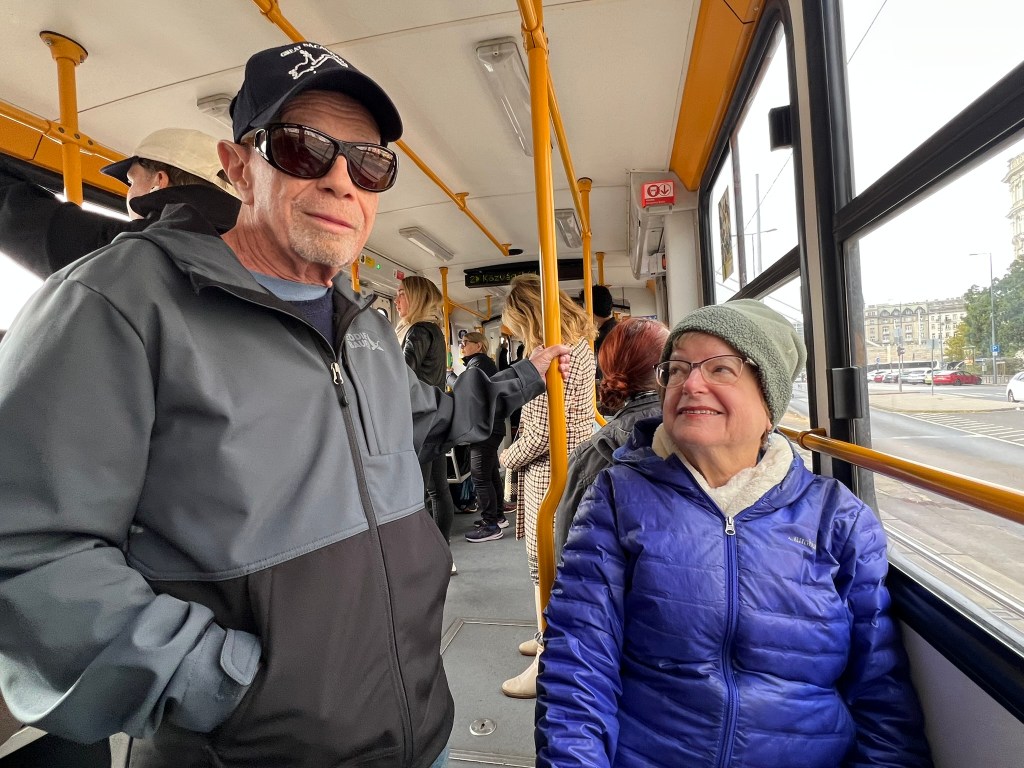
Mom’s first impression was of the harsh appearance of people, which I did not really notice, and the similar bubble coats people were wearing as her bright blue one. Dad and I went out after dark and found a Greek restaurant, and we brought back food to ease us into the culture shock.
Sunday
We spent our first full day, Sunday, getting a slow start and acclimatizing to the city. Budapest surprised us with its incredibly adorned architecture, giving the impression that every building was some kind of castle, plus an international, big city feel with many diverse food options.
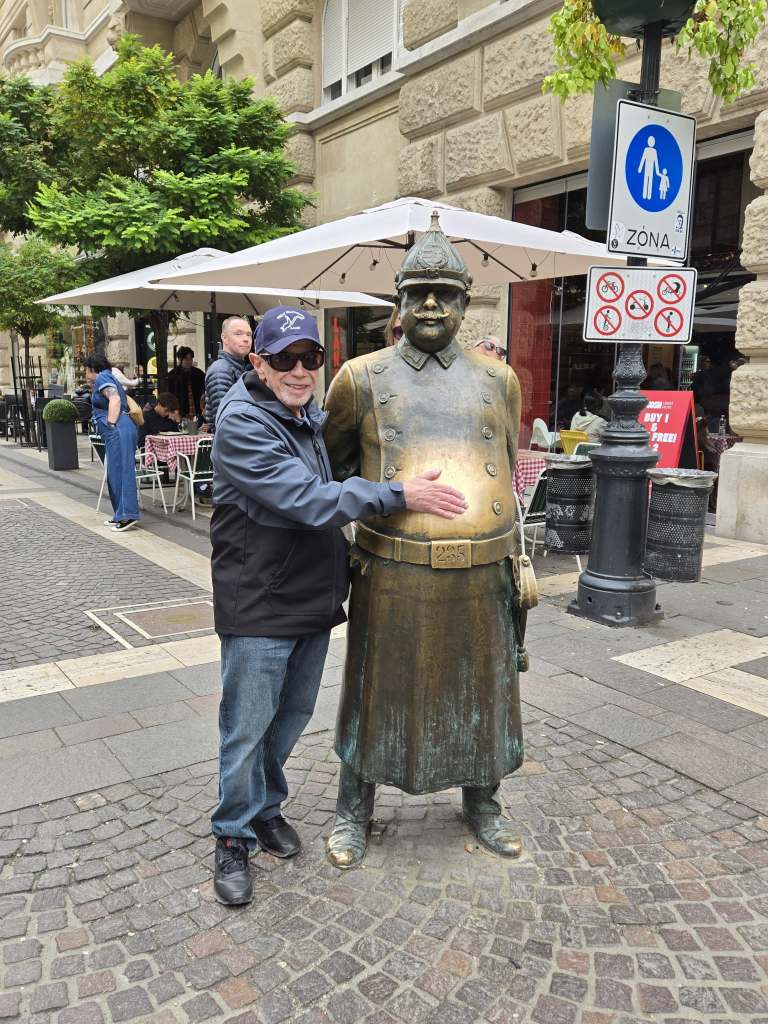
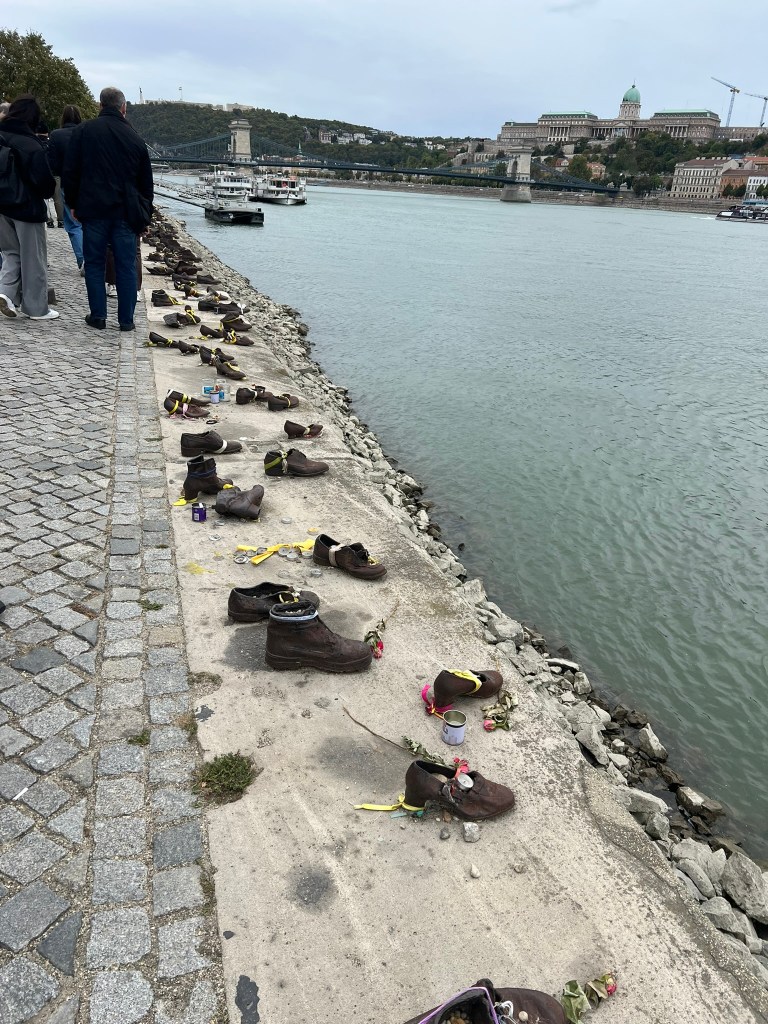
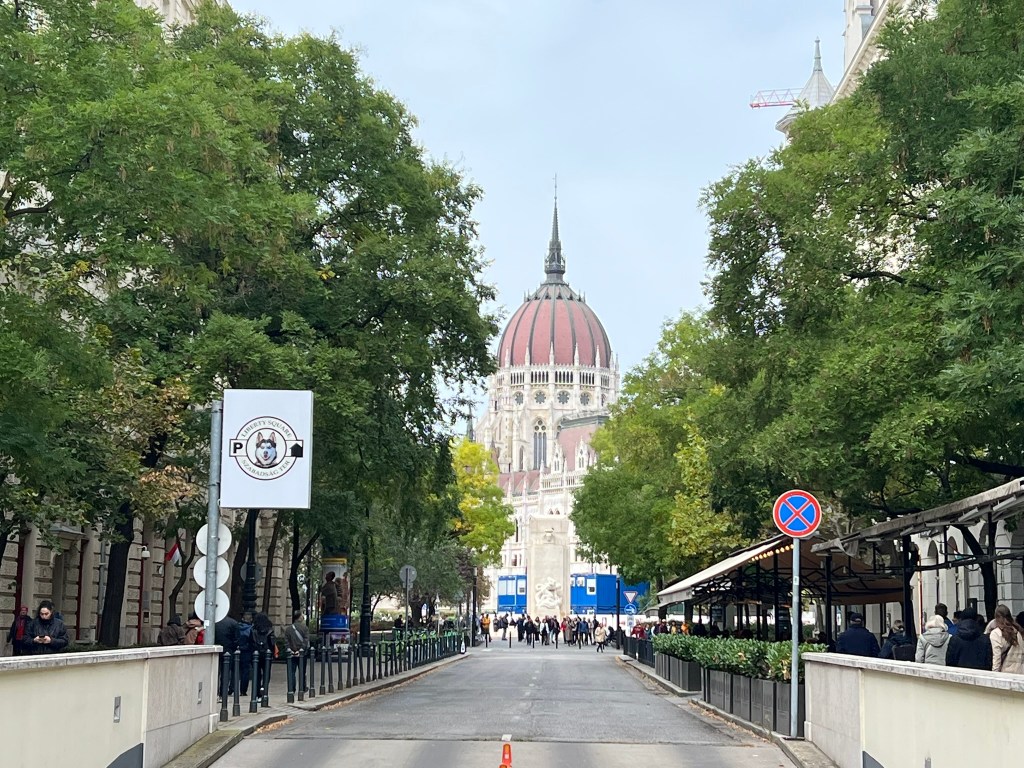
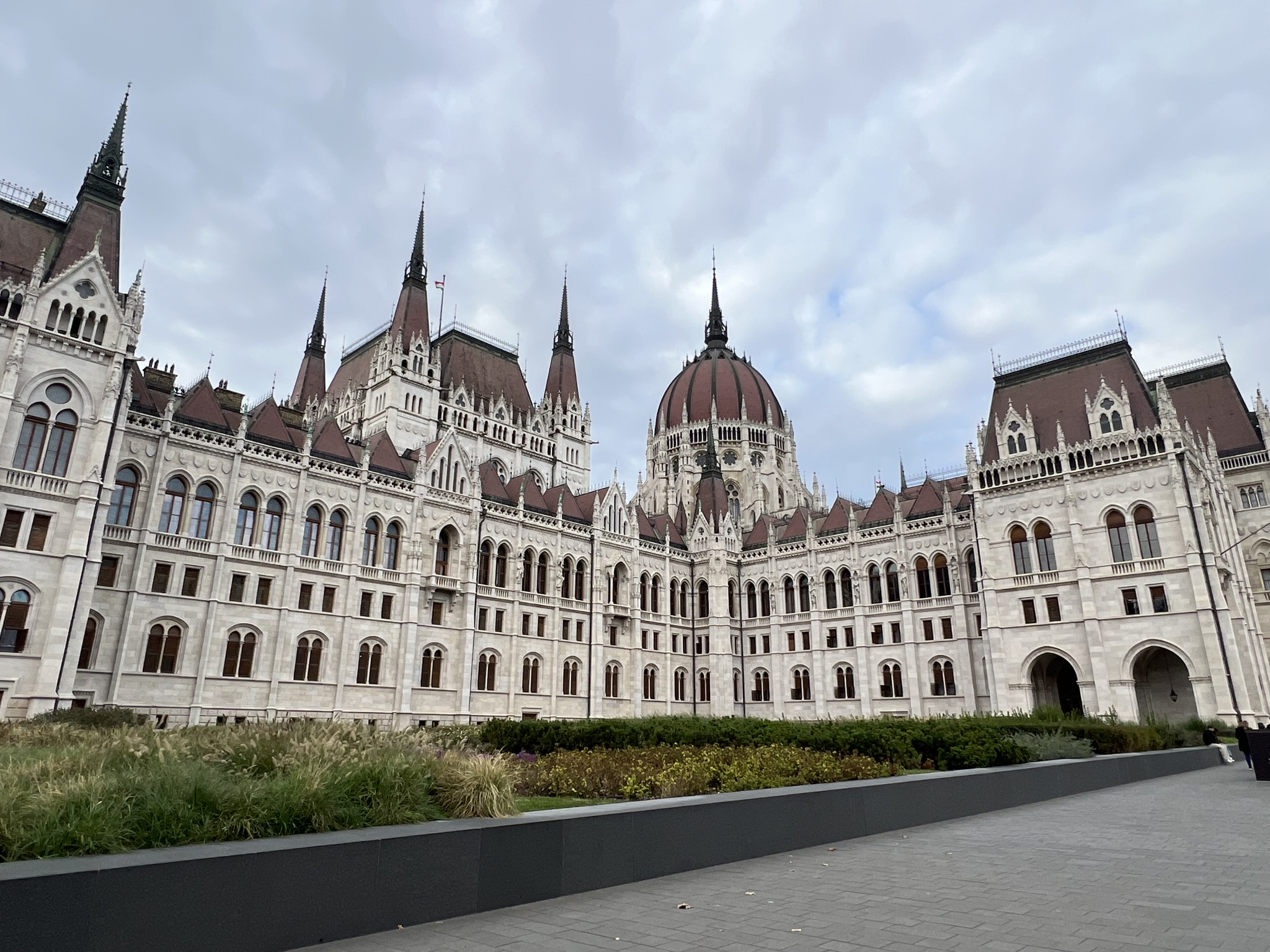
Dad and I joined a free walking tour to orient us to the city while mom tried to sleep off her dizzy spell. Our tour guide, Istvan, showed us our first views of jaw-dropping buildings like the dark-green domed St. Stephen’s Basilica, which at 96 meters tall marks the maximum legal building height in the city; and the neo-Gothic Parliament building, the largest building in Hungary. We also found smaller stories like a bronze “fat man” statue that actually had no backstory, and shoe sculptures lining part of the Danube River to commemorate people who were killed there during the Holocaust. We learned about the atrocities of the last century throughout World War II, the Soviet occupation, and the current leadership of controversial Prime Minister Viktor Orbán. Heaviness hangs in the air in Budapest, a sharp contrast to the beauty of the city.
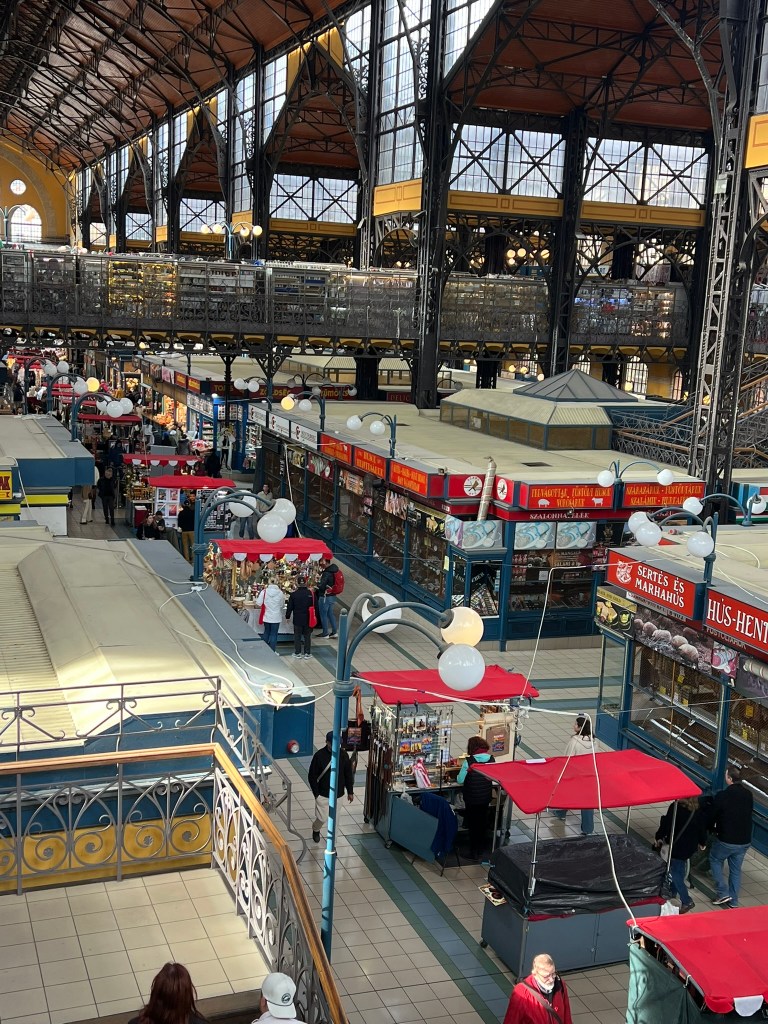
That afternoon, mom re-joined us for a tram ride to check out the Central Market Hall, located in a grand refurbished train station and a great place for quick meals, souvenirs, and general shopping. We tried the popular local dessert of chimney cakes, a twisted cinnamon sugar cone that tasted like a warm donut.
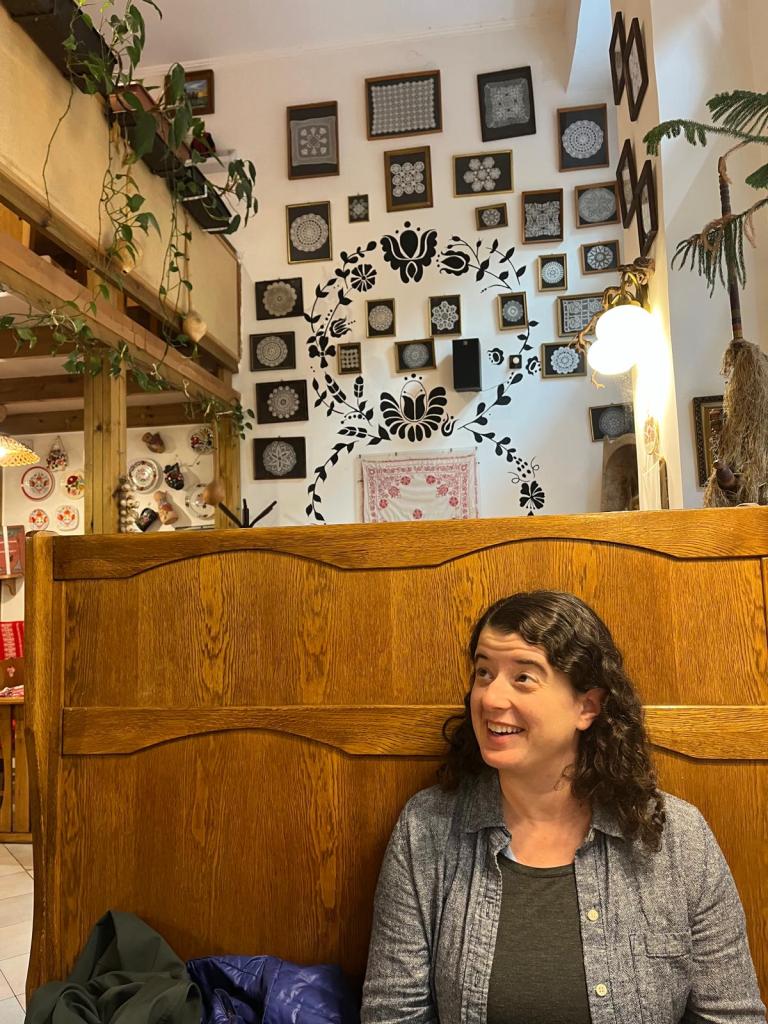
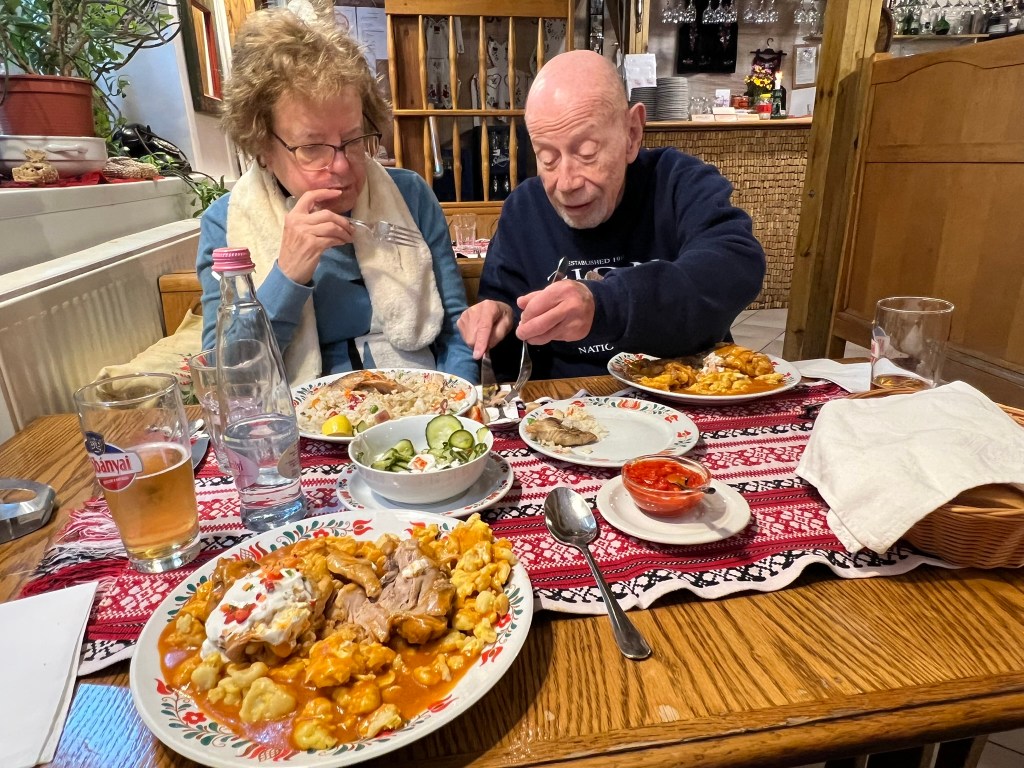
We popped into a store outside to get some things we needed, and the Vietnamese owner recommended we try a popular restaurant around the corner called Pipa. Our 4pm dinner was excellent and not crowded in the cozy space with art hanging on the walls that was reminiscent of a grandma’s cross stitching. There, we tried our first Hungarian meal, chicken paprika with a vinegary cucumber salad on the side. The dish was not as spicy as expected – we later learned about sweet paprika spice – but very flavorful. And it seemed that sour cream goes on everything.
Monday
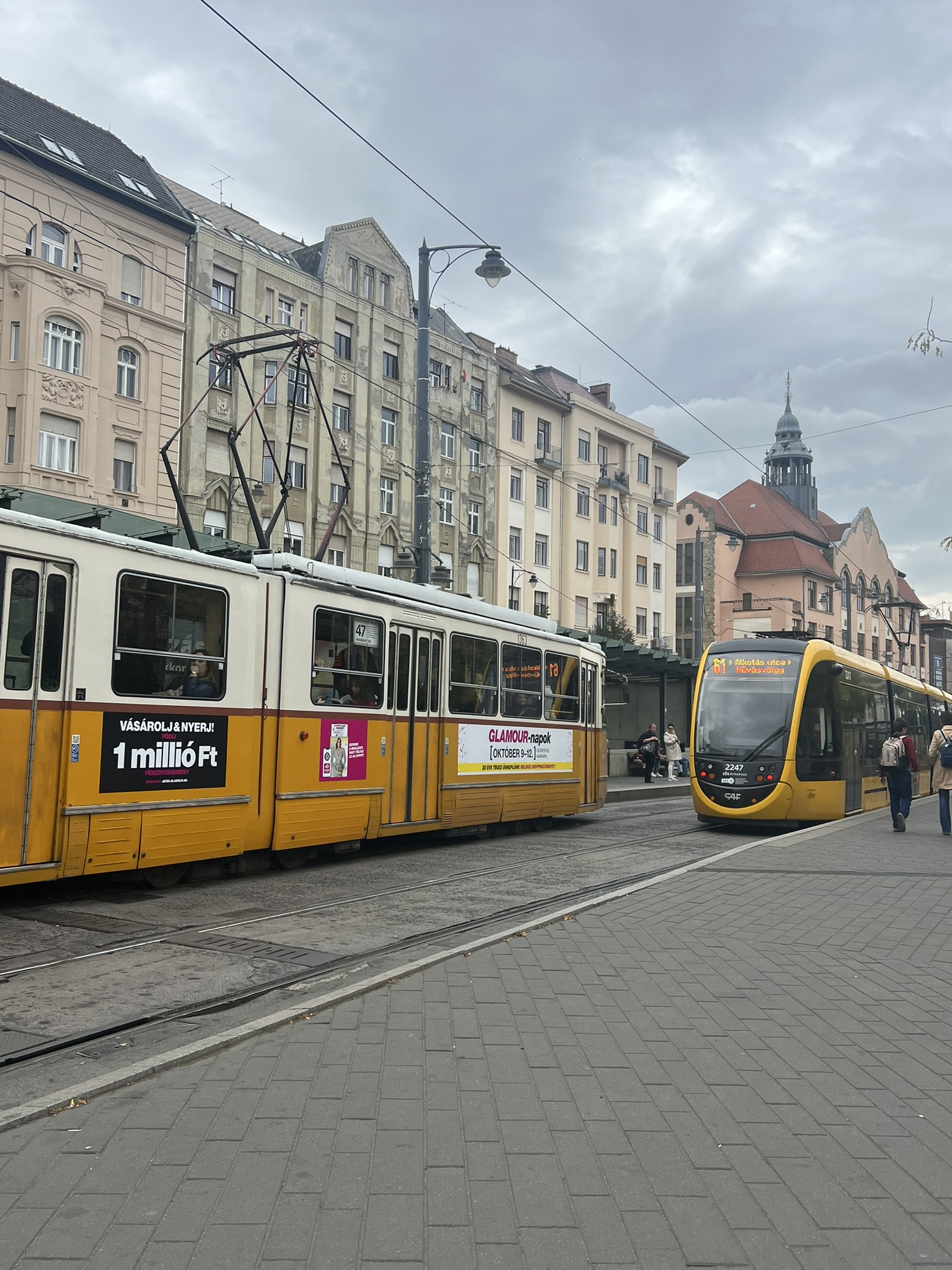
Monday was the big day for exploring our family ancestry. We got an early start and took a bus across the river, from the Pest side of the city on the east to the Buda side on the west (helping my parents navigate the transit ticketing app throughout the week was a very special experience for me). Up the hill where we went to check out the National Archives.
At mom’s urging, I had done some advance preparation and learned that we could simply walk into the building and try to use their research library to investigate our family history. I knew we would need certain information that we were not sure we had, like the family member’s date of birth, marriage records, town, or religious institution. Brief experiments with ancestry.com hadn’t yielded any helpful results, and dad just knew his father came to the U.S. as a boy sometime just before the turn of the 19th Century.
The imposing but delicately styled building rested on a quiet cobblestoned street, and as we entered and walked up the gray stone steps I had the distinct feeling like I was in my old college library, dark and important and beautiful. We greeted a beefy security guard at a desk, who immediately told us “no, closed,” and directed us toward an exhibition about 1945 and the end of World War Two.
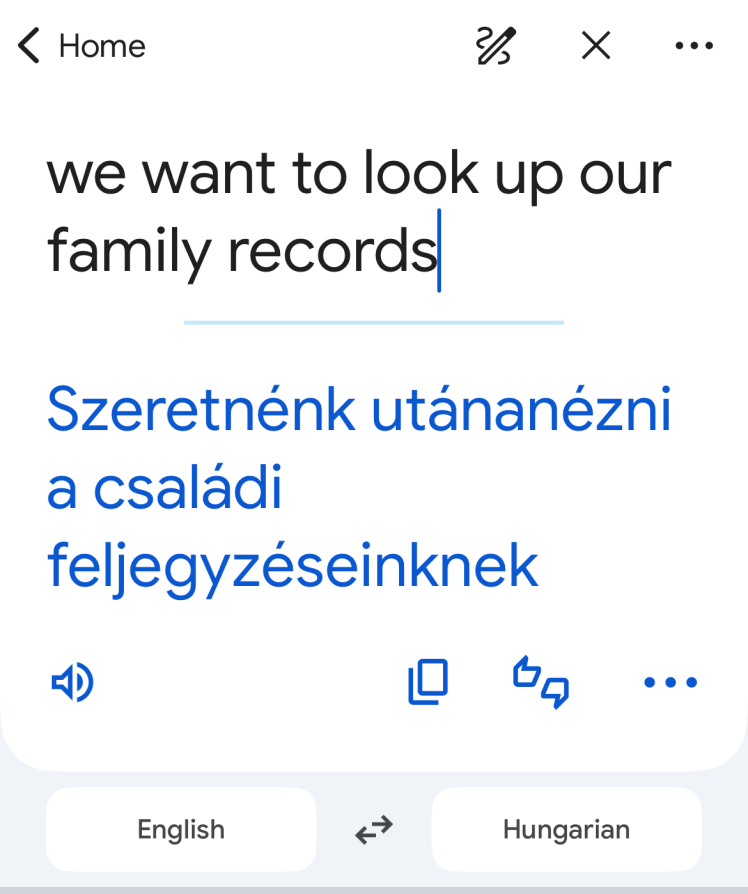
Not keen to take no for an answer so soon, and with a clear language barrier in place, I typed into Google Translate: “We want to research our family records.” As he stood up and read my phone, he immediately lit up and said “ah, family!” He signed us into the building, then took us down the hall, instructed me to knock on a wooden door, and left.
We timidly entered a small office with about 5 people at their desks, looking at these strangers who had interrupted their Monday morning work routine. I asked if someone could help us in English and a young woman came over to talk with us. She asked questions about what we knew about my dad’s grandfather, and unfortunately it was not much. It was good that we went in with low expectations, because she politely let us know they could not search by name alone. Instead, we should try a website like Family Search, and once we had birth records or other information like a location or religious institution, we could be in touch with them by email to help do a search, since all the records were digitized. She also recommended getting records from Ellis Island in New York.
As our conversation came to a close, she handed us a brochure with contact information on it, then showed us the 1945 exhibition in case we wanted to check it out. We opted to skip that and left the building, just a couple of minutes after entering, pausing to take some family photos outside. Even with the realistic expectations, I think dad was a bit disappointed. But it felt nice to try.
I’m not sure if we will ever follow up to try to learn about our family history. In a fast-paced life filled with work and other obligations, it can feel low-priority to make time for such a passion project. Still, some cousins recently uncovered some partial family immigration stories, so I know there is hope if we ever make the time to dig in deeper. As my parents approach the late stages of their lives, I’m grateful to have made the time to learn and explore with them. And as tensions toward immigrants flare yet again in the U.S., it felt good to remember and embrace the American truism that we are all immigrants.

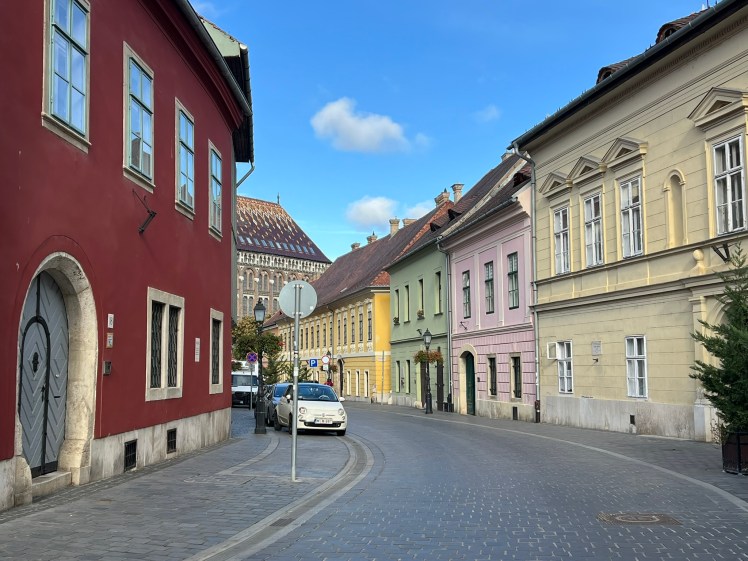
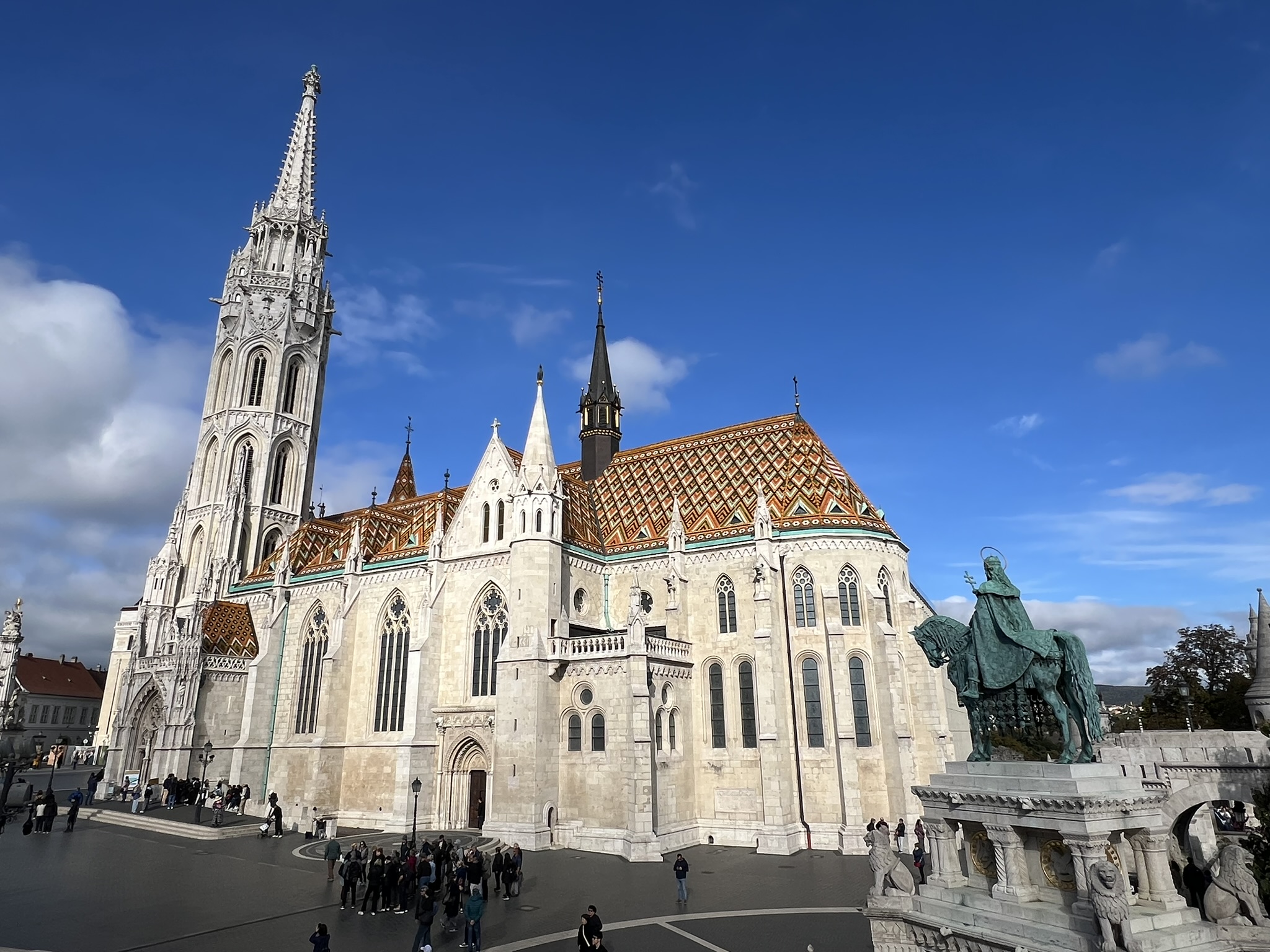
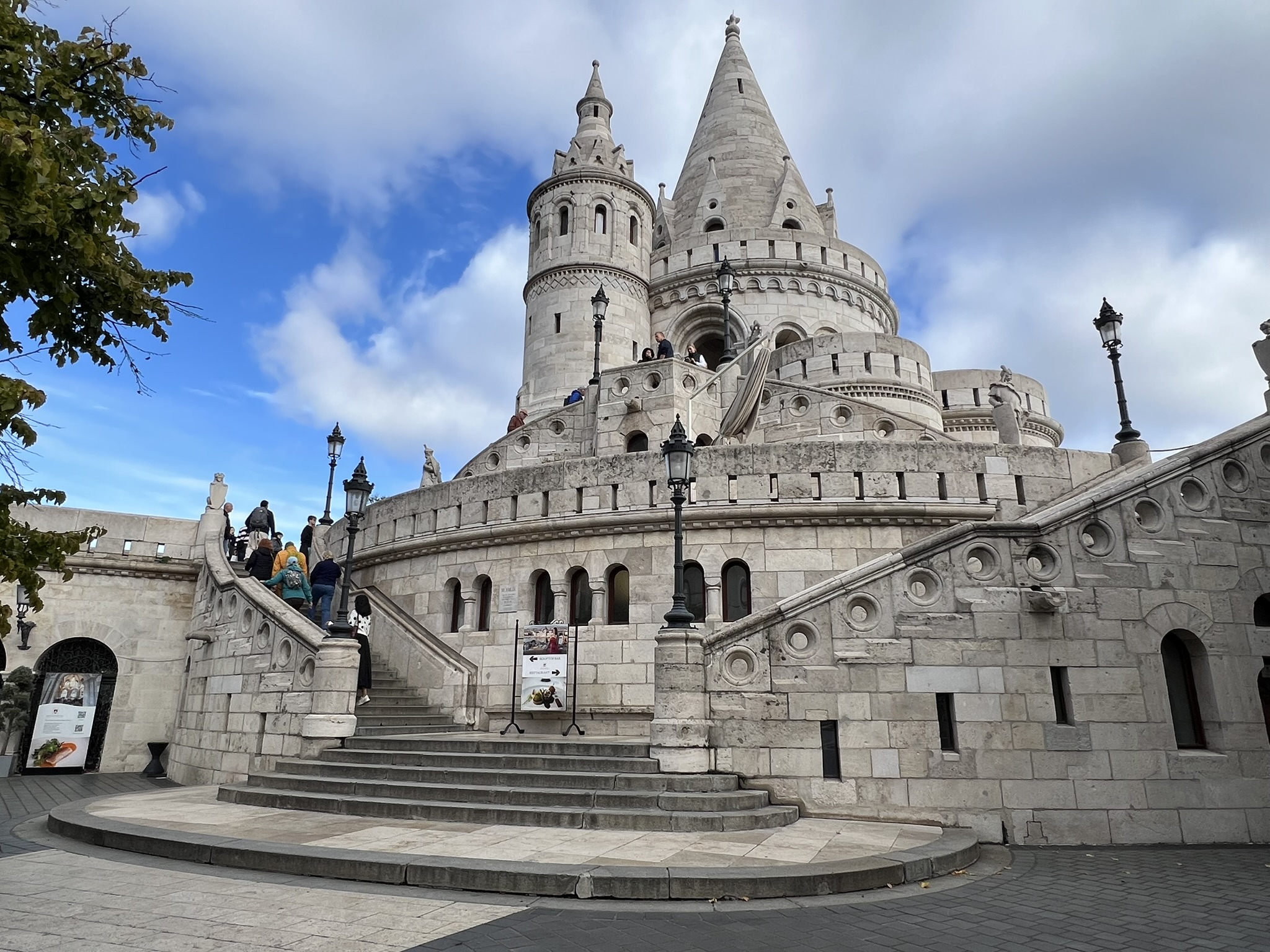
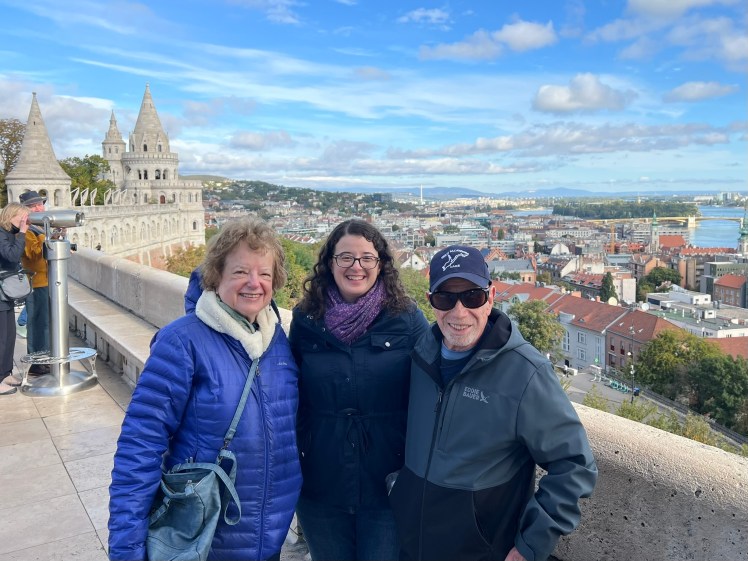
After all that, our day had just begun. As we strolled around the Buda Castle district near the Archives, we cleansed our palates with the joy of a distinctly European streetscape – colorful buildings, cobblestoned streets, and well-manicured trees. We soon came upon a gorgeous complex of churches and architectural gems. We were particularly excited by the Fisherman’s Bastion, a tourist attraction of gray castle-spires and pathways that you pay a few dollars to walk across so you can take photos of the Danube and surrounding churches. It was beautiful and made us very happy, especially as the sun was out and distracting from the chilly 50-degree weather.
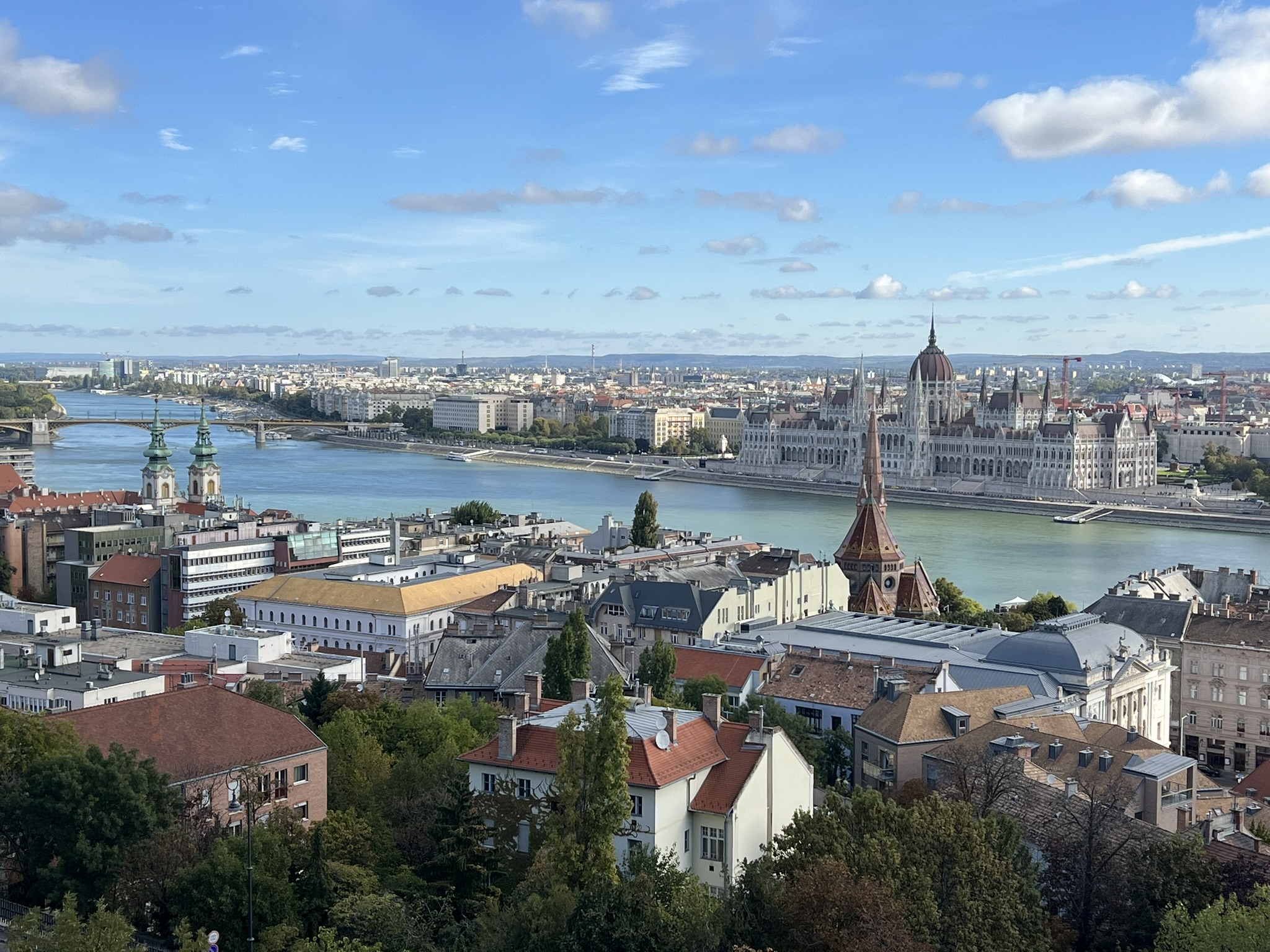
We took the bus a bit further to the Buda Castle, an imposing stone building/complex, and I opted for us to disembark behind the building and walk the grounds. There was a bit of construction rerouting us to some steps, and mom started struggling with her balance again. We eventually kept moving and saw the lovely, manicured castle gardens.
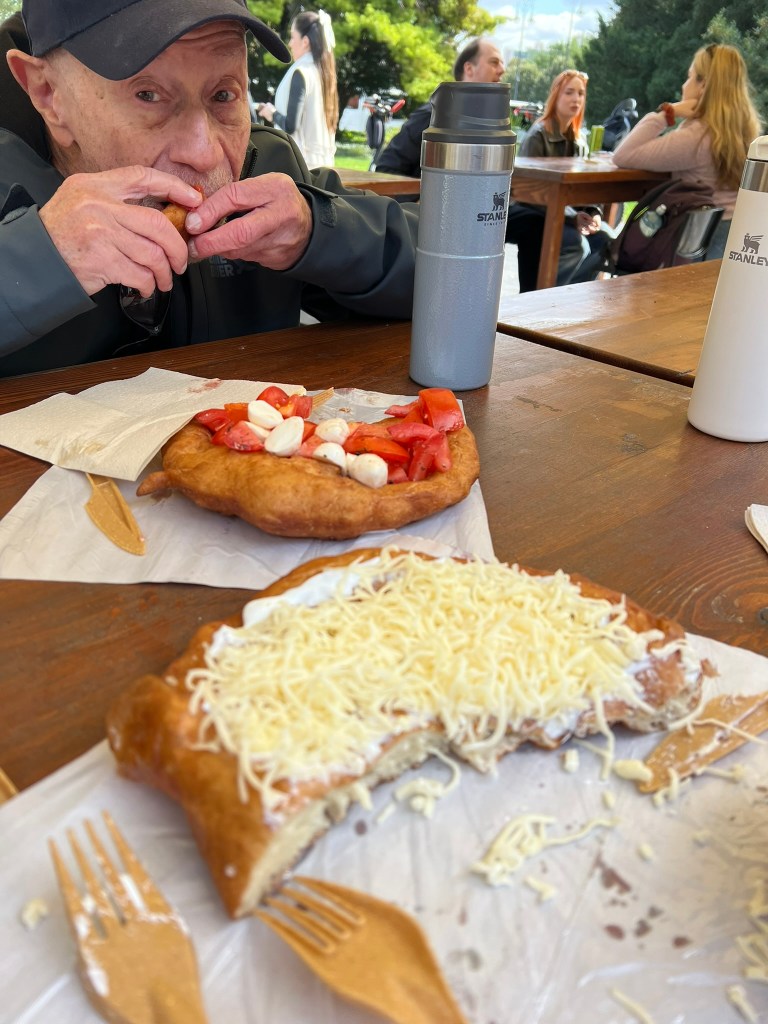
Instead of trying to go into the castle we navigated back to the street and the bus, but first decided to stop at a kiosk to try langos, a Hungarian street food pizza-like dish made of fried dough and cold toppings of your choice (we did a cheese/sour cream and a tomato/mozzarella). It was good, but truly just fried dough, heavy and sitting in our stomachs. We got the bus back to our place for a long rest before the next planned activity.
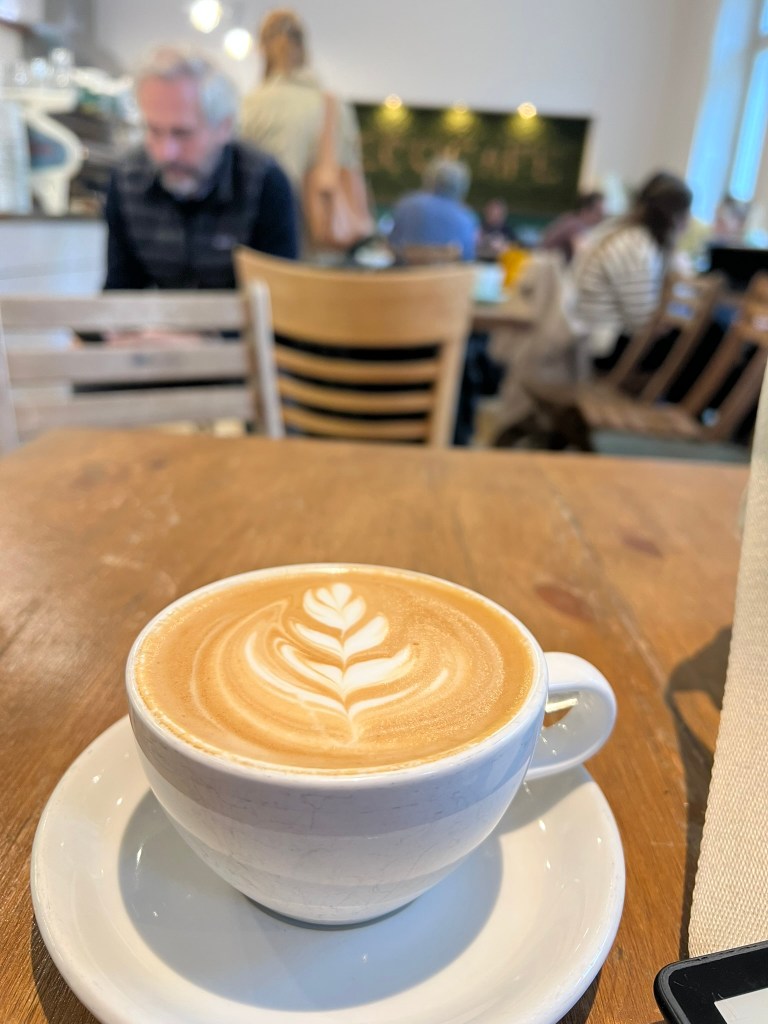
In true Tara style, I went out on my own for a few hours that afternoon, taking a long walk through a park adorned with castles and along a wide, expensive shopping street, Andrassy Avenue. I stopped in a café and opened my senses to the local Budapest experience. In the coffee shop, it didn’t seem too different from back home, crowded and chatty.

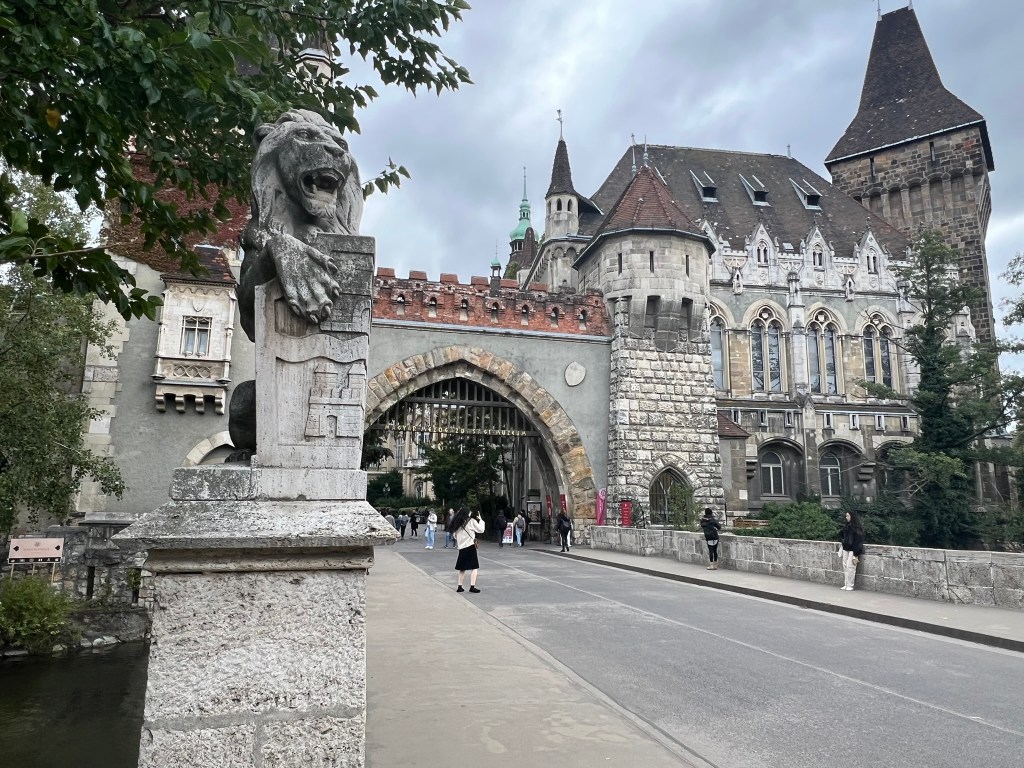
That evening, we were excited to depart on our food tour, one of my favorite travel activities. Our young guide, Peter, met us in the Jewish Quarter, a vibrant neighborhood known for its nightlife and food. Our small group included an American couple living in Paris, a Danish couple, and a girl from Philadelphia about my age who was taking a break from her family vacation with 13 relatives. Talking to her, I learned that she, too, was on a family ancestry exploration trip. It was fun to share tips like going to the archives, and hearing about how she was traveling to a small ancestral town to see what they could find.
The food was great. We stopped for cups of hot vegetable soup that we ate standing in the traffic-free street, a sit-down chicken paprika meal, the day’s second helping of langos in a casual, red-painted store that felt like a pizza joint, and a cellar where we sampled a fluffy cake and some too-sweet-for-me Hungarian white wine.
Mom’s wobbles were becoming a full-on problem mid-tour, such that me or dad had to always hold on to her. At one point we let the tour abandon her, with dad, at an outdoor restaurant so she could rest; fortunately they were able to catch up with us soon after. She had a good attitude about it, but it was becoming a little scary.
Tuesday
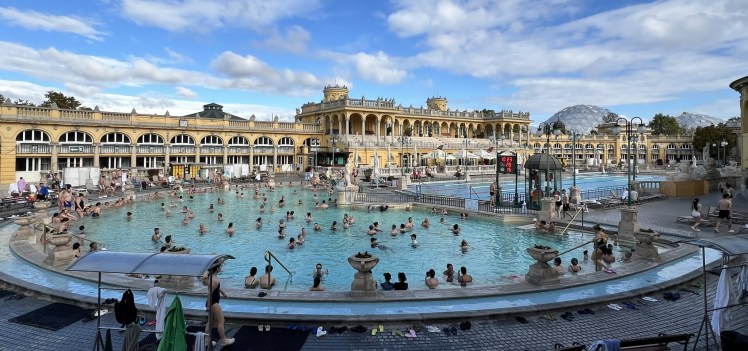
On Tuesday morning, we took the metro to the Széchenyi baths, the most popular of the city’s many thermal spas. Inside the huge yellow building with Victorian adornments, a series of efficient Hungarian women ushered us to our separate locker rooms, then outside to the baths, a massive courtyard surrounded by the yellow building with trees and lounge chairs attempting to fill the huge open space.
With steam rising off the large half-moon pool, the spot lived up to the travel-influencer hype that I had seen in advance. The three of us dumped our towels and eagerly stepped in, the water beckoning us from the chilly air. It was delightfully hot and relaxing, even in an environment that was chock full of tourists. Next to the pool was a warm lap swimming pool, which required a bathing cap to use, and a few people were swimming with relaxingly slow strokes.
After our soak, we moved on from the cool air to the indoor pools, where we jumped from pool to pool and sauna to sauna for what felt like hours of blissful relaxation. My parents were cooked, but I took one more dip in the outdoor pool, where I saw Hungarian grandpas setting up waterproof chess sets on a ledge in the pool. After our showers, it was an easy decision to stumble into the poolside café for lunch and more relaxation.
The next step, which I had framed as optional if we were up for it, was a walk through the park to House of Music, which I had scoped out on my solo walk the day before. Mom was doing great all day and was happy from the baths, but by the time we walked 15 minutes she was done, so she chose to rest in the museum lobby while dad and I checked out an exhibition on world music, which he ended up evacuating early to find a bathroom. I enjoyed the exhibition, which involved a lot of headphones to hear obscure music from all over the world. I was especially intrigued by the Inuit throat-singing. A slow wobbly journey home led us to some much-needed rest.
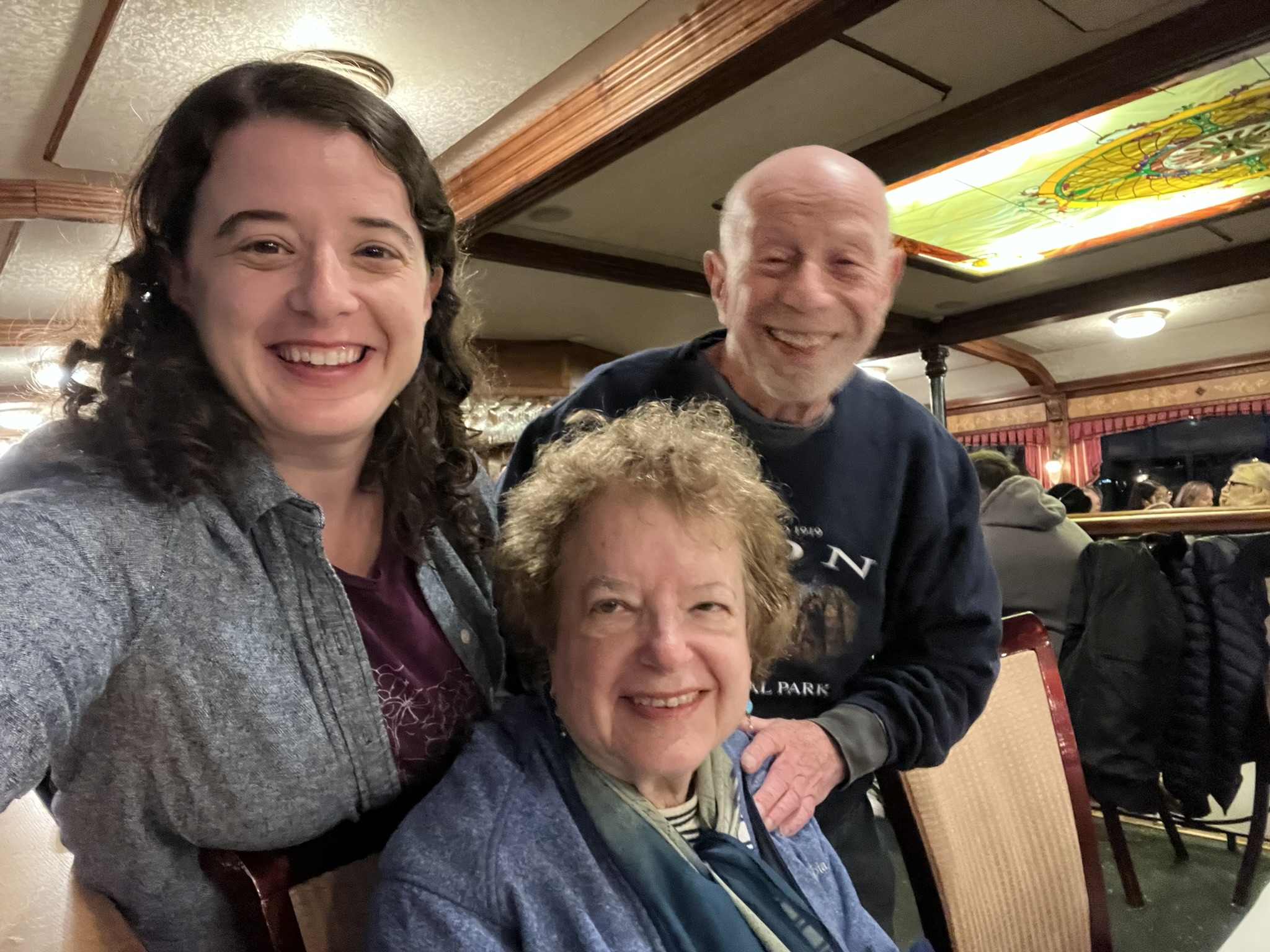
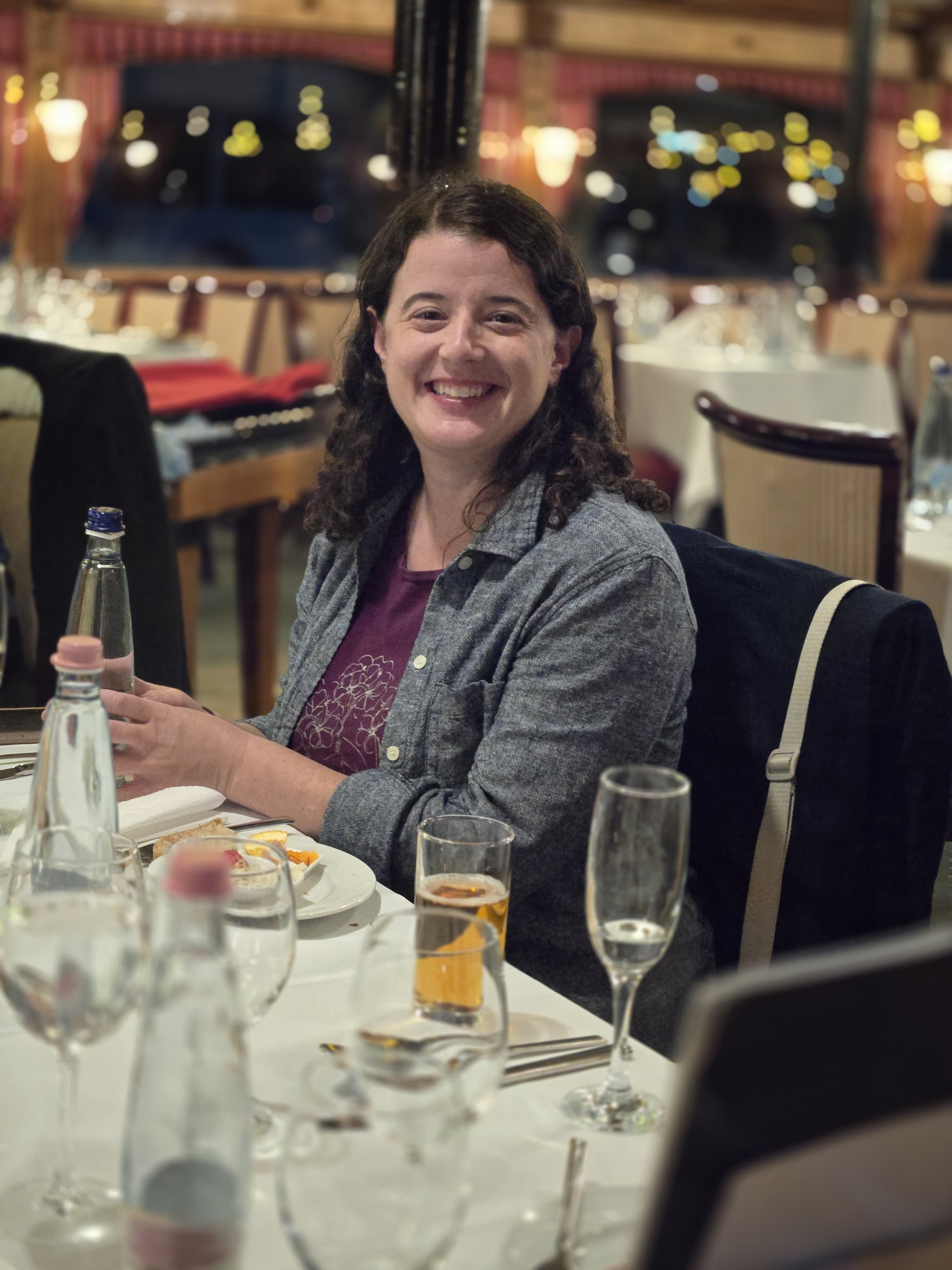
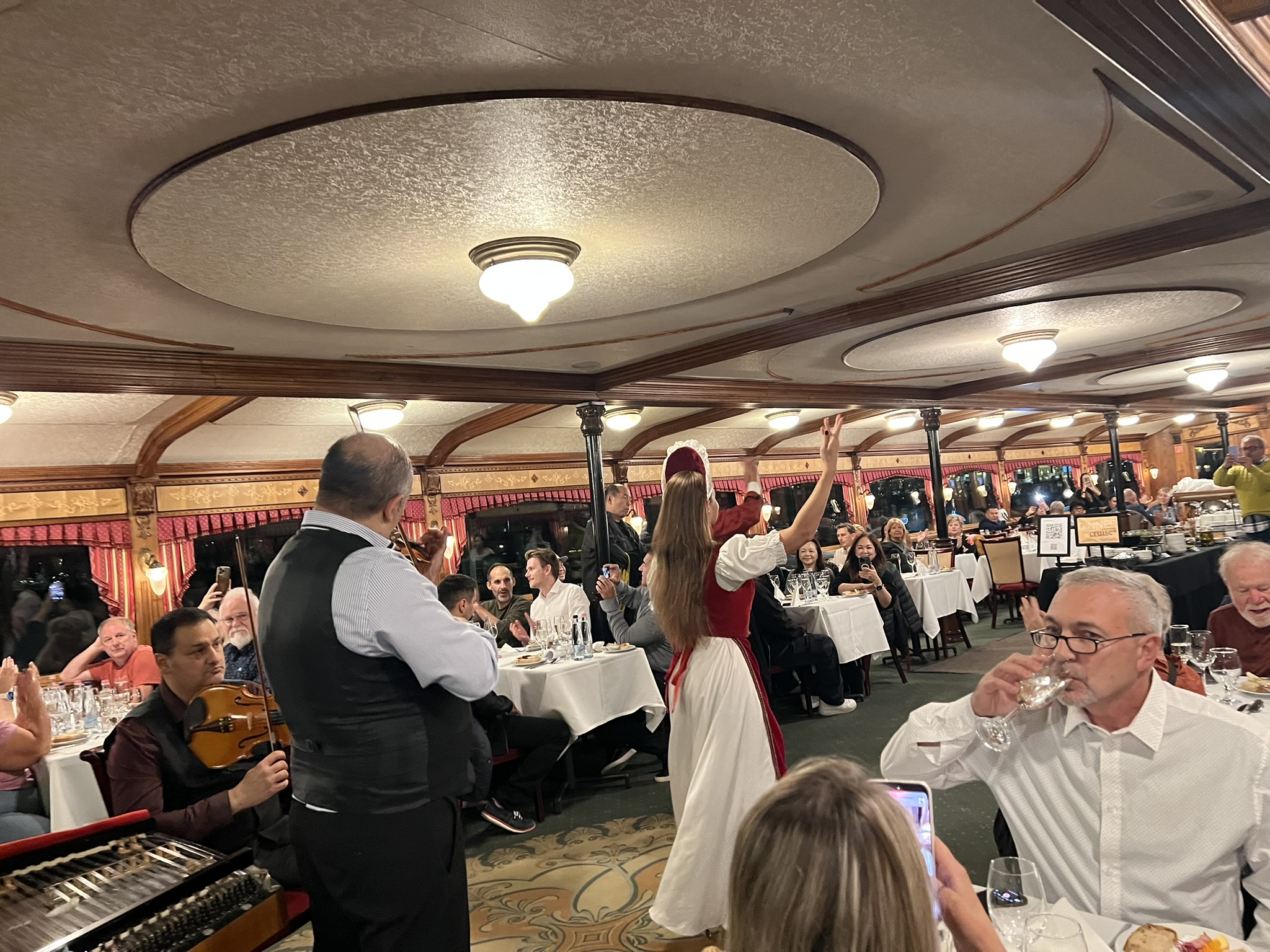
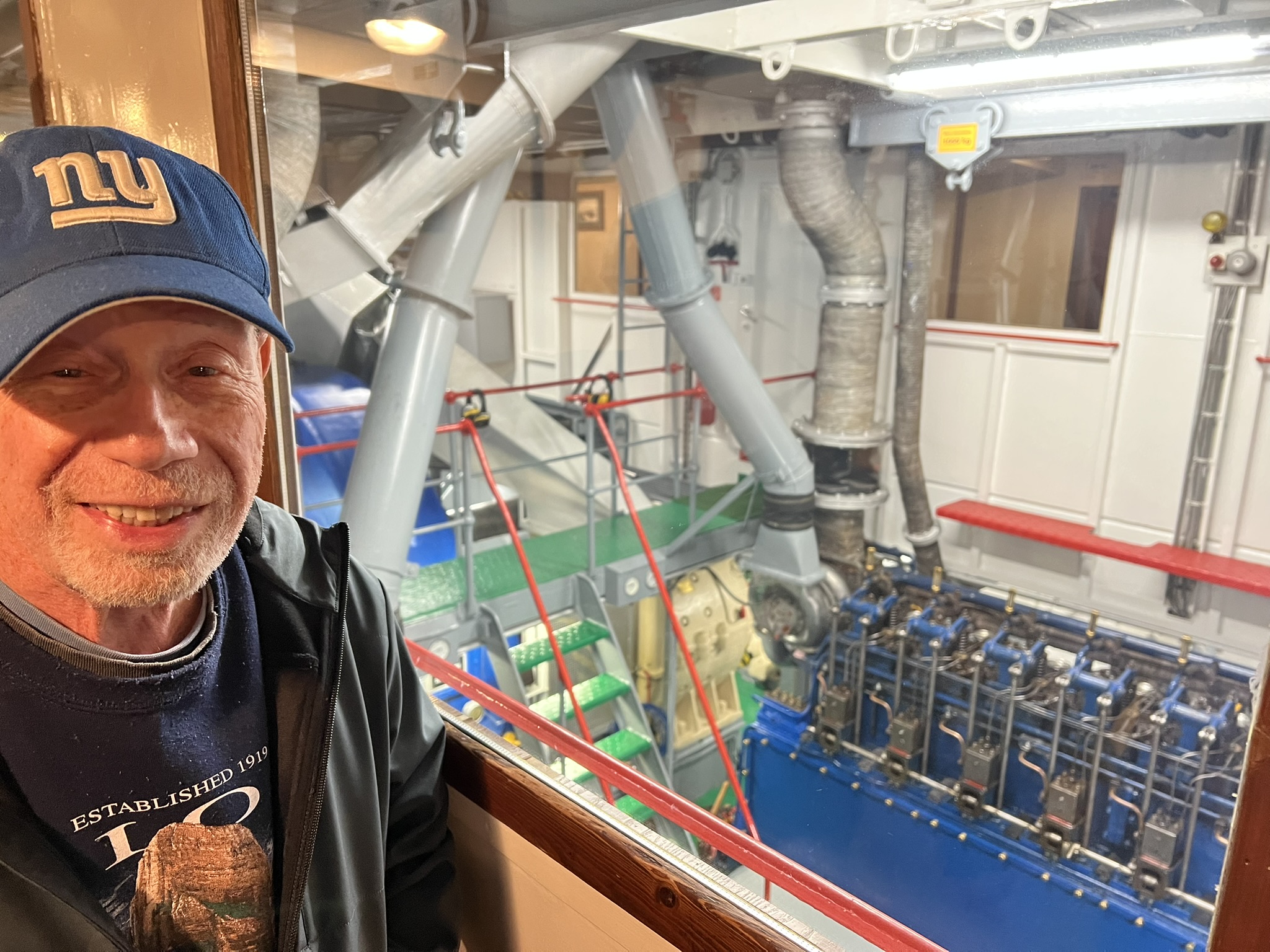
That night, we walked to the river for a dinner cruise on the Danube, featuring live Hungarian music, a huge buffet meal, performances from local gypsy dancers, and great night views. It was surprisingly fancy and a smooth ride up and down the river. We had a lovely time and completely stuffed our faces with many heavy potato, noodle, and veggie-based dishes, and my parents tried the goulash, a traditional beef-based Hungarian soup that I skipped because of my pseudo-vegetarianism. Dad was particularly enjoying himself, as he seems to have developed a late-in-life fascination with all things boats. As we disembarked we snapped a photo of his excitement gazing into the view of the engine room.

Wednesday:
The next day, mom slept in while dad and I went on a small group tour to a natural area up a chairlift on the outskirts of the city. We met one metro stop away across the river in Battayami Square, watching the rush hour locals speed around while we enjoyed the Ottoman architecture surrounding the green park. I popped into a grocery store to get change so we could leave a tip, which ended up taking forever as I waited in the only cash line to purchase my 60-cent piece of cheesy bread with the equivalent of a $50 bill, clearly annoying the cashier.
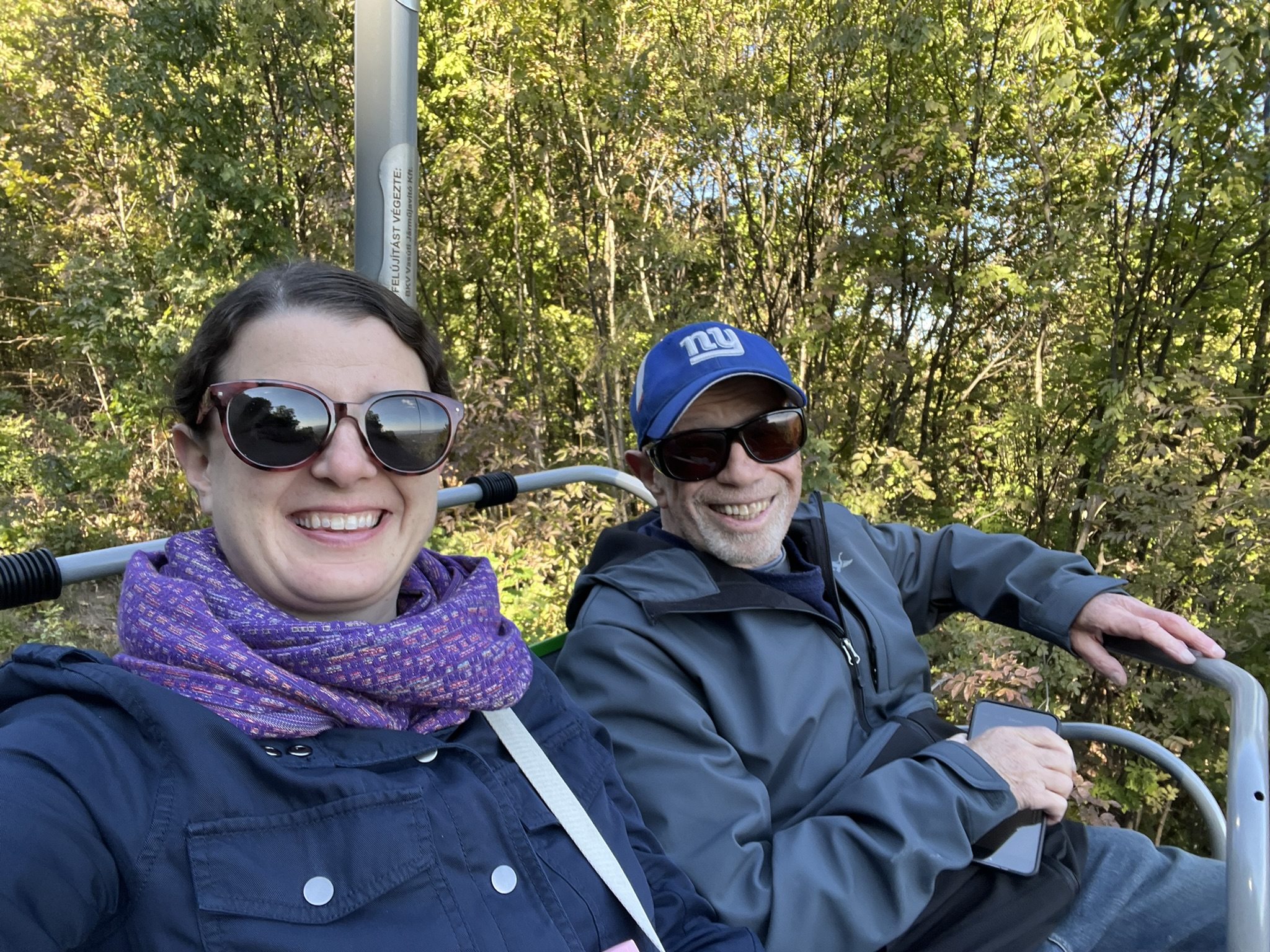
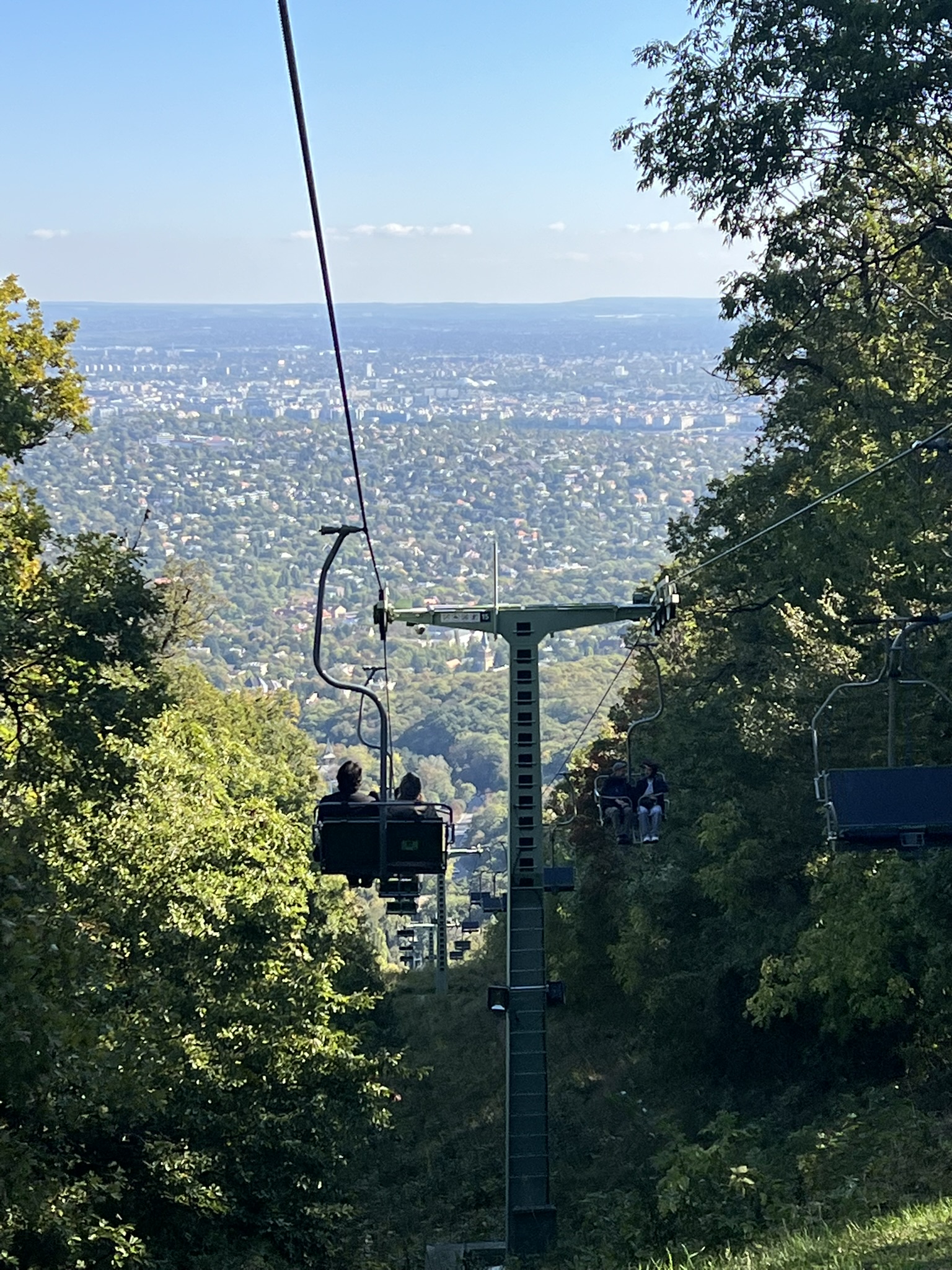
Our kind driver, an older man who hit it off with my dad, took us to his van and began the half hour drive through some beautiful neighborhoods and quiet streets. He ushered us onto the chairlift, a nice, 10-minute ride up in the cool air. At the top, we commenced a very steep 10-minute walk up a paved road to a tower, where we were treated to 360 degree views of Budapest and the surrounding towns and countryside.
On the way down, dad shared a rare moment of vulnerability:
“You know, I don’t feel any real sense of connection to this place. But still, it’s a very nice place.”
I related very strongly to his sentiment, as someone even further removed from her family roots before several generations of New Yorkers. I always just identified as a New Yorker. I only had one living grandparent when I was growing up, my mother’s mother, who came to Brooklyn from Russia when she was a toddler and fully identified as a New Yorker herself.
After a lunch break, mom joined us for an outing to the Light Art Museum, a short bus ride away. Mom had been hyping this spot for weeks, so we were glad she was feeling good enough to go. It was a dark, two-story museum with displays focused on the use of light. Some was weird. Some was cool. As most art is. We walked to dinner at Mazel Tov, a fancy falafel place that we enjoyed. Along the way we stopped in a pharmacy where mom braved translation challenges with a worker and managed to buy some magnesium to help with her wobbles.
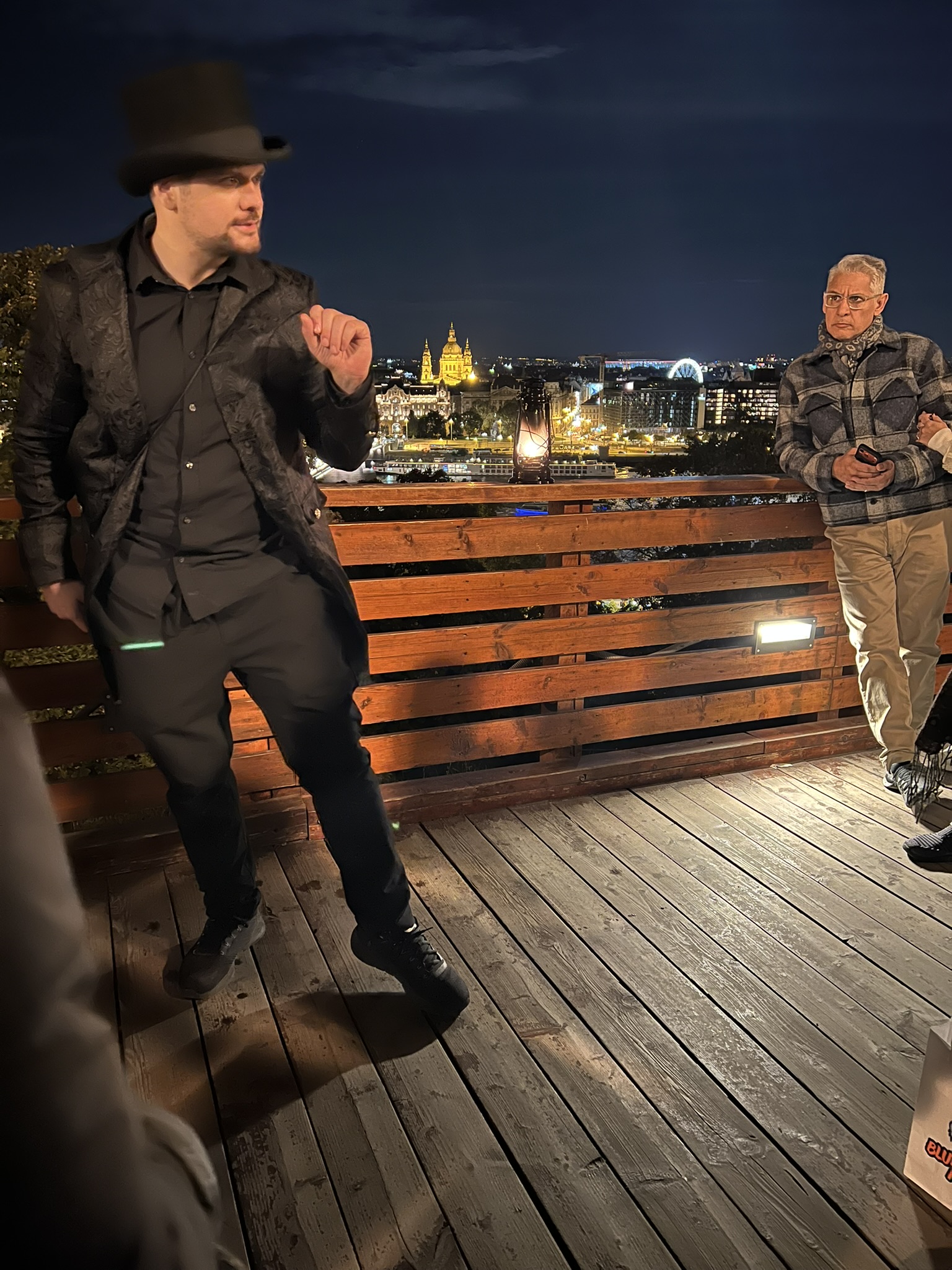
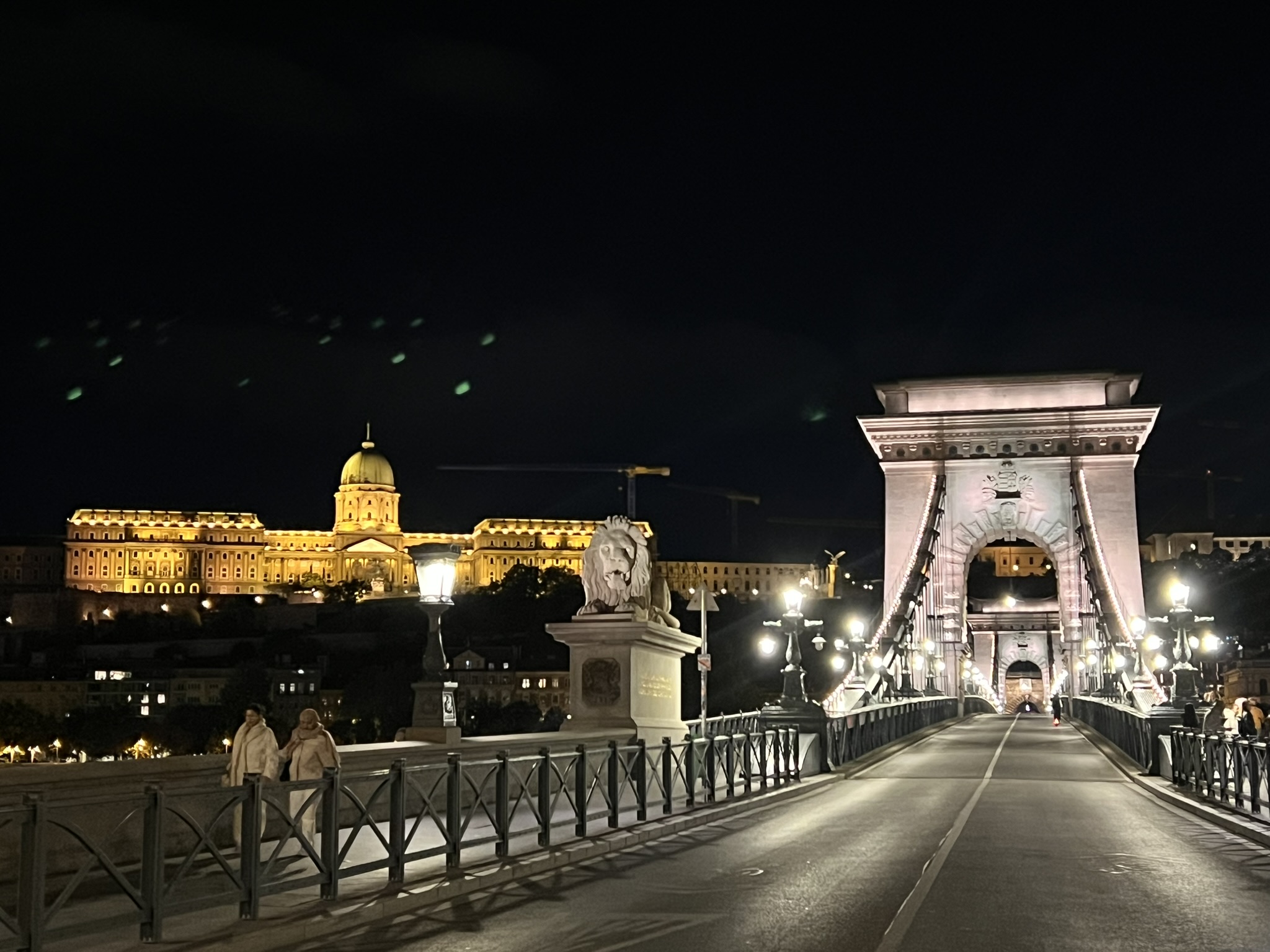
After dropping off the parents, I walked 20 minutes across the beautiful Chain Bridge to meet my vampire tour! A group of over 30 people met our creepily-adorned guide and his lantern, and commenced walking into the dark Buda Castle grounds with stops for storytelling about the city’s shady history of beheadings and back-from-the-dead hauntings. I was happy we got to explore inside the castle grounds a bit with their adorned buildings, fountains, and ample public spaces. The tour left us off by the Fisherman’s Bastion, where it was a little quiet and I had some trouble navigating back in the dark for a minute. I felt safe except for a moment in the tourist area, where a teenager walking a dog asked me in Hungarian, then in English, to say hi to his friend on his video call, so I did. I wonder what they are using my image for, or what that was… I wasn’t pickpocketed so who knows.

Thursday:
It was time for a much-needed Tara solo day. On Thursday, I spent hours roaming the city by foot and transit and hitting all the spots I wanted to see. The day started at Rudas baths, another thermal spa known for two main pools: one, a small outdoor tub that offers 360-degree views of the Danube, the city, and the adjacent cliffs; and a dark, octogon-shaped Turkish bath section with colored, opaque skylights adding to the sexy ambiance. I got a great massage which was much-needed, though I observed my feet and hips were still very achy after days of exploring.
The next stop was strolling a wide, funky shopping street, Bartok Bela, and trying unsuccessfully to blend in with the locals. I returned to the Central Market Hall to purchase a colorful glass necklace I couldn’t stop thinking about, followed by ordering a sleeve of mozzarella sticks that I sinfully indulged on a crowded bench.
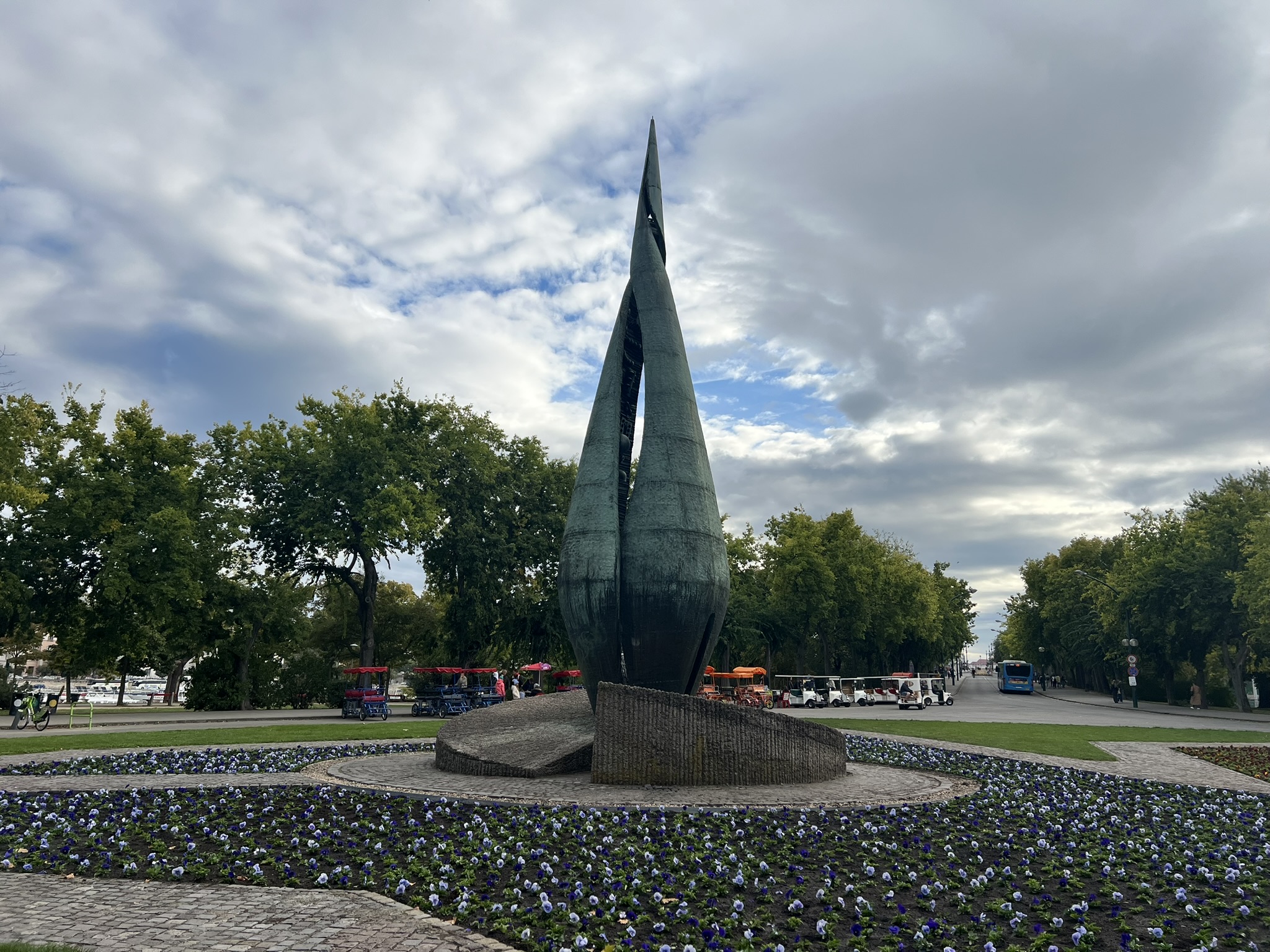
Next up: I rode the tram up north past the enormous Parliament building, and transferred to a short bus ride to Margaret Island, where I spent just a little time exploring the central park-like vibes, a cool fountain, and a tall statue surrounded by flowers symbolizing the coming together of Budapest’s historic districts.
I walked back over the bridge, and took the tram one stop to actually explore Parliament. The underground visitor center was very crowded, even toward the end of the day, and I was not surprised that there were no more tickets available. I was able to stop to see a free exhibit on Hungary’s crowned jewels, including an interesting story about how the U.S. safeguarded them during World War Two.
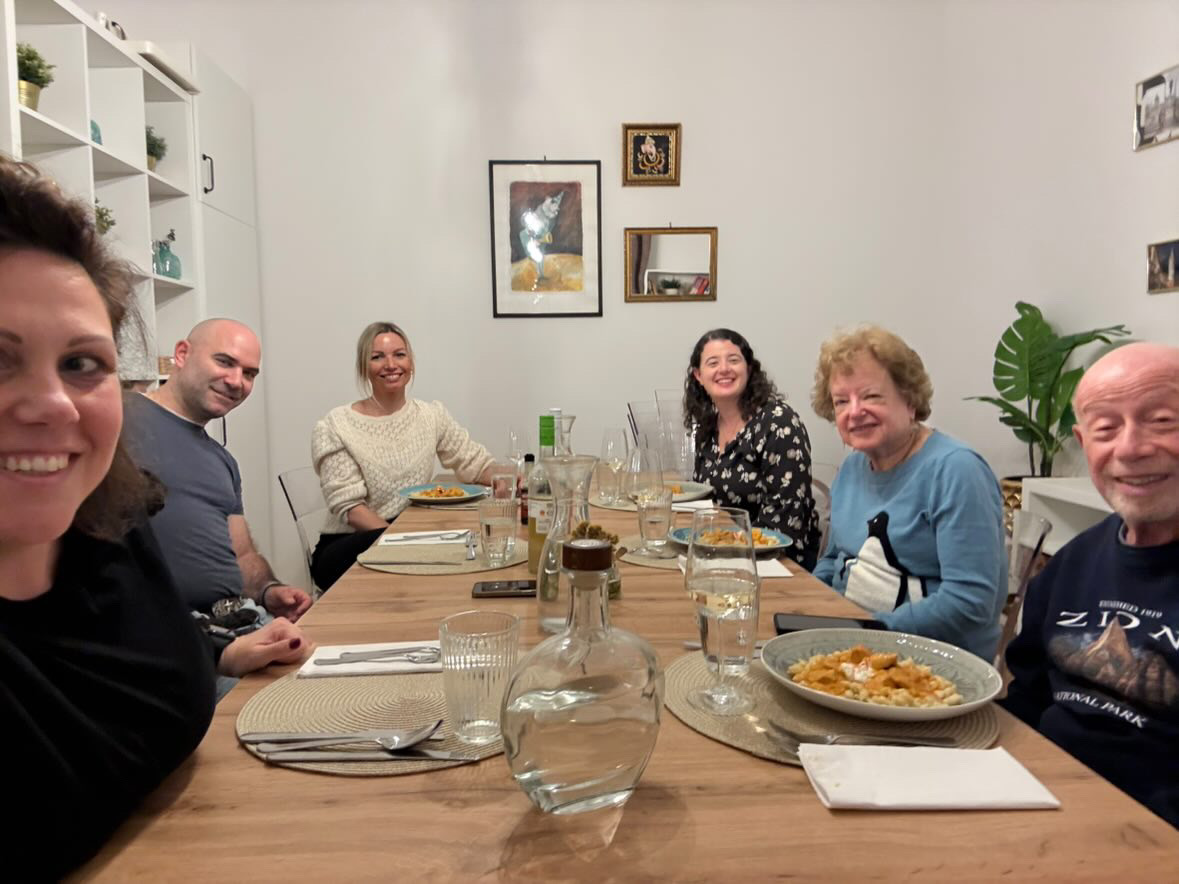
After a quick rest after my whirlwind day, I joined my parents for an AirBnb experience where we went to a couple’s apartment for a home-cooked meal. It was delicious and delightful! A solo traveler, a German journalist named Diana, joined us at Zita and Gabe’s home. We were given lots of drinks and amazing food that Zita, who owns a cooking school, prepared for us, including chicken paprika and yummy dips. We got to know each other and shared stories, and even got a visit from their toddler and parents who lived across the hall. I really enjoyed the experience. We said goodbye and took an Uber back.

Friday:
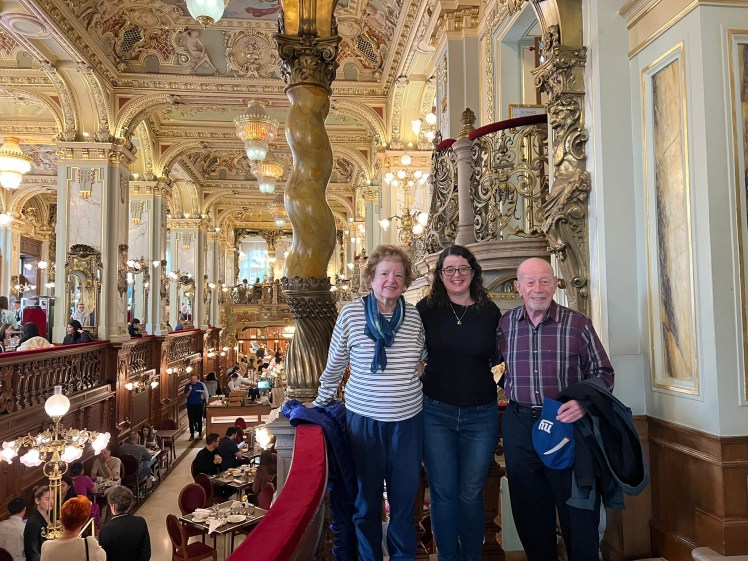
We got an early start on Friday for a visit to the New York Café, a luxurious restaurant designed seemingly exclusively for tourists, while offering a scrumptious and elegant taste of Hungary. Walking in the doors, we were assaulted by the overly adorned 3-story open air space, with the distinct feeling like we just stepped into the palace of Versailles. There were frescos on the ceilings, carvings on columns, and polished wait staff to show us to our table of cushioned seats near a pianist accompanying the space with classical tunes. The 11 euro cappuccinos seemed worth it somehow, as we lingered and roamed around the large space, taking photos and sneaking into forbidden areas of the adjacent hotel lobby.
My parents had stopped by the famous Dohany Street Synagogue the previous day, the largest synagogue in Europe and second largest in the world to Temple Beth Shalom in New York, but balked on paying the $39 fee to go inside. When my dad seemed to regret it, mom and I pushed him to return. Religious institutions aren’t my jam, so I helped the two of them pay and went on my way to wander the Jewish Quarter. I stopped in a store dedicated to the Rubix Cube, whose inventor was from Budapest; a large, funky vintage clothing shop; and a tiny corner art store where I purchased a small, framed print of a Mustache Guardian: the back of the print told a tale of his purpose – to encourage a socially positive atmosphere in the home. I stumbled upon a flea market in a long, narrow alleyway, amazed at the hidden art and culture I had found that morning.
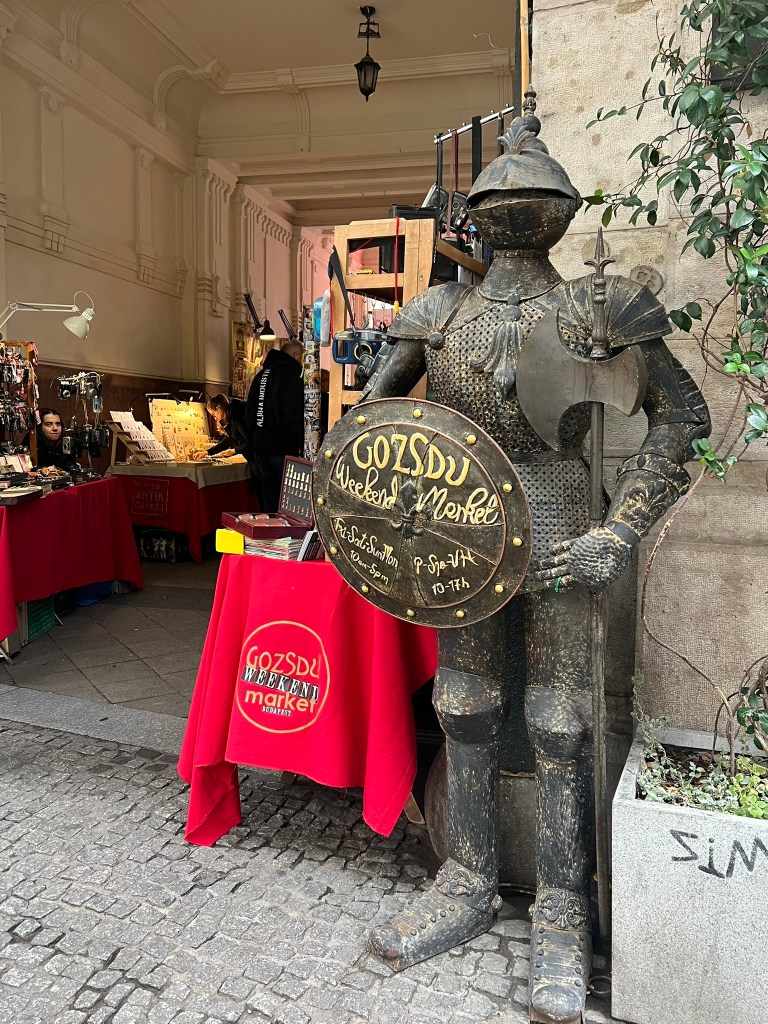
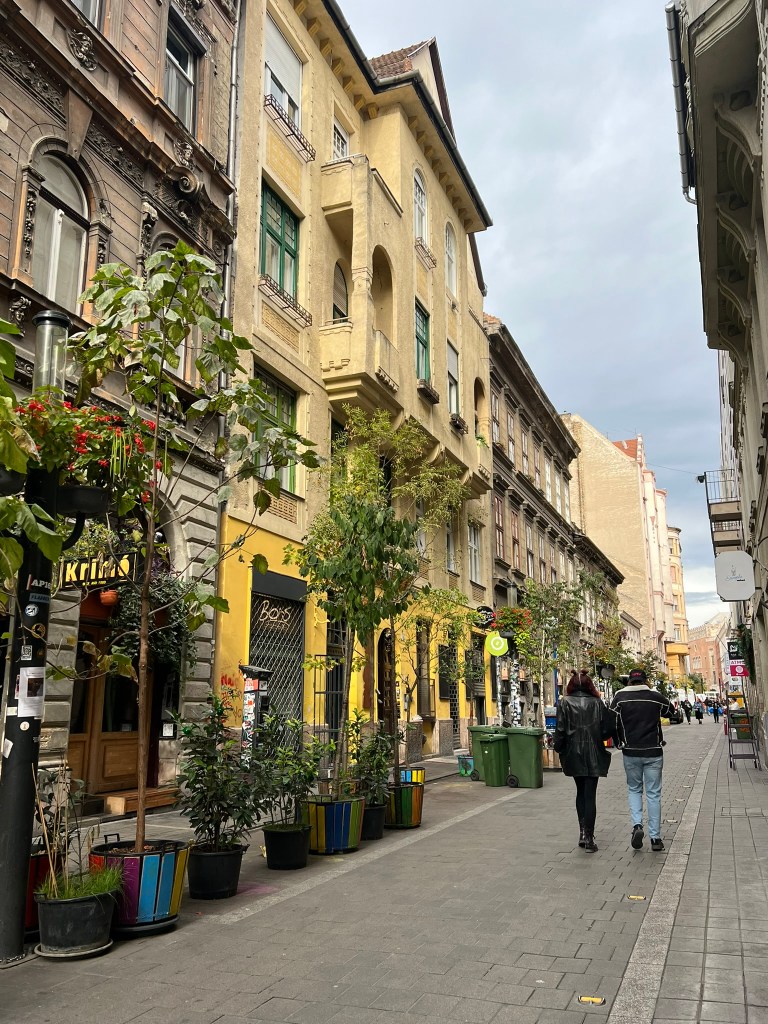
After meeting back up for a short rest and snacks, and hearing that the synagogue was beautiful but the tour was boring, me and dad departed for our Cave Tour. We met our 30-person group at the fancy church complex on the Buda Side, then entered a random door to descend down many steps to check out a carved-out series of caves—now electrified for easy navigation—that had been used over time for various purposes, including medieval dungeons, World War II bomb shelters, and more recently as wine cellars and storage for restaurants. We also got to see some random skull displays someone had put there generations ago, and a mammoth tooth fossil. I was at the point of being over-stimulated by the city, but it was an interesting tour.
We picked up mom and walked to an early dinner at Café Vian, located in a trendy corner patio near that morning’s flea market where I had an okay chicken meal. We escorted mom to an Uber, then dad and I walked to check out Szimpla Kert, a ruin bar that we had briefly stepped into on our food tour the other night.
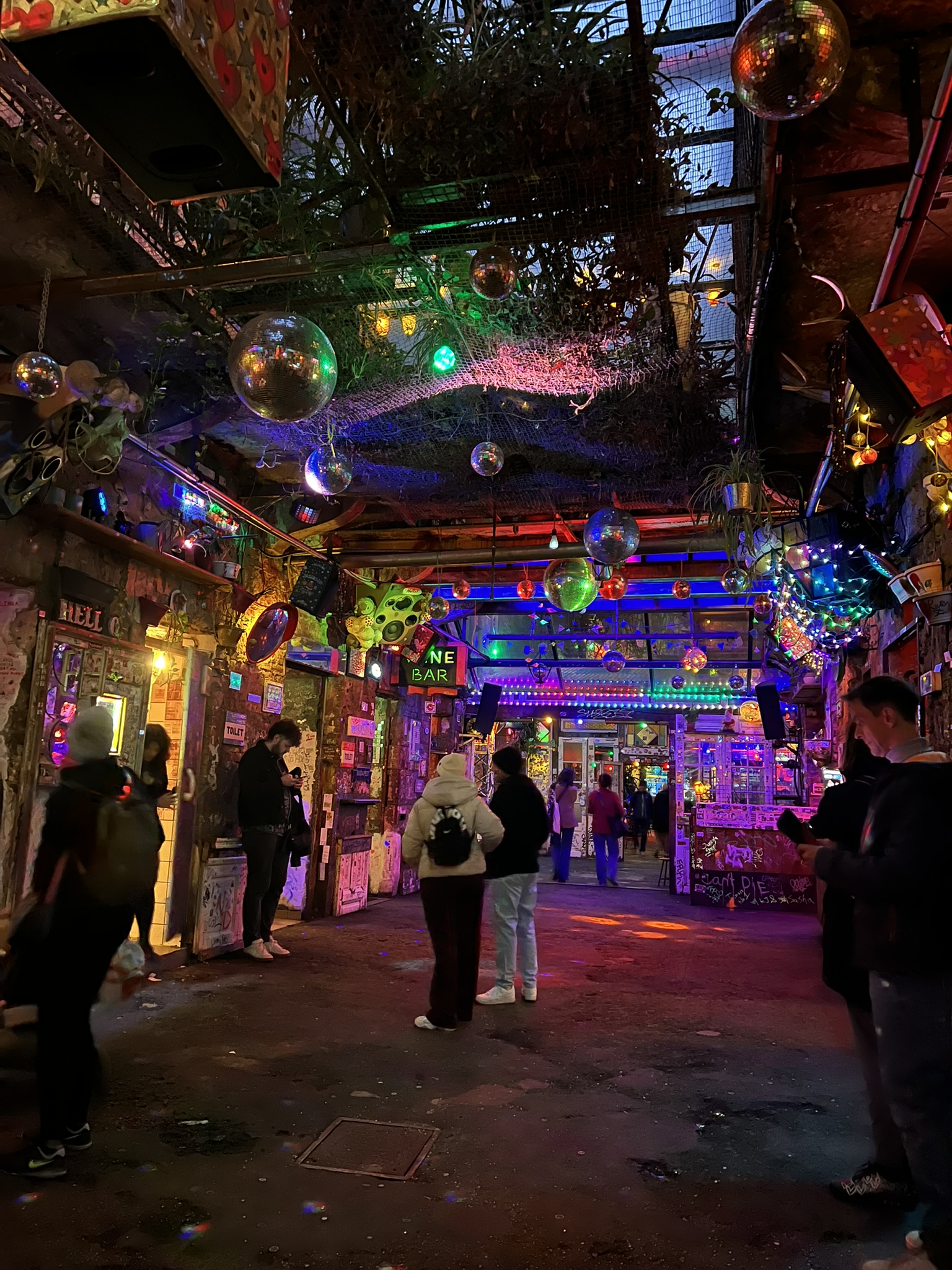
Ruin bars are a relatively new phenomenon in Budapest but have become a major part of the city’s identity and culture. These were essentially bombed-out buildings from World War II that were abandoned to time. About twenty years ago, young people started hanging out and drinking in them. The spaces were purchased and turned into official bars, still keeping the postwar ruin décor. Today there are only a small handful of originals, while other bars are now replicating the style.
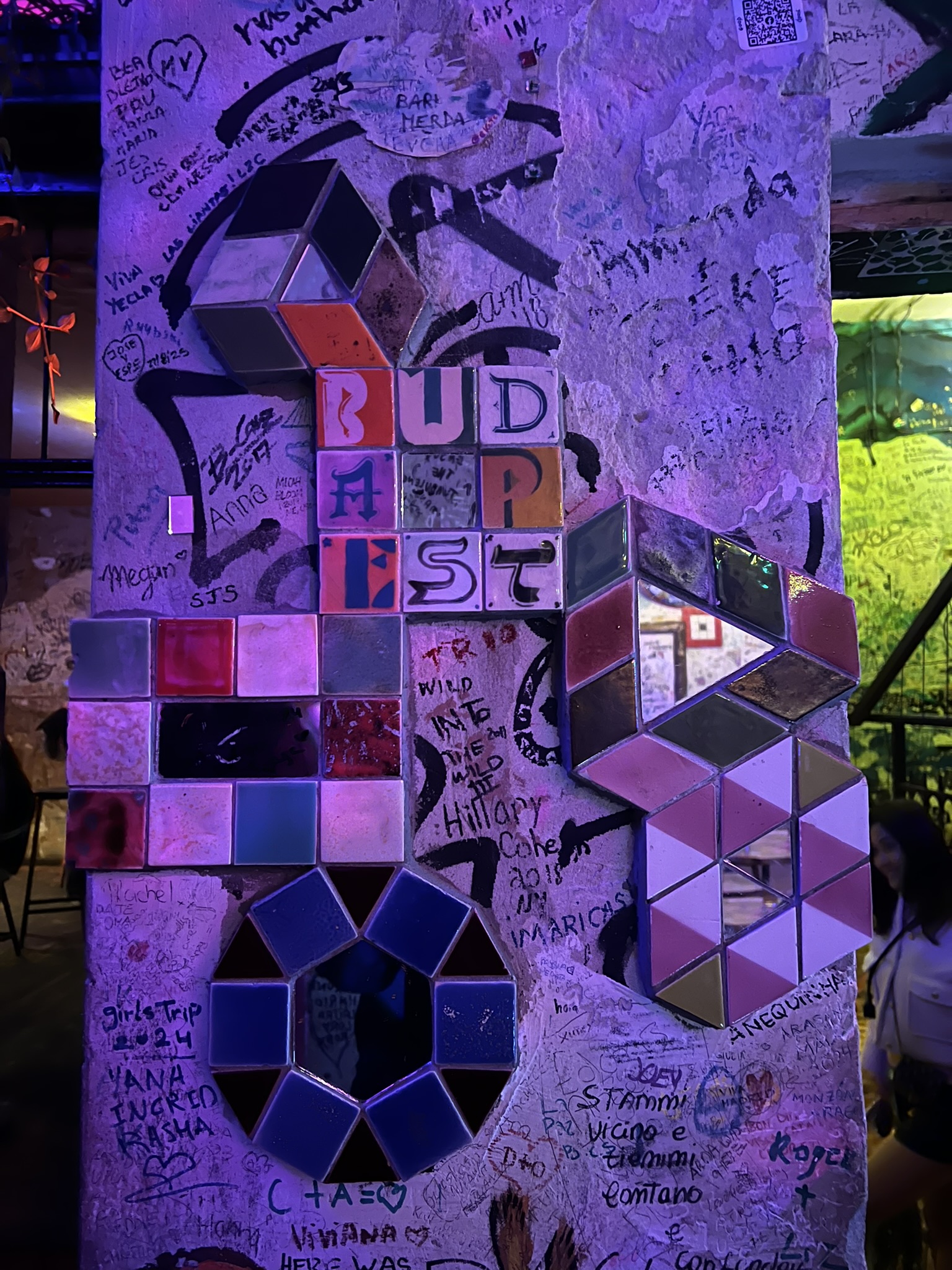
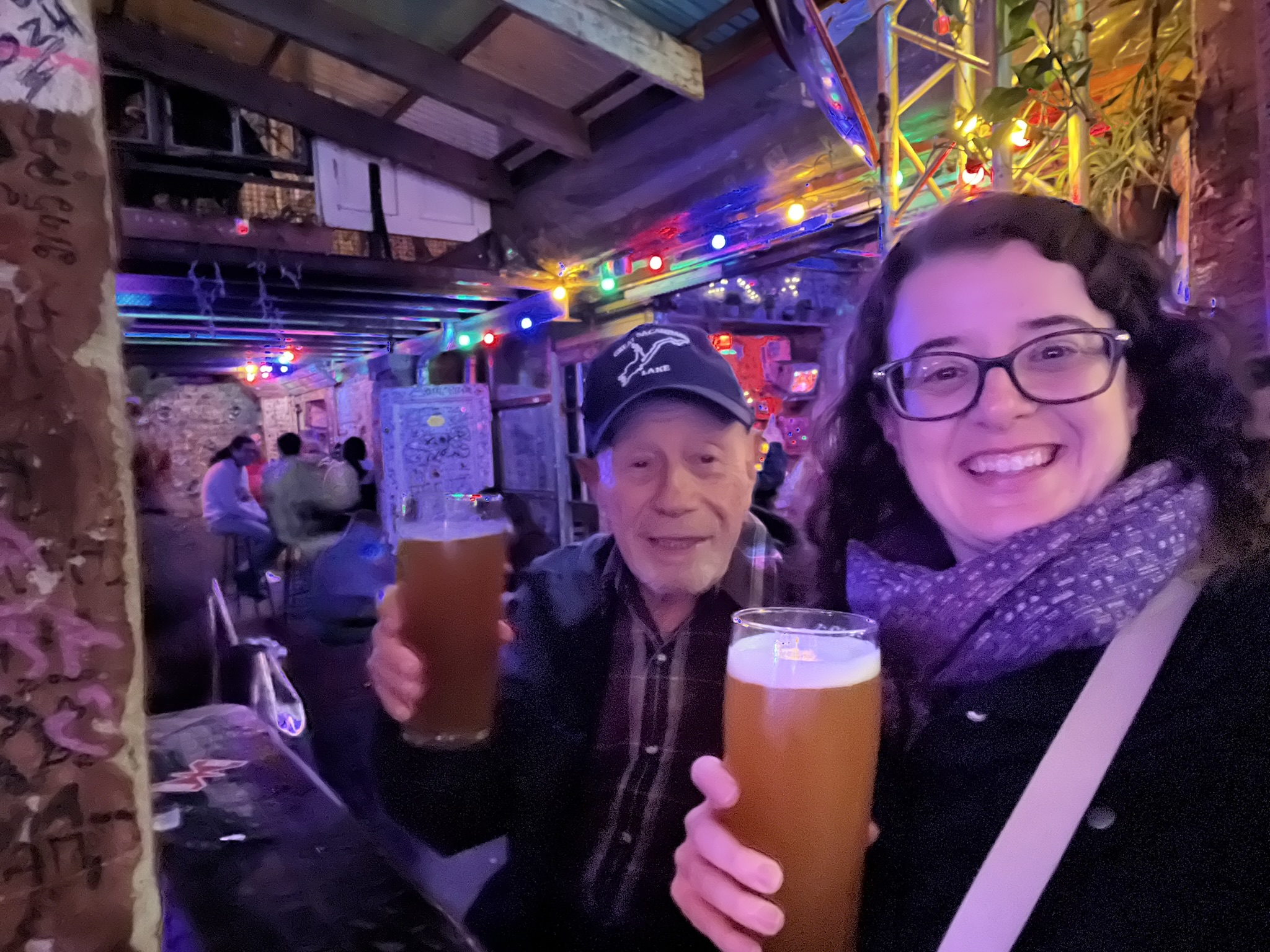
When entering Szimpla Kert, the first and most popular of the ruin bars, the dark hall with bright pops of colorful blacklit decor and a disco ball betray the enormity of the two-story space. Multiple bars line the wide corridor with many options to purchase a cocktail or a beer, the latter which the space seems to demand. The walls are covered in graffiti, stickers, and a punk rock vibe. Tables and chairs are bunched throughout the space. Following a narrow hallway upstairs past more bars leads to a surprise living room-style space with a folk artist playing her music. In a room downstairs is a band testing out their fog machine, presumably for a set later that night. The vibe is distinctly Hungarian, though the crowd is obviously tourist, with the odd older couple uncomfortably walking through with their large cameras and sporty day clothes. Still, this does not detract from the experience.
Dad and I enjoyed a beer at a narrow countertop with stools as we people-watched. Dad talked about his bar experiences back home, something I’ve always wondered about. We had a great time. Our walk back was interrupted by an emergency bathroom break in a Starbucks, where I took some time to figure out how to pay while urgently dad snuck through the turnstile. We closed out the night by watching the “Is It Cake” finale with mom, which we had gotten into that week.
Saturday:
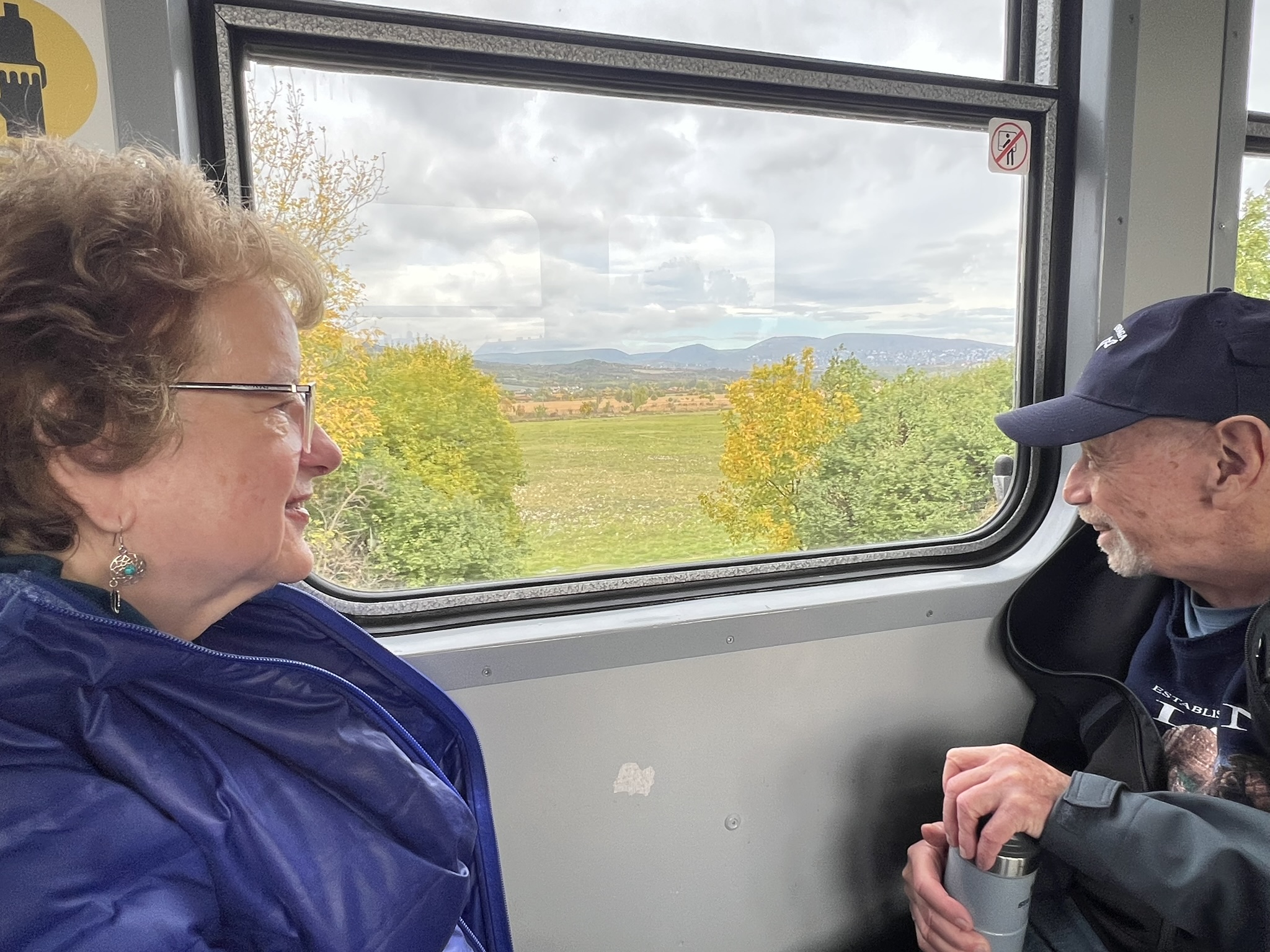
For our last day, we were excited to take ourselves on a day trip to Szentendre, a small town about an hour away from the city by train. The trains worked well, as we took the metro to the commuter train and figured out the tickets, though I stamped them in the validator machine the wrong way and the agent on the train later was annoyed.
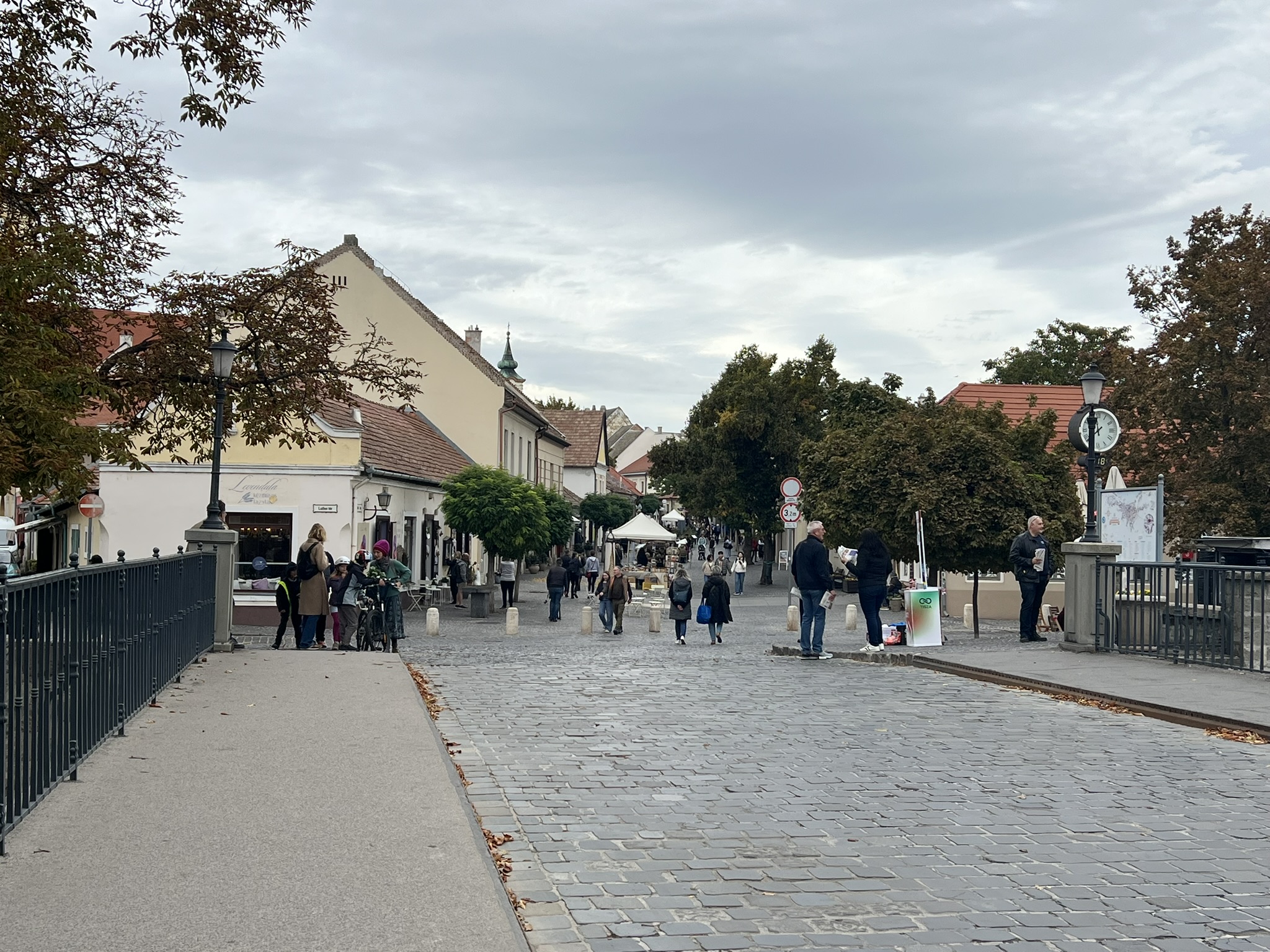
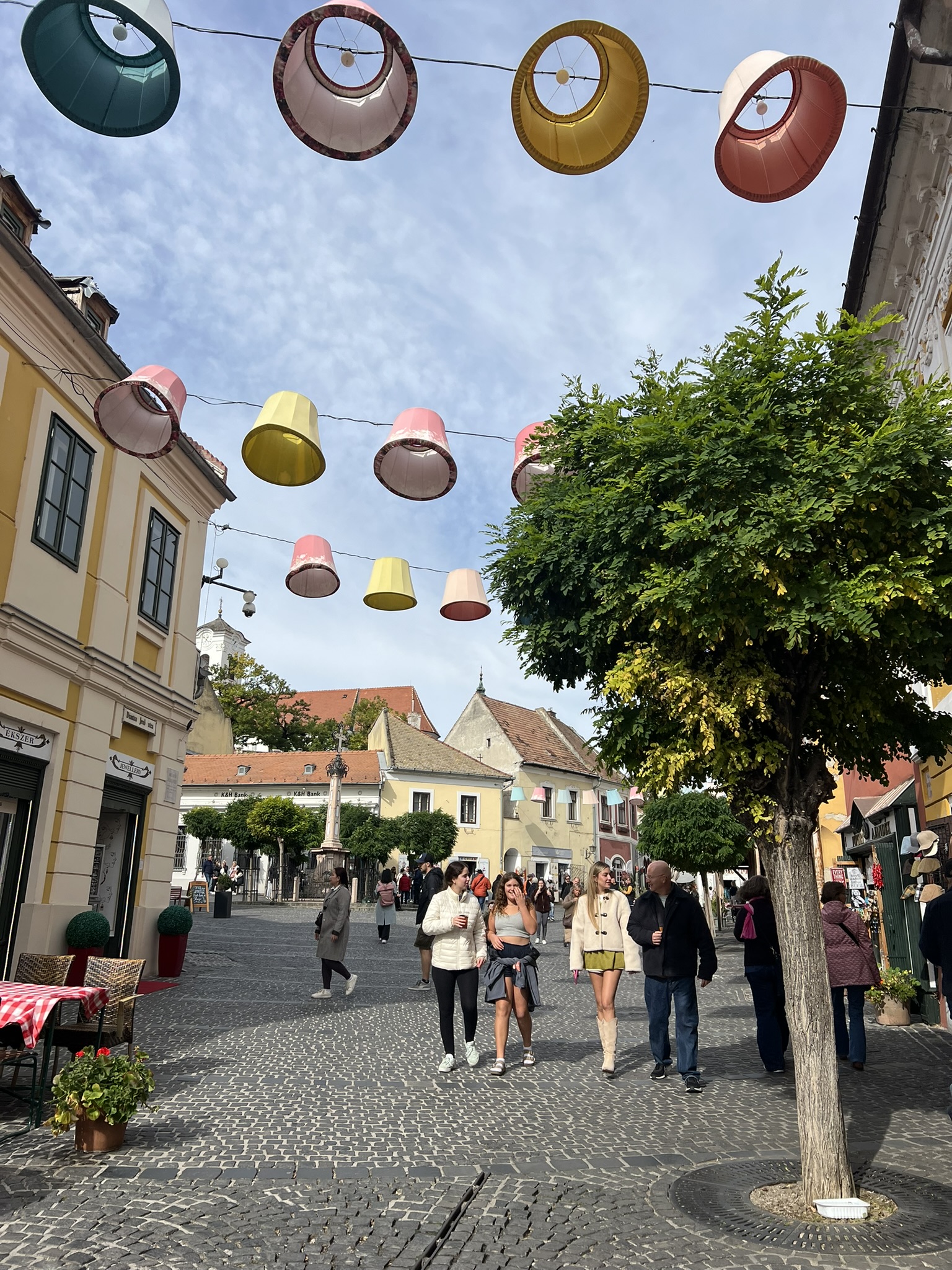
We walked slowly, entering via an underpass to a quiet village that slowly began to reveal itself with ever more colors, shops, and activity. As we crossed a bridge over a small man-made canal, we arrived in the main part of town, cobblestoned, car-free, and lovely.
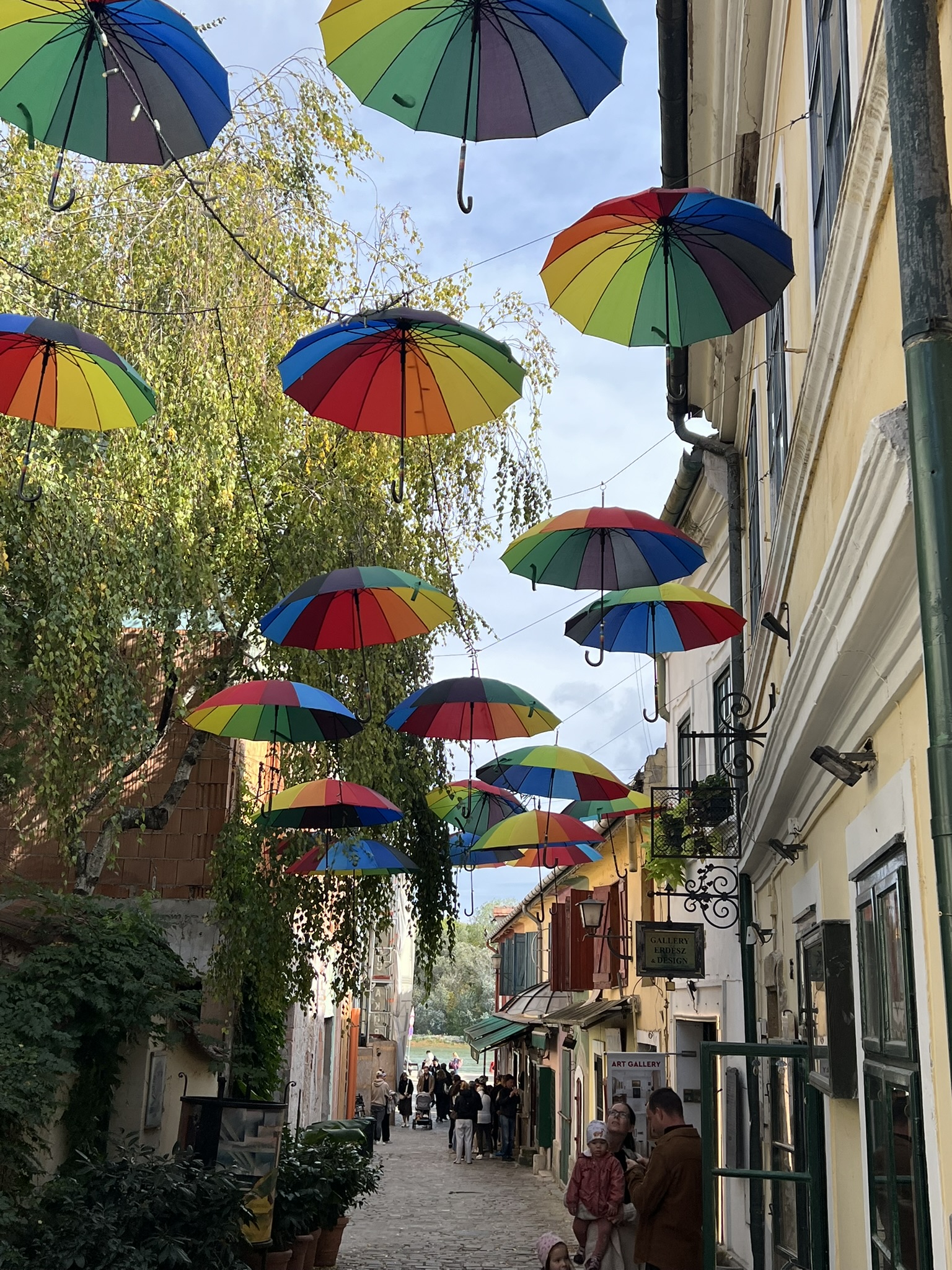
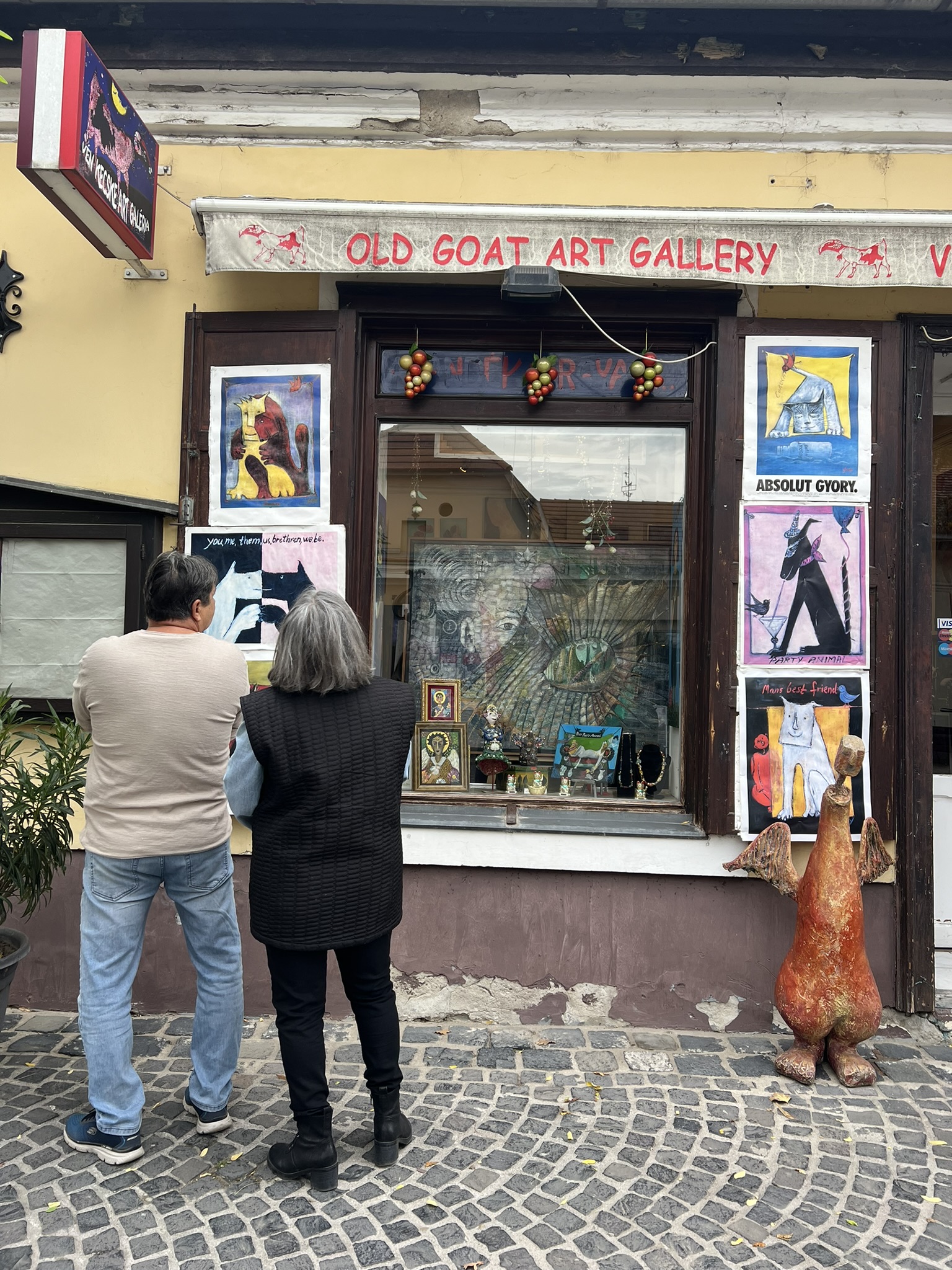
Szentendre is known for its artist community, we were not disappointed. Mom was thrilled we got to walk through one art museum to look at some paintings, and I was happy to see all the art woven into the town and the vendors, both indoor and outdoor. Many small art galleries and museums were woven throughout the town. The main square a few blocks in was decorated with pastel-colored lampshades draped across the sky between buildings. There was a famous “umbrella street,” an area with colorful umbrellas lining the sky, which seems to have become a staple of many areas across the world.
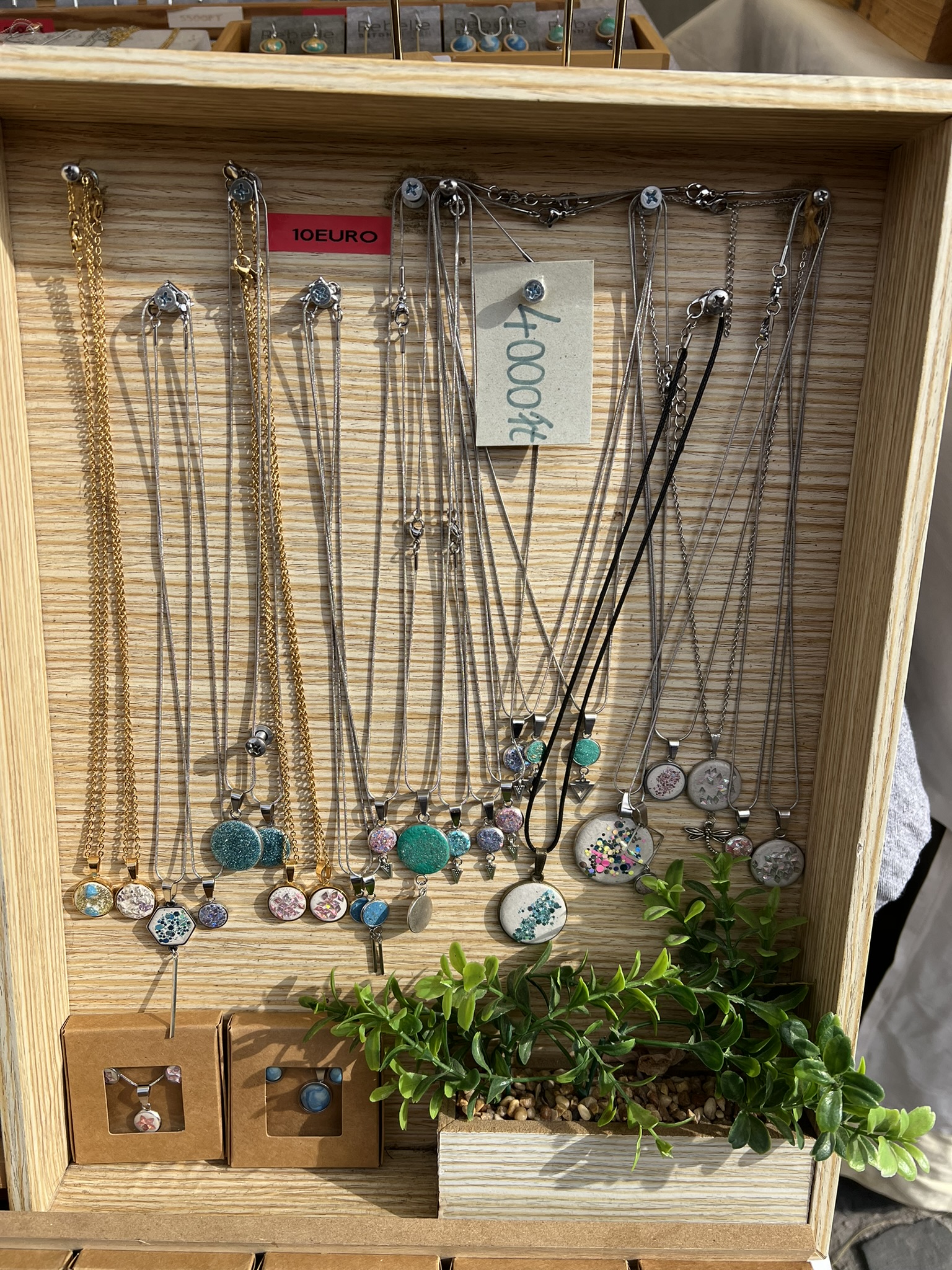
We stopped at a café next to the Marzipan Museum for coffee and scones. Mom bought some scarves. I bought some jewelry. We all bought some lavender ice cream. For a while mom and dad sat by the water when mom got tired, while I zoomed around to check out some more streets, including the charming local streets behind the main strip. The walk back to the train was extremely slow and emotionally painful, though mom wasn’t really wobbling anymore.


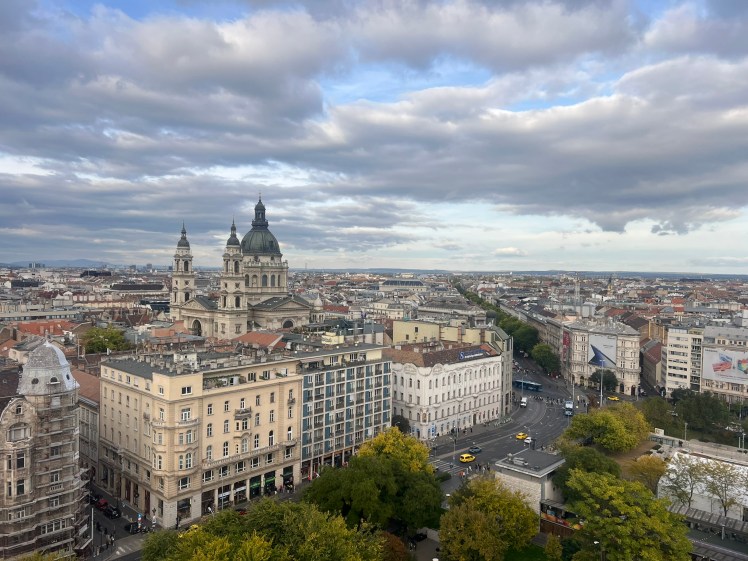
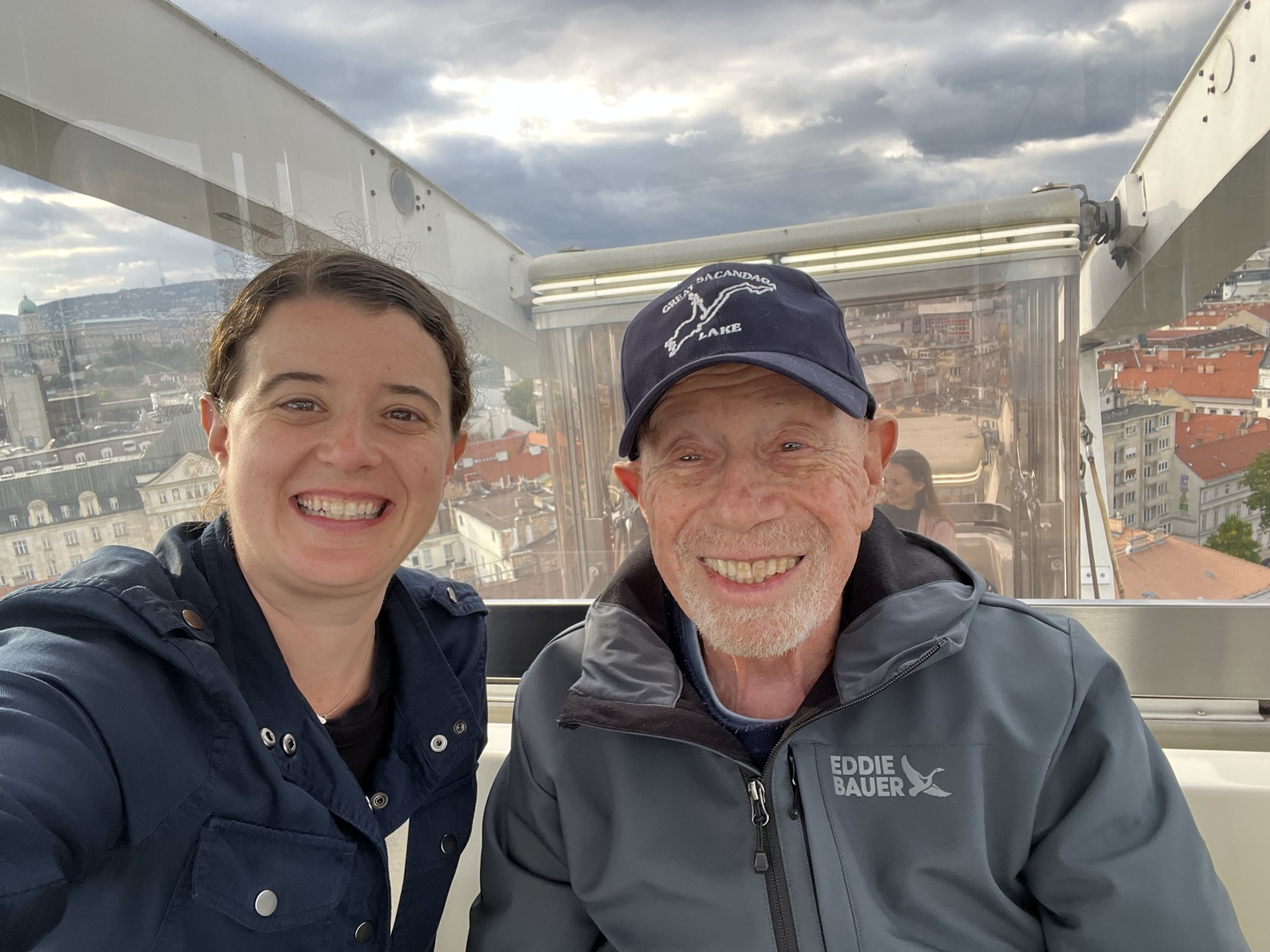
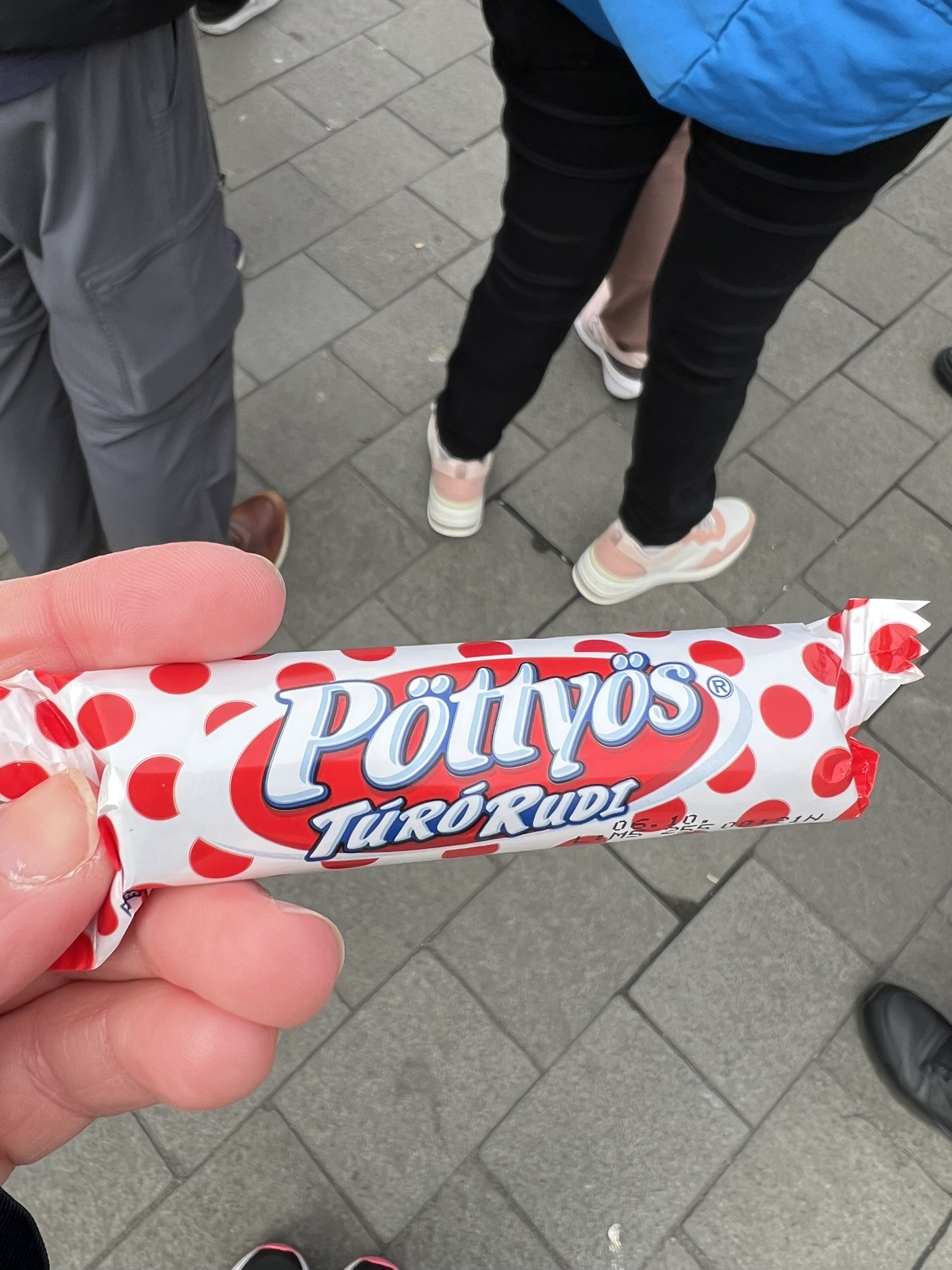
Back in the city, we decided to indulge dad and finally go on the large ferris wheel outside our Airbnb, while mom waited down below. He was excited as a little kid, happy to pay the $15 per person. I was pleasantly surprised by the awesome city views, showing us sweeping views of all the places we had visited that week. I stopped in the grocery store for a few final items – some sweet paprika spice for mom to take home, and one more round of chocolate bars filled with cottage cheese that we were obsessed with (which sadly had to be refrigerated so we could not bring them home).
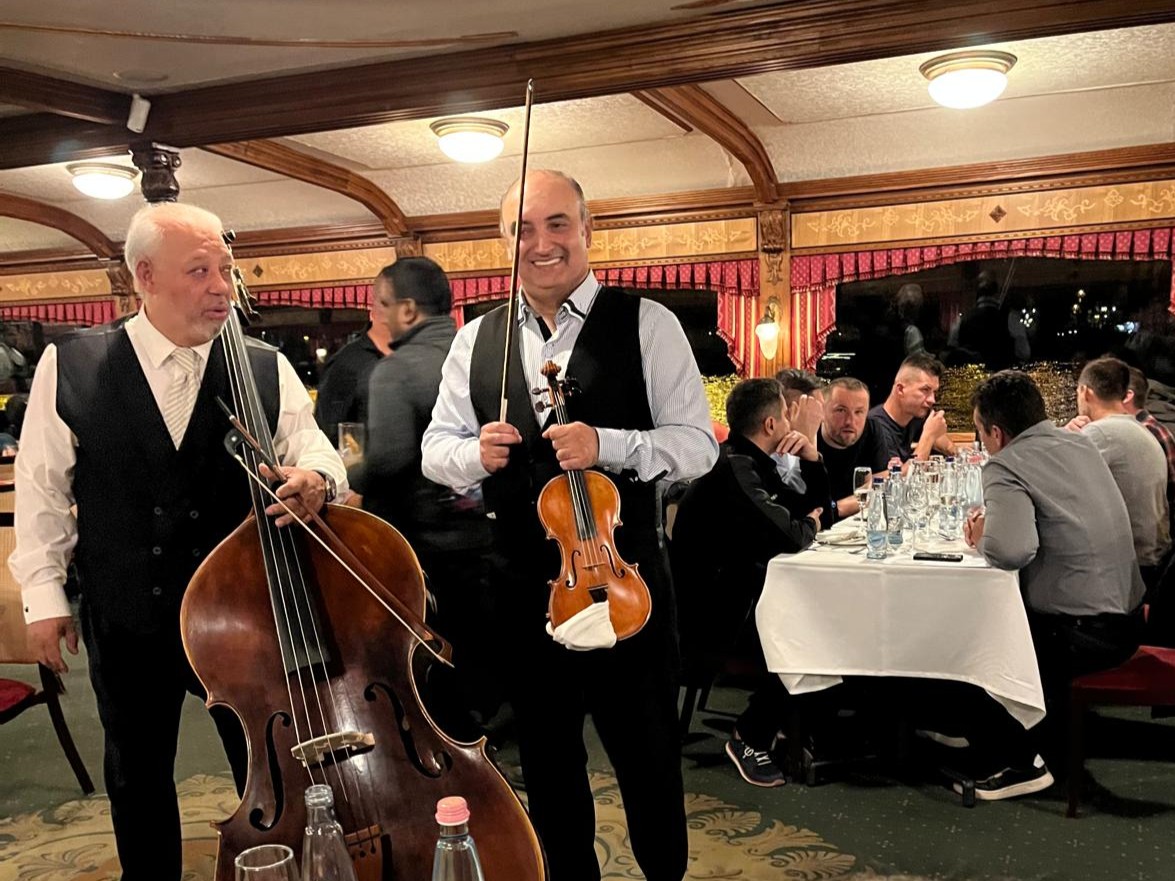
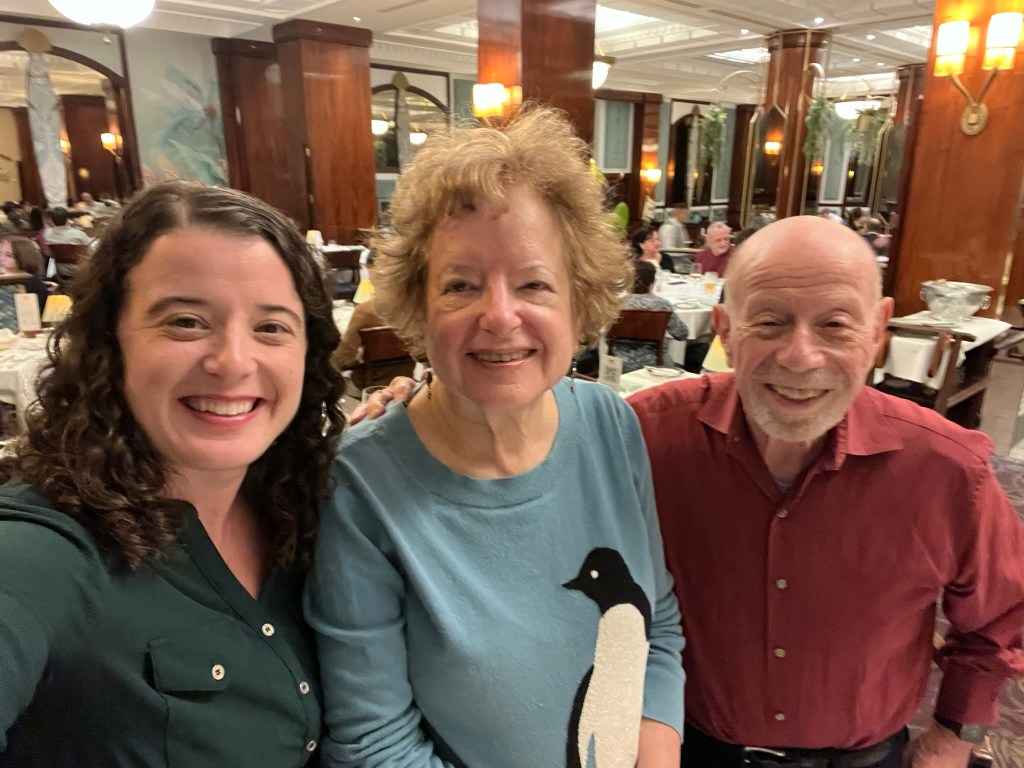
For our final dinner, we had made a reservation at Gundel, a fancy, popular restaurant that folks back home had recommended. Like the New York Café, it was extravagant and lovely and so enjoyable. The large room with cushioned chairs and roaming musicians gave the air of a grand ballroom celebration. The pre-fixe meal was only about $50 per person plus drinks, which certainly would have been in the hundreds in New York. I had my last chicken paprika, the best yet, and a delicious goat cheese salad. We ended the evening very content with our overall Budapest experience!
Sunday
We had a lot of time in the morning before we had to leave, so we took our time packing and cleaning. I was ready first, so I watched some tv. At one point I got up and looked out the window and realized there was a full-on running race going on in the street outside! We had heard there would be a marathon that day. Dad, a former marathon runner, got extremely excited. We figured out how to open the windows, and he proceeded to spend the next 30 minutes yelling out the 2nd story window to encourage the runners, “Go! Go! Go!” Many runners looked up at him oddly. It became so annoying after a while that mom and I just went into the other room.
The travel day back was long and difficult. Mom was kind of a mess. I completely lost my patience after keeping it together and playing calm tour guide all week. Heathrow is a terrible airport to transfer in, especially if you aren’t walking well. But we made it back, splitting up at the airport to brave the nor’easter rainstorm to our respective homes (it was surprising that our flight wasn’t delayed).
Budapest was lovely. While there were some disruptions and challenges, I really enjoyed getting to investigate my ancestry. Even though we didn’t learn anything new, I did learn some new things about my parents and how we interact. (And don’t worry, Mom was able to visit her doctor and everything is fine!)
The week felt like a gift I was able to give my parents, while I also got some fulfilling travel memories and family bonding in return. And while I sincerely valued the trip, let’s just say, my next trip will be solo.
 travels.of.tara