April 19, 2023
The last full day in the Galapagos was of course one of the most memorable, as they all will be. We started after breakfast walking to Santa Cruz’s interpretation and research center, home to the island’s giant tortoise breeding center and the Charles Darwin Research Station. The walk there once again started in a heavy rain, but stopped as we arrived so we were walking through a dense, wet, humidity; but the landscape and learnings made it barely noticeable.
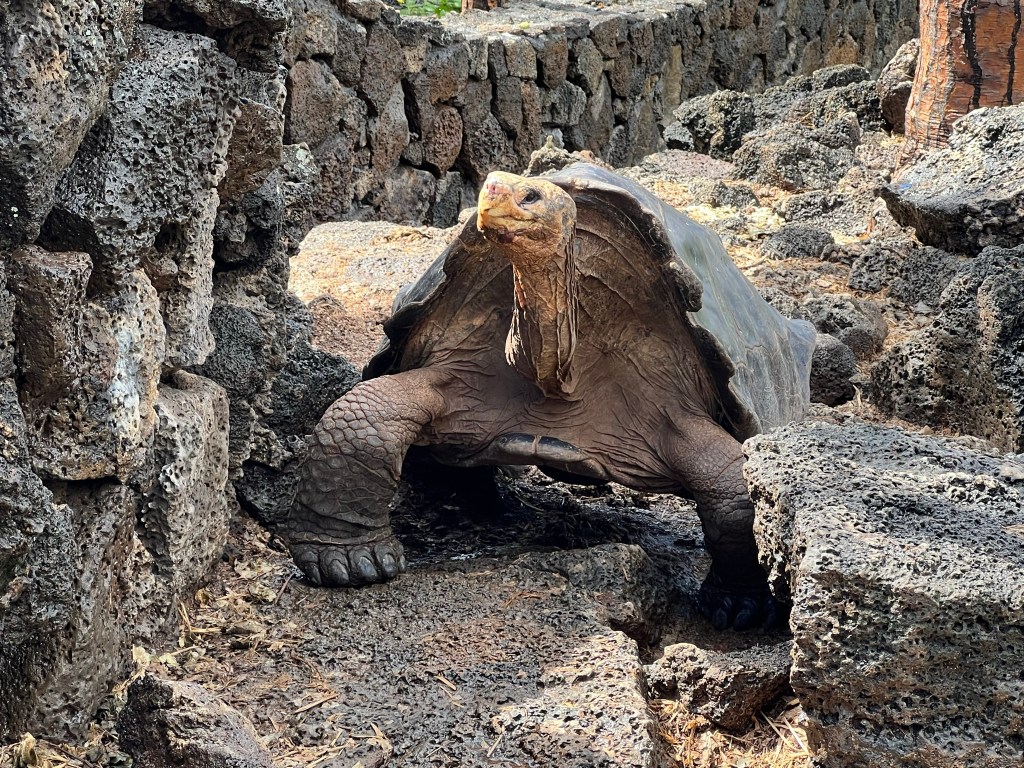
We learned about Lonesome George, the last of his species, and the unsuccessful attempts to get him to breed. The other final 3 were taken by researchers around 1906 to California, because that was the theory of conservation back then – take native species out and to the lab and study them (aka cut them open). So poor George was left alone, eventually meeting his caretaker friend. He died in 2014, before that many people would visit him and could pet him, as Paulina did. They weirdly sent him to a world-renowned taxidermist from the American Museum of Natural History in New York to be stuffed, and now he is on display in an air controlled space in the center that we got to see. He is a little local legend. We also learned more about the pirates who came and ate the tortoises, but when they needed their boats to go faster they would dump them overboard and that helped different species find new homes on different islands. There was a lot to learn about invasive species and more. Seeing the tortoises in their pens again was fun, and one giant one was coming right up to the wall and being friendly with us. I could have easily pet him.
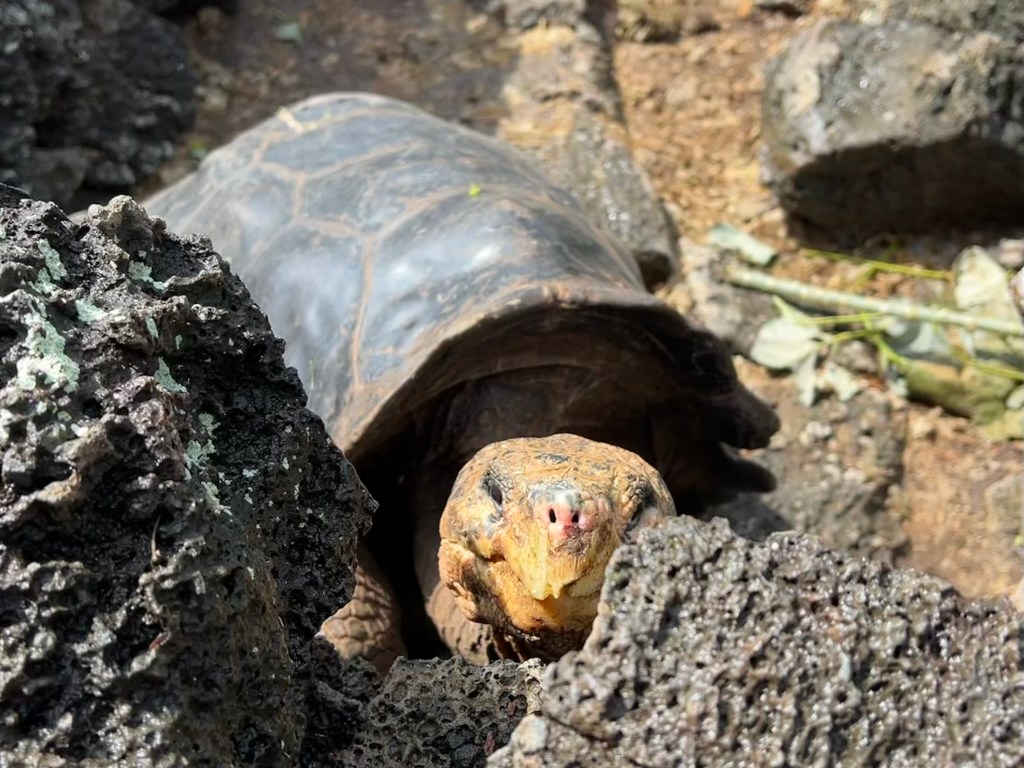
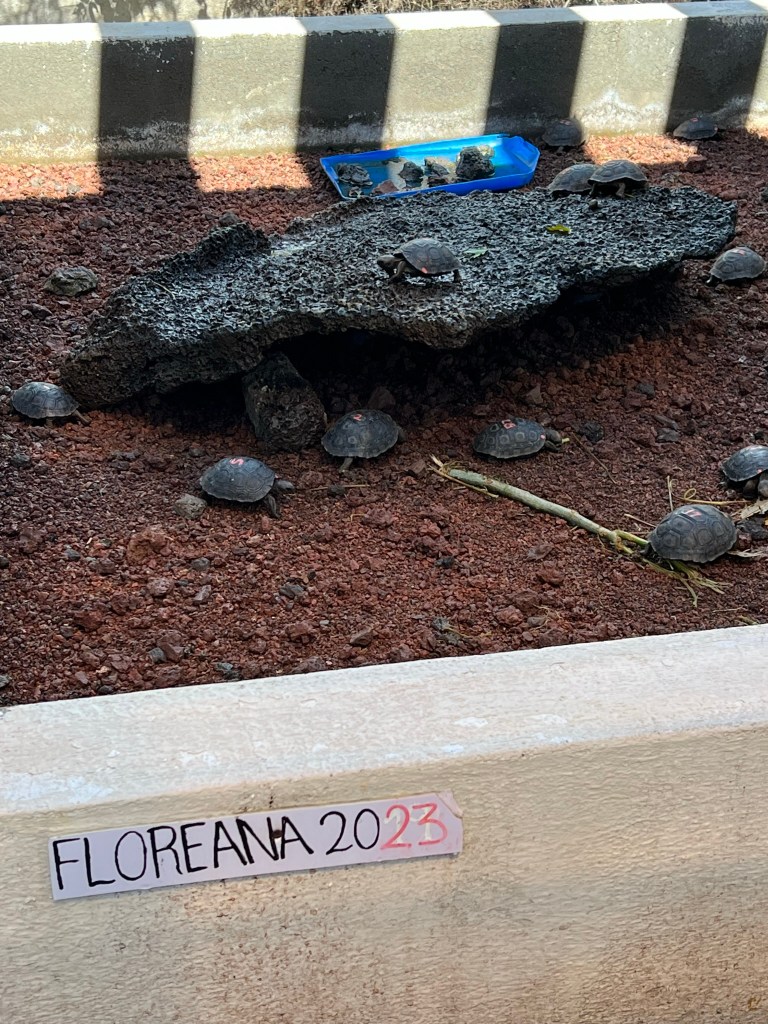
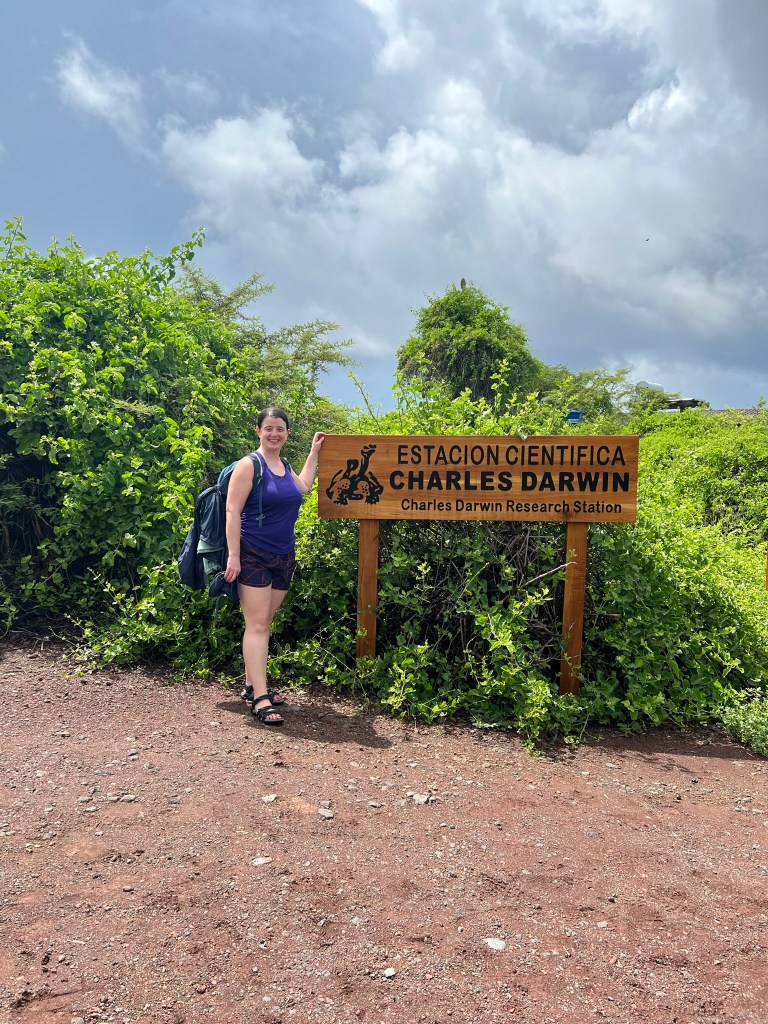
The Charles Darwin Research Station was mostly a little indoor museum, with a gift shop that supports the organization. I bought a shirt and got stuck in a long line of high school students from DC and Boston, who we later saw at the beach and felt fortunate not to be traveling with!
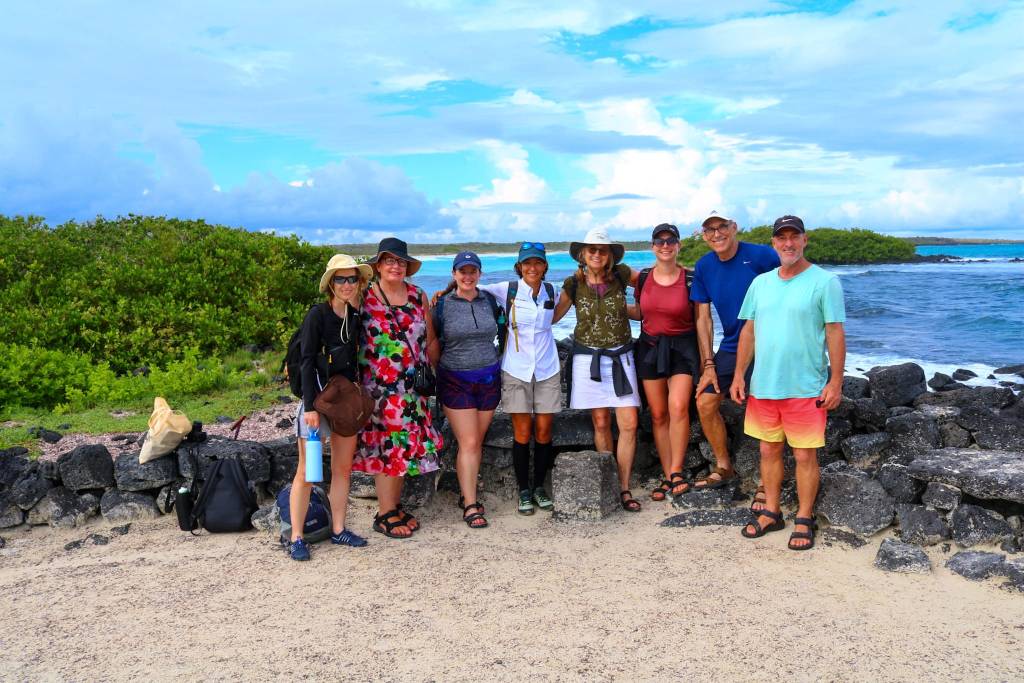
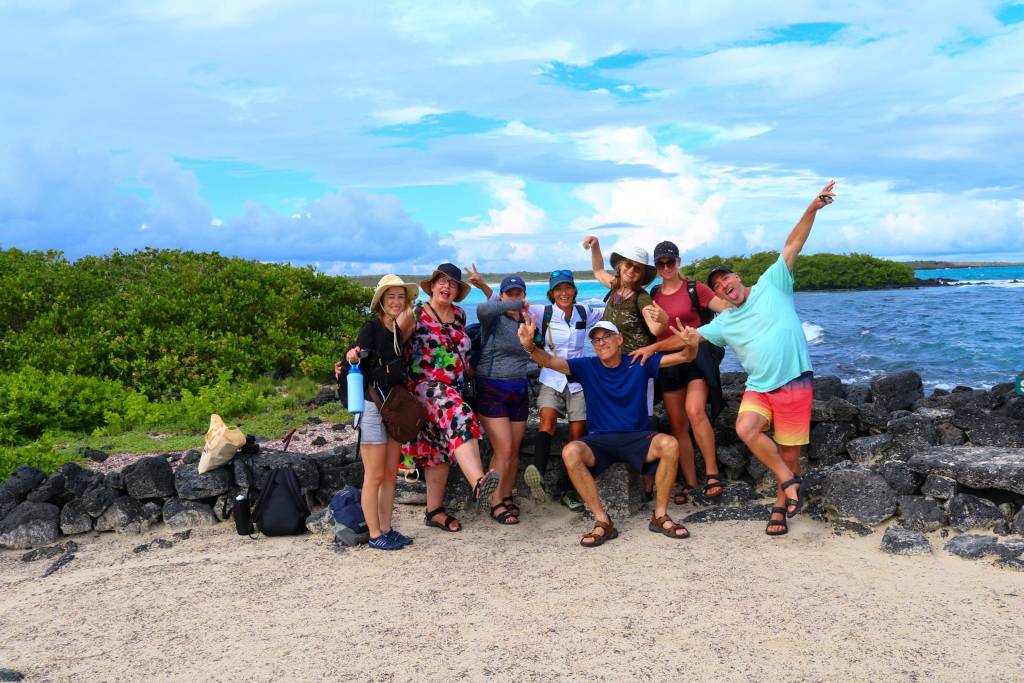
We stopped for lunch on our walk back at a nice airy spot, and I had a good veggie burger and another fresh juice with passion fruit. We meandered a bit and Paulina slowly convinced us all to forgo the 2.5 mile walk to our next destination, Tortuga Bay, and instead to take the public ferry for $10 each way. It ended up being a good decision, giving us lots of time at the beach spot. Before leaving we stopped in a grocery store and I bought a nice reusable water bottle. The ferry was a bit small and bumpy and some of the other passengers were territorial, but we met a nice man from French Canada who had been to the Galapagos 5 times, and lived in Ecuador for a while in the 60s. He stayed with us for a bit when we arrived, fortunately there to take our group shot for us.
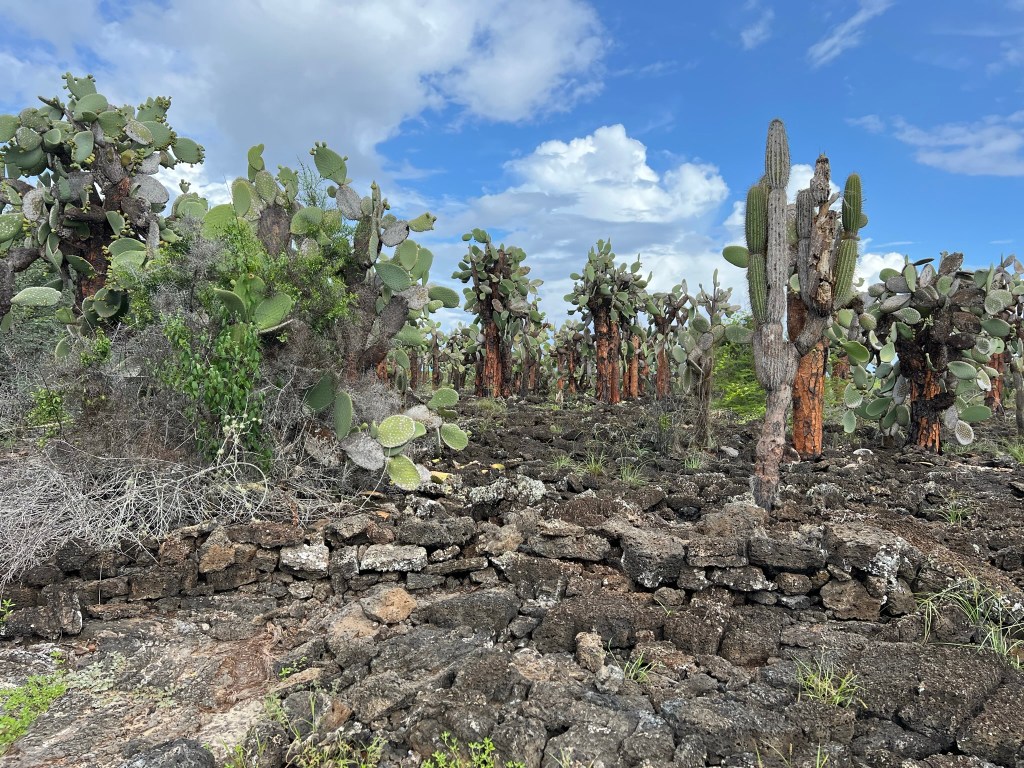
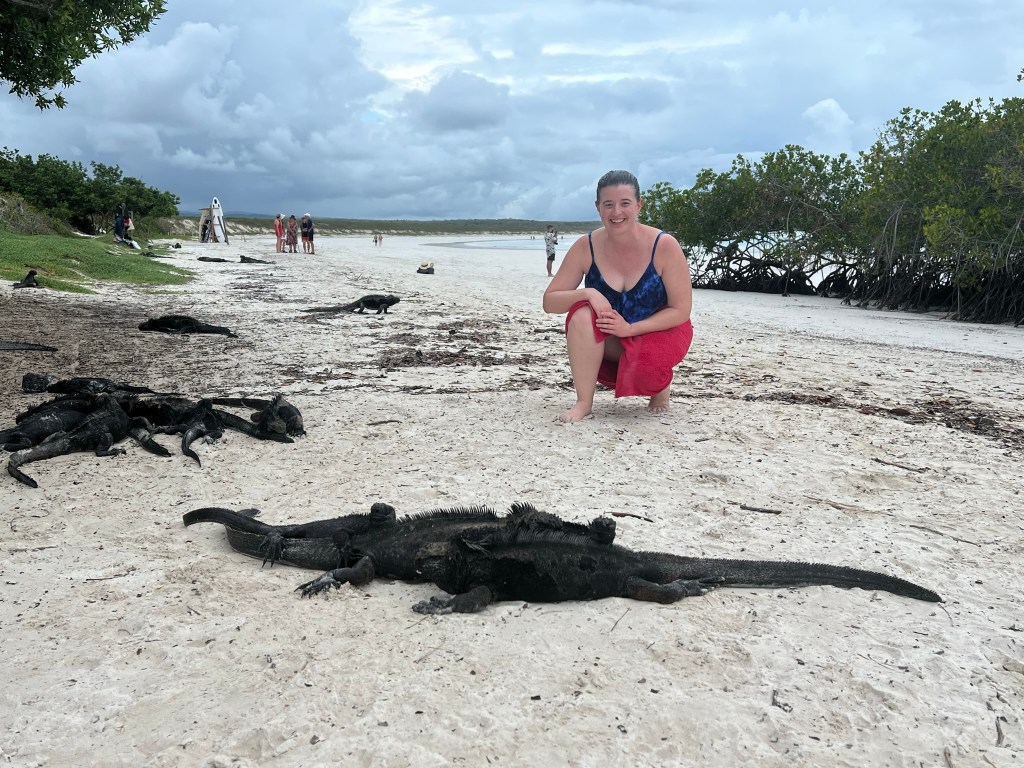
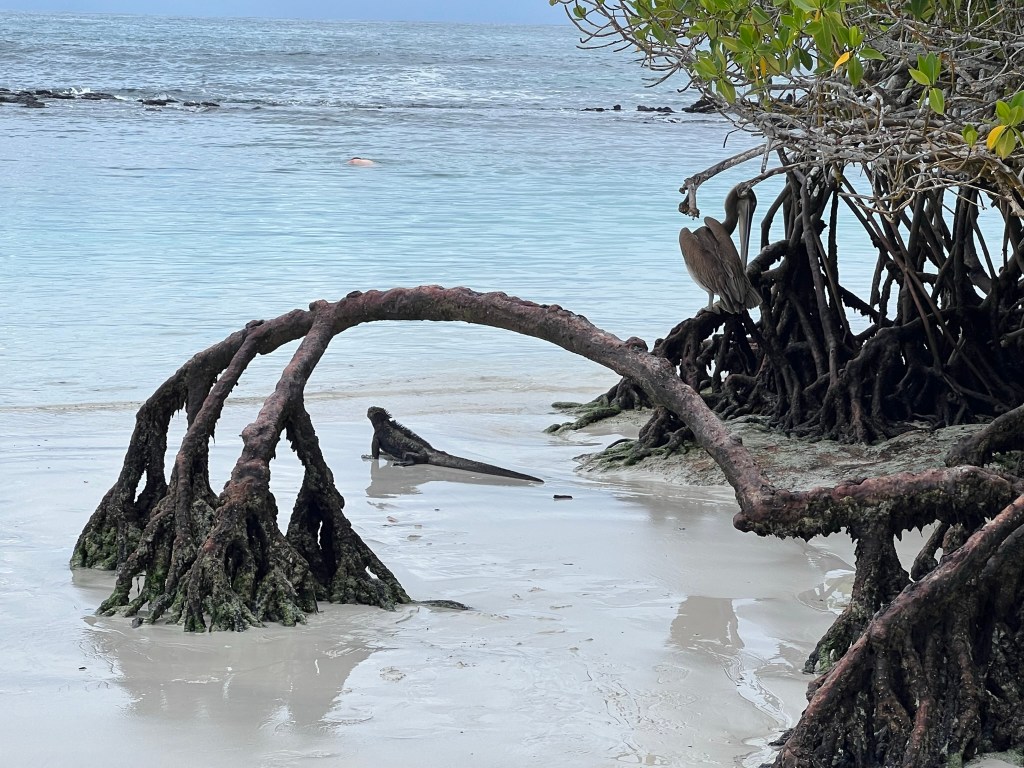
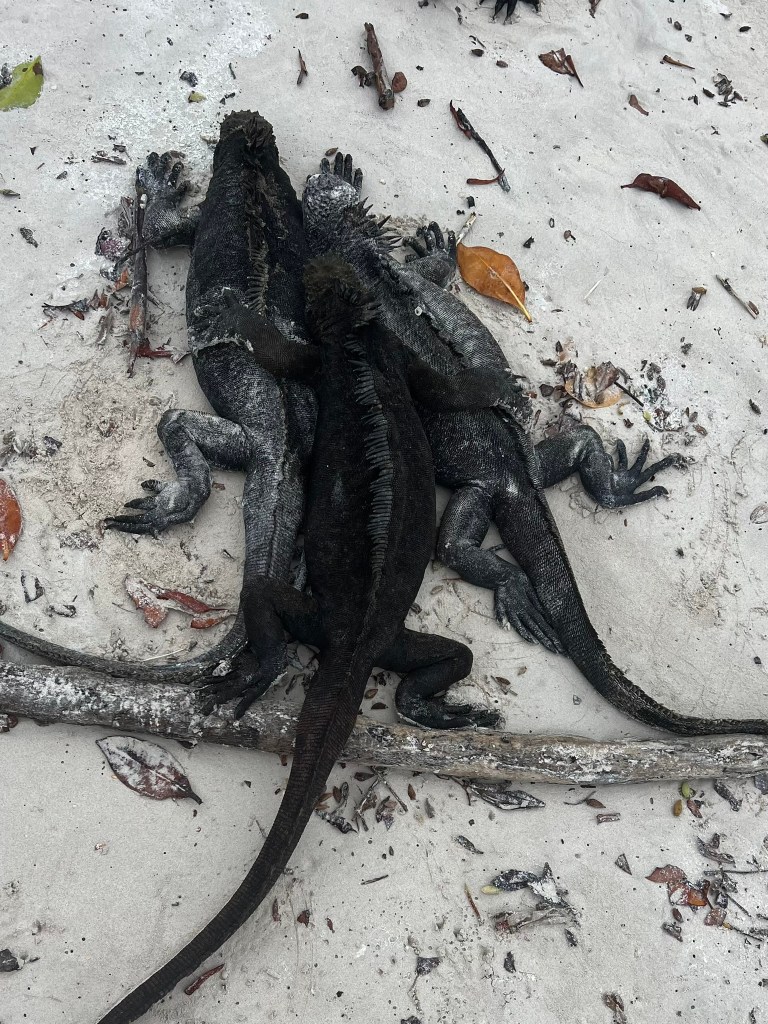
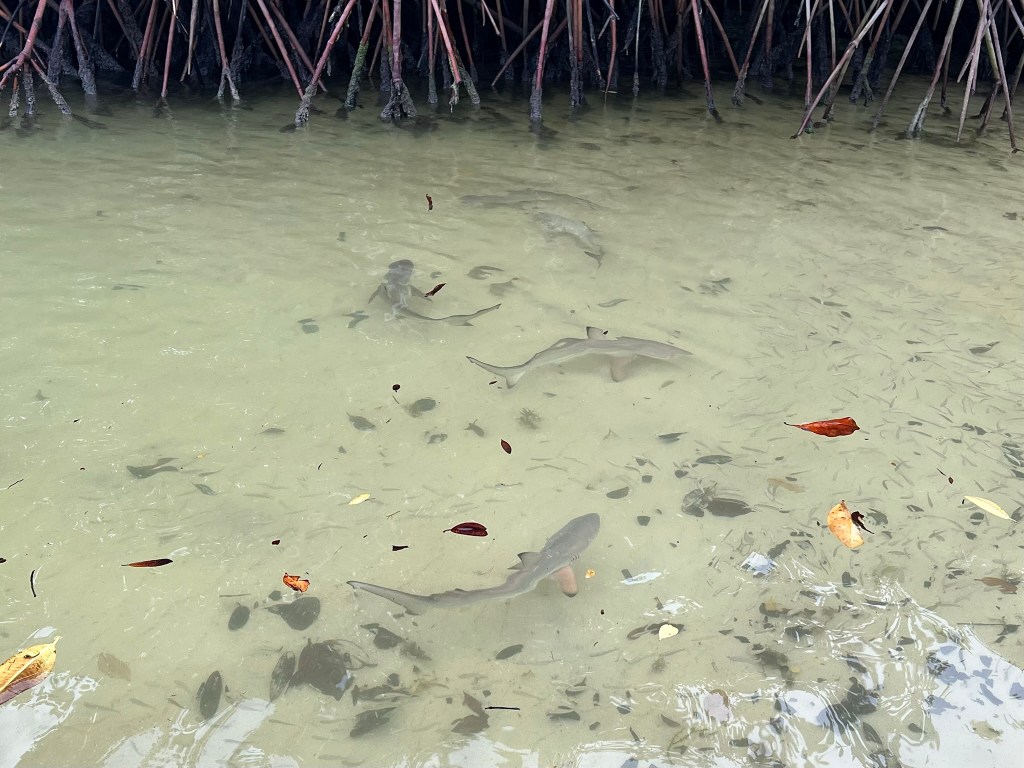
The bay was beautiful. There was a forest of prickly pear trees that greeted us, then we arrived at mangroves, and saw a long bay-like beach. We walked around to the side that was more exposed to the ocean with some small waves, passing tons of marine iguanas, including some that were piled on top of each other and seemingly hugging. We went for an amazing swim, feeling strange without our fins and masks. The crystal water and soft sandy sea floor was enough to make us happy, but then the wildlife sightings began. Swimming right by us, we saw some marine iguanas swimming (above the water paddling like humans), a sea lion waking up from a nap on land and hopping in, lots of pelicans in the mangrove trees who were diving dangerously close to our heads looking for fish, a great blue heron visiting for a while, lava gulls – which Paulina’s friend is studying to identify where they nest because no one knows – and then finally I saw the baby sharks, about two feet long and unmistakably swimming by us in the ocean looking for the little fish that were swimming around. Later, we walked to the other side of the bay by the mangroves, because a guide told Paulina he saw a baby hammerhead shark. We didn’t see that, but saw dozens of baby sharks along the walk, culminating in groups of them swimming around us as we stood in fascination. They passed right under us, inches from our legs. We also saw a little sea turtle pop in and a pelican swimming around us too, competing with the sharks for food. It was a very magical moment and we stayed there for a while, unrushed and feeling full with joy of being where we were. The boat picked us up, using some rocks as a natural pier, and as we sped off and looked at the dark cloud formations start to darken for sunset we began to reflect on the incredible journey we’d had.
It was raining back in town. We took quick showers then ran out to do our souvenir shopping, Casey and I going together on an aggressively fast mission and getting some nice things – it was hard to contain ourselves. For myself I got adorable pj pants with sea turtles, a little necklace pendant with a silver tortoise, and a blue footed booby tchotchke for a shelf. We met for dinner at Almar, a nice restaurant again right on the sea, and had a lovely last meal, again avoiding the passing rain. I had vegan ceviche again and nice wine. Paulina asked for our highlights and we found ourselves reliving the trip, unable to choose one or a few highlights. Back at the hostel with wifi, we exchanged instagrams and a photo sharing app called PhotoCircle that we would use to share pictures and videos without distorting quality. Fiona changed her plans to stay on an extra day to go diving, so we said goodbye. It was hard to fall asleep that night, everything spinning together in reflections.
In the morning, I grabbed coffee early at 7ish and said another goodbye to Fiona, then I went on a little walk around town again, seeing a last round of wildlife on the shore like sea lions snoozing in the street and on public benches, a frigate bird, pelican, and marine iguana. It was oddly the first real solo activity I had done the whole week, so it was hitting me that the social part of the trip was ending and I would have to start figuring things out for myself again very soon.
The journey to the airport in Baltra, technically the 5th inhabited Galapagos island thanks to its airport and military base, was quite a to-do, and we were glad we didn’t start the trip on this island. A bus drove us 35 minutes to a pier in Santa Cruz, we hopped a boat with our suitcases for a quick ferry, then caught a public bus on Baltra to the airport – along the way with lots of travelers, luggage, and chaos. The airport was LEED Gold and had nice giant cooling fans. Paulina made sure we got through security and waved us off, as I joked about making a run for it so I could stay on the islands. It was a very sad goodbye! She was flying home to San Cristobal in a few hours on a tiny plane to save time from ferries, to make a flight to the mainland the next day for a wedding. Us solo travelers and Paulina were all encouraging about staying in touch and visiting each other in the future.
I truly hope to make it back to the Galapagos someday. I’m sad to leave but also so happy and full and know I will remember this experience forever. It’s hard to put into words. Maybe it’s something about feeling closer to the earth and evolution, and remembering we are just a small part of something much bigger. But something about the Galapagos is more than that. I also constantly just felt so privileged to be there and see everything we saw, grateful for the opportunity and having the resources to visit – though it wasn’t really about money. Like it was an honor to be there and get to be part of it, like visiting royalty or a deity. Now, writing on the plane back to Quito, I can’t imagine going back to any other way of living. I still have two full days left, both which I plan to spend on day trips to nature. I can barely entertain the idea of engaging with world news let alone work emails, and I dread it more than I usually do after traveling. I have much more reflecting to do, but I know the words life-changing are going to be a part of it.
 travels.of.tara