July 30, 2016 – Bergen Airport.
A few thoughts from my trip:
The Environment
As a person who cares about the environment, and spends a good amount of time at work trying to improve environmental policies in New York, I was interested in what other countries are doing that we aren’t. Some places seem to just get it – basic things like assuming no plastic bags and building adequate bike infrastructure. Other places weren’t so obviously different, but large-scale things like compact, walkable neighborhood design and well-functioning transit systems contribute to much cleaner cities.
Reykjavik and Copenhagen stood out as the most eco-friendly places. The hostel in Reykjavik was especially green, with signs about their clean tap water and ads for a brand of diva cups sold at the hostel to save on feminine product waste. The Blue Lagoon had 4 separate waste bins, so sorting was actually something you had to step back and think about.
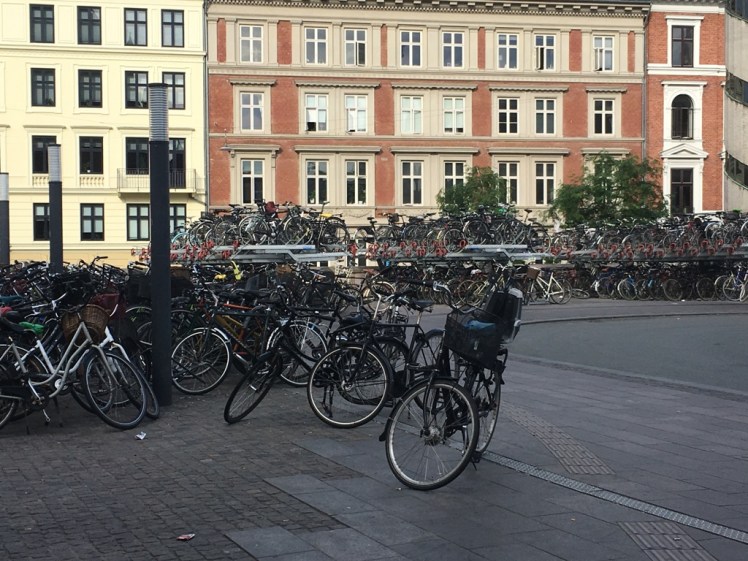
Copenhagen and its intense bike infrastructure take countless cars off the road. There were double-level bike parking structures, bike lanes with multiple turning lanes, and even a few babies wearing bike helmets. It’s so simple – safe bike lanes and ample parking really work. Generally I didn’t notice a lot of automobile traffic in any place. I’m also told Norway has the most Teslas on the road as any country, though I didn’t see any.
I barely experienced a single air conditioner all trip. If I did, they weren’t blasting extremely cold air. My days in the capital cities were some of the warmest they get, in the high 70s. I also did not notice a lot of pollution anywhere. Most noticeably coming from a sweltering NYC summer heat, the air has been stunningly clean and fresh everywhere I’ve been, from cities to nature.
I saw a lot of wind turbines, including some offshore wind in Sweden. Apparently solar hasn’t taken off as much as wind in Europe.
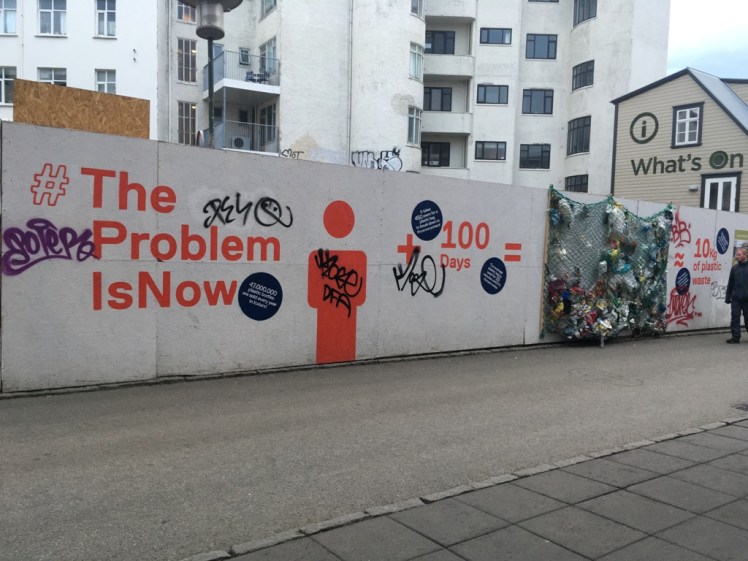
My favorite issue of plastic bags, which I’ve learned a lot about in the last several months through work, have been tricky to get a handle on. Tourist shops generally give out bags. Every grocery store I went into didn’t give me a bag, though some asked if I wanted one. In Stockholm there were boxes of plastic bags before check out, so I assume you could buy them. A display on some scaffolding in downtown Reykjavik talked about the problem of plastic bag waste. They seem to be less ubiquitous; for instance I didn’t see any stuck in trees.
Everywhere there was some kind of deposit for plastic bottles that shows up prominently on the register and your receipt. At Tivoli in Copenhagen, the deposit was about 75 cents for plastic cups that all the drinks came in, but there were automated machines throughout the park that took them back and gave you your money. All over I saw people collecting bottles from the trash, just like they do in New York.
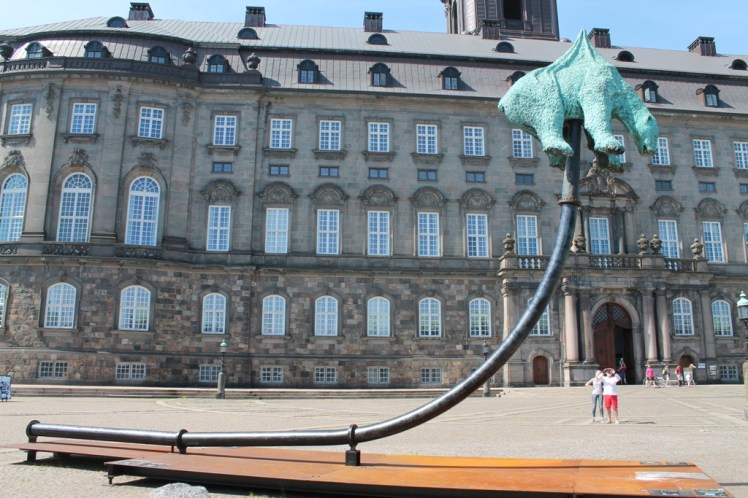
And in the public plaza in front of Copenhagen’s government building, there is a sculpture that was placed there in advance of COP21 in Paris last year called “Unbearable.” It was very disturbing, featuring a polar bear impaled on an oil pipe, the pipe in the shape of a graph of global CO2 emissions over time and showing the steep increase of the last several years.
The Social Policies
In college I took a class on comparative cultural institutions that focused on the US, Japan, and Sweden, so I already had a good sense of how impressive the social policies are in Scandinavia. While they’re not the same everywhere, pretty uniformly people get free higher education including some paid advanced degree programs, a year of paid family leave with 2/3 or 3/4 pay (putting New York’s “historic” 12 week program from this year into strange light), heavily subsidized child care, and free healthcare for all. Just basic living stuff that keeps people happy and healthy.
That doesn’t mean there aren’t problems. These countries are very white, and racism has been said to be a problem, though I didn’t get up close with that issue here. When I arrived in Oslo I was struck by how noticeably different and diverse the city was. 20% of the population in Oslo is minority, including a lot of refugees from Africa and the Middle East.
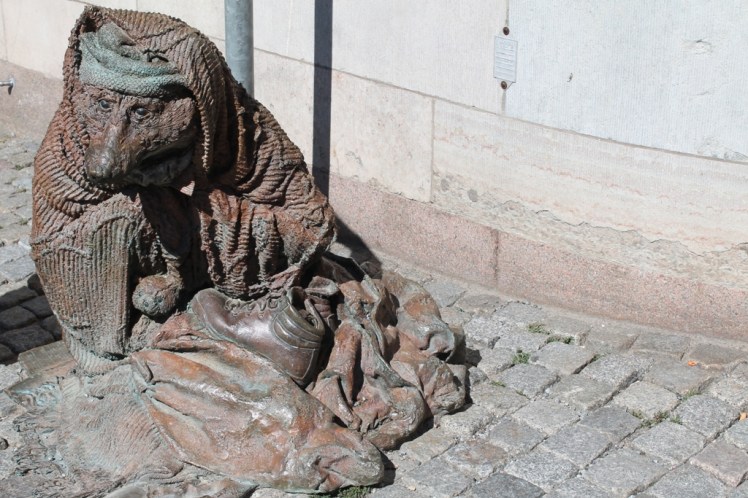
I saw many beggars in the streets in all the cities, though not as many as New York. I learned that these people have help available from the government if they need it, with generous unemployment benefits and housing allowances, but some people fall through the system. Stockholm placed a statue of a homeless fox in front of the Crime Minister’s home, as a reminder that the homeless are not invisible.
The Capitalism
I’m entertained by the things that are the same and the things that are different in different countries. In “the same” category, there were tons of 7-11s everywhere, and I ate some surprisingly decent cheap meals at them. I saw a handful of Starbucks and maybe just one Dunkin Donuts, and several McDonalds and Burger Kings.
There were some other chain convenience stores that were different, and some chain grocery stores that are in other parts of Europe too. When I was looking for soup in Stockholm when I was sick, all I could find in the grocery store was Cup of Noodles, which was a common thing with soup everywhere I went. There are a few brands of flavored seltzer that are everywhere, though I saw no ginger ale (my favorite!) anywhere. There’s no turkey, but lots of seafood and other meats and pre-made sandwiches are popular everywhere.
The People
Other than my tour guides and brief encounters with hostel staff and people serving me food, I didn’t interact extensively with the locals. Everyone has been very nice and accommodating, and quickly willing to switch to English when I give them blank stares.
I had the pleasure of meeting other travelers and learning their life and travel stories. Especially in the hostels and on the group tours, solo travelers are eager to talk to each other, usually breaking the silence with “where are you from?” The stories are inspiring. I met a 60-year old Swiss woman who was riding a motor bike through Norway and that day had driven 350 km in the rain, an Australian doctoral candidate who was studying the effect of cancer medications in Sweden while also traveling for fun, a Canadian living in London and working for pwc and taking dozens of weekend trips in Europe, a travel writer from Dubai who quit her finance job to pursue her passion, and so many others. Strangely nearly everyone I met brought up American politics, even before I told them what I do for a living.
At times the travel stories made my 2-week adventure seem puny compared to their summer backpacking trips. I had a lot of conversations about America’s limited vacation time mentality. 2-3 weeks, standard in the US, is worth quitting over in many other countries. The stories have made my bucket list grow and grow. There’s so much to see in the world and not enough time!
The Trip
As I put this post together in the airport, I’m still not ready to reflect on the big picture of what this trip has been. I return to finish writing this the next night, after a long sleep and a lazy, tired day back home in Queens. The flight back was under 7 hours and went quickly, though the time difference made me exhausted. I went through 226 unread work emails and started unpacking. I could use a week to recover but it’s back to work tomorrow!
I don’t know that extensive reflection on this trip is necessary. I’m not at a point of major transition in my life and things feel pretty comfortably stable right now. It’s nice not to feel that kind of angst that comes with life’s uncertainty. So that let me really focus on the experiences and the planning and the enjoyment of it all. On my long hikes and walks I thought a bit about being 30. Sometimes scary as I’m getting older, but mostly inspiring to think about how long life is and how there are so many more opportunities to travel and experience new things.
All in all, my trip to Scandinavia was wonderful. I feel full and happy, and already thinking about what’s next!
 travels.of.tara